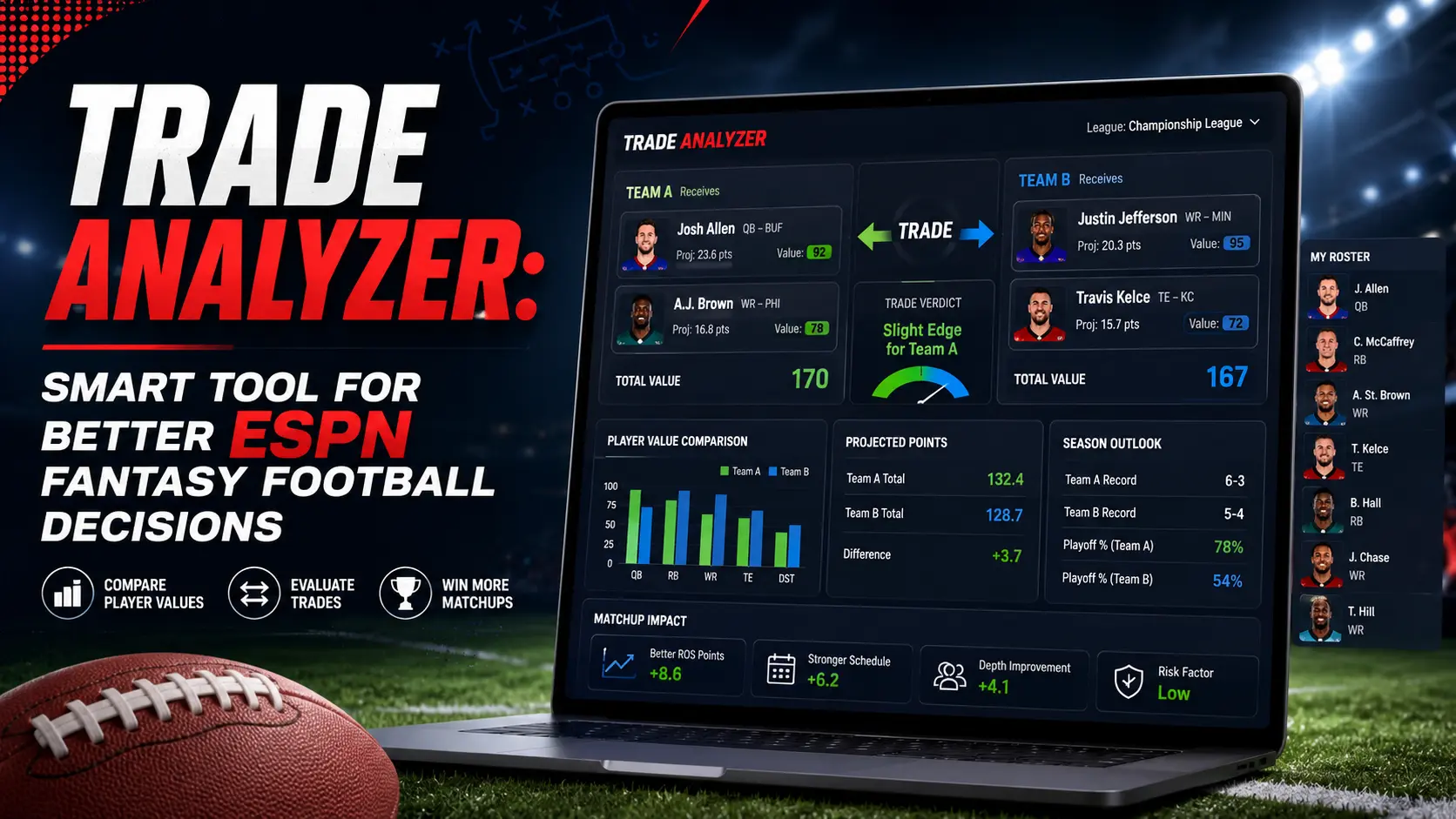
Trade-Analyzer-Smart-Tool-for-Better-ESPN-Fantasy-Football-Decisions

Trade Analyzer: Smart Tool for Better ESPN Fantasy Football Decisions

A Trade Analyzer can save your season when espn fantasy football trades get messy. You may love one player. Your league mate may love another. Yet feelings do not win matchups. Clear data, fair value, team needs, and smart timing help you make cleaner choices in fantasy football.

Fantasy managers in the USA deal with injuries, bye weeks, waiver moves, and wild Sunday drama. One trade can fix a weak roster. One bad trade can sink months of work. That is why a strong trade analyzer gives you a calm second opinion before you hit accept.

What Is a Trade Analyzer and How Does It Work?

A trade analyzer is a tool that checks a fantasy trade before you make it. It compares player value, team needs, league scoring, and future upside. In espn fantasy, this matters because every roster has different gaps, strengths, and playoff hopes.

It does not replace your brain. It helps your brain breathe. A good analyzer studies projections, rankings, recent form, and position scarcity. Then it shows whether a deal improves your team or only looks shiny for five minutes.

Simple Meaning of a Trade Analyzer

A trade analyzer is like a trade referee for fantasy football on espn. It checks both sides of a deal and shows who may gain more value. If you trade a running back for a wide receiver, it helps you see the real cost.

How It Checks Market Data

A tool checks player projections, usage, injury news, matchup difficulty, roster percentage, start trends, and schedule strength. It may also compare expert rankings and league settings. That mix gives you a fuller picture than one hot performance on Monday night.

Why Traders Use It Before Entering a Trade

Fantasy managers use it before a trade because emotions can trick them. A player with one huge game may feel elite. A quiet star may feel washed. The analyzer slows things down and asks, “Does this deal help your full roster?”

Why a Trade Analyzer Matters for Smarter Fantasy Football Decisions

A trade analyzer matters because espn football fantasy leagues move fast. Injuries appear suddenly. Bench players become starters overnight. A fair trade on Tuesday may look different after Friday practice reports, so smart managers check value before acting.

This tool also protects you from hype. Fantasy chat rooms, social media clips, and highlight reels can make average players look unstoppable. The analyzer brings you back to earth with numbers, role data, and team context.

Reducing Emotional Trading

Emotional trading happens when you panic after one bad week. You may trade a good player too cheaply because he scored six points. A tool helps you avoid that trap. It shows longer trends, not just yesterday’s pain.

Finding Stronger Trade Setups

Strong trade setups solve a real roster problem. For example, you may have four good wide receivers but only one safe running back. A trade analyzer can show whether moving depth for need gives your team better weekly balance.

Making Decisions With Data, Not Guesswork

Guesswork sounds confident until the scoreboard laughs. Data gives you a stronger base. You can compare projections, snap share, targets, red-zone usage, and playoff schedule. In espn fantasy football, these small edges often decide close matchups.

Key Features of a Powerful Trade Analyzer

A powerful trade analyzer should feel simple, not scary. It should show player value, position need, future schedule, scoring format, and roster impact. If a tool only says “good” or “bad,” it may not give enough depth.

The best tools explain why a trade helps or hurts. They consider whether you play PPR, half-PPR, standard scoring, or dynasty. For dynasty users, tools like a dynasty trade calculator can weigh youth, picks, and long-term value.

Entry and Exit Point Analysis

In fantasy trades, entry means when you should offer a deal. Exit means when you should walk away. A smart manager buys players before value rises and sells players before value falls. Timing turns an average trade into a league-winning move.

Risk-Reward Ratio Calculator

Every trade has risk and reward. You may trade a safe player for a high-upside star. That move can win big or backfire badly. A trade analyzer helps compare the possible weekly gain with the danger of losing stable points.

Stop-Loss and Take-Profit Planning

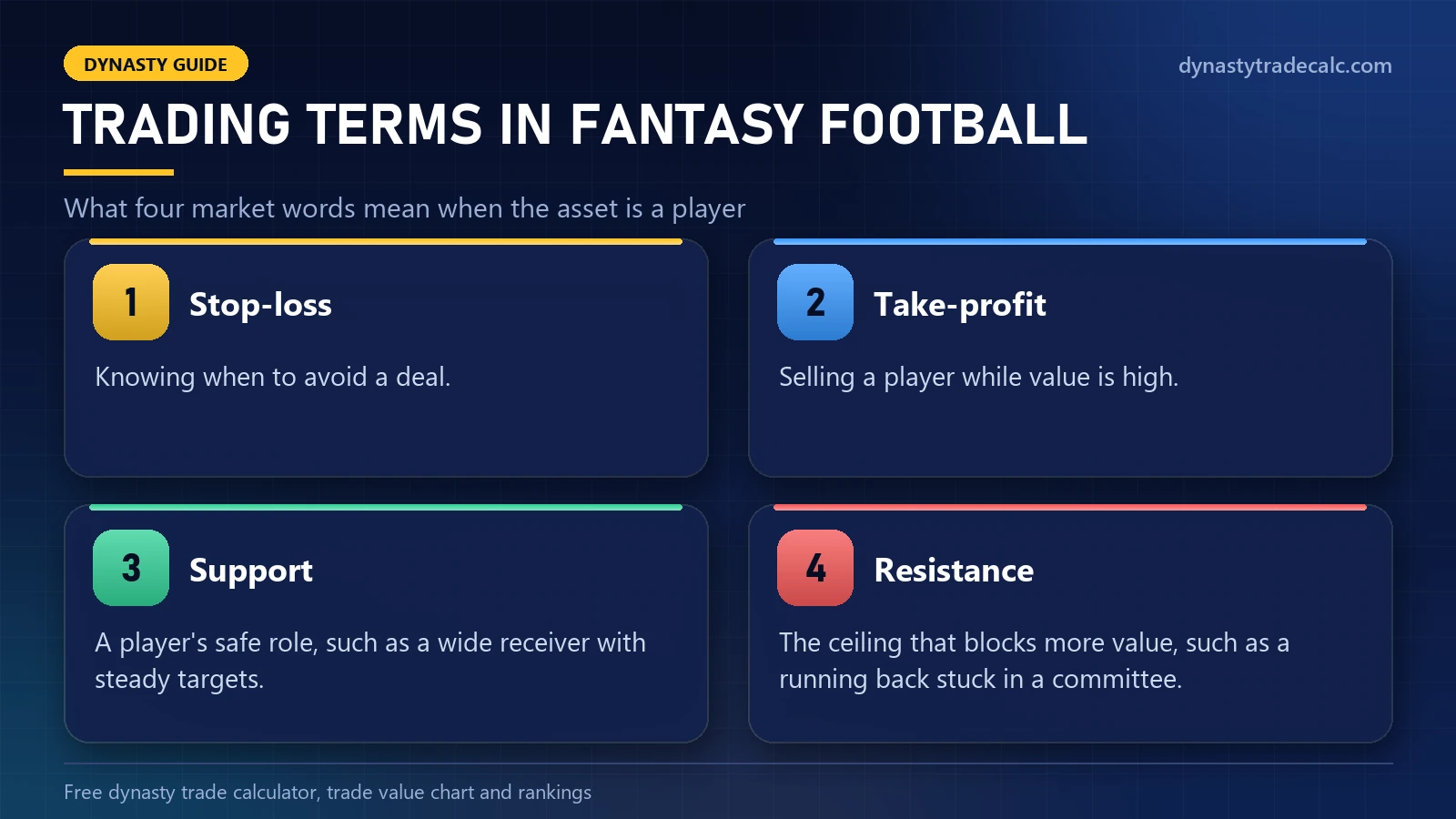
In fantasy terms, stop-loss means knowing when to avoid a deal. Take-profit means selling a player while value is high. If a backup running back explodes for two games, you may trade him before the starter returns.

Real-Time Market Signal Review

Real-time signals include injury updates, depth chart changes, weather news, and coaching comments. A sudden hamstring report can change player value quickly. Good analysis tools help you react before your league mates notice the same door opening.

How a Trade Analyzer Helps You Manage Fantasy Football Risk

A trade analyzer helps you manage risk by showing what you may lose. Many managers only look at the player they receive. Smart managers also check what their lineup loses, what their bench loses, and what their playoff path needs.

Risk feels small when a big name enters the deal. Yet names do not score points by themselves. Usage, health, role, schedule, and team situation matter more. That is why careful trade review keeps your roster from cracking.

Understanding Risk Before You Trade

Before you trade, ask what happens if your new player gets hurt, loses volume, or faces a brutal schedule. Also ask who fills the old player’s spot. A fair deal can still hurt if it creates a new weakness.

Avoiding Overtrading and Poor Setups

Overtrading is common in active fantasy football leagues. Some managers trade just to feel busy. That can damage a good roster. A tool helps you reject trades that look fun but do not improve your weekly starting lineup.

Protecting Your Capital With Better Planning

Your fantasy capital is your roster value. Protect it like a small treasure chest. Do not trade depth without checking bye weeks. Do not trade upside without checking playoff matchups. Better planning keeps your team flexible when chaos arrives.

Trade Analyzer vs Manual Fantasy Football Analysis

A trade analyzer is fast. Manual analysis is personal. The tool can compare numbers quickly, while you understand your league’s habits. Some managers love stars. Others overpay for rookies. Knowing those patterns helps you negotiate better trades.

The strongest approach uses both. Let the tool check values and roster impact. Then use your judgment to study news, league behavior, and playoff goals. That mix gives you data with street smarts.

Speed and Accuracy Comparison

Manual trade review takes time. You must check rankings, injuries, matchups, and depth charts. A tool can scan much faster. However, accuracy still depends on fresh data and good settings. Wrong league settings can make any answer crooked.

Human Judgment vs Data-Based Insights

Data may say a trade is fair. Your judgment may say it is not right for your team. For example, trading away your only strong tight end may look balanced on paper. In real life, it may wreck your lineup.

When Manual Analysis Still Matters

Manual analysis matters when news changes fast. Coach quotes, practice reports, and team injuries may not update instantly everywhere. Your league context also matters. If your rival needs a quarterback badly, you may ask for more value.

Best Ways to Use a Trade Analyzer Before Placing a Trade

Use the tool before you send any offer. First, check your weakest starting spot. Then compare players by role, schedule, health, and weekly floor. A trade should solve a clear problem, not just add a famous name.

Also check how the deal affects your bench. In espn fantasy, managers often forget bye-week depth. A trade that improves Week 6 but hurts Week 10 may cost you later. Think like a coach, not a collector.

Check Market Trend First

Market trend means player value movement. If a player’s targets, carries, or snaps are rising, his value may climb soon. If usage is falling, the shine may fade. Trade analyzers help you spot these trends before prices shift.

Review Support and Resistance Levels

In fantasy, support is a player’s safe role. Resistance is the ceiling that blocks more value. A wide receiver with steady targets has support. A running back stuck in a committee may face resistance, even if he looks talented.

Compare Risk, Reward, and Trade Timing

Timing matters in every trade. Buy after a quiet game if the role still looks strong. Sell after a lucky touchdown week if volume looks weak. A smart trade analyzer helps separate real improvement from box-score smoke.

Confirm Signals Before Execution

Before accepting, confirm the player’s injury status, role, schedule, and team need. Do not accept only because one tool says yes. Use it as a guide. Then check the wider picture like a careful manager.

Common Mistakes Traders Make Without a Trade Analyzer

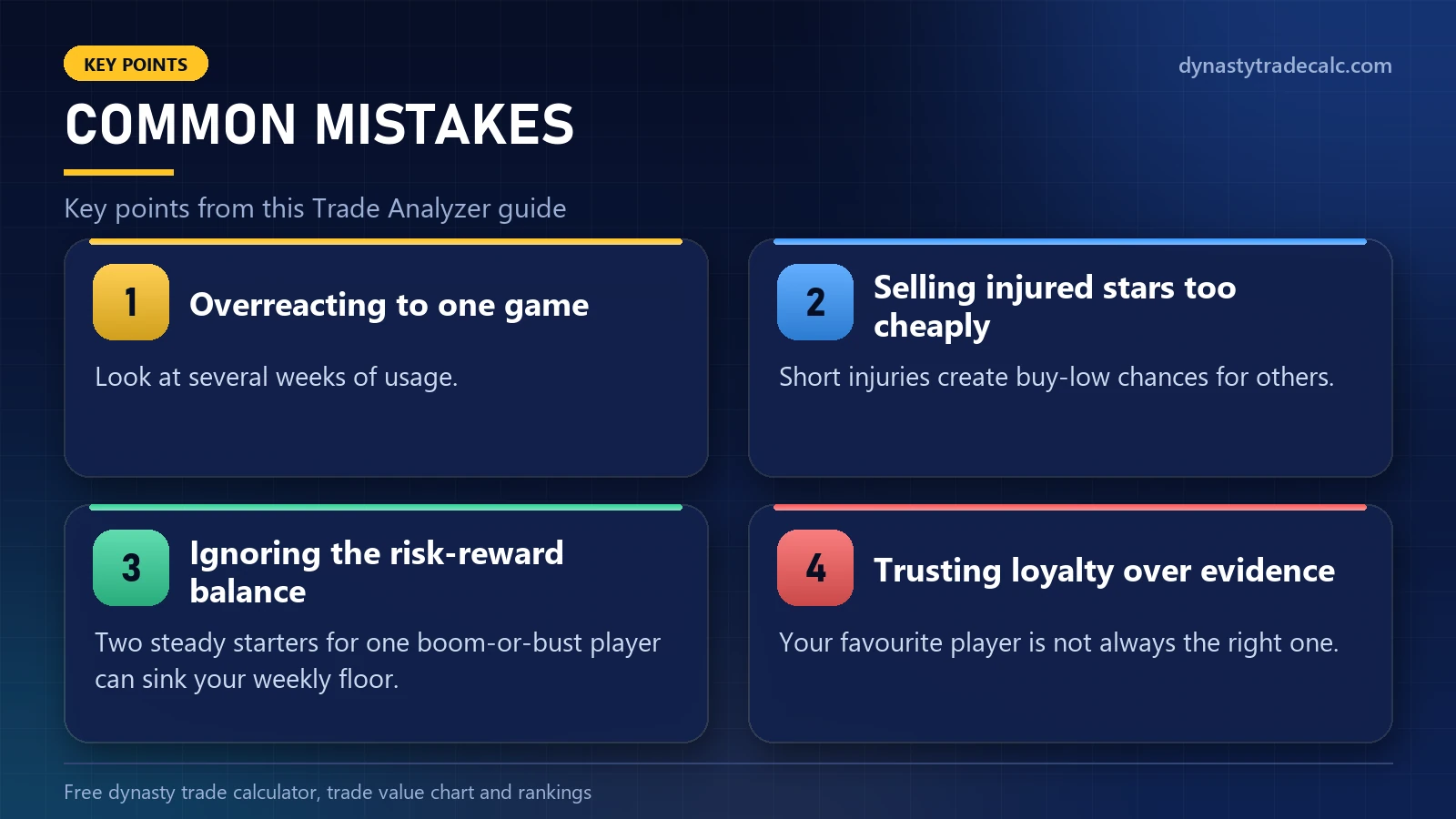
Without a trade analyzer, fantasy managers often chase emotion. They overreact to one bad game. They sell injured stars too cheaply. They accept big names without checking lineup fit. This is how good rosters quietly lose power.

Mistakes also happen when managers ignore scoring format. A player may be better in PPR than standard scoring. Another may be stronger in dynasty than redraft. Tools like a dynasty league trade calculator help with those deeper format gaps.

Entering Trades Too Early

Entering too early means buying before you understand the situation. Maybe a backup had one strong week because of a temporary injury. If you trade too quickly, you may pay full price for a short rental.

Ignoring Risk-Reward Ratio

Ignoring risk-reward makes trades dangerous. If you give away two stable starters for one boom-or-bust player, your weekly floor can collapse. The upside may look sweet, but the downside can bite like a cold Sunday wind.

Chasing Losses After Bad Trades

Some managers make a bad trade, then rush into another trade to fix it. That is revenge trading in fantasy form. Slow down. Review your roster, check waivers, study matchups, and make the next move with patience.

Trusting Emotions Over Evidence

Your favorite player may not be the right player. Your least favorite team may still have fantasy stars. Evidence beats loyalty. In football fantasy nfl searches, many users want advice because emotion makes clear thinking harder.

Important Fantasy Football Metrics Every Beginner Should Know

Fantasy metrics help you understand value beyond points. Points matter, of course. Yet volume, efficiency, snap share, targets, carries, routes, and red-zone work explain why those points happened. That knowledge helps you predict future results better.

When using espn fantasy football, learn the basic numbers first. Projection, opponent rank, start percentage, and roster percentage can guide decisions. These metrics are not perfect, but they help you avoid blind moves.

Win Rate

Win rate means how often a player helps you win weekly matchups. It can also describe how often your trade decisions improve your lineup. Do not judge only by one week. Track results across several games.

Risk-Reward Ratio

Risk-reward in fantasy compares safety with upside. A steady wide receiver may score 12 points often. A boom player may score 25 or 3. Your roster decides which type you need more.

Drawdown

Drawdown means a drop in team value or scoring power. For example, injuries and poor trades can lower your weekly projection. If your lineup falls from 130 projected points to 108, your roster has taken a real hit.

Profit Factor

Profit factor in fantasy means total gain from a trade compared with what you gave up. If your new player improves your lineup by six points weekly while the old player loses three, the deal created useful value.

Trade Expectancy

Trade expectancy means the likely long-term result of a trade. A good deal should improve your expected points, roster balance, or future value. In dynasty, this may include draft picks, age, contract security, and future team role.

How to Choose the Best Trade Analyzer Tool

Choose a trade analyzer that matches your league. Redraft managers need weekly projections and injury updates. Dynasty managers need age curves, draft-pick value, and long-term upside. Keeper leagues need a mix of both worlds.

You can also compare tools such as ESPN data, FantasyPros, and other trade calculators. Some users search antasypros by mistake, but they often mean FantasyPros. Others search pros fantasy while looking for expert trade advice.

Easy Dashboard and Clean Reports

A clean dashboard saves time. You should see trade value, roster impact, player outlook, and risk notes without digging through ten menus. If the tool confuses you, you may ignore it when pressure rises.

Accurate Data and Fast Updates

Fast updates matter during NFL weeks. Injury reports, practice status, and depth chart changes can change trade value quickly. A tool with stale data may mislead you. Always compare analyzer results with fresh news before accepting any trade.

Backtesting and Performance Tracking

Backtesting in fantasy means reviewing past trades and asking what happened next. Did the deal improve your lineup? Did your bench become too thin? This habit turns old decisions into lessons instead of regrets.

Beginner-Friendly Trading Insights

Beginner-friendly tools explain value in plain language. They should show why one side wins, where the risk sits, and how the trade affects weekly scoring. Good tools teach you while helping you decide.

Trade Analyzer Comparison Table for Fantasy Managers

A comparison table can make tool selection easier. You do not need the most expensive tool first. You need the tool that fits your league style, budget, and skill level. Simple clarity beats shiny clutter.

Tool TypeBest ForMain ValueWatch Out For
ESPN trade review dataManagers playing fantasy football on espnEasy league context and familiar platformMay need outside research for deeper player value
FantasyPros trade toolsManagers who want expert-based comparisonsRoster sync, rankings, and trade adviceSome advanced features may require paid access
dynasty trade calculator toolsDynasty and keeper managersLong-term value, age, and picksRedraft value may not match dynasty value
Manual spreadsheetCareful managers who like custom trackingFull control over your own processTakes more time and effort

A table cannot make the trade for you. It only clarifies choices. Use ESPN for league context, outside tools for broader value, and your own judgment for negotiation. That three-part method keeps your decisions sharp.

Case Study: A Simple ESPN Fantasy Trade Decision

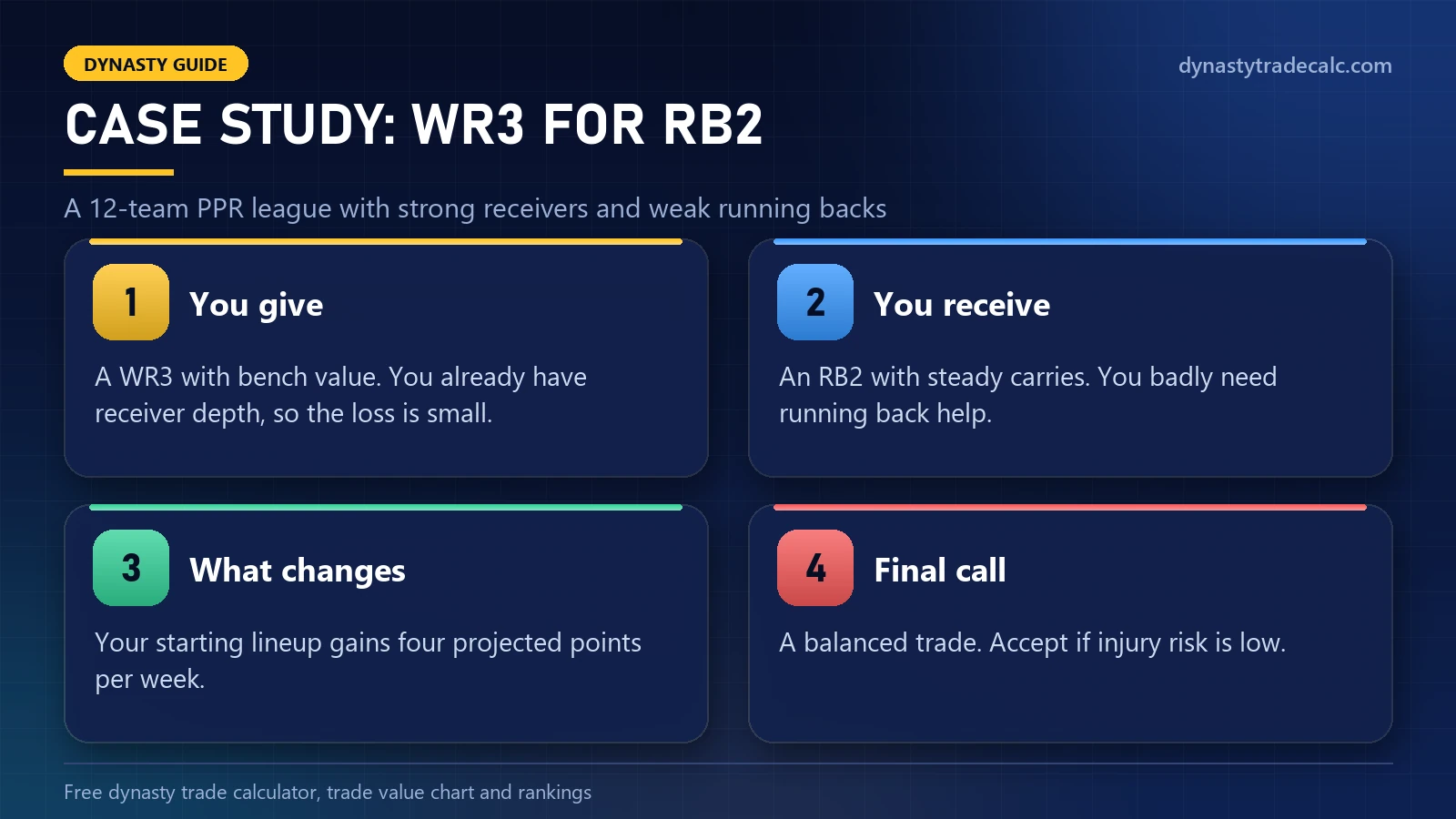
Imagine you play in a 12-team PPR league. Your wide receivers are strong, but your running backs are weak. Another manager offers you a solid RB2 for your WR3. At first, the deal feels boring. Yet boring can be beautiful.

The analyzer shows your starting lineup gains four projected points per week. Your bench loses some depth, but your weekly roster becomes stronger. In this case, the trade makes sense because it fixes a real need without draining your core.

Trade SidePlayer TypeTeam NeedResult
You giveWR3 with bench valueYou already have receiver depthSmall depth loss
You receiveRB2 with steady carriesYou badly need running back helpStrong lineup gain
Final callBalanced tradeBetter weekly scoringAccept if injury risk is low

This example shows why context matters. The same trade may be bad for another team. If that team lacks receivers, giving away a WR3 could hurt. A trade analyzer works best when it reads your roster needs correctly.

Final Thoughts: Is a Trade Analyzer Worth Using?

A trade analyzer is worth using if you want smarter trades and fewer regret moves. It helps you compare value, spot roster gaps, and understand risk before accepting a deal. In espn fantasy, that can separate patient managers from panicked ones.

Still, no tool knows everything. Football is messy. Coaches change roles. Injuries appear. Weather gets weird. Use the analyzer as your trusted helper, not your boss. The final decision should always pass through your own common sense.

Who Should Use It?

Any manager who plays fantasy football can use it. Beginners need it for guidance. Experienced managers need it for confirmation. Dynasty players need it for long-term value. Even confident managers benefit from a second opinion before big trades.

What Results Can You Expect?

You can expect better structure, clearer trade thinking, and fewer emotional mistakes. You should not expect perfect predictions. Fantasy football still has chaos. The goal is not magic. The goal is a smarter process that improves your odds.

Why It Supports Long-Term Fantasy Discipline

Discipline grows when you review trades the same way every time. You check value, need, risk, timing, and playoff impact. Over a season, that process keeps you calmer. It also helps you learn from every move.

5 FAQ’s

What is the best trade analyzer for ESPN fantasy football?

The best tool depends on your league type. ESPN’s own data helps with league context. Tools like FantasyPros can add expert rankings and roster analysis. Dynasty players may also use a dynasty league trade calculator for long-term value.

Can I use a trade analyzer for dynasty leagues?

Yes, but use the right type. Dynasty leagues need age, draft picks, future role, and long-term upside. A normal redraft analyzer may miss those details. That is why a dynasty trade calculator can be more useful.

Is fantasy football on ESPN good for beginners?

Yes, fantasy football on espn is beginner-friendly for many users. The platform offers leagues, rankings, projections, and lineup tools. Beginners should still learn scoring rules, waiver moves, bye weeks, and basic trade value before making big deals.

Does a trade analyzer guarantee better trades?

No tool can guarantee a perfect trade. NFL injuries, coaching changes, and surprise breakouts can change everything. However, a trade analyzer can reduce blind decisions. It gives you a stronger starting point than pure guesswork.

How often should I check trade value?

Check trade value every week during the season. Player roles change quickly. Injuries, bye weeks, and matchups can shift demand. If your league is active, checking after waiver runs and before Sunday games gives you better timing.

Similar Posts

Leave a Reply

Your email address will not be published. Required fields are marked *