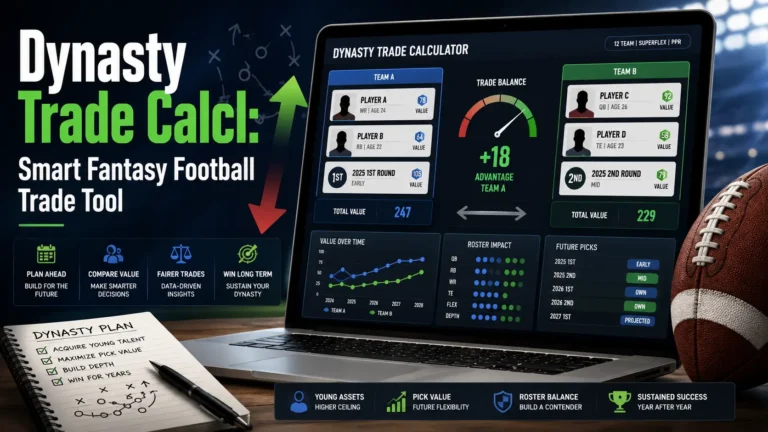
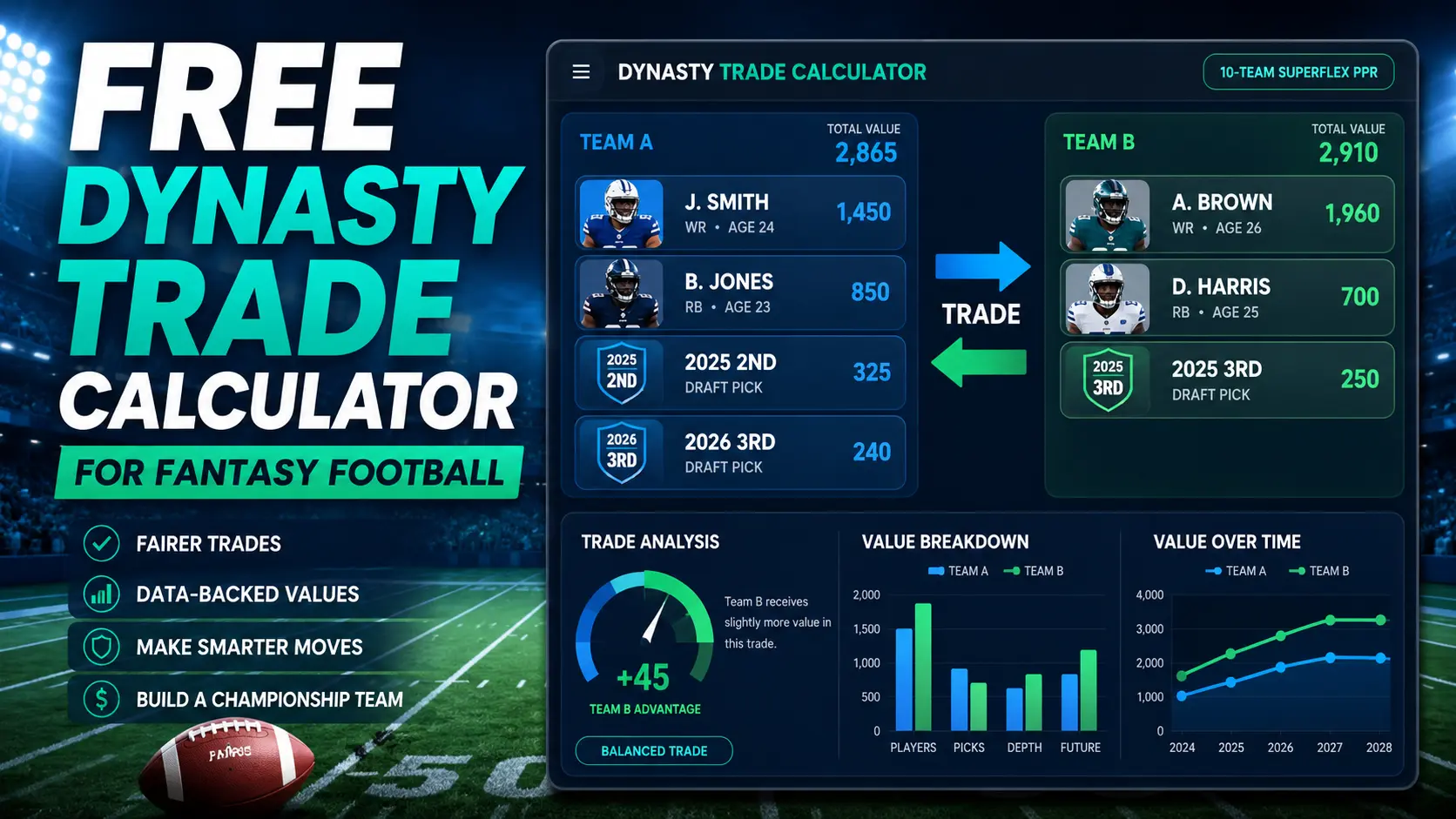
Free Dynasty Trade Calculator for Fantasy Football
A Free Dynasty Trade Calculator can save you from a trade that looks sweet today but stings tomorrow. One shiny name lands in your inbox, and suddenly your careful plan starts wobbling like a cheap folding chair. A smart dynasty trade feels exciting. It can also fool you fast. One shiny name lands in your inbox, and suddenly your careful plan starts wobbling like a cheap folding chair.
That is why dynasty managers need clear trade value. In football fantasy, one deal can shape many seasons. A calculator helps you compare players, rookie picks, league settings, and team direction before emotion grabs the steering wheel.
Many USA managers search for football fantasy pro, fantasy pro football, and football fantasypros when they want fast advice. However, good dynasty trading needs more than a quick yes or no. You need context, timing, and a little common sense.
What Is a Free Dynasty Trade Calculator?
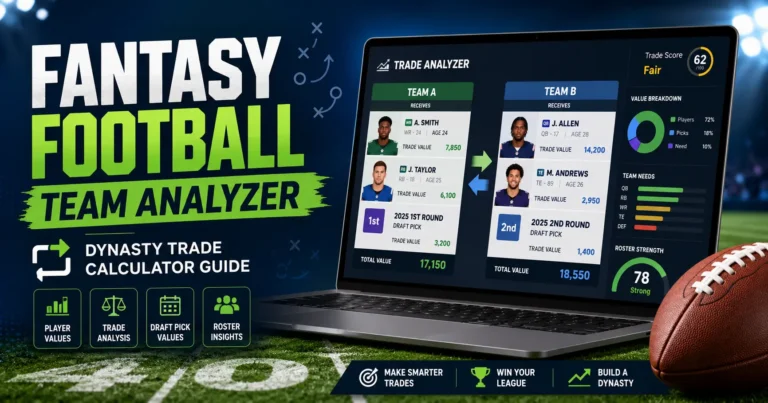
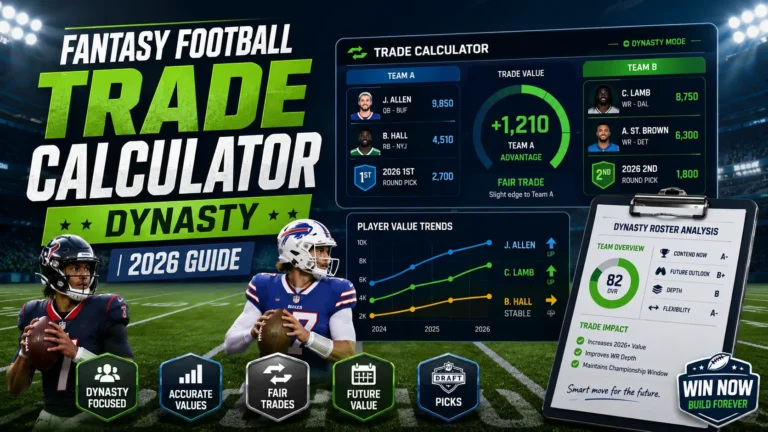
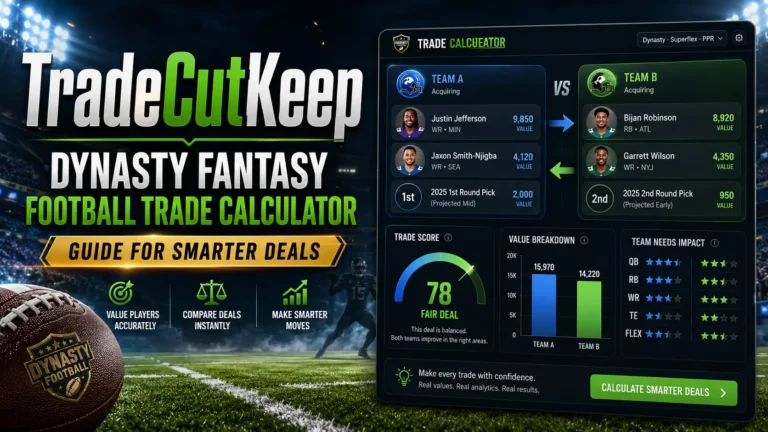
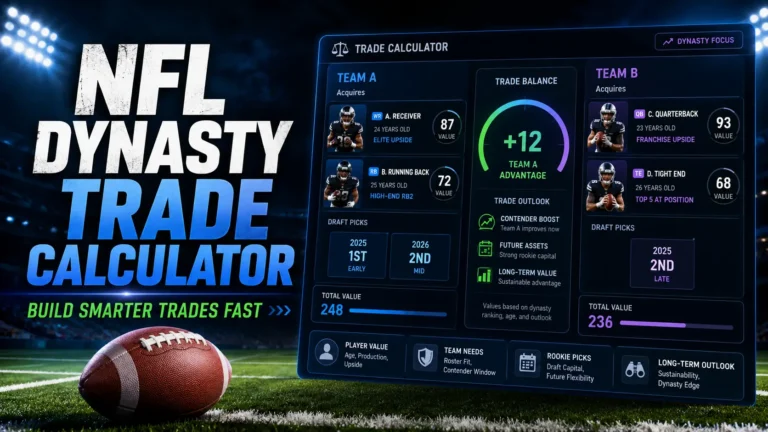
A Free Dynasty Trade Calculator helps you compare long-term fantasy football assets. It looks at players, draft picks, positions, and league format. Then it shows which side of a trade carries more value. This matters because dynasty leagues do not reset every season.
Unlike redraft tools, dynasty calculators think beyond this week. They consider age, role, upside, scarcity, and future draft capital. As a result, you can judge whether a veteran scorer is worth more than a younger player with a longer runway.
Simple Meaning of Dynasty Trade Calculator
A dynasty trade calculator is a trade value checker. You add players and picks on both sides. Then it compares the deal. It does not replace your brain, but it gives you a cleaner view before you accept, reject, or counter.
How It Helps Fantasy Football Managers
Great managers use tools to remove guesswork. A calculator can show hidden value in picks, young players, and position scarcity. For example, a backup quarterback may look boring in 1QB, but he can matter a lot in Superflex.
Why Use a Free Dynasty Trade Calculator Before Making a Trade?
A Free Dynasty Trade Calculator protects you from panic deals. Fantasy managers often react to one injury, one breakout game, or one bad Sunday. However, dynasty value moves slower than weekly points. You need a longer lens before making a serious move.
It also helps you negotiate better. If a trade looks close, you can ask for a small pick upgrade. You may also request a bench player. That tiny adjustment can turn an average offer into a useful roster move.
Avoid Bad Dynasty Trades
Bad trades often start with fear. A player loses touches, and managers rush to sell. Yet one poor week rarely tells the full story. You should study usage, role, age, and team situation before cutting bait.
Compare Player and Pick Value Clearly
Player and pick trades can get messy. A starter gives points now, while a future first gives flexibility later. A good calculator helps you compare both. Therefore, you can see the real trade gap without doing mental gymnastics.
| Trade Part | What It Means | Why It Matters |
|---|---|---|
| Player Value | Current and future worth | Shows roster impact |
| Pick Value | Rookie draft power | Adds future flexibility |
| Position | Scarcity level | Changes market demand |
| Scoring Format | League rules | Adjusts player prices |
| Team Goal | Contend or rebuild | Guides final choice |
How Free Dynasty Trade Calculator Works
A Free Dynasty Trade Calculator usually gives every player and pick a value score. You enter the trade pieces for both teams. Then the tool totals each side. If one side has a large gap, the offer may need adjustment.
Better tools also adjust for settings. Superflex raises quarterback value. PPR boosts players who catch passes. TE Premium helps tight ends. Because of that, the same trade can look fair in one league and poor in another.
Player Values, Pick Values, and Trade Balance
Player value comes from talent, age, workload, and market demand. Pick value comes from draft range and future upside. Trade balance compares both sides. However, a balanced number still needs team context.
Why Age, Upside, and Team Role Matter
Age shows how long value may last. Upside shows the possible ceiling. Role shows weekly opportunity. For example, a young wide receiver with steady targets can outvalue an older running back with a shrinking workload.
Free Dynasty Trade Calculator for Player Values
A Free Dynasty Trade Calculator for player values helps you judge quarterbacks, running backs, wide receivers, and tight ends. Each position behaves differently. Quarterbacks rise in Superflex. Wide receivers often last longer. Running backs can score fast, but they can fall fast too.
Player value also changes with news. Injuries, coaching shifts, rookie competition, and contract changes can move prices quickly. Therefore, you should review trades often. Dynasty value is alive, and it rarely sits still for long.
| Position | Dynasty Value Style | Best Use |
|---|---|---|
| QB | Premium in Superflex | Long-term anchor |
| RB | Strong short-term scoring | Win-now push |
| WR | Stable long-term value | Core build piece |
| TE | Scarce elite edge | Weekly advantage |
| Rookie | Upside asset | Rebuild fuel |
Free Dynasty Trade Calculator for Draft Picks
A Free Dynasty Trade Calculator for draft picks helps you understand rookie value. Picks are flexible currency. They do not score today, but they give you choices tomorrow. Early first-round picks can become cornerstone players or powerful trade chips.
Timing matters too. Rookie picks often gain value before the draft because managers get excited. During playoff pushes, contenders may sell picks for starters. So, smart managers buy picks when quiet and sell them when the room gets loud.
Rookie Pick Value in Dynasty Fantasy Football
Rookie picks carry value because they offer youth and upside. Still, not every pick hits. Early picks usually hold stronger value. Later picks work better as sweeteners. In a dynasty fantasy trade calculator, draft range can change the whole deal.
Early Picks vs Late Picks
Early picks offer higher upside and better player choice. Late picks cost less but carry more risk. However, late picks can still help in deep leagues. Sometimes, one cheap rookie becomes a weekly starter before anyone sees it coming.
| Pick Type | Typical Use | Main Risk |
|---|---|---|
| Early 1st | Build around young talent | High price |
| Mid 1st | Add upside | Player tier drop |
| Late 1st | Contender reload | Less certainty |
| 2nd Round | Trade balance | Lower hit rate |
| 3rd Round | Deep upside bet | Often misses |
Free Dynasty Trade Calculator for League Settings
A Free Dynasty Trade Calculator for league settings matters because rules change prices. In 1QB, quarterbacks are easier to replace. In Superflex, starting quarterbacks become golden tickets. Meanwhile, PPR and TE Premium scoring can push certain players higher.
If you play fantasy football nfl espn, espn nfl fantasy, or nfl fantasy espn, always check roster settings first. League size, starting spots, bench depth, and scoring rules shape value. Ignore them, and your trade read may go sideways.
1QB, Superflex, PPR, Half-PPR, and TE Premium
Each format rewards different assets. Superflex boosts quarterbacks. PPR boosts pass catchers. TE Premium boosts tight ends. Half-PPR sits between standard and full PPR. Because of this, you should never use one generic value chart for every league.
Why League Format Changes Trade Value
Format changes demand. When more teams need quarterbacks, quarterback value rises. When receptions matter more, target earners rise. When tight ends get premium scoring, elite tight ends become difference-makers. The market follows scarcity.
| Format | Who Gains Value | Simple Reason |
|---|---|---|
| 1QB | WRs and RBs | QBs are easier to stream |
| Superflex | QBs | Two QBs can start |
| PPR | WRs and receiving RBs | Catches add points |
| Half-PPR | Balanced players | Mixed scoring impact |
| TE Premium | Tight ends | TE catches score more |
Dynasty Trade Strategy for Contenders and Rebuilders
Every dynasty team needs a lane. If you are trying to win now, buy points. If you are rebuilding, buy future value. The middle feels safe, but it often becomes quicksand. You sink slowly while stronger teams pass you.
Contenders should target stable starters, injury cover, and playoff upside. Rebuilders should chase young receivers, quarterbacks, and draft picks. However, both sides need patience. A great dynasty trade should fit your timeline, not someone else’s screenshot.
| Team Type | Best Goal | Smart Target |
|---|---|---|
| Contender | Win now | Veteran starters |
| Rebuilder | Gain future value | Picks and youth |
| Middle Team | Pick a lane | Flexible assets |
| Strong Team | Upgrade starters | Elite players |
| Weak Team | Build value | Young assets |
Common Dynasty Trade Mistakes to Avoid
The fastest way to lose value is chasing last week. One big game can make an average player look like a league-winner. However, smart managers study snaps, targets, routes, touches, and role. Fireworks look pretty, but usage tells the truth.
Another mistake is ignoring roster fit. If you already have six good receivers, another WR3 may not help much. Instead, fix weak spots. A fair trade still fails if it does not improve your lineup or future plan.
| Mistake | Why It Hurts | Better Move |
|---|---|---|
| Chasing one game | Value may fade | Study role |
| Ignoring format | Prices get distorted | Check settings |
| Overvaluing names | Fame is not value | Compare production |
| Selling picks cheap | Future value drops | Time the market |
| No team plan | Trades lack direction | Choose your lane |
Real Dynasty Trade Examples and Case Studies
Imagine a rebuilding manager receives a veteran running back for a future first. The veteran may score right now. Still, the pick gives more future flexibility. If that manager cannot win this season, the future first likely fits better.
Now picture a contender trading a late first for a proven starter. That move can make sense. Points matter when a title is close. As the saying goes, “Flags fly forever.” Still, overpaying for a fading player can burn tomorrow.
Example Trade for a Contending Team
A contender sends a late first for a reliable running back. The calculator may call it close. The real question is simple. Does that player improve your weekly lineup? If yes, the deal may be worth the future cost.
Example Trade for a Rebuilding Team
A rebuilder sends an aging starter for a young wide receiver and a second-round pick. That deal may not help this week. However, it builds future value. Dynasty rebuilds work best when every move adds youth, flexibility, or upside.
Best Tips to Build a Winning Dynasty Fantasy Football Team
Winning dynasty teams mix patience with nerve. You need young core players, useful picks, and reliable weekly starters. You also need market awareness. Some league mates overpay for rookies. Others love veterans. Use those habits like a quiet cheat code.
Track your trades in a simple note. Write the offer, your reason, and the result. Over time, patterns appear. A fantasy football discussion forum can help with broad opinions, but your own league market gives the sharper edge.
How to Trade With a Long-Term Plan
Start with your team direction. Then judge every trade against that goal. If you contend, buy useful points. If you rebuild, buy future value. If the trade does neither, walk away. Busy trading is not the same as smart trading.
When to Accept, Reject, or Counter a Trade
Accept when value and team fit both make sense. Reject when the offer weakens your plan. Counter when the deal is close but needs balance. For example, ask for a third-round pick, a younger bench player, or a small upgrade.
FAQs
Is a Free Dynasty Trade Calculator always accurate?
No, a Free Dynasty Trade Calculator is not always accurate. It gives an estimate, not a final truth. You should also check injuries, depth charts, scoring rules, and team direction. Think of it as a helpful co-manager, not your boss.
How often should dynasty trade values be updated?
Dynasty values should be checked often during the season. Injuries, trades, rookies, coaching changes, and depth chart moves can shift prices quickly. In the offseason, free agency and the NFL Draft can also change player and pick value.
Does a dynasty trade calculator work for Superflex leagues?
Yes, it can work for Superflex leagues. However, you must choose the right setting. Superflex raises quarterback value because teams can start another QB. If you use 1QB values, the result may look badly wrong.
Are rookie picks more valuable than veteran players?
Rookie picks can be more valuable than veterans in rebuilds. They offer youth, upside, and flexibility. However, contenders may prefer proven starters. The better choice depends on your roster timeline, league market, and the strength of the rookie class.
Can I use a Free Dynasty Trade Calculator for ESPN fantasy football leagues?
Yes, you can use a Free Dynasty Trade Calculator for ESPN leagues. Just match the scoring, roster size, keeper rules, and lineup format. If your ESPN league uses unusual settings, adjust your trade judgment before trusting the final number.