


Table of Contents
- Dynasty vs Redraft: Why the Calculator Has to Be Different
- How a Dynasty Calculator Works
- Features to Look For
- How to Evaluate Players
- Rookies and Draft Picks
- Strategy for Rebuilding and Contending Teams
- Making Fair Trade Offers
- How League Size Changes Values
- Case Study: A Rebuilding Team
- Common Mistakes
- Go Deeper
- Frequently Asked Questions
- Conclusion
- Related Guides
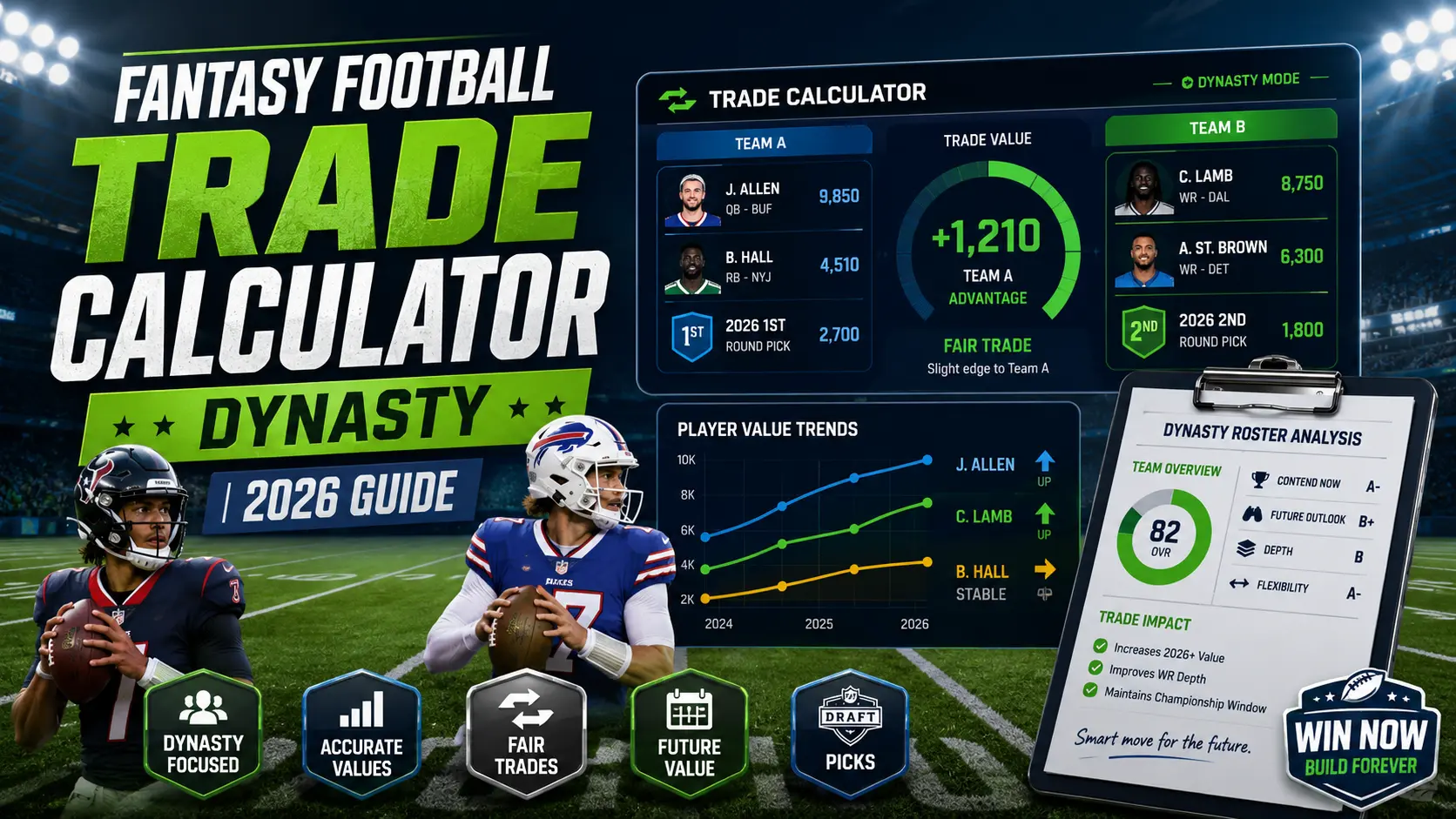
A fantasy football trade calculator dynasty setting compares players and draft picks with long-term values, so you can judge a trade in a league where you keep your roster for years. This guide explains why dynasty needs its own calculator, how to read the result and how to make offers other managers accept.
Dynasty vs Redraft: Why the Calculator Has to Be Different
| What is measured | Redraft calculator | Dynasty calculator |
|---|---|---|
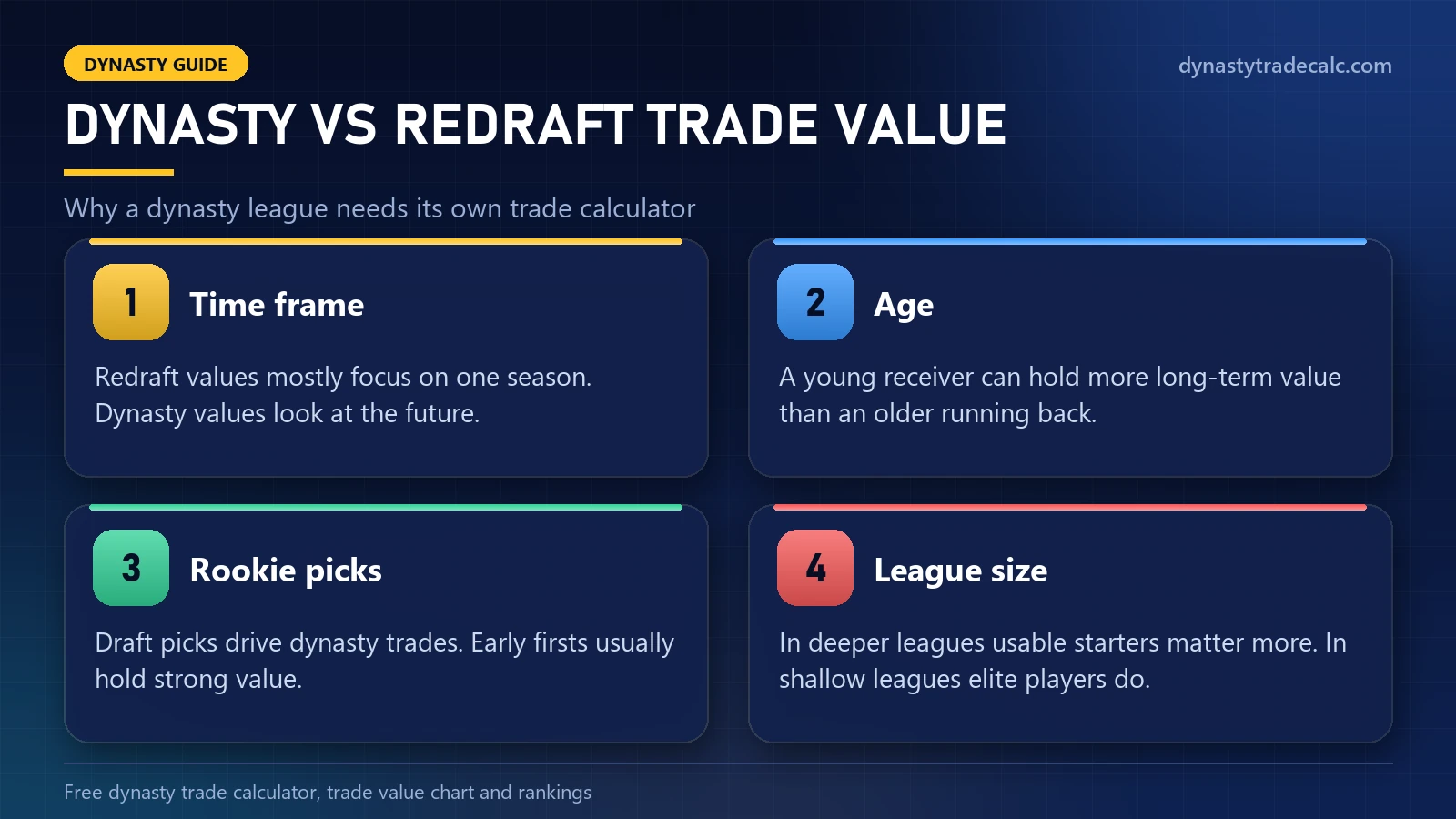
| Time frame | Mostly one season | This season and the seasons after it |
| Player age | Matters little | A young receiver can hold more value than an older running back who scores more today |
| Rookie picks | Current weekly points matter more | Draft picks drive trades and carry their own value |
| What sets the price | Expected points this year | Age, future role, long-term upside and market stability |
A general fantasy football trade calculator and a dynasty one can look alike, but they measure different things. Use a redraft tool in a dynasty league and young players and picks will look far too cheap. Our free dynasty trade calculator is built for dynasty and needs no account.
How a Dynasty Calculator Works
Each value blends rankings, age, position, past production, future upside and market demand. League format then moves the values: Superflex lifts quarterbacks, PPR lifts pass catchers and tight end premium lifts tight ends. The tool adds up both sides and shows the gap.
- Choose your lineup and scoring.
- Enter every player and pick on both sides.
- Read the gap between the totals.
- Check your starting lineup before and after the trade.
- Accept, counter or decline based on your team direction.
Features to Look For
- Lineup settings: 1QB, Superflex and 2QB.
- Scoring: standard, half-PPR and full PPR, plus tight end premium.
- Rookie and future picks on both sides.
- Multi-player trades with both totals shown.
- A visible update date, because dynasty values move every week after injuries and breakouts.
How to Evaluate Players
A fantasy football trade calculator with dynasty values starts the job; you finish it. Start with age, role and scoring format. A 23-year-old receiver with steady targets can carry more value than a 29-year-old running back with a shrinking workload. Then check the depth chart and recent usage, because a player needs snaps and targets to keep his value.
Rookies and Draft Picks
| Asset Type | Usual Dynasty Meaning | Best Fit |
|---|---|---|
| Early first-round pick | High upside rookie asset | Rebuilding team |
| Late first-round pick | Useful but less safe | Balanced roster |
| Future second-round pick | Trade sweetener | Any team |
| Young WR | Long value window | Rebuild or contender |
| Older RB | Short-term points | Contender |
Every fantasy football trade calculator built for dynasty lists picks next to players. Picks are mystery boxes: some become stars and some never start. Price them by range, not by the best player you hope to land. Current values are on our rookie pick values page.
Strategy for Rebuilding and Contending Teams
| Team Type | Smart Trade Goal | Risk To Avoid |
|---|---|---|
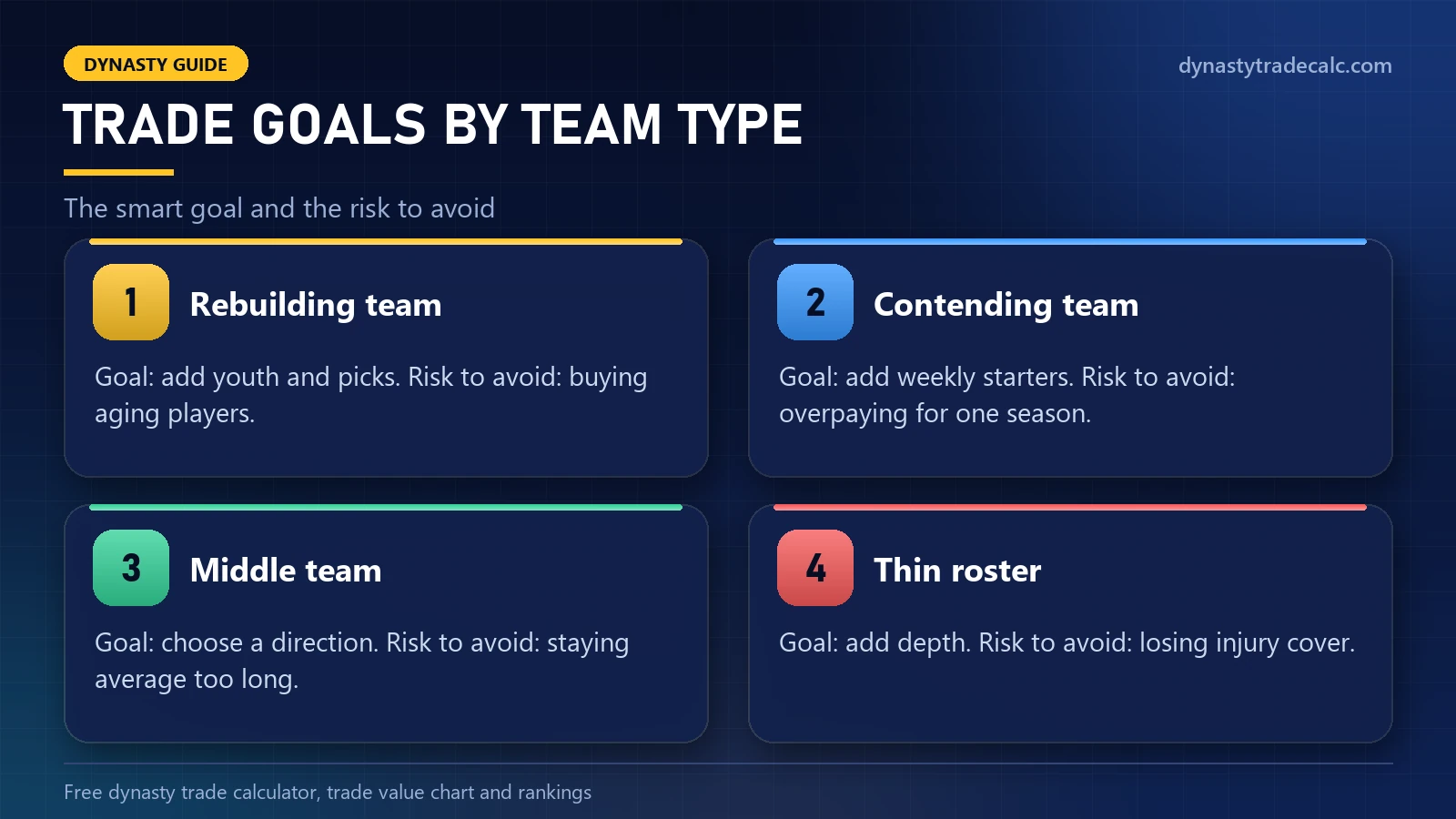
| Rebuilding team | Add youth and picks | Buying aging players |
| Contending team | Add weekly starters | Overpaying for one season |
| Middle team | Choose a direction | Staying average too long |
| Deep roster | Upgrade starters | Hoarding bench value |
| Thin roster | Add depth | Losing injury cover |
Making Fair Trade Offers
Fair offers start with respect. Other managers remember lowball offers, and they stop replying. If you want a star, send real value: a young player, a useful pick or a starter they need. Run the offer through a fantasy football trade calculator with dynasty values first, so your opening offer is already close. Common errors are listed in the biggest dynasty trade mistakes.
How League Size Changes Values
Most fantasy football trade calculators for dynasty assume a standard 12-team league. In a 16-team league, usable starters are scarcer and depth is worth more. In a 10-team league, the waiver wire is deep and elite players matter most. Adjust your reading of the result to your league size.
Case Study: A Rebuilding Team
You are rebuilding and receive an offer: an older running back for your future first-round pick. The back may score more this season, and the calculator may call it close. But your team is not winning this year, and the pick could become a young starter. Decline, or ask for a younger player instead.
Common Mistakes
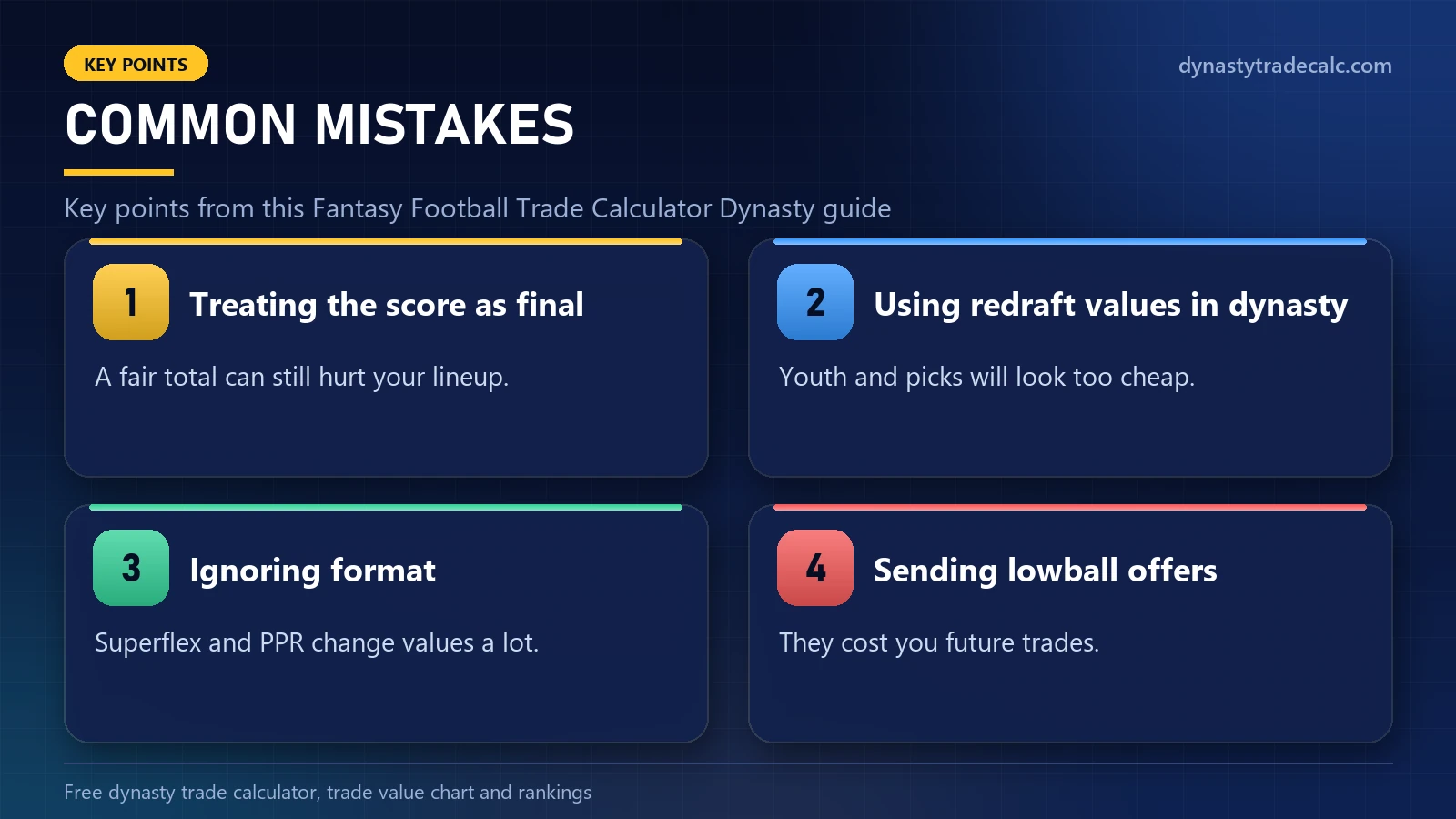
- Treating the score as final. A fair total can still hurt your lineup.
- Using redraft values in dynasty. Youth and picks will look too cheap.
- Ignoring format. Superflex and PPR change values a lot.
- Sending lowball offers. They cost you future trades.
Go Deeper
- trade calculator fantasy football: redraft, keeper and dynasty
- fantasy trade calculator: build and counter offers
- dynasty trade calculator Superflex
Frequently Asked Questions
What is a fantasy football trade calculator dynasty tool?
It is a fantasy football trade calculator set to dynasty values. It compares players and picks in long-term leagues and gives each side of a trade a value, so you can see which side is ahead.
Can I use a regular fantasy football trade calculator for a dynasty league?
Not reliably. A redraft calculator mostly values one season of points, while dynasty values include age, future role and rookie picks. Use a tool built for dynasty.
How should I value rookie draft picks in dynasty trades?
By draft slot, class strength, team direction and league format. Early firsts usually carry premium value, while future picks are discounted a little for the wait.
Does league size change dynasty trade calculator values?
Yes. In deeper leagues, such as 16-team formats, usable starters are scarcer and depth is worth more. In shallow leagues, elite players matter most.
Should I trust calculator values over my own team needs?
No. Let your team needs guide the final call. A calculator may say a trade is fair, but a fair trade can still be wrong for your roster or your timeline.
Is a dynasty trade calculator always accurate?
No. It gives a helpful estimate but cannot know your league, rivals or playoff window. Use it as a starting point and check a second source before big deals.
What is an FF dynasty trade calculator?
FF dynasty trade calculator is short for fantasy football dynasty trade calculator. It compares players and picks with long-term values so you can judge a dynasty trade.
Conclusion
A fantasy football trade calculator with dynasty values is the right tool for long-term leagues. Set your format, price every player and pick, check your lineup and match the trade to your team’s plan. Repeat that on every offer, and small gains will add up over several seasons.
Related Guides
Compare With Other Sources
Our values are estimates, not quotes. It is good practice to compare a trade against KeepTradeCut crowd-sourced dynasty values and FantasyCalc as well. For this season’s values, see our dynasty trade calculator 2026 guide. For a step-by-step comparison routine, see our dynasty trade calculator guide to comparing trades. To read a result line by line, see our dynasty trade analyzer free guide. Playing redraft as well as dynasty? Our guide to the trade calculator shows how to read any trade result.
