Dynasty-Trade-Calculator-1-QB-Smart-Fantasy-Trade-Tool

Dynasty Trade Calculator 1 QB: Smart Fantasy Trade Tool

A dynasty trade calculator 1 qb helps you compare players, rookie picks, and future assets in a one-quarterback dynasty fantasy football league. It gives you a calm value check before you accept, reject, or counter a trade.

Fantasy football trades can feel like chess with shoulder pads. One move can fix your lineup. Another can haunt your roster for two seasons. That is why smart USA fantasy managers use data, context, and format-specific values before making a deal.

What Is a Dynasty Trade Calculator 1 QB and Why Does It Matter?

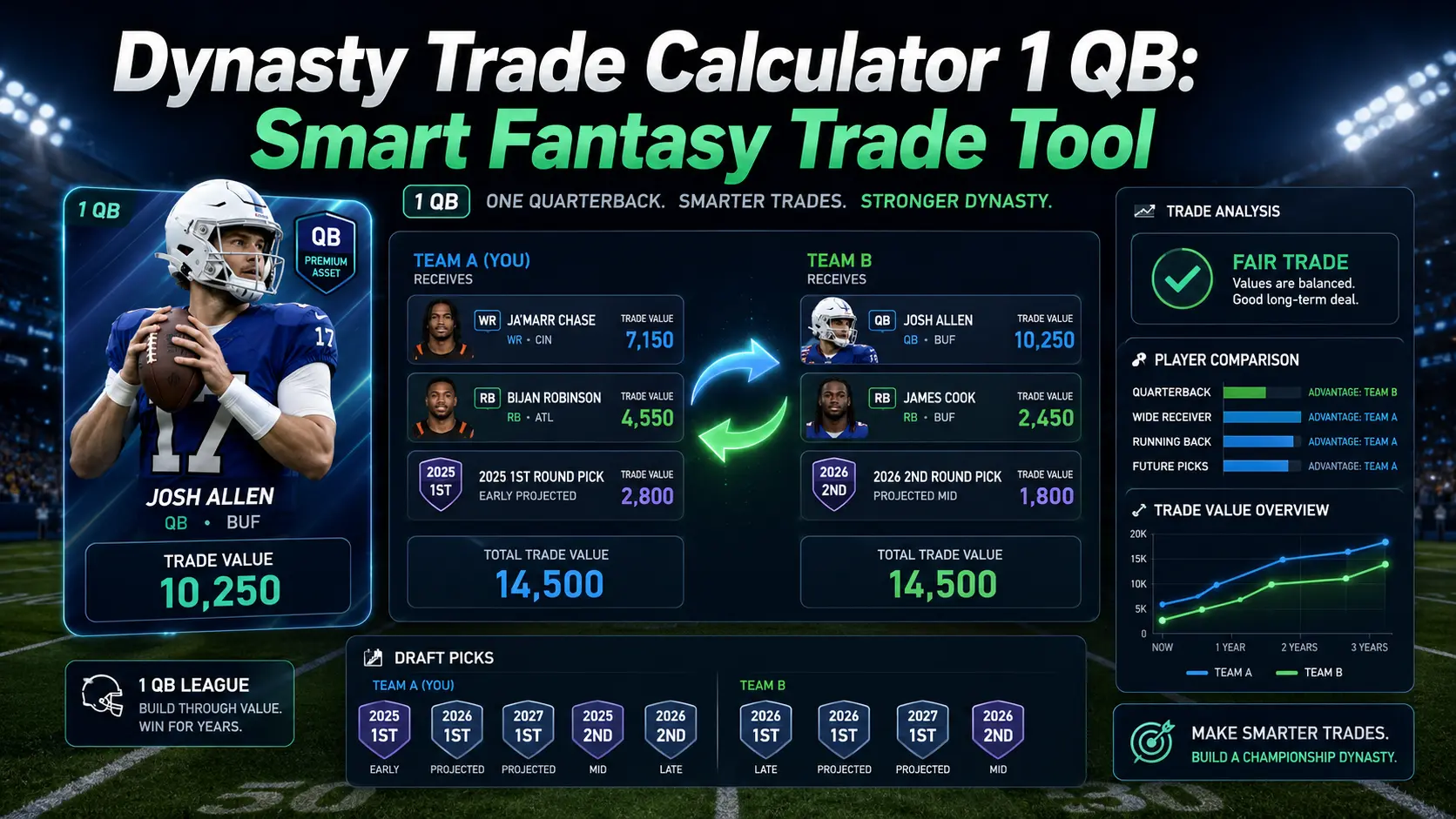
A dynasty trade calculator 1 qb is a trade value tool made for dynasty football leagues where each team usually starts one quarterback. It compares players, picks, age, team role, and long-term upside in one simple view.

This matters because 1 QB leagues value players differently. Quarterbacks still score points, but they are easier to replace than in Superflex. So, wide receiver value, rookie draft picks, and weekly flex production often carry more trade power.

Simple Meaning for Fantasy Football Beginners

Think of it like a trade scale. You place players and picks on both sides. The tool shows which side looks stronger. It cannot replace your judgment, but it can stop you from making a lopsided trade after one exciting Sunday.

Why 1 QB Leagues Value Players Differently

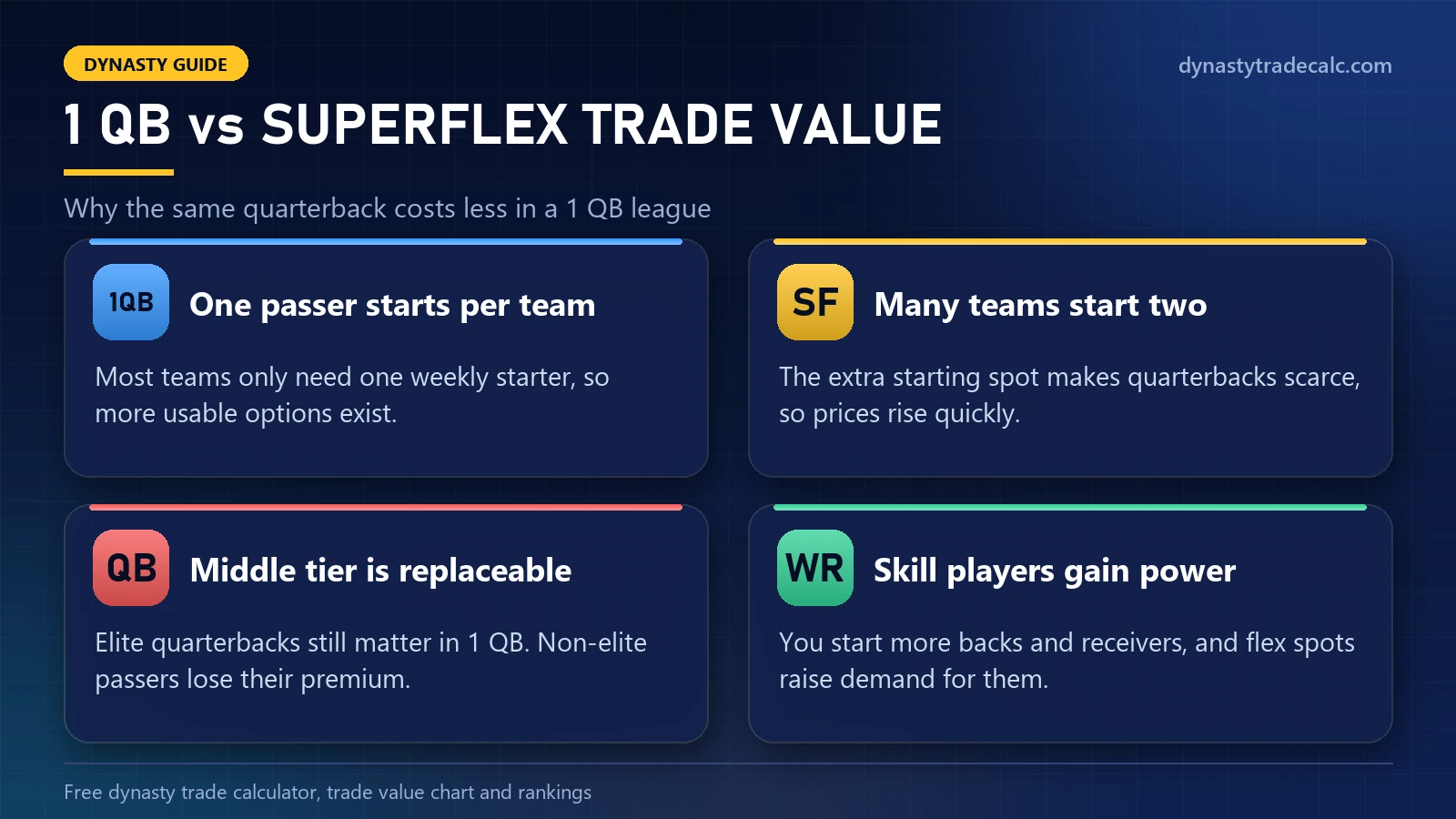
1 QB leagues value quarterbacks lower because most teams only need one weekly starter. That creates more usable options. Meanwhile, running backs, wide receivers, and tight ends fill more lineup spots. Scarcity shifts, and trade prices shift with it.

How This Tool Helps You Avoid Bad Trades

Bad trades often happen when emotion beats logic. A calculator slows you down. It helps you check player age, draft capital, production, and roster fit. You still make the call, but you make it with cleaner eyes.

How a Dynasty Trade Calculator 1 QB Works for Player Values

A dynasty trade calculator 1 qb works by giving values to players and picks based on dynasty format. It may use market data, expert rankings, real trades, or crowd opinion. The goal is simple. It helps you compare trade sides.

However, no tool sees everything. It may not know your league has a manager who overpays for rookie picks. It may not know your team lacks starting receivers. So, use the value as a guide, not a command.

Player Age, Role, Production, and Long-Term Upside

Age matters because dynasty leagues last for years. A young receiver with growing targets may carry more value than an older star. Role matters too. A player with weekly snaps, targets, and trust often beats a famous name with fading usage.

Why Quarterbacks Are Valued Differently in 1 QB Leagues

Quarterbacks lose some market power in 1 QB leagues because replacement options exist. Unless you own an elite scorer, your quarterback may not return premium value. Managers often prefer a strong flex starter or an early rookie pick instead.

How Trade Values Change During the Season

Values move fast during the season. Injuries, depth chart changes, rookie breakouts, and bad quarterback play can reshape a market overnight. That is why a dynasty trade calculator 2025 style update matters. Fresh values beat stale guesses.

Dynasty Trade Calculator 1 QB vs Superflex Trade Calculator

A dynasty trade calculator 1 qb is not the same as a Superflex calculator. In Superflex, teams can start a second quarterback. That extra starting spot turns quarterbacks into scarce assets, so their trade prices rise quickly.

In 1 QB formats, quarterbacks still matter, but they rarely dominate the market. A manager may prefer a young WR2 over a good QB2. That sounds strange to NFL fans, but fantasy value follows lineup demand, not television fame.

Main Difference Between 1 QB and Superflex Formats

The main difference is quarterback demand. In 1 QB, each team usually starts one passer. In Superflex, many teams start two. More demand creates higher prices. It is simple supply and demand wearing a fantasy football hoodie.

Why Quarterbacks Lose Some Value in 1 QB Leagues

Quarterbacks lose value because the position is less scarce. If your starter struggles, you can often stream or trade cheaper. This lowers the premium on non-elite passers. Elite quarterbacks still matter, but the middle tier becomes replaceable.

Which Format Is Better for Dynasty Fantasy Football?

Both formats can be fun. 1 QB feels cleaner for beginners. Superflex adds deeper quarterback strategy. If your league wants more trade drama, Superflex works well. If you want classic fantasy balance, 1 QB offers a friendly path.

Key Features of a Dynasty Trade Calculator 1 QB

A useful dynasty trade calculator 1 qb should handle players, rookie picks, future picks, league size, scoring rules, and multi-player trades. A strong tool should also separate 1 QB values from Superflex values, because those markets behave differently.

Some tools use real trade databases. Others use expert rankings or crowdsourced inputs. You may compare multiple tools such as rotoballer dynasty trade calculator, dlf dynasty trade calculator, and market-based calculators before making a final decision.

Player-to-Player Trade Comparison

Player-to-player comparison helps you judge simple deals. For example, you may compare an aging running back with a young receiver. The calculator gives a baseline. Then you decide whether your roster needs points now or value later.

Rookie Pick and Future Pick Support

A good dynasty football trade calculator with draft picks should value early, middle, and late picks differently. A future first is not always equal. A pick from a weak team may become gold. A pick from a champion may land late.

League Size and Scoring Format Settings

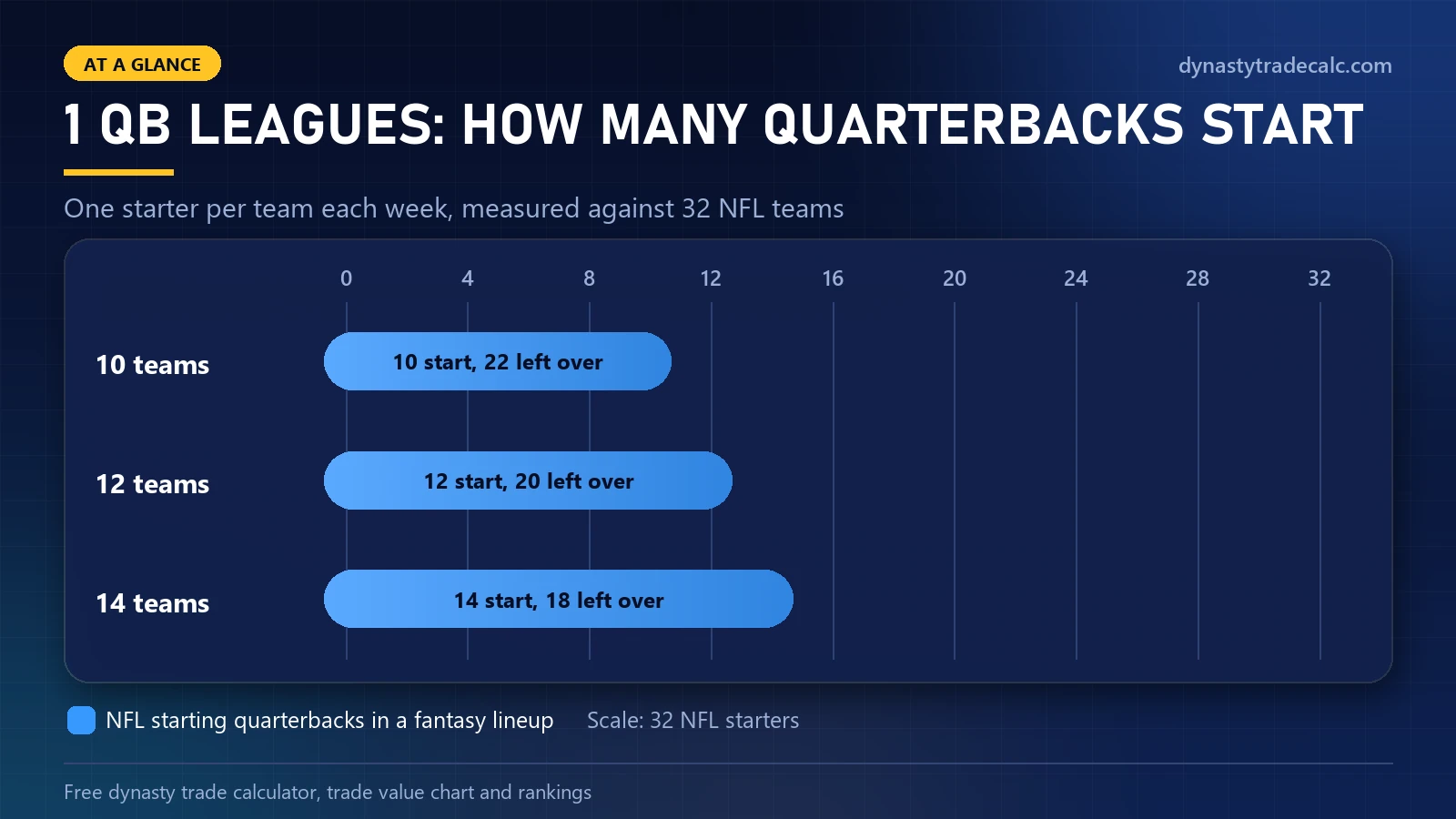
League size changes player value. A 10-team league has more waiver options. A 14-team league makes depth more valuable. Scoring also matters. PPR, half-PPR, tight end premium, and start requirements can change trade results.

Updated Market Values and Player Rankings

Updated values protect you from old information. A player can rise after a breakout or fall after an injury. Tools using current market data help you react faster. Still, do not chase every weekly spike like a squirrel chasing headlights.

How to Use a Dynasty Trade Calculator 1 QB Before Accepting a Trade

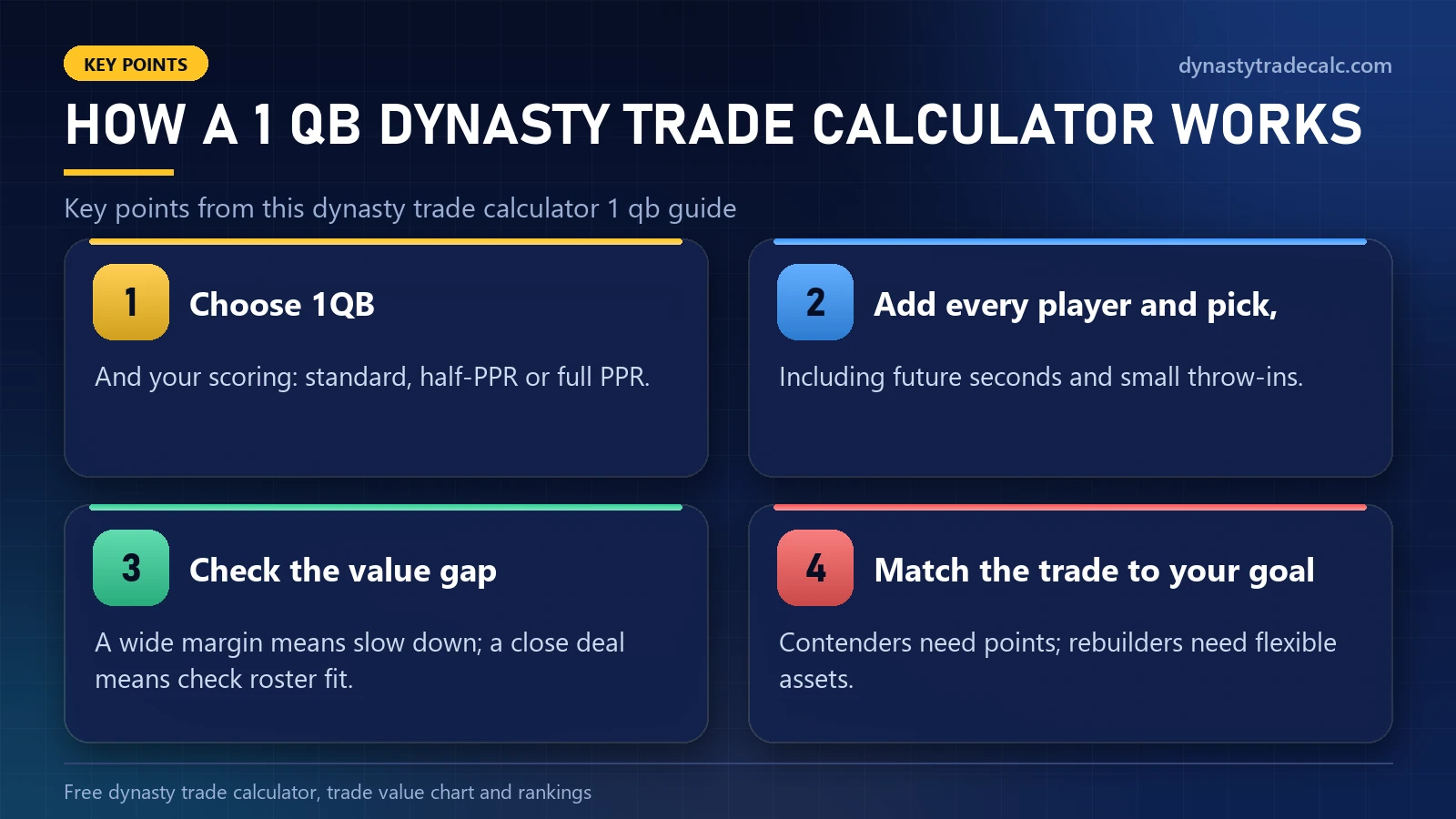
A dynasty trade calculator 1 qb works best before emotions take over. Enter every player and pick. Then choose the correct format. If the tool has league settings, match them closely to your real league.

After that, compare the result with your team plan. A contender can pay for points. A rebuilder should protect youth and picks. A middle team should be careful. Without a clear direction, even fair trades can create roster fog.

Step 1: Add Every Player and Pick

Add all assets in the trade. Include future seconds, thirds, and small players. Dynasty value hides in the corners. A throw-in today can become useful depth later. Missing one asset can make the trade look fair when it is not.

Step 2: Check the Trade Value Difference

Check the value gap between both sides. If one side wins by a wide margin, slow down. If the deal looks close, study roster fit. Fair value means little if your team loses its only strong starter.

Step 3: Match the Trade With Your Team Goal

Your team goal should guide the trade. Contenders need weekly points. Rebuilders need flexible assets. Balanced teams need patience. A dynasty startup draft trade calculator can also help new leagues understand player costs before rosters even form.

Step 4: Accept, Reject, or Counter Smartly

Do not treat every offer as yes or no. Many trades deserve a counter. Add a pick. Swap a bench player. Ask for a younger piece. Good managers negotiate with calm hands, not panic fingers.

Common Mistakes When Using a Dynasty Trade Calculator 1 QB

A dynasty trade calculator 1 qb can help, but blind trust can hurt. Some managers worship the number. That is risky. A calculator cannot fully know your standings, league habits, playoff pressure, or rebuilding timeline.

Another mistake is using the wrong format. If you judge a 1 QB deal with Superflex values, quarterbacks may look too expensive. That can wreck negotiations. Format mismatch is a tiny button with a giant trapdoor.

Overvaluing Quarterbacks in 1 QB Leagues

Managers often overvalue quarterbacks because NFL coverage makes them feel priceless. In fantasy, lineup rules decide value. A top quarterback helps, but a good quarterback rarely deserves the same price as a premium young wide receiver.

Ignoring Rookie Picks and Future Draft Capital

Rookie picks bring flexibility. You can draft prospects, trade during rookie hype, or package picks for veterans. A dynasty fantasy football draft pick trade calculator helps you avoid treating every first-round pick like the same asset.

Trusting the Calculator Without Team Context

A calculator gives a value estimate. It does not know your team has weak running backs or too many bench receivers. If a trade creates a lineup hole, the value score may look fine while your weekly matchup suffers.

Chasing Big Names Instead of Real Value

Big names can trick you. A famous veteran may feel safer than a rising young player. However, dynasty rewards future production. You want the next strong season, not last year’s highlight reel sitting in your starting lineup.

How 1 QB Scoring Changes Dynasty Trade Strategy

1 QB scoring changes your trade strategy because quarterbacks do not carry Superflex prices. You can still value elite passers, but you should not overpay for the middle tier. The format pushes attention toward flex starters and young skill players.

This also changes roster building. You do not need four quarterbacks in most 1 QB leagues. You can turn extra quarterback depth into running backs, receivers, tight ends, or picks. That is where smart managers squeeze value.

Why Elite Quarterbacks Still Matter

Elite quarterbacks still matter because they give stable weekly points. They can win close matchups. However, the gap between a strong QB1 and a replaceable starter may be smaller than people think. Cost matters more than name value.

Why Running Backs and Wide Receivers Gain More Trade Power

Running backs and wide receivers gain more power because you start more of them. Flex spots raise demand. A reliable WR2 or high-volume RB2 can help your lineup more than a second quarterback on your bench.

How Positional Scarcity Affects Trade Decisions

Scarcity drives prices. If many quarterbacks are usable, they cost less. If few running backs get real volume, they cost more. The same logic applies to tight ends. Scarcity turns ordinary supply into expensive fantasy real estate.

How to Value Rookie Picks, Young Players, and Veterans

Rookie picks, young players, and veterans serve different purposes. Picks bring choice. Young players bring growth. Veterans bring points now. A smart manager knows which asset fits the roster window before chasing a shiny trade.

You should also think about timing. Picks rise before rookie drafts. Veterans rise near playoff pushes. Young players rise after role growth. If you understand timing, you can buy before buzz and sell before the music stops.

Early Rookie Picks vs Proven Starters

Early rookie picks offer upside and market power. Proven starters offer known production. A contender may prefer the starter. A rebuilder may prefer the pick. The best answer depends on your roster, draft class, and league trade appetite.

When to Trade Future Picks

Trade future picks when the return truly moves your team forward. If one starter can help you win a title, paying a late first can make sense. If you are chasing a minor bench upgrade, keep the pick.

When to Buy Young Breakout Players

Buy young breakout players before everyone agrees they broke out. Watch snaps, targets, routes, and coach trust. If usage grows before the price jumps, you may find value. That window closes faster than a screen door in July.

When to Sell Aging Veterans

Sell aging veterans when their market still respects their production. You do not need to sell every older player. However, if your team cannot win soon, moving an aging starter for picks can protect long-term value.

Best Trade Strategy for Contenders, Rebuilders, and Middle Teams

Your team stage should shape every trade. Contenders need starters. Rebuilders need picks and youth. Middle teams need honesty. A team stuck in the middle can waste years by buying too late and selling too slowly.

However, strategy should stay flexible. Injuries change direction. Rookies surprise us. Veterans rebound. Review your roster every few weeks. Good dynasty managers keep a plan, but they do not chain themselves to it.

Trade Strategy for Win-Now Teams

Win-now teams should pay for players who enter the starting lineup. Bench depth helps, but playoff points matter most. A slight overpay can be fine when the player fixes a real weakness and improves weekly upside.

Trade Strategy for Rebuilding Teams

Rebuilding teams should sell older production before the market collapses. Target young players, rookie picks, and injured discounts. Do not accept weak offers because others know you are rebuilding. You are selling assets, not yard-sale furniture.

Trade Strategy for Balanced Teams

Balanced teams should choose a clear path. If your lineup has a real ceiling, buy carefully. If your team looks average, sell early. Comfortable middle teams often finish sixth, miss prizes, and draft too late.

Real Trade Examples to Understand Fair Player Value

Real examples make trade value easier to understand. Imagine you trade a spare quarterback for a young flex receiver and a future second. In Superflex, that may look light. In 1 QB, it can be smart.

Now imagine a contender trading a late first for a veteran running back. That can work if the player becomes a weekly starter. If he sits on your bench, you bought decoration. A 3 way dynasty trade calculator can help when multiple teams join one deal.

Team TypeExample TradeWhy It Can Work
ContenderLate first for proven RBAdds playoff points now
RebuilderVeteran WR for young player and pickConverts age into future value
QB-Heavy TeamSpare QB for flex starterTurns bench value into lineup help
Startup LeagueMove down for extra future picksBuilds depth and flexibility
Three-Team DealTeam A gets WR, Team B gets QB, Team C gets picksSolves different roster needs

FAQs

Fantasy managers ask these questions because dynasty trading can feel slippery. One format change can flip the answer. One future pick can change the deal. Use these answers as a simple guide before you accept or counter.

Also, compare tools when needed. A fantasy football dynasty league trade calculator, nfl.dynasty trade calculator, or market-based tool can give different values. That is normal. Different tools weigh age, picks, and market behavior differently.

What is the best way to use a dynasty trade calculator 1 qb?

The best way to use a dynasty trade calculator 1 qb is to enter all players and picks, choose 1 QB settings, and compare the result with your roster goal. Use the number as a guide, not a final command.

Is a dynasty trade calculator 1 qb accurate?

A dynasty trade calculator 1 qb can be accurate for baseline value, but no calculator is perfect. League habits, injuries, scoring settings, and team needs change the real answer. Always add human judgment before accepting the deal.

Why are quarterbacks less valuable in 1 QB dynasty leagues?

Quarterbacks are less valuable because each team usually starts only one. That creates more replacement options. Unless the quarterback is elite, managers often prefer strong skill players, tight ends, or rookie picks in major dynasty trades.

Should I trade rookie picks in a 1 QB dynasty league?

You should trade rookie picks when the return fits your timeline. Contenders can move picks for proven starters. Rebuilders should protect early picks unless the offer is strong. Picks keep your roster flexible and tradable.

Can a trade calculator help beginners make better trades?

Yes, a trade calculator helps beginners avoid obvious mistakes. It shows value differences between players and picks. It also teaches format impact. Still, beginners should learn scoring rules, roster needs, and player roles before making major deals.

Should I always follow the calculator result?

No, you should not always follow the calculator result. Use it as a checkpoint. Then review roster fit, risk, standings, and future plan. The calculator shows value, but you make the final football decision.

Extra Note: Why Other Dynasty Calculators Are Not the Same

Some readers search for dynasty trade calculator mlb because baseball also has dynasty leagues. That tool is different from football. Baseball dynasty value depends on prospects, positions, pitching risk, age curves, and long development timelines. You should not use baseball logic for football trades.

The same idea applies across sports and formats. A football calculator should match football scoring. A 1 QB calculator should match 1 QB demand. When your tool fits your league, your decisions become sharper, calmer, and much easier to defend.

Similar Posts

Leave a Reply

Your email address will not be published. Required fields are marked *