How-to-Use-Dynasty-Trade-Calculator-Step-by-Step-Guide

How to Use Dynasty Trade Calculator: Step-by-Step Guide

A single trade can change your dynasty team for several seasons. You might acquire a future superstar. You could also surrender valuable draft capital for a player whose best years have already passed. That uncertainty makes every serious trade feel like a high-stakes puzzle.

A dynasty trade calculator helps you solve part of that puzzle. It compares players and draft picks through estimated market values. It also helps you judge large packages that seem confusing at first glance. However, the final score should guide your thinking rather than replace it.

Learning how to use dynasty trade calculator tools can protect you from emotional decisions. It can also help you create fairer counteroffers. You still need to consider team direction, league rules, positional scarcity, and weekly lineup strength. Numbers matter, yet context often matters more.

This guide explains each step in easy English. You will learn how calculators value players, how league settings change results, and how to examine multi-player offers. You will also see practical examples, useful comparisons, and common mistakes that can damage a promising roster.

How to Use Dynasty Trade Calculator for Fantasy Football Trades

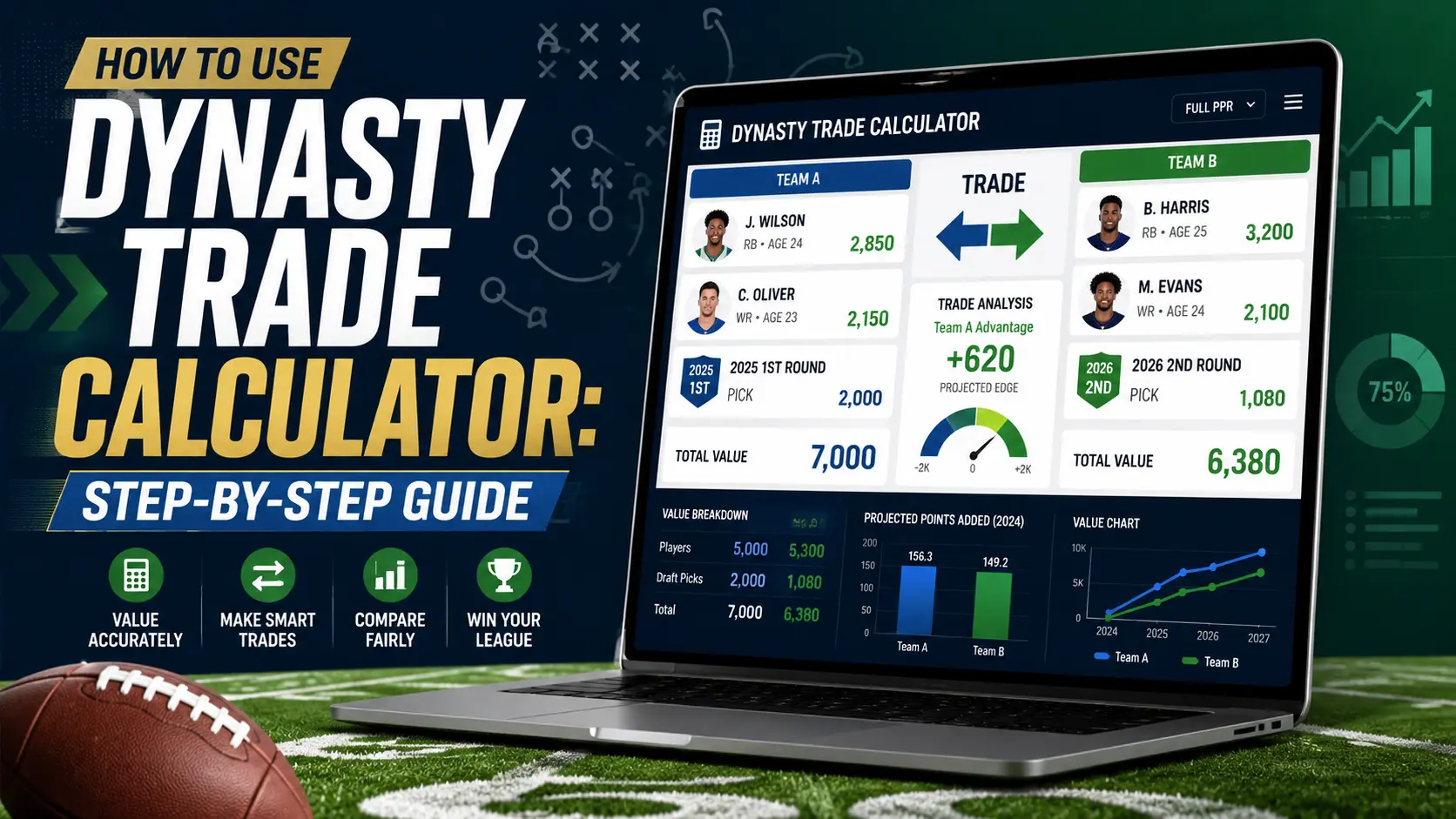
A dynasty calculator turns different assets into comparable numbers. For example, it can compare an experienced running back with a rookie receiver and a future draft pick. Without a shared value system, that comparison becomes difficult. The calculator gives you a neutral starting point for the discussion.

That starting point becomes especially useful when another manager sends a complicated offer. Instead of guessing, enter every asset and review the totals. The result shows whether the trade sits near the current market range. You can then judge how the deal affects your lineup and long-term plan.

A dynasty 101 trade calculator may feel most helpful to new managers. It reduces confusion and teaches the basic relationship between players, picks, age, and positional value. Experienced managers use the same information differently. They search for gaps between public value and their own projections.

The phrase trade calculator fantasy dynasty usually describes a tool built for long-term leagues. Unlike a redraft calculator, it considers future seasons. Youth and job security carry more weight. Draft selections also appear as tradable assets because dynasty rosters continue from year to year.

Why Trade Value Assessments Matter

Dynasty trades rarely involve equal players. One manager may offer a productive veteran for a younger prospect. Another may package three average players for one elite starter. A trade value assessment creates a common scale. It helps you see what each side gives up and receives.

Still, equal totals do not guarantee equal practical value. Two bench players worth 4,000 points each may not equal an 8,000-point weekly starter. The stronger player occupies only one lineup position. That roster efficiency creates an extra advantage that basic totals may not fully capture.

“A calculator measures market value. A smart manager measures market value, lineup impact, and future flexibility.”

The following table shows how different assets may help various team types.

Asset typeMain advantageBest fitMain risk
Elite young playerProduction and long-term securityAny rosterVery expensive acquisition cost
Older veteranImmediate weekly pointsChampionship contenderFast value decline
Rookie prospectGrowth potentialRebuilding rosterUncertain NFL success
Future first-round pickFlexibility and strong demandRebuilder or flexible teamUnknown draft position
Depth playerInjury protectionDeep leagueLimited starting impact

Step-by-Step Instructions on How to Use Dynasty Trade Calculator

Begin by choosing a reliable calculator. Popular options include KeepTradeCut, FantasyCalc, DynastyProcess, and the FantasyPros Trade Analyzer. Each tool uses a different valuation method, so results may vary.

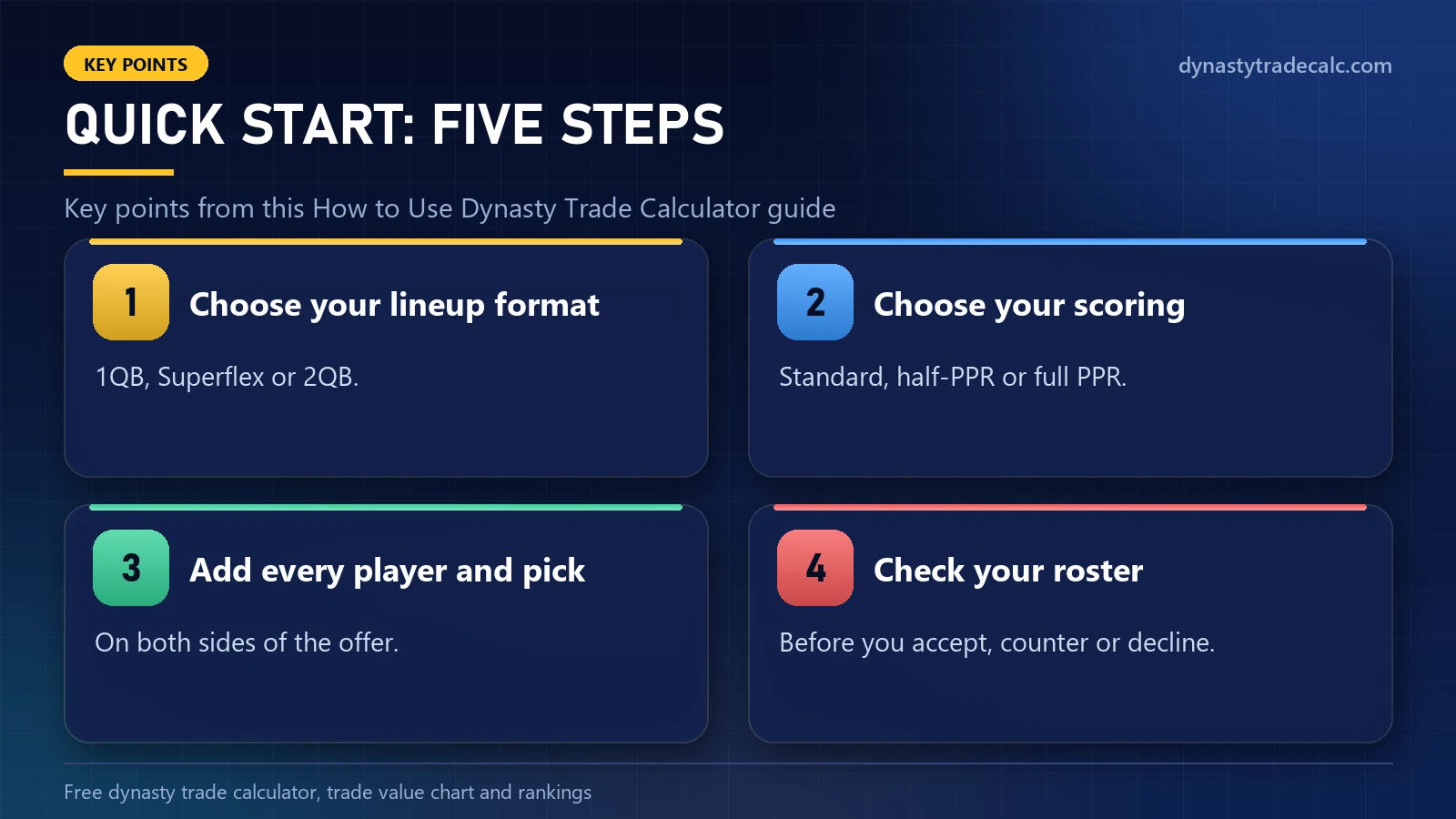
Next, select the correct league format. Enter the number of teams, scoring system, quarterback requirements, and tight-end premium settings when available. These choices matter greatly. A quarterback carries far more value in superflex than in a standard one-quarterback league.

After adjusting the settings, add all players and picks from both sides. Do not leave out smaller pieces. A third-round pick may look unimportant, yet it can close a modest value gap. The calculator will display total values and may recommend an asset that makes the trade closer.

Review the output carefully. Do not accept a deal only because both totals appear green or equal. Ask whether the incoming players will start for your team. Check their age, role, contract security, and injury record. Finally, compare the result with another calculator or current ranking source.

Dynasty Trade Calculator Process

The table below gives you a simple workflow for using almost any dynasty league football trade calculator.

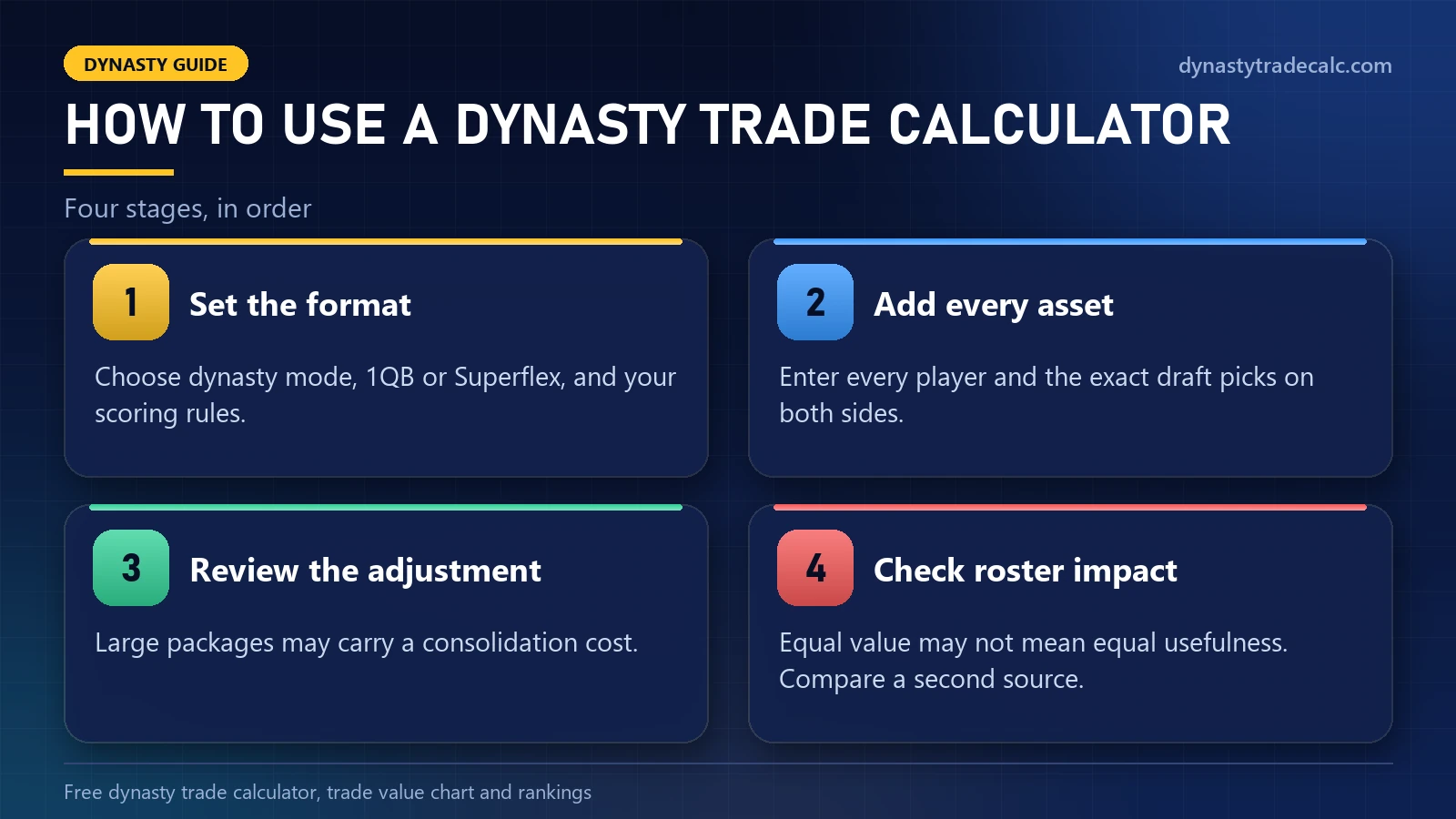
StepActionWhy it matters
1Choose dynasty modeRedraft values ignore long-term usefulness
2Set 1QB or superflexQuarterback value changes sharply
3Select scoring rulesPPR and tight-end premium affect positions
4Add every playerMissing assets produce misleading totals
5Add exact draft picksEarly and late picks have different value
6Review value adjustmentLarge packages may require consolidation costs
7Check roster impactEqual value may not mean equal usefulness
8Compare another sourceA second opinion reveals unusual valuations

Suppose Team A gives a veteran running back and a future second-round pick. Team B gives a younger wide receiver. The calculator may show similar totals. A contender might prefer the running back because he adds immediate points. A rebuilding team may prefer the receiver because he offers a longer career window.

That example shows how to use dynasty trade calculator results properly. First, confirm the numerical balance. Then match the assets to your competitive timeline. Finally, decide whether the deal improves your actual roster rather than merely producing an attractive score.

Understanding Trade Values in Dynasty Trade Calculator

Trade values come from different sources. KeepTradeCut uses crowdsourced player opinions. FantasyCalc studies trades completed in real fantasy leagues. Other platforms use expert rankings, projection models, or blended systems. Therefore, two calculators can produce different answers without either tool being useless.

Age strongly affects dynasty value. A 23-year-old receiver may hold more value than a 29-year-old receiver with similar production. Managers expect the younger player to remain useful longer. However, age should not erase current ability. A productive veteran can still become a league-winning purchase.

Position also matters. Running backs often lose market value quickly because injuries and workload changes can shorten their productive windows. Wide receivers usually hold value longer. Quarterbacks become premium assets in superflex leagues. Tight ends gain importance when the scoring system awards them extra reception points.

NFL contracts create another layer. A player with guaranteed money and a stable role usually feels safer. A veteran approaching free agency carries more uncertainty. Yet contract length alone cannot guarantee opportunity. A coaching change, draft selection, or depth-chart move can alter a player’s role.

Factors That Change Dynasty Value

Value factorPossible positive effectPossible negative effect
AgeYoung players offer longer careersVery young players may lack proven ability
PositionScarce positions receive premiumsReplaceable positions lose leverage
ProductionStrong scoring supports valueOne hot month may mislead managers
NFL roleSecure starters offer stabilityCommittee roles reduce weekly reliability
ContractGuaranteed money suggests securityExpiring contracts create uncertainty
Injury historyClean history lowers concernRepeated injuries increase risk
Team situationStrong offense creates opportunityPoor line or quarterback can limit output
Draft capitalHigh NFL investment supports chancesLow investment weakens job security

A 2025 dynasty trade calculator result may now contain outdated assumptions. Player roles, draft classes, contracts, and team situations change quickly. Therefore, always use current values for present decisions. Older calculators can still show historical market movement, but they should not control a new trade.

Common Mistakes When Using Dynasty Trade Calculator

The most common mistake is treating the calculator as an automatic judge. A balanced score can hide a bad roster move. For example, trading an elite starter for three reasonable bench players may look fair on paper. Yet your weekly lineup could become much weaker.

Managers also forget to enter the right settings. A 1QB calculator will undervalue quarterbacks in superflex. Standard scoring may undervalue high-volume receivers compared with full PPR. Tight-end premium rules can move elite tight ends well above ordinary options at the position.

Another mistake involves overvaluing quantity. Three players do not automatically offer more value than one star. You only have a limited number of starting spots. Extra players may sit on your bench or force you to release other assets. That hidden cost changes the real outcome.

People also rely on old screenshots or saved scores. Dynasty values can change after an injury, trade, coaching decision, or NFL Draft result. Always enter the offer again before accepting it. A calculation from two months ago may no longer represent the market.

How Managers Misread Trade Scores

Imagine a calculator gives Side A a value of 20,000 and Side B a value of 19,300. That difference looks small. However, Side B may receive the best player in the deal. In shallow leagues, elite talent deserves an additional premium because replacement-level players remain easy to find.

The opposite can happen in very deep leagues. Depth becomes more valuable because waiver options offer little help. A two-for-one deal may strengthen several starting positions. Therefore, roster size and available free agents should influence how you interpret the final score.

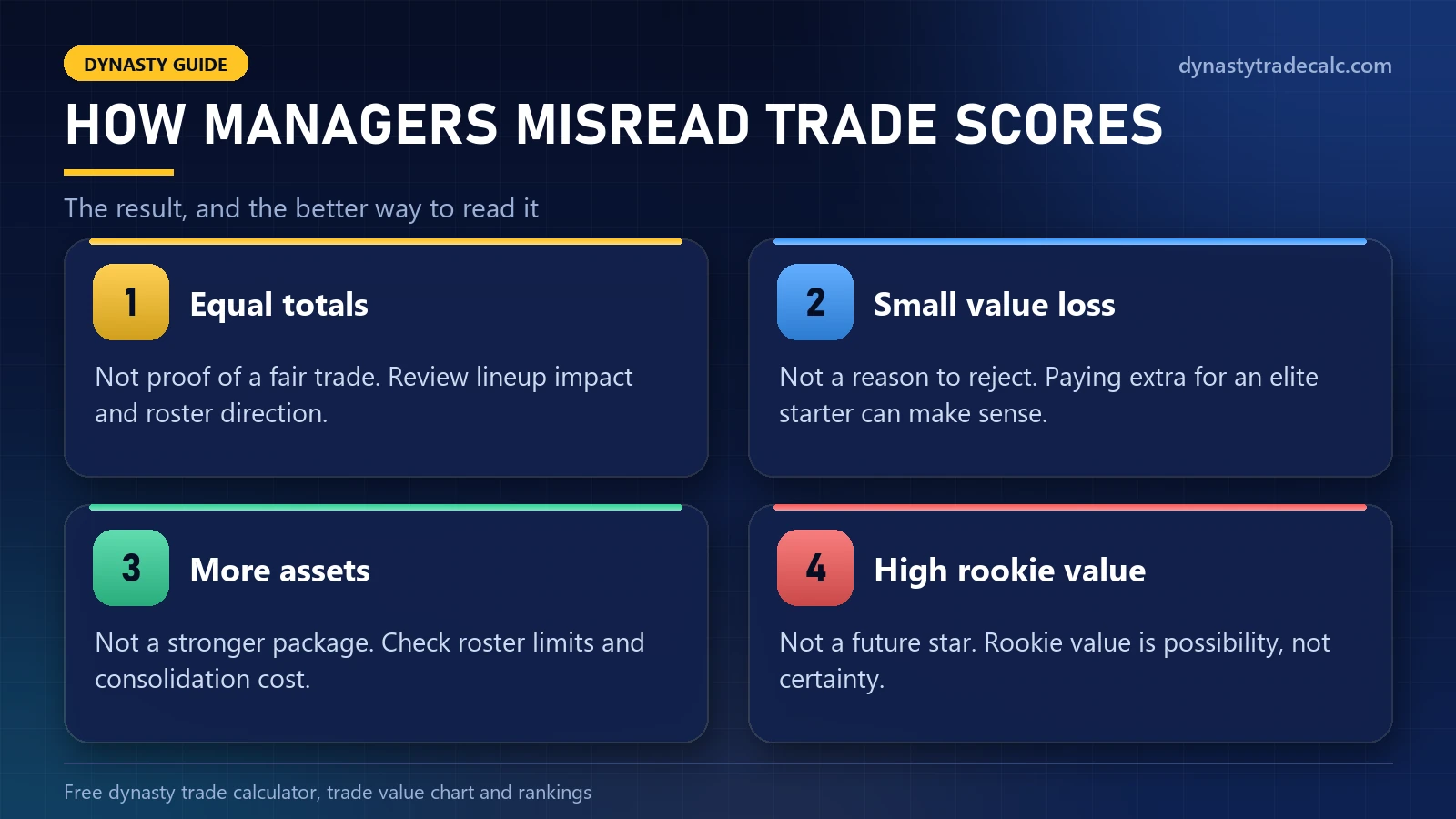
Calculator resultIncorrect conclusionBetter interpretation
Equal totalsThe trade must be fairReview lineup impact and roster direction
Small value lossThe deal must be rejectedPaying extra for an elite starter can make sense
Large number of assetsThe package must be strongerCheck roster limits and consolidation cost
High rookie valueThe prospect will become a starRookie value represents possibility, not certainty
Falling veteran valueThe player has become uselessHe may still deliver valuable weekly points

Tips for Maximizing Accuracy with Dynasty Trade Calculator

Accuracy begins with correct inputs. Match your team count, scoring rules, starting positions, and quarterback format. If the tool cannot copy every setting, mentally adjust the result. For example, starting two tight ends increases scarcity even when the calculator only offers a basic premium option.

Next, compare multiple sources. A crowdsourced market may react quickly to news. An expert model may move more slowly but offer better resistance to temporary hype. A database of completed trades shows what managers actually pay. Together, these perspectives create a more dependable value range.

The fantasypros dynasty trade calculator and analyzer can add roster-based context through expert rankings and league information. Meanwhile, public market tools may show current manager sentiment. One source reveals professional opinion. Another shows what ordinary dynasty players currently believe.

You should also study recent trades in your own league. Every league develops a private economy. One group may overpay for quarterbacks. Another may treat future picks like gold. A public calculator cannot fully understand these habits. Your league history reveals where real negotiating power exists.

Create a Personal Value Range

Do not assign one fixed number to every player. Create a buying price, fair price, and selling price. Suppose a receiver has a public value of 6,000. You may buy at 5,500, consider 6,000 reasonable, and sell above 6,700. This range gives you room to negotiate.

A trade calculator fantasy football dynasty manager should also review current depth charts, injury reports, and team news. The calculator reacts to available information, but markets sometimes move too far. That gap can create buying opportunities for calm managers who understand the player’s likely role.

How to Use Dynasty Trade Calculator for Multi-Player Trades

Multi-player offers often look more attractive than they really are. A long list creates the feeling of abundance. However, several ordinary assets may carry less practical value than one elite player. Enter every piece, then identify the single best asset in the exchange.

Next, review any adjustment applied to the larger package. Some calculators use a value modifier because combining smaller assets into a superstar usually requires an overpayment. This feature reflects roster efficiency. Elite players are difficult to replace, while moderate players appear more often in trade talks.

Learning how to use dynasty trade calculator tools for package deals also means checking roster space. If you receive four players for two, you need two extra spots. You may have to cut useful depth. Include the value of those released players when judging the complete transaction.

Two-Team and Three-Team Trade Comparison

Trade formatMain benefitMain difficultyBest approach
Two-for-oneConsolidates value into a stronger starterRequires an overpaymentFocus on the best player
Three-for-twoCan fix several roster needsExtra assets hide true valueEvaluate each incoming starter
Pick-heavy dealPreserves future flexibilityPick positions remain uncertainUse realistic draft ranges
Three-team dealSolves needs that two teams cannot matchMore moving parts can cause confusionCalculate each team separately

A 3 team dynasty trade calculator is useful when two managers cannot create a direct match. For example, Team A wants a quarterback, Team B wants draft picks, and Team C wants a receiver. A three-team deal can send each asset toward the manager who values it most.

However, many calculators only compare two sides at once. You can still evaluate a three-team trade by creating three separate comparisons. Calculate what each team sends and receives. Then review whether every manager improves according to their roster direction.

Best Practices for Successful Dynasty Trades

Successful trading starts with an honest team assessment. You need to know whether you are contending, rebuilding, or trapped in the middle. A contender should value current points. A rebuilding manager should prefer youth, picks, and flexible assets that can gain value.

Do not rebuild simply because your roster is not perfect. Most championship teams contain weak spots. Compare your projected lineup with the strongest teams in your league. If you can compete, use future assets carefully to improve key positions. If you cannot compete, sell declining veterans before their market disappears.

Timing creates profitable opportunities. Injured stars may become cheaper when their managers need immediate production. Rookie picks often become more expensive near the draft. Veterans can gain demand near the fantasy playoffs. Understanding these market cycles helps you buy and sell more efficiently.

Good communication also matters. Explain why the offer helps the other manager. Avoid sending five unwanted bench players for their best starter. That approach feels disrespectful and rarely begins a useful conversation. A thoughtful opening offer creates room for a serious counteroffer.

Match Assets to Your Competitive Window

Team stageAssets to targetAssets to consider selling
Strong contenderReliable veterans and weekly startersDistant picks or unused prospects
Fringe contenderFlexible starters and affordable depthOverpriced short-term players
Rebuilding teamYoung players and future picksAging players with current demand
Productive struggleInjured stars and discounted youthTemporary breakout veterans
Balanced rosterValue opportunities at any positionAssets trading above your projection

Never trade only to make activity. Every move should improve points, flexibility, age balance, or market value. Sometimes the best decision is declining an offer. Patience prevents you from turning a manageable weakness into a long-term problem.

Alternatives and Complementary Tools to Dynasty Trade Calculator

A calculator works best when combined with other resources. Dynasty rankings help you compare players within each position. Trade databases show completed deals. Average draft position data reveals current startup demand. Rookie mock drafts help you estimate who may remain available at each pick.

The dynasty startup pick trade calculator becomes especially useful during a startup draft. Startup selections lose certainty as the draft continues because the available player pool changes. Pick 3.04 may look attractive before the draft, yet its value depends on which players remain on the board.

DynastyProcess offers a startup display mode and customizable valuation options. FantasyCalc uses real trade data to create market values. KeepTradeCut gathers community opinions. FantasyPros uses expert-driven rankings and league analysis. Comparing these methods can reveal unusual differences worth investigating.

The term dynasty trade calculator football normally refers to American fantasy football tools. A baseball dynasty trade calculator serves a different game. Baseball values depend on categories, prospects, minor-league timelines, pitching risk, and larger rosters. Do not apply football values to baseball trades.

Calculator Comparison Table

ToolMain data approachUseful featurePossible limitation
KeepTradeCutCrowdsourced market opinionsFast reaction to market sentimentCommunity hype may cause sharp swings
FantasyCalcCompleted fantasy tradesShows what managers actually exchangePast trades may reflect unusual league contexts
DynastyProcessExpert-based and adjustable valuesStartup mode and customizationSome settings require manual interpretation
FantasyProsExpert consensus and roster analysisLeague-aware recommendationsSome advanced features may require an account
Personal spreadsheetYour own rankings and league historyFully customized to your strategyRequires regular manual updates

No platform knows your league better than you do. Use public tools for broad market information. Then add local trade history, manager habits, roster needs, and waiver depth. That combination creates a much sharper decision process.

Case Studies: Using Dynasty Trade Calculator to Win Trades

Consider a rebuilding manager who owns an older running back producing strong weekly numbers. A contender offers a future first-round pick and a young receiver. The calculator shows a small advantage for the veteran side. However, the rebuilding team accepts because the new assets match its timeline.

The deal may help both managers. The contender receives points for a championship push. The rebuilder receives two assets that can retain or gain value. This example shows why a trade does not need one clear winner. Different goals can make the same exchange useful for both teams.

Case Study One: Consolidating Depth

Team Alpha owns four startable wide receivers but lacks an elite option. It offers two mid-level receivers for one top player. The calculator shows that Alpha slightly overpays. Still, the trade improves its weekly lineup because the elite receiver replaces one starter while the other outgoing player sat on the bench.

Team Alpha beforeTeam Alpha after
Two moderate weekly startersOne elite starter
Extra bench depthOpen roster spot
Lower scoring ceilingHigher scoring ceiling
More injury protectionGreater reliance on one player

The overpayment makes sense because Alpha converts unused depth into starting power. However, this move would carry more risk in a very deep league. Context determines whether consolidation creates an advantage.

Case Study Two: Buying an Injured Star

Team Bravo is rebuilding and does not need immediate points. A contender owns a young injured quarterback but fears missing the playoffs. Bravo offers a healthy veteran quarterback and a future second-round pick. The calculator sees a close deal, yet Bravo prefers the injured player’s long-term value.

This trade separates current utility from future value. The contender buys healthy production. Bravo accepts short-term inactivity for a younger cornerstone. Both teams use their timelines to turn the same assets into different forms of value.

Case Study Three: Learning From a Poor Deal

Team Charlie sends an elite receiver for three average players because the calculator shows equal totals. Only one incoming player enters the starting lineup. Charlie also drops two useful bench players to create space. The apparent balance disappears once lineup efficiency and roster cuts enter the calculation.

The lesson is clear. Always identify the best player, count usable starting spots, and include hidden roster costs. An equal score does not repair a deal that reduces your weekly ceiling.

How Dynasty Trade Calculator Impacts Long-Term Team Strategy

Dynasty leagues reward managers who think in several timeframes. You need enough present production to compete. You also need younger assets and draft capital to avoid a sudden collapse. Calculators help you compare these goals through a common value scale.

A veteran may score more points today. A young player may carry greater market value because managers expect future growth. Draft picks offer another benefit. They remain flexible because every manager can imagine using them. That liquidity makes picks useful in later negotiations.

However, collecting picks without building a competitive roster can become a trap. Prospects fail. Draft classes disappoint. An endless rebuild may look impressive on paper but never produce a title. Your goal is not to own the youngest team. Your goal is to create sustainable championship chances.

Understanding how to use dynasty trade calculator analysis helps you monitor value movement across your roster. Sell some assets near peak demand. Buy useful players when fear lowers their price. Keep enough flexibility to respond when injuries or unexpected breakouts change the league.

Balance Current Points and Future Flexibility

Roster areaPresent-focused choiceFuture-focused choiceBalanced approach
QuarterbackProven veteran starterYoung developmental passerStable starter plus young backup
Running backHigh-volume veteranFuture picksBuy veterans near contention
Wide receiverProductive prime-age playerYoung breakout candidateBuild around mixed age groups
Tight endReliable weekly producerAthletic prospectAvoid paying for uncertain hype
Draft capitalTrade picks for pointsCollect several future picksPreserve at least some flexibility

Think of dynasty value like a moving river. You cannot freeze it. Injuries, contracts, rookies, and depth charts keep changing the current. A calculator shows the direction today. Your judgment decides when to cross.

Frequently Asked Questions

Is the Dynasty Trade Calculator Free to Use?

Many leading tools provide free calculations. KeepTradeCut, FantasyCalc, and DynastyProcess offer accessible trade comparison features. Some platforms may charge for advanced tools, full league synchronization, or deeper roster analysis. Always review current access details before signing up.

A free calculator usually provides enough information for a basic trade check. However, paid services may save time by importing your league and adjusting recommendations to your roster. The best choice depends on how often you trade and how much customization you need.

Can I Trust the Trade Scores Completely?

No. You should trust the score as one piece of evidence. The calculator cannot fully understand your league’s market, your championship window, or another manager’s priorities. It also cannot guarantee future performance.

Use the score to identify major imbalances. Then examine player roles, age, injury risk, team needs, and starting requirements. Strong decisions combine numerical information with football knowledge and league awareness.

How Often Are Player Values Updated?

The schedule depends on the platform. Some tools update several times per day. Others change after new rankings, projections, or community votes become available. Values often move fastest during free agency, the NFL Draft, training camp, and the regular season.

Check the website’s displayed update time whenever possible. Also compare major news with the current number. If a player changed teams five minutes ago, the calculator may not yet reflect the new situation.

Does It Work for All Fantasy Football Platforms?

Manual calculators usually work with any league because you enter the assets yourself. This includes leagues hosted on Sleeper, ESPN, Yahoo, and other services. The host platform does not matter when you manually create the trade.

Automatic league synchronization may support fewer hosts. It may also require account access or a paid plan. Manual entry remains a dependable option when direct importing is unavailable.

Should I Accept a Trade When the Calculator Says I Win?

Not automatically. First, check whether the incoming assets strengthen your starting lineup. Then review your team direction and roster space. A numerical win may still create a positional weakness or force you to cut useful players.

You should also consider the best player in the trade. In many leagues, elite players deserve a premium. Paying slightly above calculator value can be reasonable when the player gives you a meaningful weekly advantage.

How Should I Value Future Rookie Picks?

Start with the projected round and expected position. An early first carries much greater value than a late first. Yet future standings remain uncertain. A strong team can suffer injuries, while a weak team can improve unexpectedly.

Treat distant picks as value ranges rather than guaranteed slots. Their market usually grows as the rookie draft approaches. However, never assume every first-round pick will become a successful NFL player.

Final Thoughts

A dynasty calculator gives structure to difficult trade decisions. It compares players, picks, and packages through estimated values. More importantly, it slows you down before emotion turns a risky offer into a lasting mistake.

The best managers do not blindly follow one result. They confirm league settings, compare several sources, examine current news, and study their own league’s market. They also understand that equal values do not always create equal roster benefits.

Use calculators as navigational tools rather than final authorities. Match every trade to your competitive timeline. Consider lineup efficiency, player age, roster space, and future flexibility. That balanced approach will help you negotiate smarter deals and build a dynasty roster that can compete for years.

Similar Posts

Leave a Reply

Your email address will not be published. Required fields are marked *