

Table of Contents
- What Is a Trade Analyzer in Fantasy Football?
- Types of Trade Analyzers
- Which Type Do You Need?
- How to Use One Step by Step
- Features of a Reliable Analyzer
- Analyzer vs Manual Review
- A Quick Example
- Benefits
- Tips to Get More From Every Trade
- Common Mistakes
- Go Deeper
- Frequently Asked Questions
- Conclusion
- Related Guides
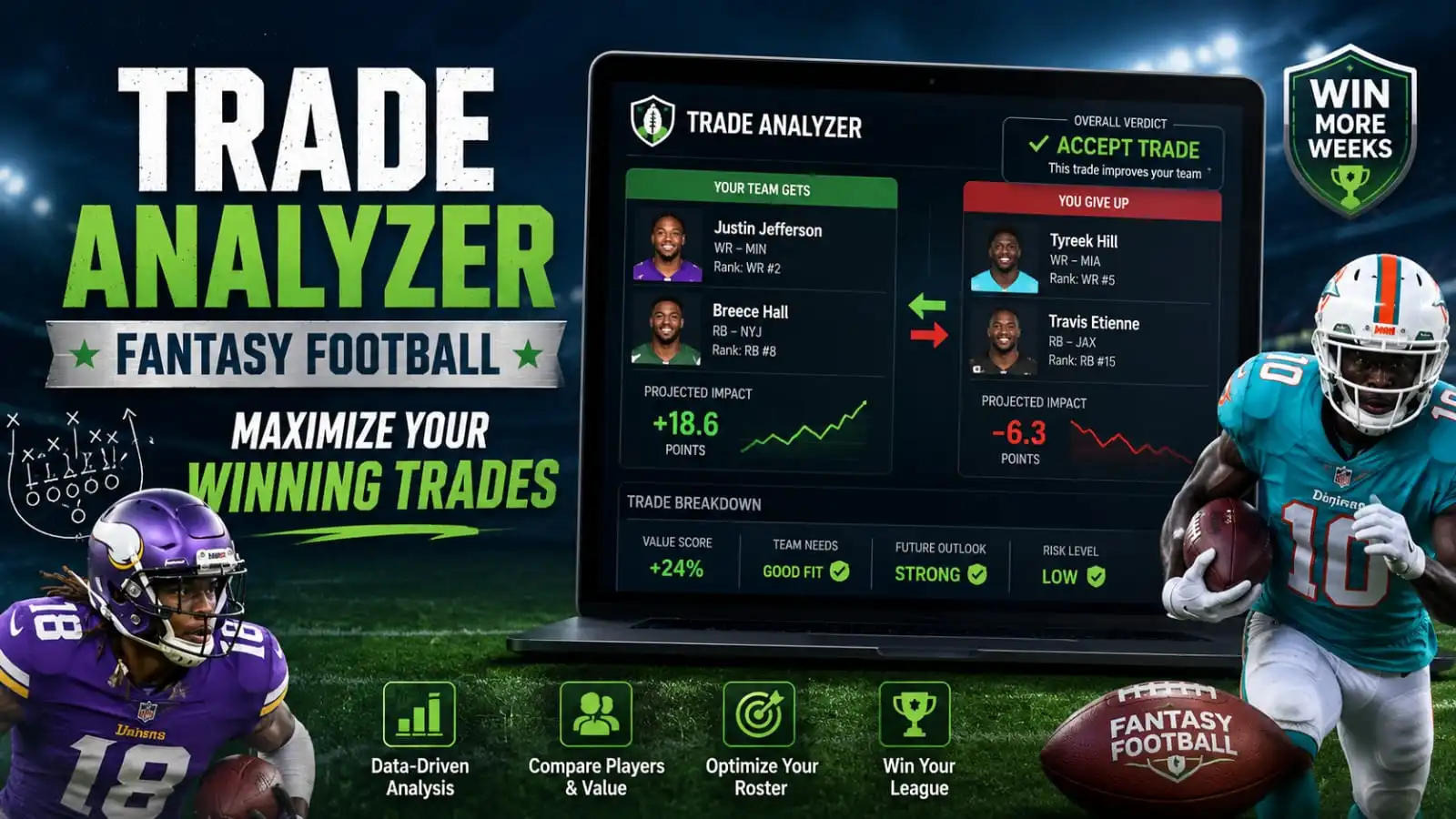
A trade analyzer for fantasy football compares both sides of a proposed deal and shows which side holds more value, before you accept or send it. The right one depends on your league: redraft, dynasty, Superflex or keeper. This guide helps you choose, use and read a trade analyzer for fantasy football.
What Is a Trade Analyzer in Fantasy Football?
You enter both sides of a deal and the tool shows which side gains more. Values can come from weekly projections, expert rankings, market trends or completed trades. A good analyzer understands your league format, so the comparison matches the way your league actually scores.
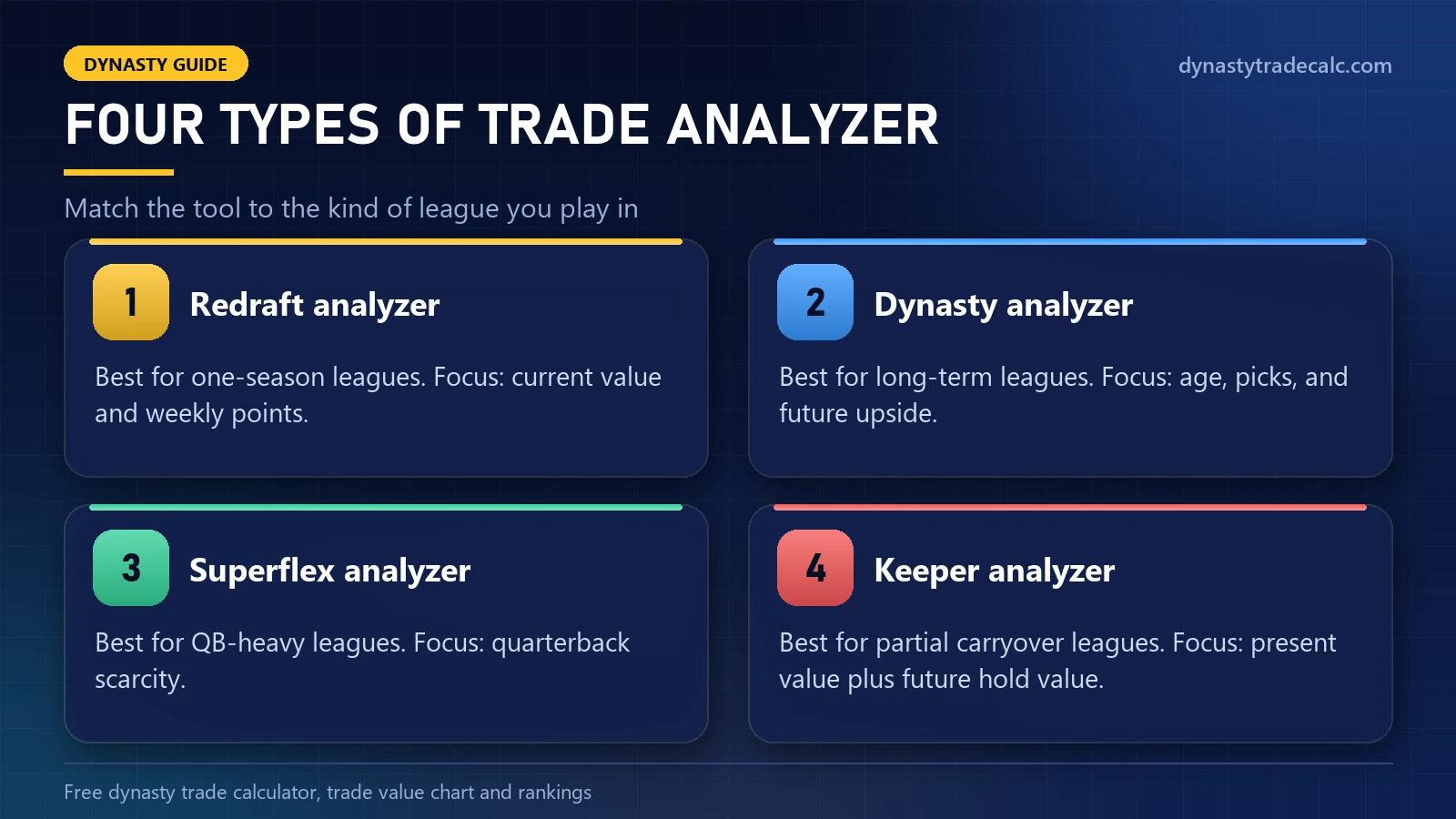
Types of Trade Analyzers
| Type of Tool | Best For | Main Focus |
|---|---|---|
| Redraft analyzer | One-season leagues | Current value and weekly points |
| Dynasty analyzer | Long-term leagues | Age, picks, and future upside |
| Superflex analyzer | QB-heavy leagues | Quarterback scarcity |
| Keeper analyzer | Partial carryover leagues | Present value plus future hold value |
A redraft tool values players by current role, weekly matchups and playoff schedule. A dynasty tool adds age, rookie picks and how long a player will stay useful. A Superflex tool raises quarterback values because teams can start two, and a keeper tool weighs this season plus the keeper cost of next year. Using the wrong type is the most common reason a trade analyzer for fantasy football gives a confident but wrong answer.
Which Type Do You Need?
Different leagues need different tools. Find your league in the first column:
| Your league | Use this type | Check this first | Go deeper |
|---|---|---|---|
| Resets every year | Redraft analyzer | Current role, health and playoff schedule | how to analyze a fantasy trade |
| Rosters carry over | Dynasty analyzer | Age, rookie picks and future upside | dynasty league trade calculator |
| Can start a second quarterback | Superflex analyzer | Quarterback value | dynasty trade calculator Superflex |
| Keeps a few players | Keeper analyzer | Present value plus future hold value | trade fantasy analyzer |
For dynasty leagues, our free dynasty trade calculator values players and rookie picks for 1QB, Superflex and 2QB lineups.
How to Use One Step by Step
- Choose the right league type.
- Enter every player and pick in the deal.
- Add your settings: scoring, lineup and roster size.
- Compare the totals and the gap between them.
- Check your lineup: does the trade fill a weak spot without opening another?
Features of a Reliable Analyzer
- Scoring and lineup settings, including Superflex and tight end premium.
- Draft picks for keeper and dynasty leagues.
- Current values that react to injuries and depth-chart news.
- Multi-player trades with both totals visible.
Analyzer vs Manual Review
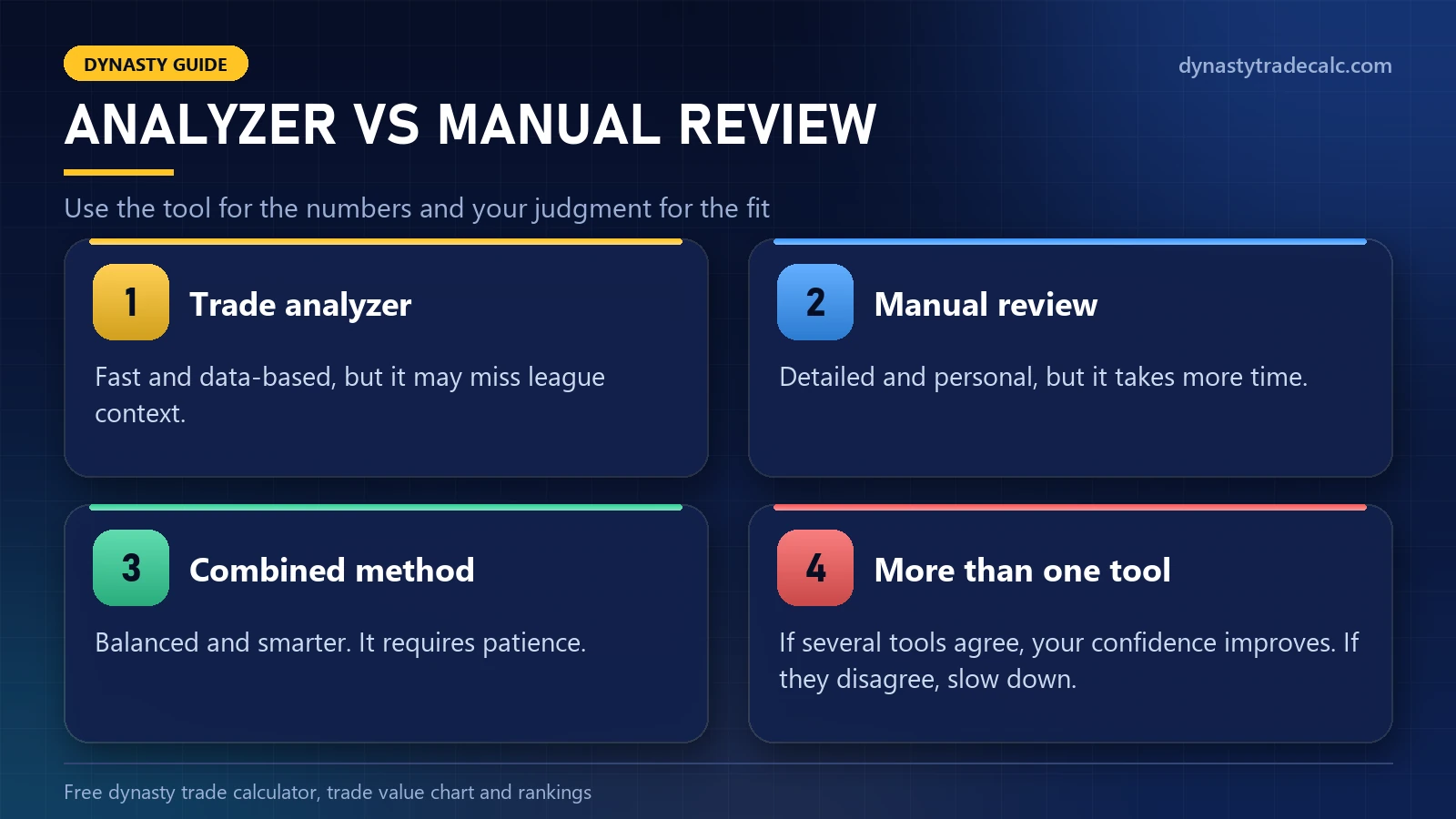
| Evaluation Method | Strength | Weakness |
|---|---|---|
| Trade analyzer | Fast and data-based | May miss league context |
| Manual review | Detailed and personal | Takes more time |
| Combined method | Balanced and smarter | Requires patience |
Manual review gives you control: you can study game logs, snap share, targets and playoff matchups, and you know your league mates. The analyzer is faster and less biased. The combined method is best: let the tool set the price, then use your own review to decide whether it fits.
A Quick Example
You play in a 12-team PPR redraft league. Your receivers are deep, but your second running back is a weekly guess. Another manager offers a steady RB2 for your WR3. The totals in the analyzer are close, so on paper the trade is even. In your lineup it is not: the running back starts every week, while the receiver would have sat on your bench. That is the kind of gain the totals alone do not show, and why you always check your starting lineup after the number.
Benefits
Fantasy football gets heated. One bad game can make you panic and one big game can make you overpay. A quick check slows you down, shows the real gap and helps you send fair offers that other managers take seriously. Nobody likes a lopsided proposal, and fair offers keep trade talks open.
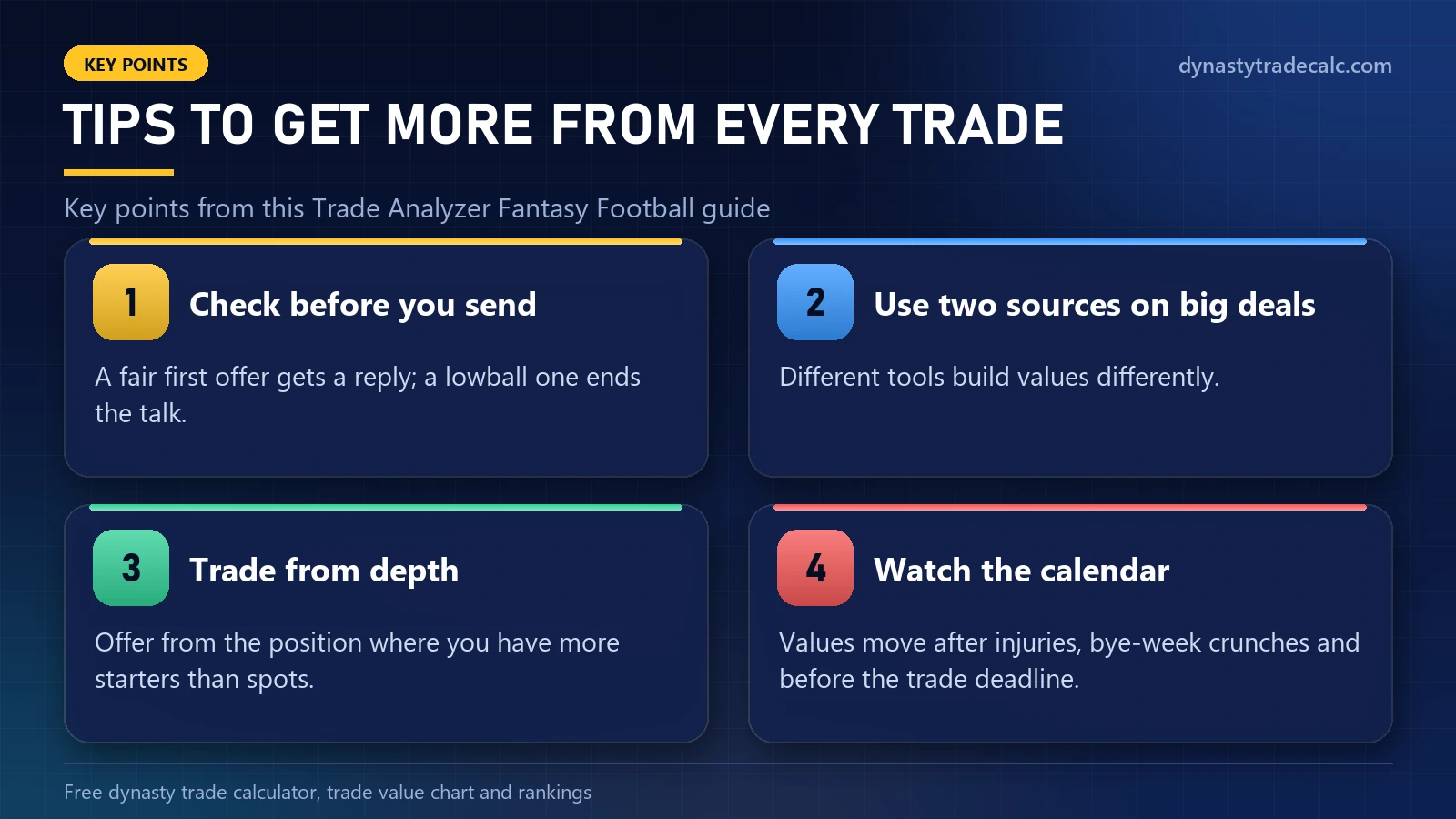
Tips to Get More From Every Trade
- Check before you send. A fair first offer gets a reply; a lowball one ends the talk.
- Use two sources on big deals. Different tools build values differently.
- Trade from depth. Offer from the position where you have more starters than spots.
- Watch the calendar. Values move after injuries, bye-week crunches and before the trade deadline.
- Explain the deal. One line on how it helps the other team gets more trades accepted.
Good second sources are KeepTradeCut crowd-sourced dynasty values and FantasyCalc. For expert consensus, see FantasyPros dynasty rankings.
Common Mistakes
- Trusting the tool too much. It may miss role changes, play-calling trends and your league’s habits.
- Using the wrong type. A redraft tool undervalues youth and picks in dynasty.
- Ignoring roster fit. A fair total can still leave a hole in your lineup.
- Checking only after an offer arrives. Use it before you send one, too.
Go Deeper
This is the main guide in our analyzer series. For a specific angle, see:
- trade fantasy analyzer
- best free trade analyzer tools
- trade analyzer for ESPN leagues
- dynasty trade analyzer free
- dynasty league analyzer
Frequently Asked Questions
Can a trade analyzer guarantee a winning fantasy football trade?
No. It estimates value from the data available, and football changes quickly. Injuries, role changes and coaching decisions can flip a trade, so use the result as a guide.
Is a redraft trade calculator different from a dynasty calculator?
Yes. A redraft tool values this season only. A dynasty tool adds age, rookie picks and future seasons, so young players and picks are worth much more there.
Which trade analyzer should I use for my league?
Match the tool to your league type. Redraft leagues need current-season value, dynasty leagues need age, picks and future upside, and Superflex leagues need higher quarterback values.
When is the best time to use a fantasy football trade analyzer?
Before every serious offer you send or receive. It helps most after injuries, breakout games, bye-week problems and in the run-up to the playoffs.
Is there a free trade analyzer for dynasty fantasy football?
Yes. The dynasty trade calculator on this site is free and needs no account. It compares players and rookie picks for 1QB, Superflex and 2QB leagues with your scoring.
Can beginners use a fantasy trade analyzer easily?
Yes. Most tools only ask for player names and your league settings. The result is a simple comparison that helps beginners learn value quickly.
What is a trade evaluator in fantasy football?
A trade evaluator for fantasy football scores both sides of a deal using player values and your league settings. Many managers search for a trade evaluator fantasy football tool; it is the same as a trade analyzer.
Which fantasy football trade evaluator should I use?
Pick a fantasy football trade evaluator that matches your league type and scoring. Redraft leagues need weekly projections, while dynasty leagues need age and rookie pick values.
How do I do a fantasy football trade analysis?
Match your league format, enter both sides in a calculator and check your starting lineup before and after. A fantasy football trade analysis is that simple routine, repeated for every offer.
Is there a free fantasy football trade analyzer?
Yes. Our dynasty trade calculator is a free fantasy football trade analyzer for long-term leagues with no account needed. Several other sites offer free tools too.
Conclusion
Pick a trade analyzer for fantasy football that matches your league, enter every player and pick, read the gap and check your lineup. Used before every serious offer, it will save you from the trades you would regret and help you find the ones that win you weeks.
Related Guides
Compare With Other Sources
No single analyzer is definitive. Sanity-check a close call against FantasyPros dynasty rankings and FantasyCalc.
