Dynasty League Analyzer: Smarter Trades, Rankings & Roster Value
Table of Contents
- What Is a Dynasty League Analyzer?
- Why Dynasty Managers Need a Dynasty League Analyzer
- How a Dynasty League Analyzer Helps Evaluate Trades
- Understanding Dynasty Rankings and Player Value
- Measuring Roster Value with a Dynasty League Analyzer
- Rookie Draft Picks and Long-Term Team Building
- Common Mistakes to Avoid in Dynasty League Analysis
- Final Thoughts: Build a Stronger Dynasty Team
- FAQs
A Dynasty League Analyzer helps you make smarter decisions in a fantasy football dynasty league before you trade, draft, rebuild, or push for a title. Dynasty fantasy football is not a one-week guessing game. You manage players, picks, risk, age, and future value across many seasons.
That is why dynasty feels like running a tiny NFL front office from your couch. Sleeper explains that dynasty leagues stay active year-round, and every decision can carry long-term impact. That means one careless trade can hurt for years. It also means one smart move can change everything.
What Is a Dynasty League Analyzer?
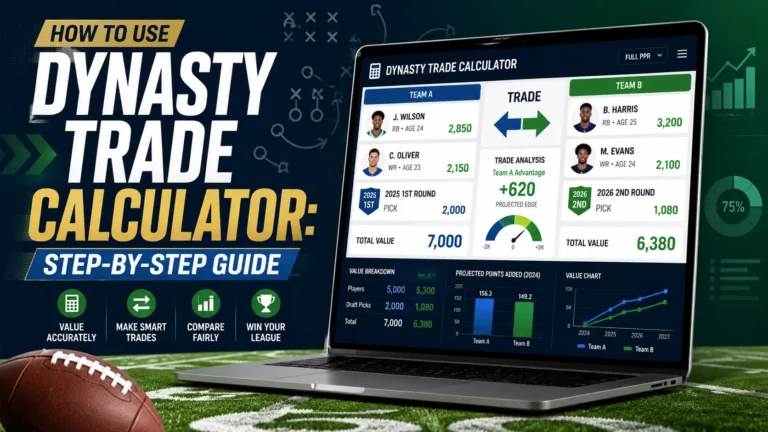
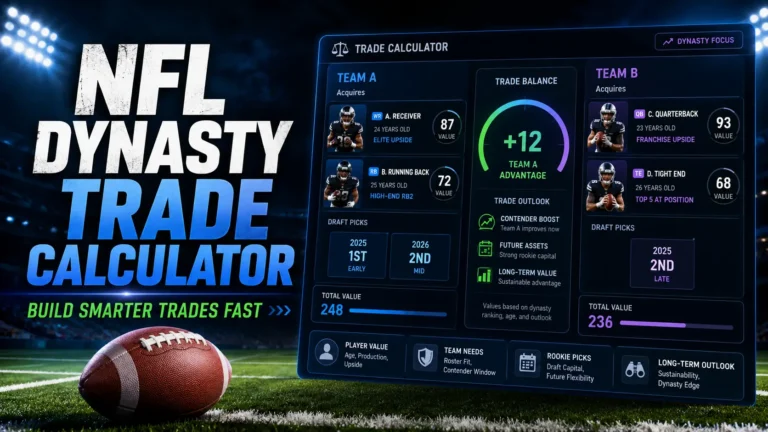
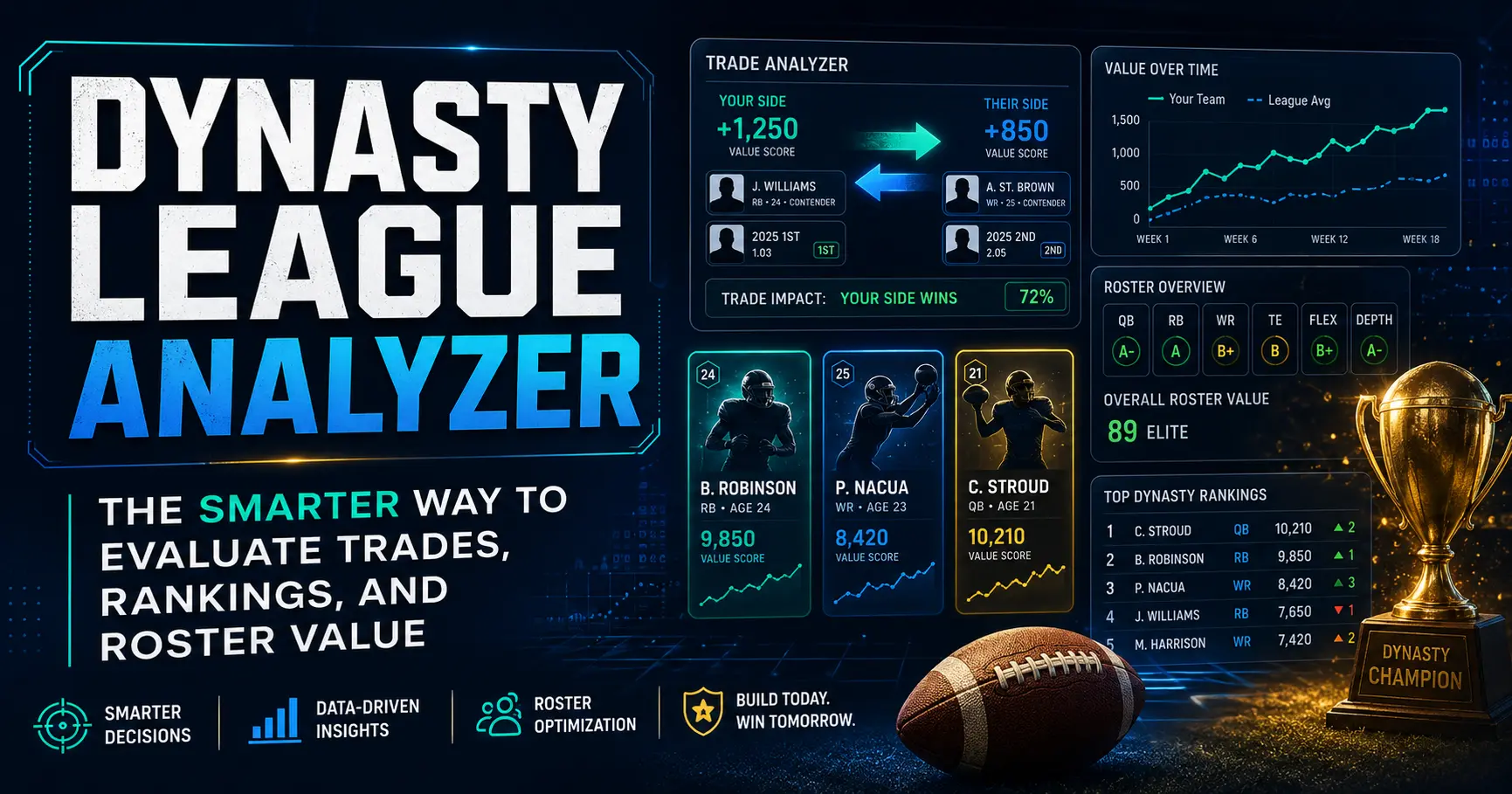
A Dynasty League Analyzer is a tool that helps you judge your roster with clearer eyes. The tool studies players, draft picks, league format, position value, and team direction. It does not replace your football brain. Instead, it sharpens your decision-making. You still make the call, but you make it with better context.
Think of it like a dashboard for dynasty decisions. A normal trade tool may only compare two sides of a deal. A deeper analyzer looks at your full team. It can show whether you need youth, weekly points, bench depth, or future picks. That makes it more useful than guessing from name value alone.
How it works in fantasy football
A strong analyzer compares current production, future upside, age, injury risk, scoring format, and roster need. In a fantasy football dynasty league, those factors matter more than last week’s box score. A wide receiver with stable targets may hold more value than a running back who just had one lucky touchdown.
Why it matters in dynasty leagues
Dynasty is slow cooking, not fast food. Patience matters in dynasty. Timing is equally important. You also need courage when the market overreacts. A useful analyzer helps you spot when a player’s price rises too high or drops too far. That is where smart managers make quiet profit.
Why Dynasty Managers Need a Dynasty League Analyzer
A Dynasty League Analyzer helps you avoid emotional decisions. This matters because dynasty managers often fall in love with their own players. Maybe you drafted the rookie. Perhaps you watched his college clips. At some point, you believed in the breakout. Then he disappoints, and suddenly every trade offer feels insulting.
Good analysis adds calm. It shows whether your team is built to win now, rebuild, or float in the dangerous middle. That middle zone is tricky. Your team may not be weak enough to collect elite picks. At the same time, it may not be strong enough to win. A clear tool helps you choose a lane before your league mates take advantage.
Long-term roster planning
Long-term planning starts with your team timeline. If your core is young, you can wait. If your stars are older, you may need points now. A dynasty team analyzer helps you compare your core players, bench options, and draft picks so your roster moves follow one clear plan.
Avoiding poor trade decisions
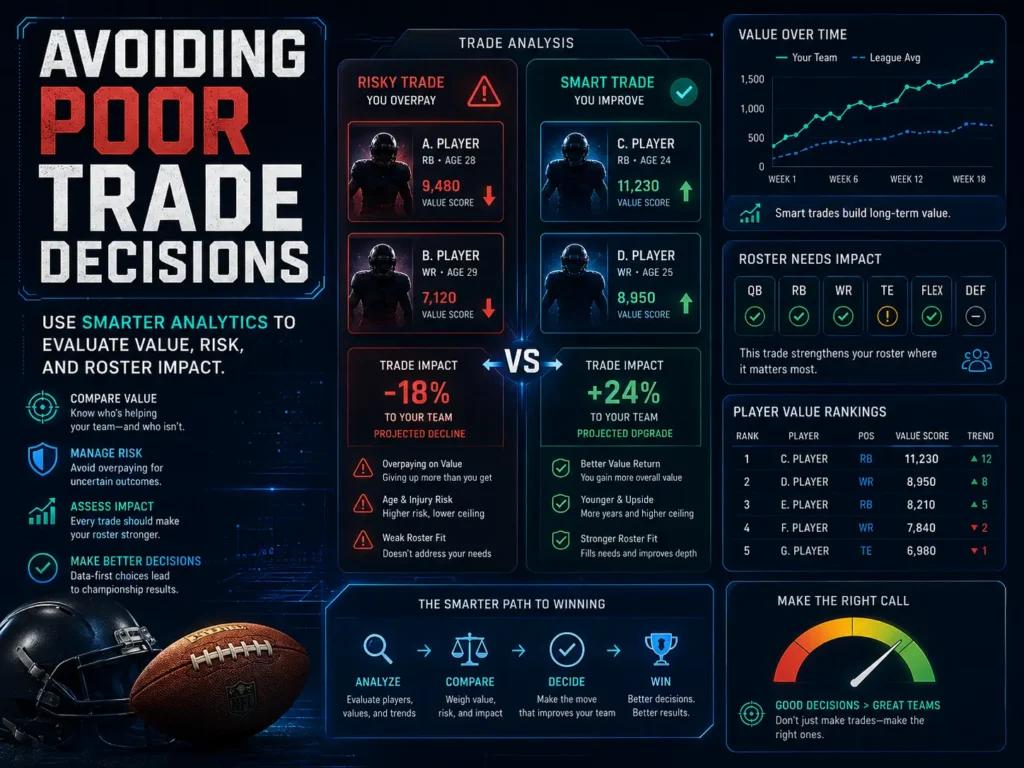
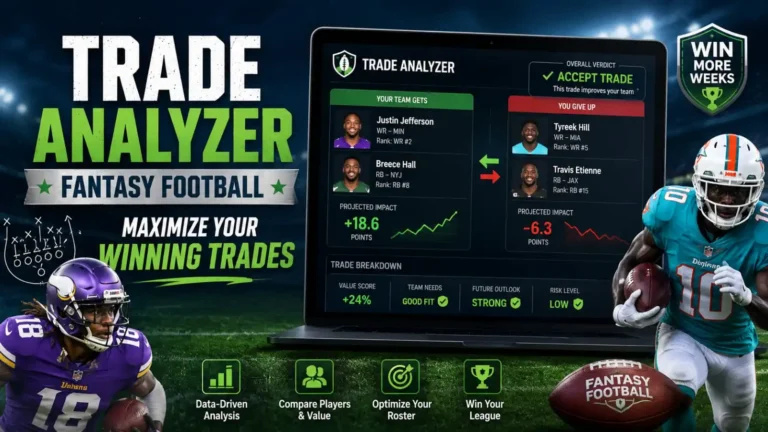
A bad dynasty trade often looks fine at first. Sometimes you get a famous player. Then the league chat reacts. At first, it feels like a win. Then the player ages, loses volume, or gets replaced. A smart tool checks trade analysis fantasy football logic before excitement grabs the wheel.
Tracking player value over time
Player value changes all season. Injuries, coaching changes, rookie buzz, and depth chart moves all shift the market. FantasyPros updates dynasty rankings and rookie rankings with current expert input, which shows how quickly values can move in this game.
How a Dynasty League Analyzer Helps Evaluate Trades
A Dynasty League Analyzer gives trade offers a second look. That matters because trades are rarely simple. One side may win short-term points. The other side may win future value. The best answer depends on your team, your league settings, and your competitive window.
For example, a contender can trade a future first for a reliable starter. That move may make sense. A rebuilding team should usually avoid that same deal. It should collect picks, young players, and flexible assets. Context is the secret sauce, and dynasty trades need lots of it.
Comparing player values
Player value is a blend of age, talent, role, production, health, and market demand. A young wide receiver with strong usage can outvalue an older player with a bigger name. This is why managers often compare a fantasy football trade calculator dynasty result with rankings and roster need.
Analyzing multi-player trades
Multi-player trades can hide weak value. Three average players do not always equal one star. Sometimes they only fill your bench with clutter. A tool like a fantasy football trade finder can help you test different offers, but you still need to ask whether your starting lineup improves.
Win-now vs rebuild trade strategy
Win-now teams should buy points without burning every future asset. Rebuild teams should sell fragile veterans before value drops. Managers often use ktc trading style market checks because KeepTradeCut crowdsources dynasty values from users and lets managers compare formats like Superflex and half PPR.
| Team Type | Best Trade Target | Main Risk | Smart Goal |
|---|---|---|---|
| Contender | Proven weekly scorer | Paying too much for age | Win now without emptying picks |
| Rebuilder | Young player or rookie pick | Waiting too long to sell veterans | Build future value |
| Middle team | Flexible assets | Chasing both paths | Pick a clear direction |
| Superflex team | Quarterback stability | Ignoring QB scarcity | Protect long-term lineup power |
Understanding Dynasty Rankings and Player Value
Dynasty rankings are helpful, but they are not law. Rankings mainly show a market view. However, they do not know your roster pain. They also cannot predict the league mate who hoards quarterbacks like canned beans before a storm. Use rankings as a guide, then apply your situation.
In Superflex formats, quarterback value often jumps because managers can start more than one quarterback. FantasyPros’ current Superflex dynasty rankings show quarterbacks clustered near the top, which makes sense in formats where strong QB depth can control weekly scoring.
Age, upside, role, and production
Age matters, but it should not bully the full conversation. A young player with no role may be less useful than an older starter with strong volume. Smart dynasty managers balance upside with real playing time. Upside is fun. Snaps and touches pay the bills.
Positional value: QB, RB, WR, TE
Position value changes by format. Quarterbacks matter more in superflex fantasy football rankings. Wide receivers often keep value longer. Running backs can win weeks but fall quickly. Tight ends become more valuable in premium formats. This is why rankings must match your league rules.
How rankings change during the season
Rankings change when usage changes. A rookie earning routes matters. A running back losing third downs matters. A quarterback gaining rushing volume matters. A good manager watches targets, snaps, carries, red-zone use, and injury news before the market fully reacts.
Measuring Roster Value with a Dynasty League Analyzer
Measuring roster value is not only about your best player. It is about structure. Your team needs starters, depth, picks, and trade flexibility. A roster with two elite names and no bench can look scary on paper, then collapse during bye weeks.
A Dynasty League Analyzer helps you see the full picture. It can show whether you have too many aging assets, not enough quarterback depth, or weak rookie capital. You can also compare your roster against fantasy half ppr rankings if your league uses half-point PPR scoring.
Identifying team strengths and weaknesses
Every dynasty roster has a personality. Some teams are young and explosive. Others are old but dangerous. A few rosters are simply confusing. A good analyzer shows where you are strong, where you are thin, and where one injury could turn your lineup into soup.
Evaluating starters vs bench depth
Starters win matchups. Depth wins seasons. Your bench should not be a museum of old names. It should hold upside, injury insurance, and trade chips. If a player cannot help your lineup or gain value, he may just be taking up oxygen.
Building for now and the future
The best dynasty teams refresh while competing. Successful teams do not sell every pick for veterans. At the same time, they do not rebuild forever. A balanced team keeps prime starters, young talent, and future picks. That mix gives you options when league markets shift.
| Roster Area | What It Tells You | Healthy Dynasty Sign |
|---|---|---|
| Starters | Current scoring power | Strong weekly ceiling |
| Bench | Injury survival | Useful backup value |
| Rookie picks | Future growth | Trade and draft flexibility |
| Age curve | Long-term risk | Core players in prime years |
| QB depth | Format stability | Especially strong in Superflex |
Rookie Draft Picks and Long-Term Team Building
Rookie picks are small mystery boxes. Some hold future stars. Some hold regret. That is why pick value often rises before and during rookie draft season. Managers love fresh names. They love hope. Hope can be expensive, so you need discipline.
Current dynasty rookie rankings superflex can help you compare rookies by format. FantasyPros publishes Superflex rookie rankings for 2026, which shows how format changes rookie value. A quarterback can rise fast in Superflex even when a wide receiver looks safer in standard formats.
Valuing rookie picks before the draft
Before the NFL Draft, rookie picks carry broad value. After landing spots appear, that value becomes sharper. A running back drafted into a clear workload can jump. A wide receiver buried on a crowded depth chart can slip. Do not draft only from hype.
Trading picks for proven players
Trading rookie picks for proven players can work when you are close to a title. The key is price. If you trade a first-round pick, you should get reliable production. Do not pay steakhouse prices for a player living on old highlights.
Finding breakout potential
Breakout players usually need talent and opportunity. Look for draft capital, open depth charts, strong athletic traits, and early usage signs. A rookie does not need instant stardom to gain value. Sometimes a small role in May becomes a big role by December.
Common Mistakes to Avoid in Dynasty League Analysis
Dynasty mistakes often start with impatience. Sometimes managers lose two games. Panic quickly follows. Then a young asset gets traded for a short-term fix. Then your season still ends badly, and your future looks thinner than cheap coffee. We have all seen this movie.
Another mistake is trusting one tool too much. A fantasy trade chart can help. Calculators also provide value. Rankings are useful as well. None of them are perfect alone. Better managers compare several signals, then apply team context and common sense.
Overvaluing aging players
Veterans can help contenders. They can also lose value fast. Running backs are especially risky when workload, injuries, or team changes appear. If you buy an older player, buy him for a clear title push. Do not pay long-term prices for short-term legs.
Undervaluing rookie picks
Rookie picks are not only players. They are currency. Managers can draft with them. Those picks may also be traded. Some owners even package them for stars. Managers who ignore pick value often run out of options. Flexibility matters more than it looks.
Making emotional trade decisions
Never trade only because you are angry after Monday night. A dropped touchdown feels personal, but it is not. Take a breath. Check your roster. Compare value. Then decide. Dynasty rewards managers who think clearly when everyone else shouts.
Ignoring roster balance
Balance keeps your team alive. Too many wide receivers and no quarterbacks will hurt in Superflex. Too many veterans and no picks will age badly. Too many rookies and no starters will lose now. Great dynasty teams avoid extreme roster shapes.
Final Thoughts: Build a Stronger Dynasty Team
A Dynasty League Analyzer is most useful when you treat it like a smart assistant, not a crystal ball. It helps you compare trades, rankings, rookie picks, and roster direction. It gives you cleaner thinking when league chat gets loud.
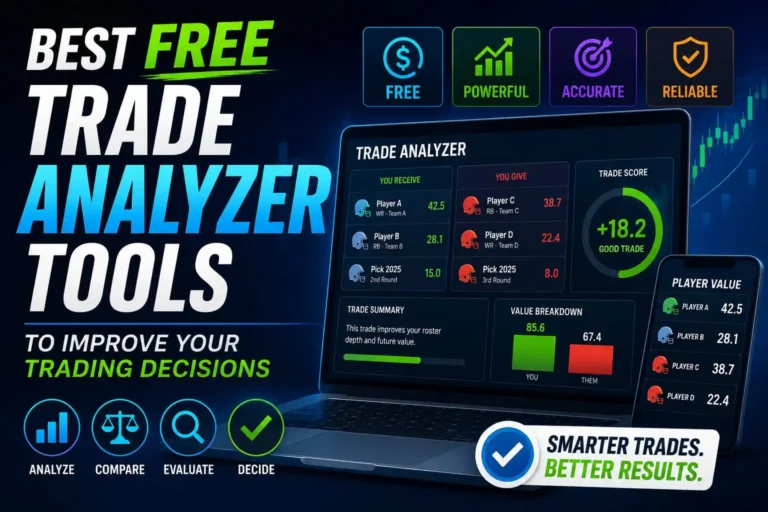
Use it with other trusted tools and your own football judgment. Some managers check fantasyfootballcalculator, tradecalc, trade analyzer ppr, or trade finder fantasy football ideas while reviewing offers. Others compare football logic with tools from other sports, like a fantasy hockey trade analyzer, fantasy mlb trade analyzer, trade analyzer fantasy baseball, or general trading fantasy dashboards. The lesson is simple. Better inputs create better decisions.
Make smarter trades
Smart trades fit your team timeline. If you are contending, buy points carefully. If you are rebuilding, chase youth and picks. If you are stuck in the middle, pick a lane. A trade should solve a problem, not create a prettier one.
Improve ranking decisions
Rankings help most when you understand why players move. Check scoring format, team situation, injury history, and role. In Superflex, quarterback value rises. In half PPR, target volume matters. In tight-end premium, scarce tight ends can become real difference-makers.
Maximize long-term roster value
Long-term value grows through steady habits. Keep flexible assets. Sell before decline. Buy before breakouts. Do not chase every rumor. Dynasty is a marathon with weekly sprints. The best managers win today without burning tomorrow to the ground.
FAQs
What is a dynasty league analyzer?
A dynasty league analyzer is a fantasy football tool that helps you review trades, player values, rookie picks, rankings, and roster strength. It works best when you use it with your league settings and team goals. It helps you make calm choices instead of chasing hype.
How does a dynasty league analyzer help with trades?
The analyzer helps you compare both sides of a trade. It can also show player value, pick value, age risk, and roster fit. That helps you avoid deals that look exciting at first but weaken your team later.
Is a dynasty league analyzer useful for rookie drafts?
Yes. It can help you compare rookie picks, young players, and proven veterans. Rookie drafts are full of hype. An analyzer keeps you grounded. It helps you see when to draft, when to trade down, and when to cash a pick for production.
What is the difference between a dynasty trade calculator and a dynasty league analyzer?
A dynasty trade calculator mainly checks whether a trade looks fair. A league analyzer looks wider. It studies your roster, rankings, team direction, depth, and future assets. In simple words, the calculator checks the deal. The analyzer checks the team.
Can beginners use a dynasty league analyzer?
Yes. Beginners may benefit the most. It helps them learn player value, trade timing, roster balance, and rookie pick strength. It also reduces guesswork. You still learn by playing, but the tool helps you avoid painful early mistakes.