


Table of Contents
- Why Trading Is Different in Dynasty
- Why Trades Matter in Dynasty Leagues
- What Is a Fantasy Trade Calculator?
- How Dynasty Trade Calculators Work
- Key Features to Look for in a Dynasty Trade Calculator
- Build an Offer in Five Steps
- How to Counter an Offer
- Common Mistakes When Using a Dynasty Trade Calculator
- Advanced Tips for Winning More Trades
- Which Calculator to Use
- Fantasy Trade Calculator FAQs
- Conclusion
- Compare With Other Sources
- Related Guides
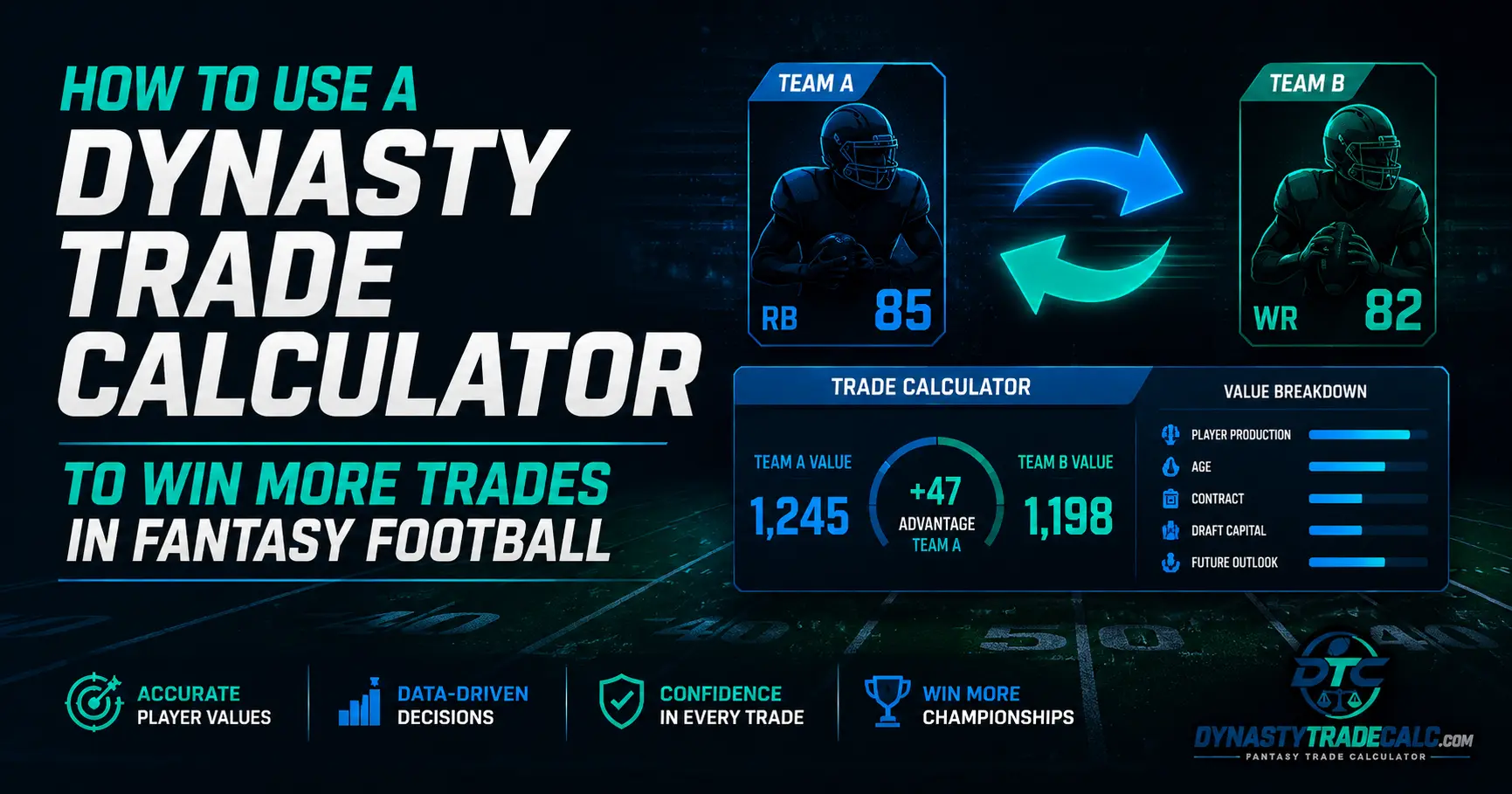
A fantasy trade calculator tells you whether an offer is fair. Winning trades takes one more step: building offers the other manager wants to accept. This guide covers both, from pricing a deal to countering one and choosing the right moment.
Why Trading Is Different in Dynasty
In a dynasty league you keep most of your roster from year to year. A trade therefore changes your team for several seasons, not one. Age, future role and draft picks all carry value, which makes deals harder to judge by eye.
Why Trades Matter in Dynasty Leagues
The draft only comes once a year. Trades are how you fix a weak position, turn depth into a star or swap aging players for picks before their value falls. Managers who trade well improve all year, while the rest wait for the next draft.
What Is a Fantasy Trade Calculator?
A fantasy trade calculator puts a number on every player and pick, then compares the total on each side of a deal. Our dynasty trade calculator does this for long-term leagues, where the values reflect future seasons as well as this one.
How Dynasty Trade Calculators Work
Each value reflects age, position, production and market demand. League format then shifts the values: quarterbacks rise in Superflex, and reception scoring lifts pass catchers. The tool adds up both sides and shows the gap. A small gap means the deal is close on paper.
The value behind each player is on our dynasty trade value chart, and the methodology page explains how the numbers are built.
Key Features to Look for in a Dynasty Trade Calculator
- Format settings for 1QB, Superflex and 2QB, with standard, half-PPR and full-PPR scoring.
- Rookie picks on both sides, because picks are the easiest way to balance a deal.
- Multi-player packages, so you can test two-for-one and three-for-two offers.
- A visible update date, so you know how current the values are.
Build an Offer in Five Steps
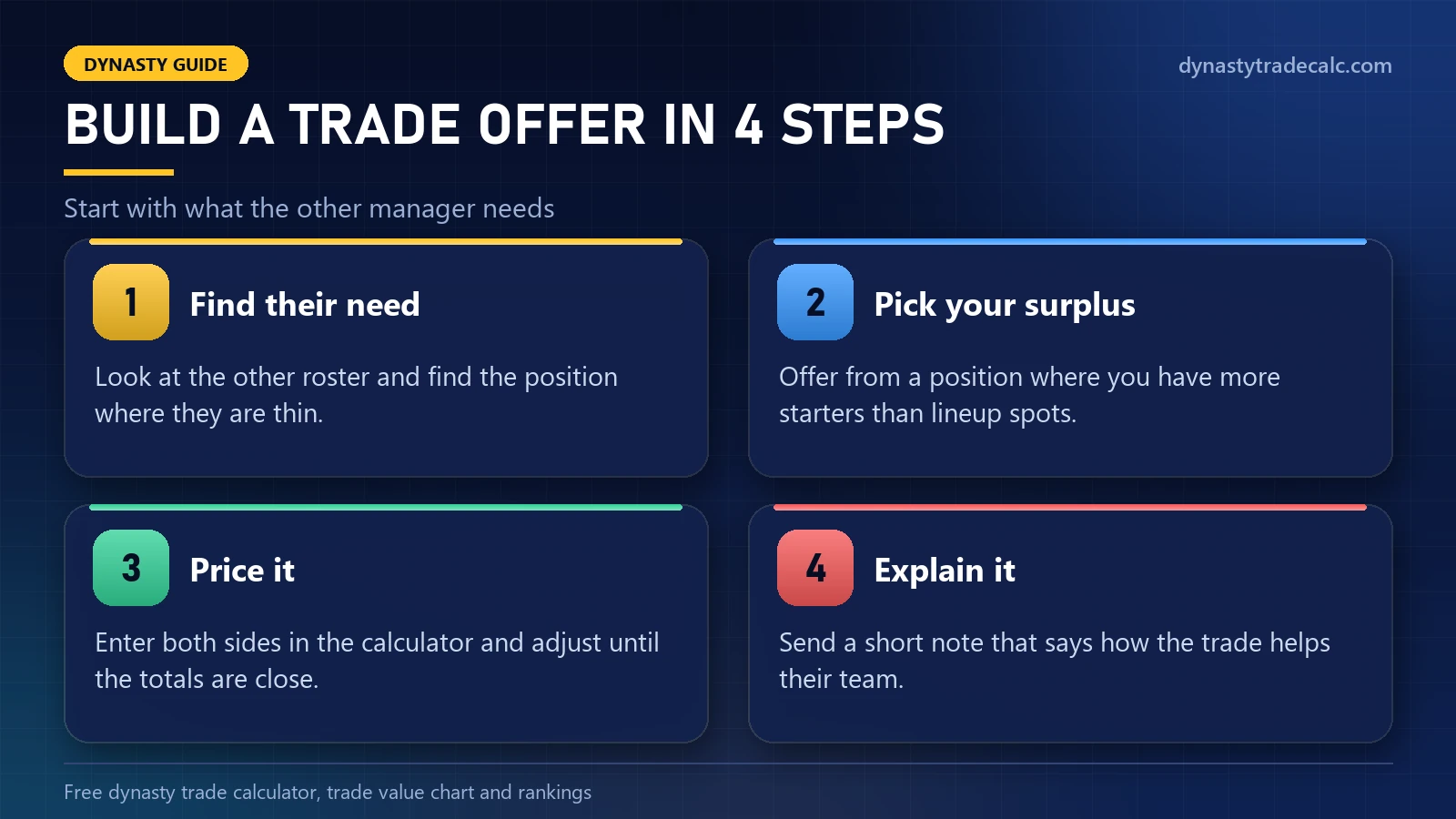
- Find their need. Look at the other roster and pick the position where they are thin.
- Pick your surplus. Offer from a position where you have more starters than lineup spots.
- Price it. Enter both sides in the calculator and adjust until the totals are close.
- Balance with a pick. A later-round pick is the simplest way to close a small gap. See our rookie pick values.
- Explain it. Send a short note that says how the trade helps their team.
The full walkthrough of the tool itself is in how to use a dynasty trade calculator.
How to Counter an Offer
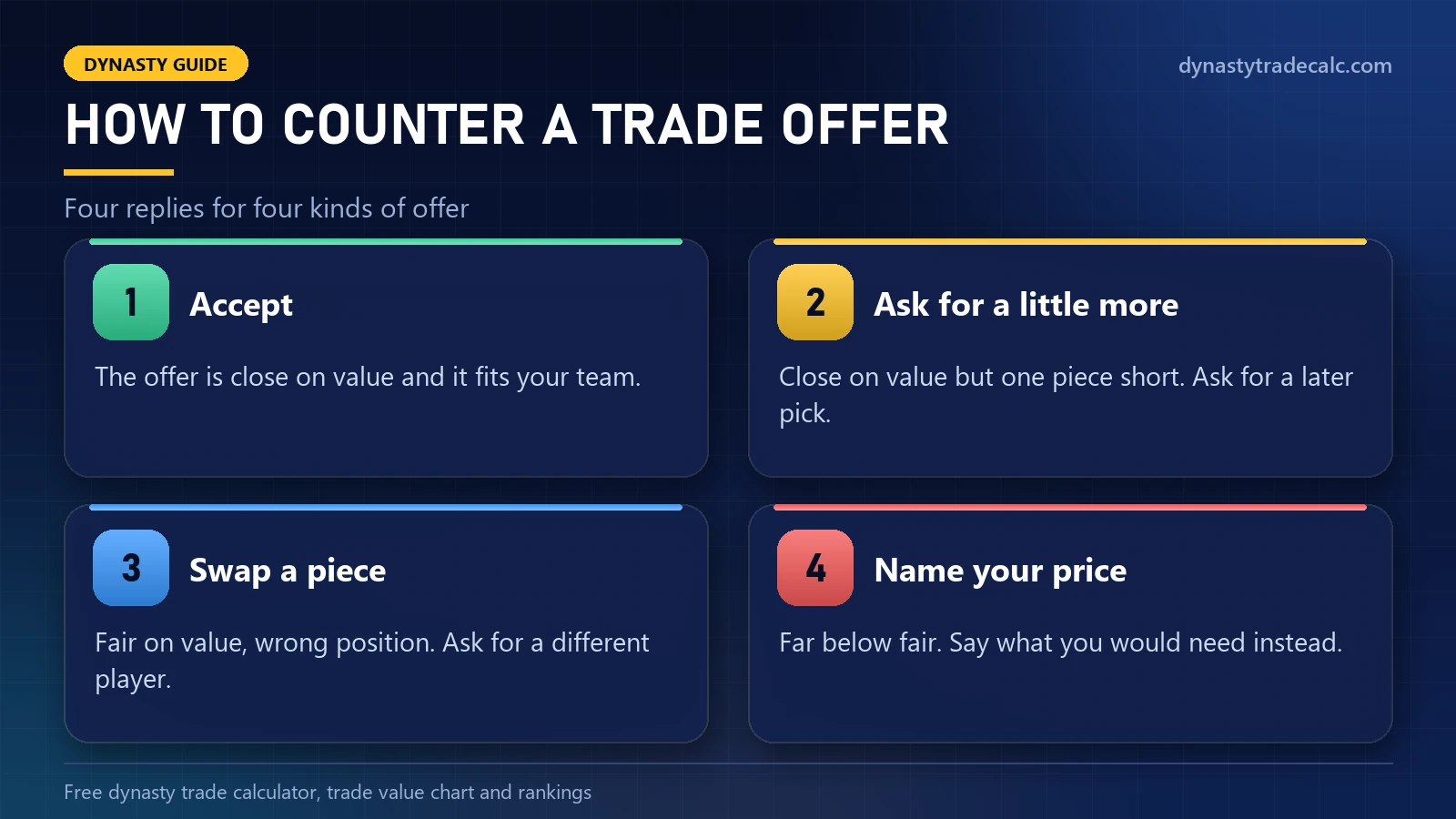
| The offer you received | Your reply | Why |
|---|---|---|
| Close on value and fits your team | Accept | Waiting for a perfect deal often loses a good one |
| Close on value, one piece short | Ask for a later pick or a bench player | A small add is easy for them to say yes to |
| Fair on value, wrong position for you | Ask to swap one player for another | The numbers stay similar and the fit improves |
| Far below fair | Say what you would need instead | It keeps the talk alive without accepting a bad deal |
Common Mistakes When Using a Dynasty Trade Calculator
- Treating the number as the answer. A fair total can still weaken your lineup.
- Using the wrong format. A 1QB setting undervalues quarterbacks in Superflex.
- Counting bodies, not starters. Three average players rarely equal one star.
- Sending lowball offers. They cost you future conversations with that manager.
More examples are in the biggest dynasty trade mistakes.
Advanced Tips for Winning More Trades
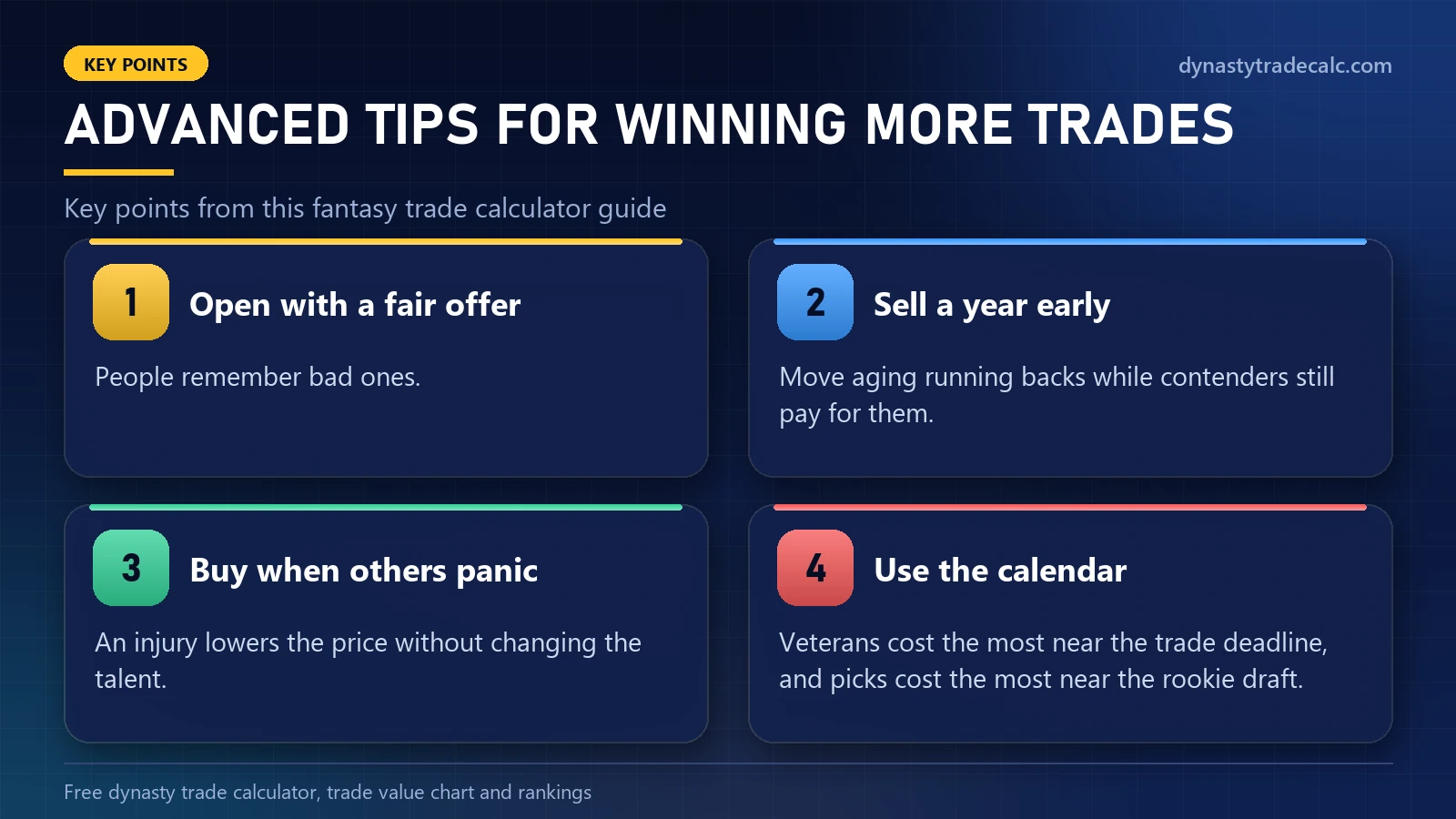
- Open with a fair offer. People remember bad ones.
- Trade for the best player in the deal. Only starters score, so stars are worth a premium.
- Sell a year early. Move aging running backs while contenders still pay for them.
- Buy when others panic. An injury lowers the price without changing the talent.
- Use the calendar. Veterans cost the most near the trade deadline, and picks cost the most near the rookie draft.
- Know your direction. Contenders buy points. Rebuilders buy youth and picks.
- Be willing to walk away. No trade is better than a bad one.
Which Calculator to Use
Use one that matches your league format and shows when its values were last updated. Then compare a second source, because calculators build their values differently: some from crowd votes, some from real completed trades and some from expert rankings. For this season’s values, see the dynasty trade calculator 2026 guide. For Superflex leagues, see the Superflex trade calculator guide.
Fantasy Trade Calculator FAQs
What is a fantasy trade calculator?
A fantasy trade calculator gives each player and draft pick a value and adds up both sides of a trade. It shows which side is ahead, so you can judge an offer before you accept or send it.
How do I win more trades in fantasy football?
Start with what the other manager needs, offer from your own surplus, and check the totals in a calculator so the deal looks fair to both sides. Fair-looking offers get accepted far more often than lowball ones.
Should I send the calculator result with my offer?
It can help when the totals are close, because it shows the offer is reasonable. Do not use it to argue. Explain how the trade helps their roster first, and share the numbers second.
How do I counter a trade offer?
If the offer is close, ask for one small extra piece such as a later pick. If it is far off, say what you would need instead. Always reply, because silence ends the conversation.
When is the best time to make a trade?
Contenders pay the most for veterans near the trade deadline. Rookie picks are worth the most close to the rookie draft. Injured players are cheapest when their manager needs points right away.
Is it bad to lose a trade on the calculator?
Not always. Paying a little extra for the best player in the deal is often right, because only starters score. What matters is whether your lineup and your plan are better afterward.
Is a fantasy trade calculator free?
The calculator on DynastyTradeCalc is free and needs no account. Several other calculators are free as well, and each one builds its values in a different way.
Conclusion
A fantasy trade calculator makes sure you are not overpaying. The rest is negotiation: start with the other manager’s need, keep the offer fair, reply to every counter and choose your moment. Do that consistently and you will win more trades than you lose.
Related Guides
Compare With Other Sources
Our values are estimates, not quotes. Before a big trade, compare the same players against KeepTradeCut crowd-sourced dynasty values, FantasyCalc and FantasyPros dynasty rankings. To value players and picks across several seasons, see our dynasty calculator guide.
