Dynasty Fantasy Trade Calculator – Value Every NFL Trade
Winning trades rarely happen by accident. A dynasty fantasy trade calculator helps you measure player value before making a deal. Instead of trusting gut feelings, you rely on player rankings, draft pick values, and long-term projections. As a result, you make smarter decisions that strengthen your roster today while protecting your future.
Dynasty fantasy football rewards patience as much as talent. One clever trade can reshape your team for years. However, one poor decision may leave you chasing competitors for multiple seasons. This guide explains how to evaluate every trade with confidence. You’ll also discover practical strategies, hidden factors, and expert tips that many managers overlook.
What Is a Dynasty Fantasy Trade Calculator?
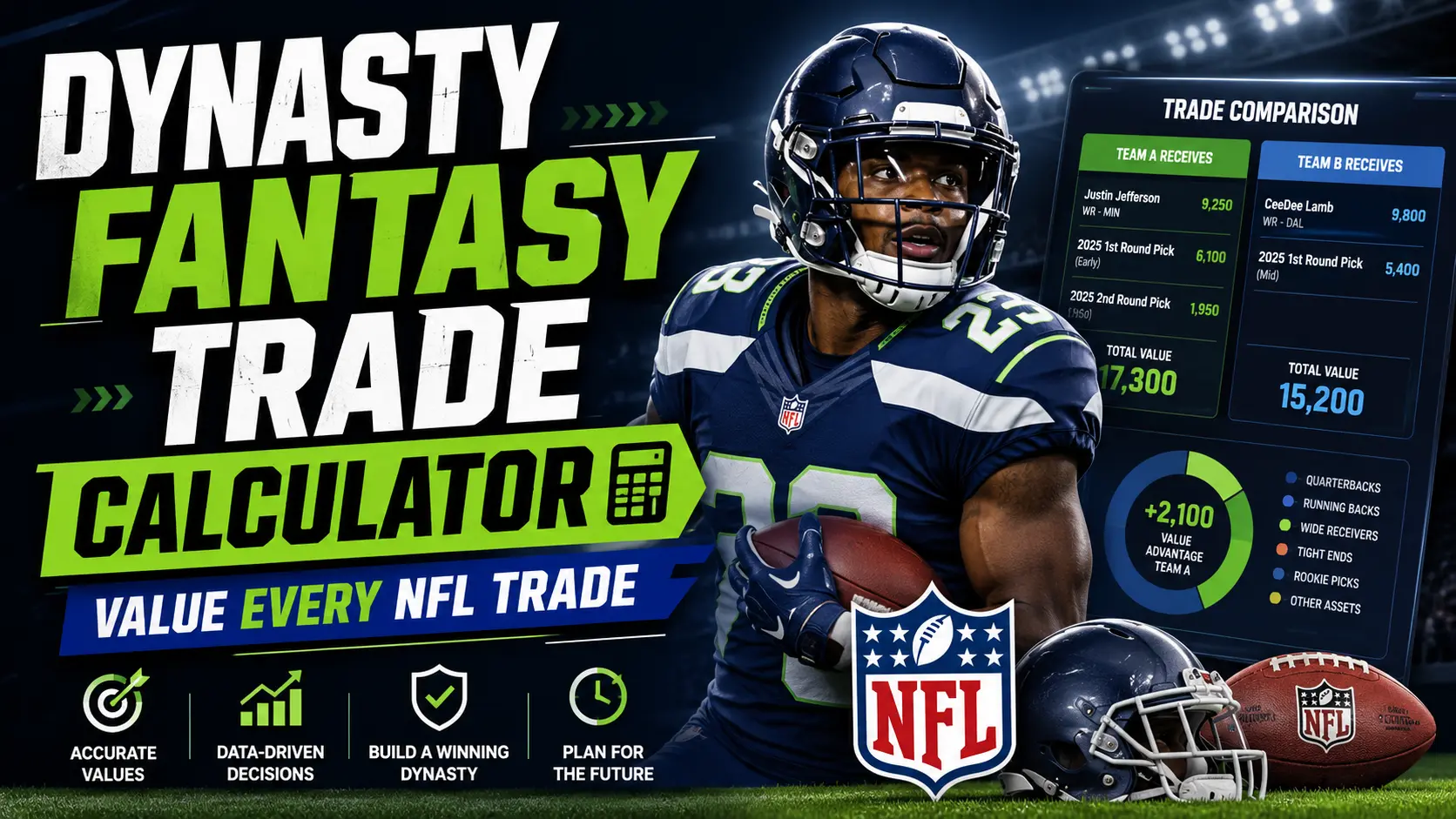
A dynasty fantasy trade calculator is a digital tool that estimates whether a trade offers fair value for both teams. It blends player projections, market value, and future draft capital into one simple comparison. Think of it as a financial advisor for your fantasy roster that helps you avoid expensive mistakes.
Unlike random opinions on social media, a quality calculator relies on consistent data rather than emotion. For example, if you’re considering trading an aging superstar for a promising rookie and a first-round pick, the calculator highlights which side gains more long-term value. That extra insight often makes the difference between winning and rebuilding.
Entering Players and Picks
Everything starts with accurate inputs. Add the players and draft selections involved in your proposed trade. Most calculators support current NFL players, rookie picks, and future selections. Therefore, you can evaluate almost any scenario within seconds without juggling multiple spreadsheets.
Comparing Both Sides of the Trade
Next, compare each team’s total value. Instead of focusing on star names alone, review the complete package. A balanced deal often beats a flashy one. Sometimes two reliable starters create more lasting success than one elite player carrying extra risk.
Understanding Trade Value Scores
Trade scores provide a quick snapshot of fairness. They don’t predict the future with perfect certainty. Instead, they estimate value using age curves, production trends, and fantasy projections. Treat the score as a trusted guide rather than an unbreakable rule.
How to Use a Dynasty Fantasy Trade Calculator
Learning the calculator takes only a few minutes. Mastering its strategy takes longer. Begin by entering every asset involved in the trade. Then compare the calculated values before considering your team’s goals. This process removes much of the guesswork that leads to regrettable decisions.
However, numbers tell only part of the story. Always combine calculator results with context such as injuries, league scoring, roster depth, and championship windows. The strongest fantasy managers use statistics as a compass instead of a map. That balanced approach consistently produces smarter trades over time.
Entering Players and Picks
Choose every player and draft pick included in the proposal. Double-check future rookie selections because an early first-round pick usually carries far greater value than a late one. Small details often shift the final evaluation more than most managers expect.
Comparing Both Sides of the Trade
Study each side carefully before accepting any offer. Look beyond total points and consider roster depth, positional scarcity, and future flexibility. A trade that appears even today may become one-sided after a breakout season or unexpected injury.
Understanding Trade Value Scores
Value scores summarize countless data points into one easy number. While they simplify comparisons, don’t ignore surrounding circumstances. A rebuilding roster values youth differently than a championship contender. Blend calculator results with common sense and you’ll make decisions that stand the test of time.
Avoid Overpaying
Nobody enjoys realizing they paid too much after a trade becomes official. A calculator highlights value differences before you accept an offer. As a result, you avoid sacrificing premium assets for players whose long-term outlook doesn’t justify the cost.
Build Long-Term Value
Dynasty leagues reward patience more than instant gratification. Young players and future draft picks often appreciate over time. Therefore, balancing today’s production with tomorrow’s upside helps you build a roster capable of competing for multiple championships instead of chasing one lucky season.
Make Data-Driven Decisions
Great fantasy managers trust evidence before opinions. By reviewing player metrics, age trends, and projected production, you gain confidence in every transaction. Data cannot predict every breakout. However, it dramatically reduces costly mistakes driven by excitement or panic.
Dynasty Fantasy Trade Calculator for Rookie Picks
Rookie draft picks often become the most valuable currency in dynasty leagues. A dynasty fantasy trade calculator estimates their worth based on expected draft position, historical success rates, and market demand. This helps you understand whether exchanging future picks truly benefits your roster.
However, rookie selections carry uncertainty. A projected first-round star may struggle after entering the NFL. Meanwhile, an overlooked prospect can become a league winner. Smart managers weigh both risk and upside before including draft capital in any trade discussion.
Valuing Future Draft Picks
Future picks gain or lose value depending on where they are expected to land. An early first-round selection usually carries elite potential. Conversely, a late-round pick offers less certainty. Understanding that difference prevents you from undervaluing premium draft capital.
Early vs Late Rookie Picks
Not every first-round pick delivers equal value. The first few selections typically feature elite prospects with higher ceilings. Later picks offer useful talent yet involve greater uncertainty. Recognizing this gap allows you to negotiate trades with much stronger confidence.
Trading Picks for Proven Players
Sometimes exchanging draft picks for established veterans makes perfect sense. If your team is ready to contend, proven production often outweighs future potential. Nevertheless, avoid trading multiple premium picks unless the returning player genuinely improves your championship chances.
Dynasty Fantasy Trade Calculator Tips to Win More Trades
Winning trades requires more than finding equal value. You must understand timing, roster construction, and league dynamics. A dynasty fantasy trade calculator supports those decisions by revealing hidden advantages. Pair those insights with sound judgment and you’ll consistently outperform less prepared managers.
Think of every trade as a game of chess rather than checkers. Every move shapes future opportunities. The strongest dynasty players remain patient, study market trends, and negotiate from positions of strength. Over time, those habits create championship-caliber rosters.
Buy Low, Sell High
Player values rise and fall throughout the season. Injuries, poor performances, or breakout games create buying and selling opportunities. Instead of following public opinion, identify undervalued players before everyone else notices their potential.
Consider Team Direction
Every trade should match your team’s current goals. Contenders often prioritize reliable veterans who score immediately. Rebuilding teams usually benefit from younger talent and future picks. Aligning every decision with your strategy produces stronger long-term results.
Don’t Ignore League Settings
League settings influence player value more than many managers realize. Superflex formats, PPR scoring, and tight end premium leagues all reward different assets. Always evaluate trades using settings that match your league rather than relying on generic rankings.
Best Strategies for Evaluating Dynasty Fantasy Trades
Smart trades rarely happen by chance. They come from careful planning, realistic expectations, and a clear understanding of your roster. While trade calculators provide valuable guidance, you should also evaluate team needs, player upside, and league dynamics before making a final decision.
Furthermore, every dynasty league evolves throughout the season. Injuries, coaching changes, and breakout performances constantly reshape player values. Staying flexible gives you a lasting advantage. Managers who adapt quickly often discover opportunities long before the rest of the league catches on.
Contending vs Rebuilding
Your team’s direction should influence every trade discussion. Contenders usually prioritize dependable veterans who produce immediately. Rebuilding teams benefit more from young prospects, future draft picks, and long-term growth. Matching every move to your competitive window creates a stronger foundation.
Age vs Production
A productive veteran may outscore a younger player today. However, dynasty leagues reward future value as much as current production. Finding the right balance between proven performance and long-term potential helps you avoid short-sighted decisions.
Positional Value
Every position carries different importance depending on league format. Elite quarterbacks dominate Superflex leagues, while top wide receivers often provide longer careers. Understanding positional scarcity and roster balance helps you maximize value throughout your lineup.
Risk Assessment
Every player carries some degree of uncertainty. Injuries, declining production, and changing situations affect future performance. Before completing any trade, weigh the potential reward against the possible downside. A calculated risk often succeeds. Blind optimism rarely does.
Dynasty Fantasy Trade Calculator vs Expert Trade Rankings
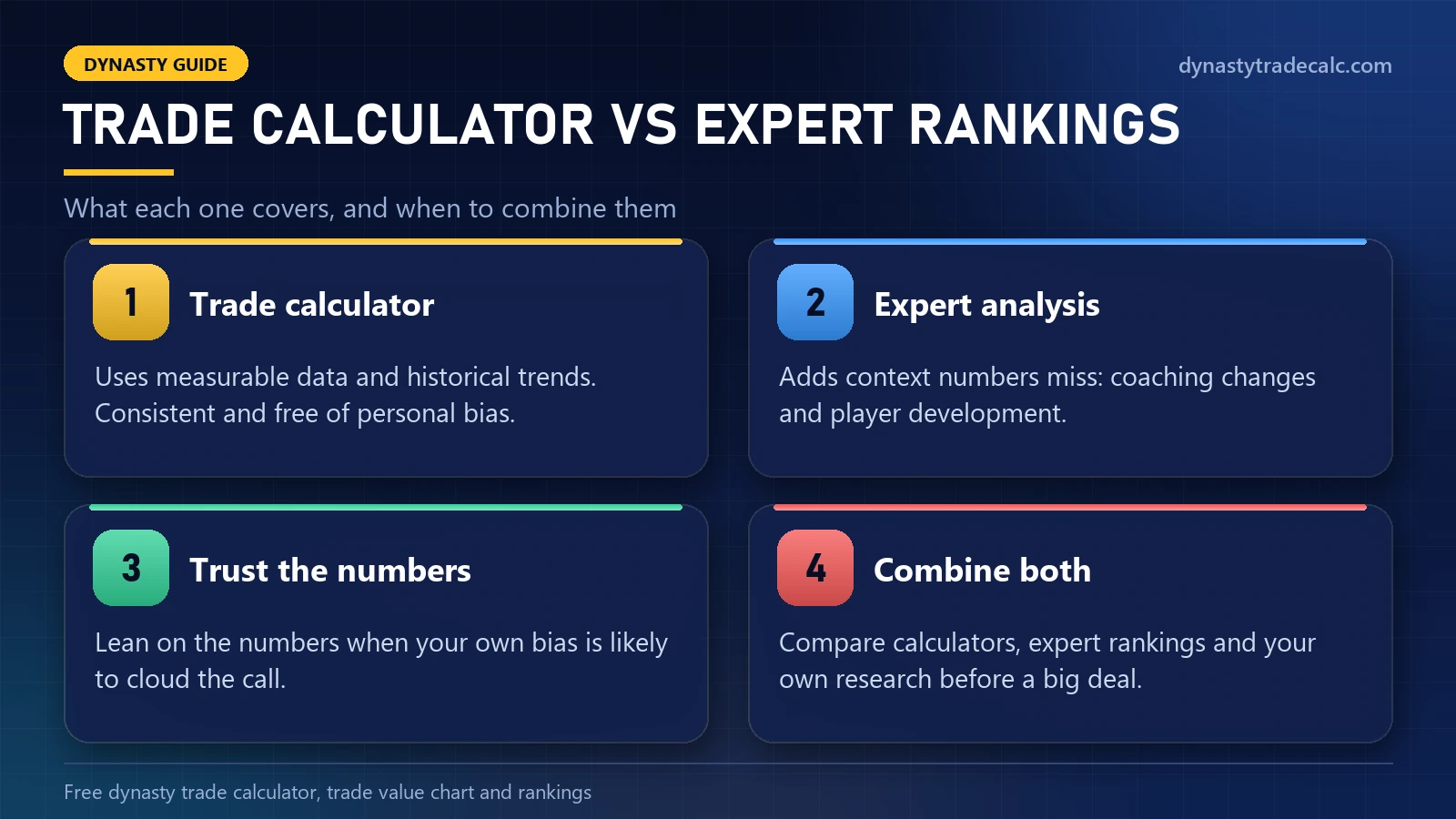
Many fantasy managers wonder whether calculators outperform expert opinions. The truth sits somewhere in the middle. A dynasty fantasy trade calculator delivers consistent data-driven evaluations, while experienced analysts provide valuable context that numbers sometimes overlook.
The strongest approach combines both resources. Think of the calculator as your compass and expert rankings as your roadmap. Together they create a clearer picture of player value, helping you avoid emotional decisions while recognizing opportunities statistics alone might miss.
Calculator vs Human Analysis
Trade calculators evaluate players using measurable data and historical trends. Human analysts also consider coaching changes, locker-room situations, and player development. Combining both viewpoints produces a more balanced evaluation than relying on either resource alone.
When to Trust the Numbers
Numbers deserve attention because they remove personal bias. However, they cannot predict every surprise. A rookie entering a favorable offense or a veteran recovering from injury may outperform expectations. Always review recent news alongside statistical projections.
Combining Both Approaches
The best dynasty managers rarely depend on one source. They compare trade calculators, expert rankings, and personal research before making decisions. This layered strategy improves confidence while reducing costly mistakes during important negotiations.
Common Mistakes to Avoid When Making Dynasty Trades
Even experienced fantasy managers make avoidable mistakes. Emotional reactions, unrealistic expectations, and poor planning often create one-sided trades. Recognizing these common pitfalls helps you protect your roster while consistently finding deals that improve your long-term championship outlook.
Remember, patience often beats urgency. You don’t have to accept every attractive offer immediately. Sometimes waiting another week reveals better opportunities as player values shift following injuries, depth chart changes, or standout performances.
Chasing Recent Performances
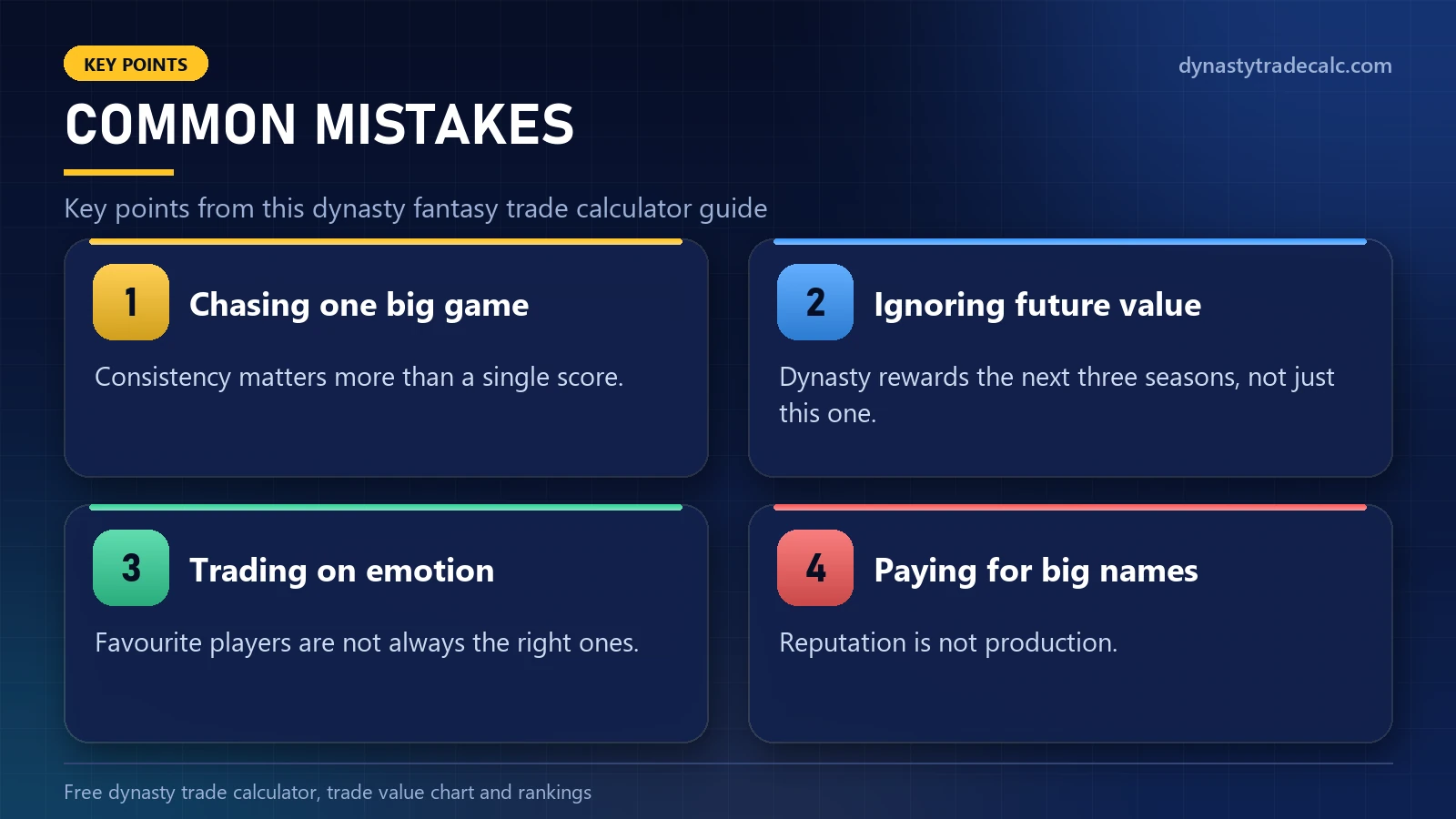
One explosive game shouldn’t completely change a player’s value. Fantasy football rewards consistency more than isolated success. Avoid paying premium prices after a breakout week because excitement often inflates market value beyond reasonable expectations.
Ignoring Future Value
Many managers focus only on this season. Dynasty leagues require a broader perspective. Consider career longevity, rookie development, and future opportunities before trading away young talent or valuable draft capital.
Trading Based on Emotion
Every fantasy manager has favorite players. However, emotional attachment can cloud judgment. Evaluate every offer objectively and compare actual value rather than personal preference. Logic wins far more championships than loyalty.
Overvaluing Big Names
Well-known players often command inflated prices because of reputation alone. Instead of paying for past achievements, evaluate current production, age, and future outlook. Smart managers invest in future performance rather than familiar names.
Factors That Affect Dynasty Player Trade Value
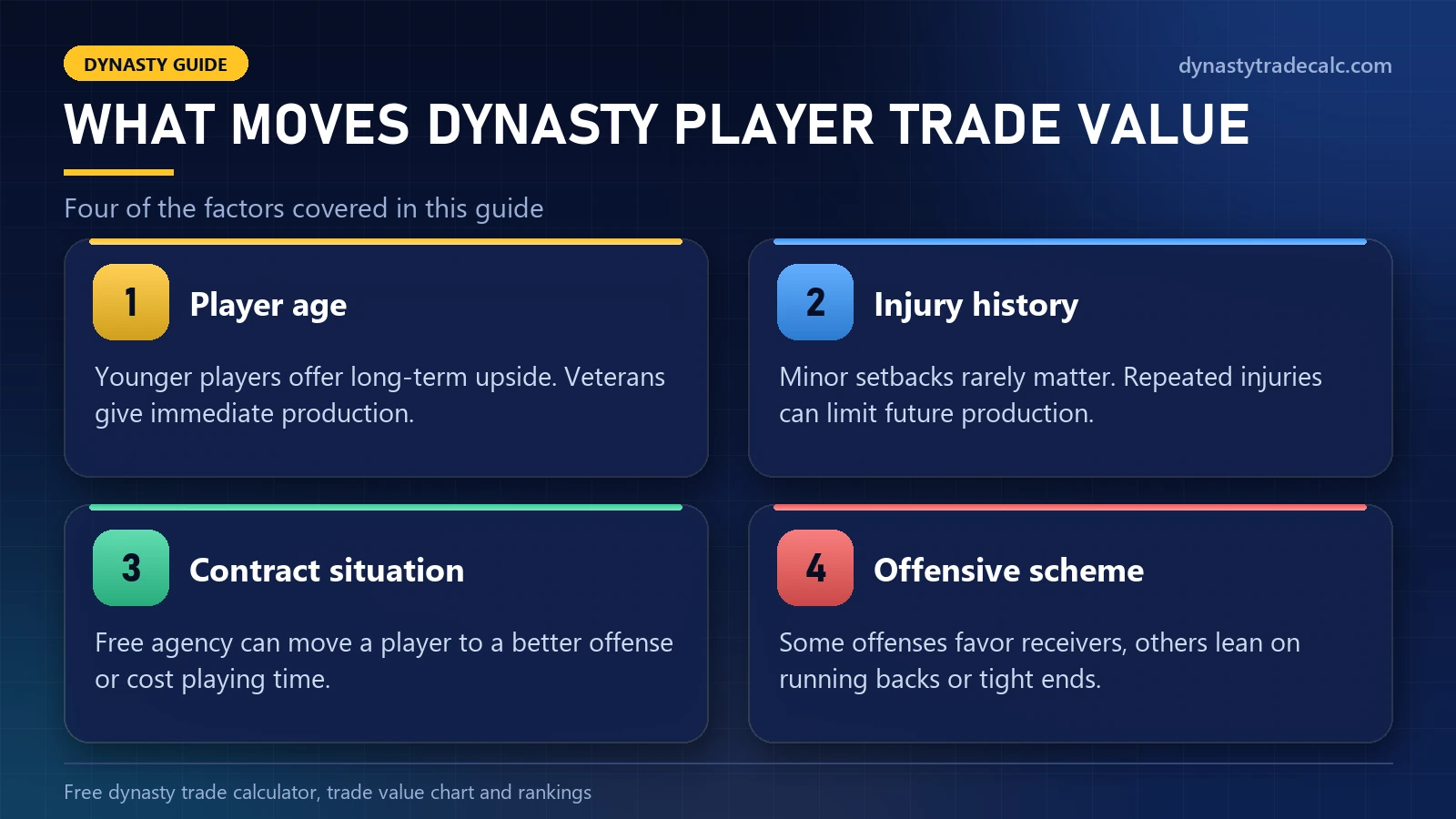
Player value changes throughout the year because the NFL never stands still. Injuries, coaching decisions, contract updates, and breakout performances constantly reshape the market. Understanding these factors helps you evaluate player value, trade assets, and long-term potential with greater confidence.
Instead of reacting to headlines, look at the bigger picture. Successful dynasty managers study trends before making moves. They understand that today’s bargain could become tomorrow’s superstar. Likewise, today’s elite player may decline faster than expected if circumstances change.
Player Age
Age plays a significant role in dynasty leagues because careers follow predictable patterns. Younger players usually offer more long-term upside, while veterans provide immediate production. Finding the right balance between youth, experience, and future value strengthens your roster year after year.
Injury History
Every injury affects trade value differently. Minor setbacks rarely cause lasting concern. However, repeated injuries may limit a player’s future production. Before making a trade, review medical history alongside recent performance instead of focusing on statistics alone.
Contract Situation
Contracts influence opportunity almost as much as talent. A player entering free agency could join a stronger offense or lose playing time elsewhere. Keeping track of contract status and team situations helps you anticipate future value changes before your league notices.
Offensive Scheme
Coaching systems create winners and losers every season. Some offenses favor wide receivers, while others depend heavily on running backs or tight ends. Understanding offensive philosophy gives you another advantage when evaluating player potential.
Strength of Schedule
Future matchups matter more than many managers realize. Easier schedules often improve fantasy production, especially during playoff weeks. While schedules shouldn’t determine every trade, they can provide the extra edge when comparing similarly valued players.
Market Trends
Dynasty values fluctuate throughout the offseason and regular season. Rookie hype, training camp reports, and preseason performances often shift public opinion. Smart managers monitor market trends and community rankings to buy undervalued players before prices increase.
Final Thoughts on Using a Dynasty Fantasy Trade Calculator
Building a championship dynasty roster requires patience, preparation, and smart decision-making. While instinct plays a role, consistent success usually comes from informed choices. A dynasty fantasy trade calculator provides reliable guidance that helps you evaluate every trade with greater confidence and accuracy.
Before accepting your next offer, compare player values, review league settings, and consider your team’s long-term direction. Combine calculator results with personal research and expert analysis for the best outcome. Small advantages accumulate over time. Those advantages often become league championships.
Frequently Asked Questions
What is a dynasty fantasy trade calculator?
A dynasty fantasy trade calculator estimates the value of players and draft picks involved in a trade. It compares both sides using player projections, age, and long-term outlook, helping you determine whether an offer is fair before making a decision.
Are dynasty trade calculators accurate?
Yes, quality calculators provide reliable estimates based on current data and historical trends. However, they cannot predict every breakout or injury. Therefore, combine calculator results with expert analysis and league context before completing a trade.
How are rookie draft picks valued?
Rookie picks receive values based on expected draft position, historical success rates, and market demand. Early first-round selections generally carry more value than later picks because they offer greater potential to acquire elite NFL prospects.
Should I trust a trade calculator completely?
No. A calculator should guide your decision rather than replace your judgment. Consider your roster, league settings, championship window, and recent NFL news before accepting any trade proposal.
How often are dynasty player values updated?
Most reliable trade calculators update player values frequently during the offseason and throughout the NFL season. Injuries, roster moves, coaching changes, and player performances can quickly change dynasty rankings.
Can a dynasty fantasy trade calculator help beginners?
Absolutely. Beginners benefit by learning fair player values and avoiding costly mistakes. Experienced managers also use calculators because objective data supports better decisions, especially during complex trades involving multiple players and draft picks.