


Table of Contents
- What Is a Draft Pick Trading Calculator?
- How It Works
- What Moves Pick Value
- How to Use a Draft Pick Trading Calculator Step by Step
- Example: Pick 7 for Pick 15 and Pick 40
- Trade Up or Trade Down?
- Why Pick Trading Matters
- Calculator vs Manual Pick Evaluation
- Common Mistakes When Trading Picks
- Frequently Asked Questions
- Conclusion
- Related Guides
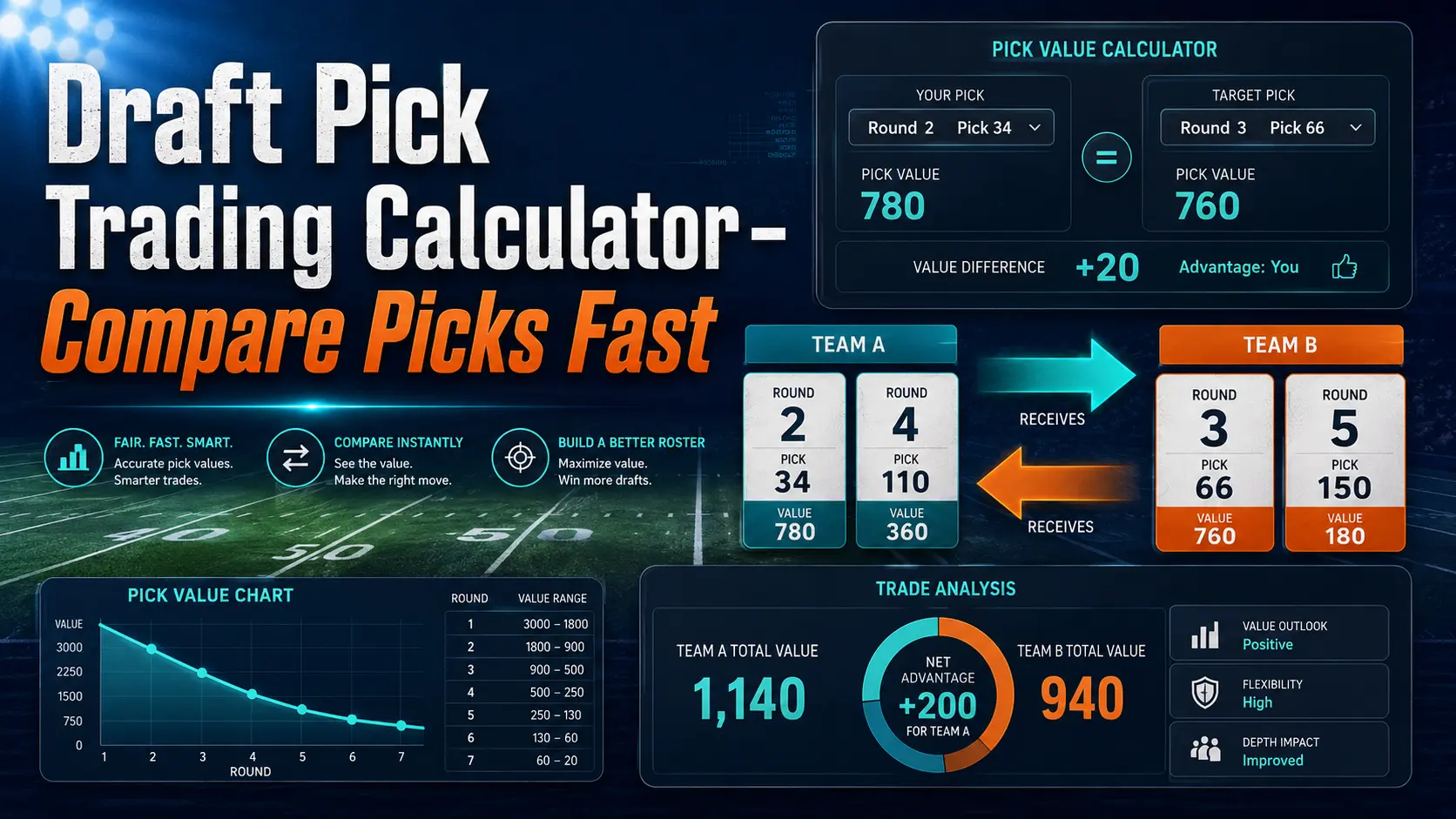
A draft pick trading calculator turns picks into values, so you can compare both sides of a pick trade before the clock runs out. It answers questions like whether pick 7 is worth picks 15 and 40, and when to move up or down. This guide shows how it works and how to decide.
What Is a Draft Pick Trading Calculator?
It is a value system for picks. Earlier picks get larger numbers because premium talent is harder to find later in a draft. The calculator adds up the picks on each side of a trade and shows whether the deal is balanced. In dynasty leagues it can also mix picks and players in one offer.
Our free dynasty trade calculator values rookie picks next to players and needs no account. Current pick prices are on our rookie pick values page.
How It Works
Most draft pick trading calculators use a value chart: a number for every pick slot, falling as the draft goes on. Better tools adjust that number for the class strength, your league format and how far away the pick is. A pick in a strong class is worth more; a future pick a year away is usually worth a little less.
What Moves Pick Value
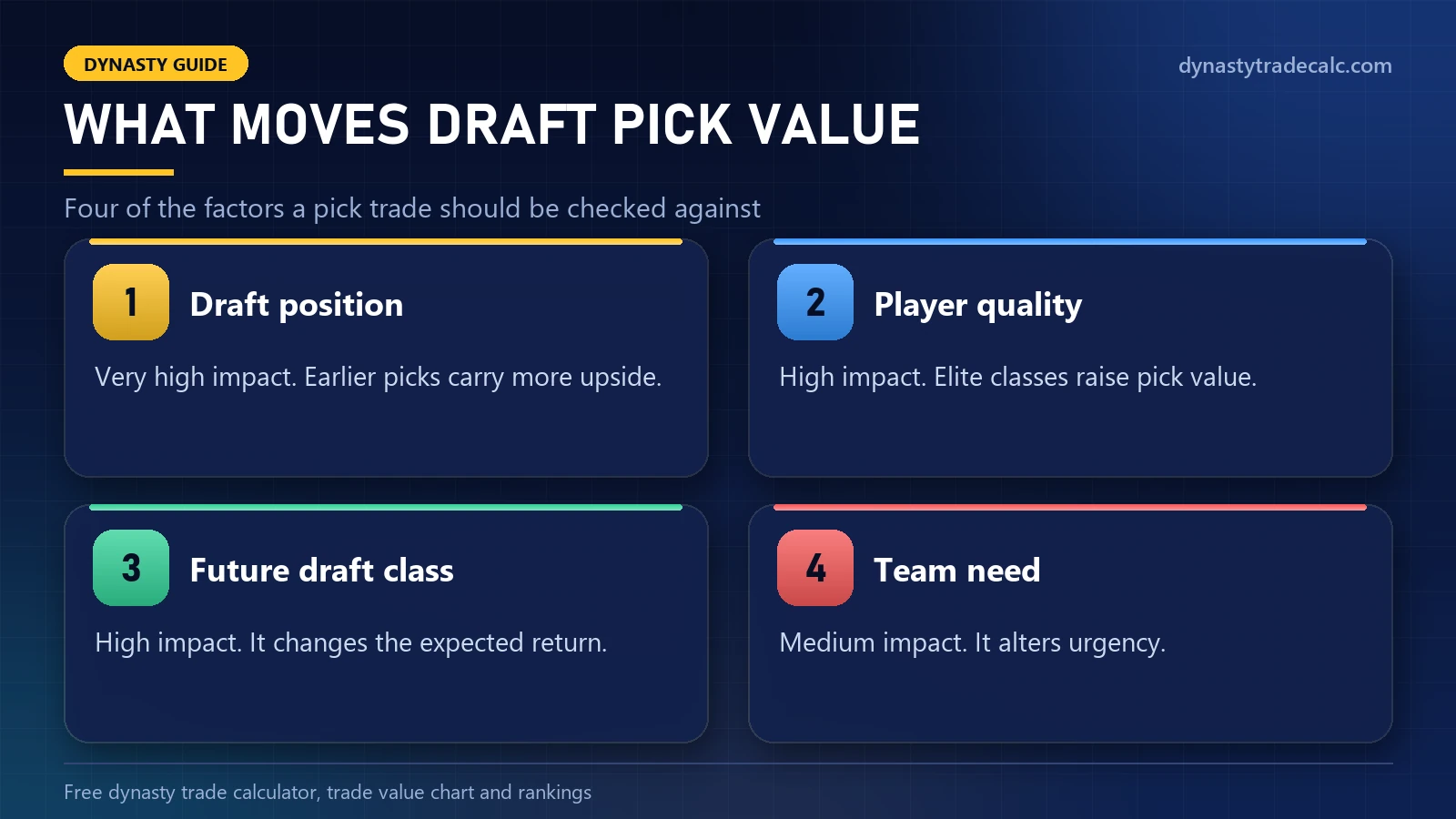
| Factor | Impact on Trade Value | Why It Matters |
| Draft Position | Very High | Earlier picks carry more upside |
| Player Quality | High | Elite classes raise pick value |
| Future Draft Class | High | Changes expected return |
| Team Need | Medium | Alters urgency |
| Market Demand | Medium | Impacts negotiation leverage |
A draft pick trading calculator should reflect all five. Draft value changes faster than most managers expect. One strong rookie class raises demand for every first-round pick, and one weak class cools the market overnight.
How to Use a Draft Pick Trading Calculator Step by Step
- Enter every pick in the trade, including future picks.
- Test other versions: sometimes one extra mid-round pick changes the whole result.
- Compare the values and note the gap.
- Review your roster and your goals before you accept.
Example: Pick 7 for Pick 15 and Pick 40
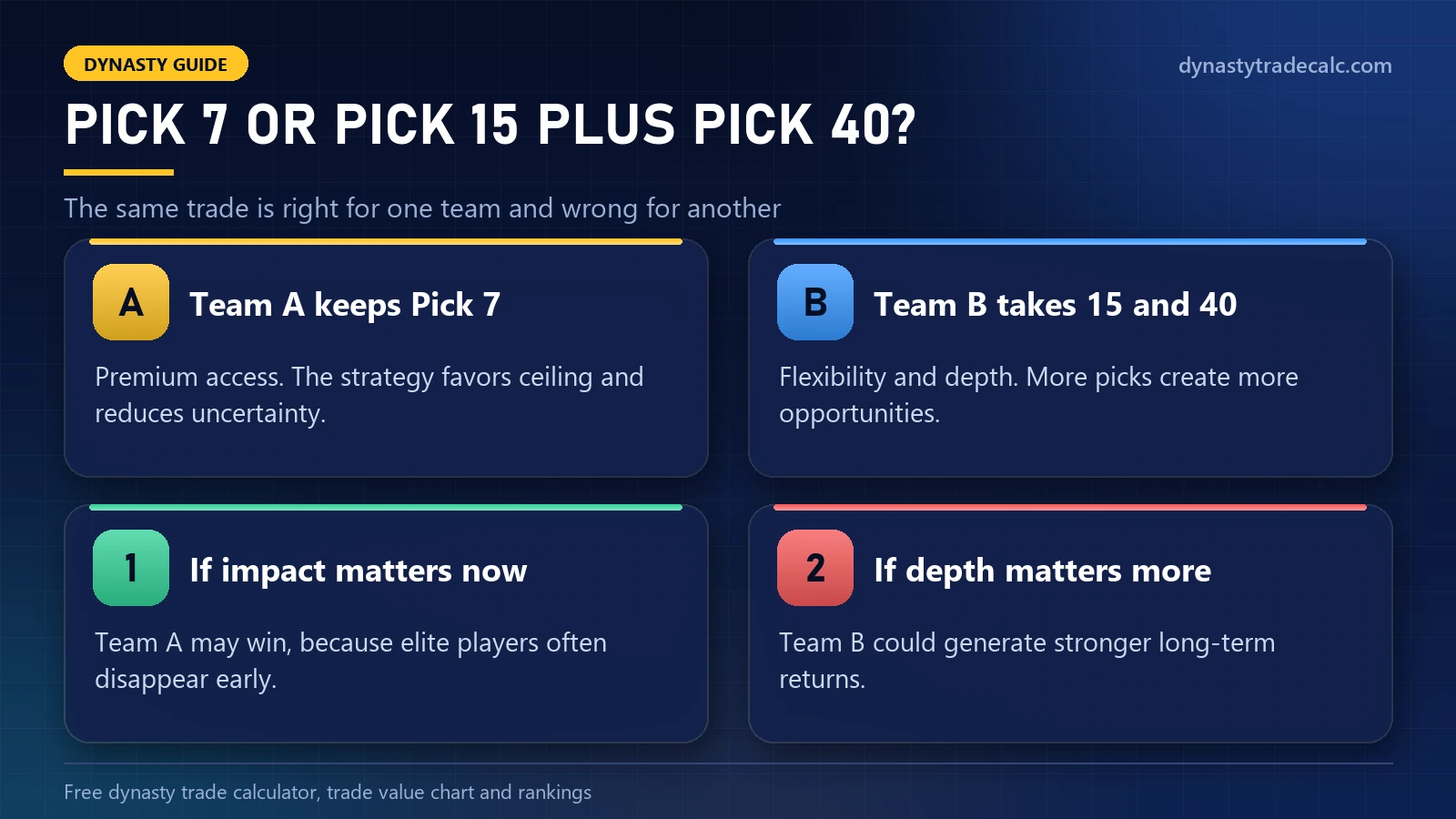
Here is how a draft pick trading calculator reads a common offer. Team A owns pick 7. Team B offers picks 15 and 40. Two picks look like more, but draft value falls quickly near the top, so the totals can be close:
| Team | Assets Received | Strategy |
| Team A | Pick 7 | Elite Talent |
| Team B | Pick 15 + Pick 40 | Depth & Flexibility |
If Team A needs an immediate star, keeping pick 7 is right: elite players disappear early. If Team B needs depth, two picks give it more chances to hit. The same trade can be good for both teams, which is what a fair pick trade looks like.
Trade Up or Trade Down?
| Your situation | Lean toward | Why |
|---|---|---|
| Contender that needs an immediate contributor | Trading up, or keeping the early pick | Elite players often disappear early |
| Rebuilding team that needs depth | Trading down for more picks | More picks create more chances to hit |
| The class looks strong at the top | Holding early picks | Elite classes raise pick value |
| The offer is built on future picks | Asking for more | Uncertainty grows over time, so future picks are less predictable |
Run both versions through the draft pick trading calculator before you decide, so you know exactly what the move costs.
For startup drafts, where picks can become any player, see our dynasty trade calculator startup draft guide.
Why Pick Trading Matters
Picks are assets that rise and fall before a player ever takes the field. They gain value as the draft approaches and managers start studying prospects, then become one specific player with one specific risk once you use them. That makes timing as important as price: selling a pick at peak demand and buying one when contenders are chasing points are two of the easiest ways to add value. Contenders can turn picks into starters; rebuilders can collect them from teams in a hurry. For players and picks in the same offer, our dynasty draft trade calculator guide shows how to mix the two.
Calculator vs Manual Pick Evaluation
Experienced managers often trust their instincts, and that still works for simple swaps. But once a deal includes three or four picks across two drafts, a draft pick trading calculator is faster and more consistent. Use the numbers to find the gap and your own knowledge of the class to decide whether to close it.
Common Mistakes When Trading Picks
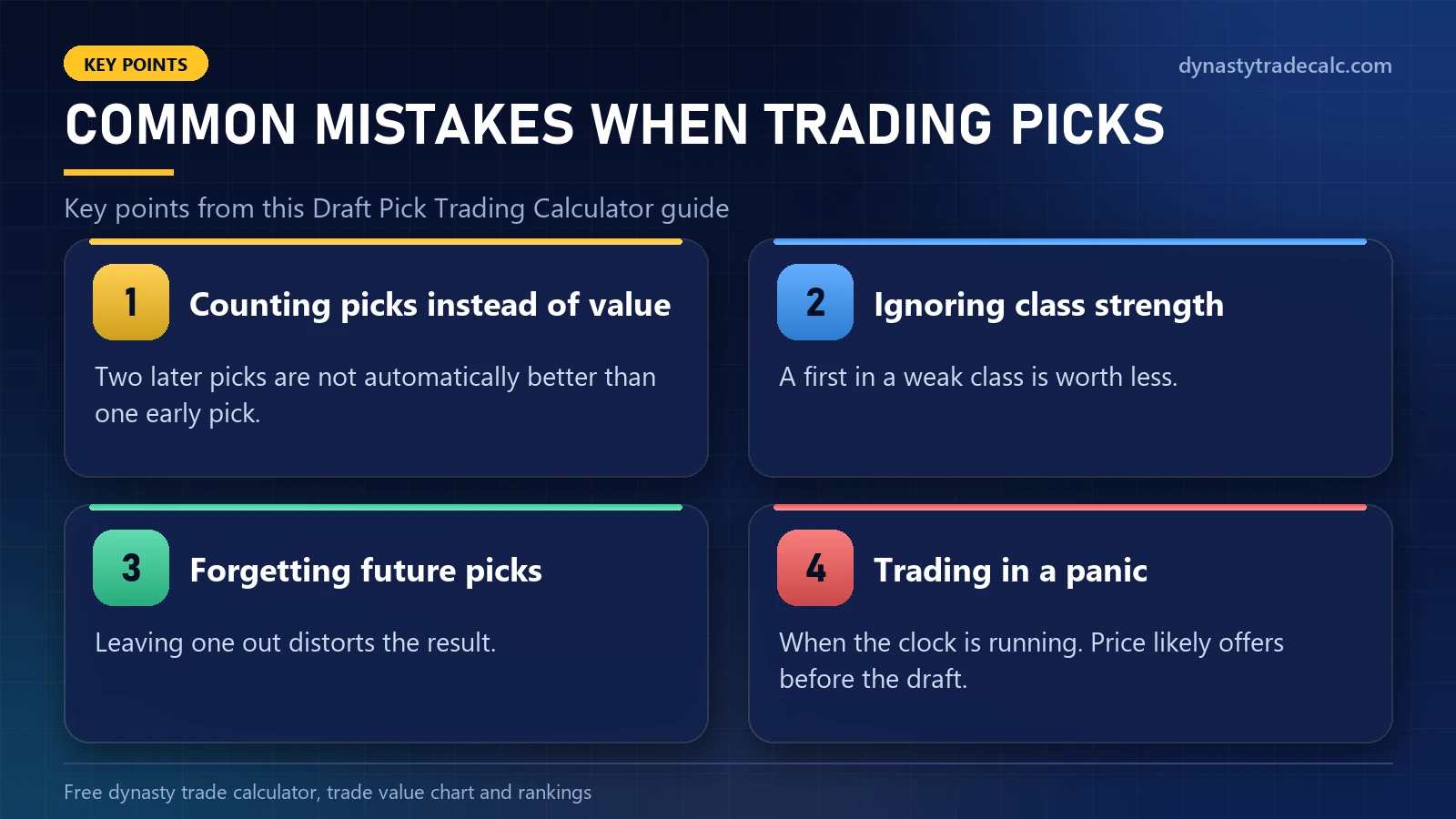
- Counting picks instead of value. Two later picks are not automatically better than one early pick.
- Ignoring class strength. A first in a weak class is worth less.
- Forgetting future picks. Leaving one out distorts the result.
- Trading in a panic when the clock is running. Price likely offers before the draft.
More examples are in the biggest dynasty trade mistakes.
Frequently Asked Questions
What does a draft pick trading calculator do?
It turns draft picks into values so you can compare both sides of a pick trade. Instead of guessing whether one early pick is worth two later ones, you can see the gap in numbers.
Is there a draft pick value calculator for dynasty leagues?
Yes. Our dynasty trade calculator is a free draft pick value calculator for rookie picks: add picks and players to either side and compare the totals. Pick prices are on our rookie pick values page.
Should I trade one early pick for two later picks?
It depends on your roster. Keeping the early pick favours ceiling, because elite players disappear early. Taking two later picks adds depth and more chances, which suits a team that needs bodies.
Can future draft picks be valued?
Yes, by estimating where the team will finish and how strong the class looks. Most systems discount future picks a little, because a pick a year away carries more uncertainty.
Are draft pick calculators accurate?
They are good estimates, not predictions. They work best when you add context: your team’s needs, the strength of the class and how your league values picks.
Is a calculator better than expert analysis for pick trades?
Not on its own. Data shows patterns and experience adds context. Use the calculator to find the value gap, then use your own judgment to decide whether the trade fits your plan.
Conclusion
A draft pick trading calculator gives you a calm number when the clock is loud. Enter every pick, compare the values, check class strength and decide by your roster’s needs. Price the likely offers before the draft starts, and draft day becomes much easier.
Related Guides
Compare With Other Sources
Rookie pick values move with draft capital and landing spot. We cross-check ours against the official NFL draft tracker, KeepTradeCut crowd-sourced dynasty values and Pro Football Reference. You can also run the same trade through our 2026 rookie pick values.

1 Comment
Pingback: Dynasty Draft Trade Calculator: Build Better Trades (2026)