


Table of Contents
- What Is a Dynasty League Trade Calculator?
- How League Settings Change the Result
- How to Use a Dynasty League Trade Calculator Step by Step
- Players, Picks and Long-Term Value
- What Drives Player Value
- Calculator vs Manual Review
- Why Every Manager Needs One
- Four Trade Situations
- Tips to Build a Winning Dynasty Team
- Common Mistakes
- Frequently Asked Questions
- Conclusion
- Related Guides
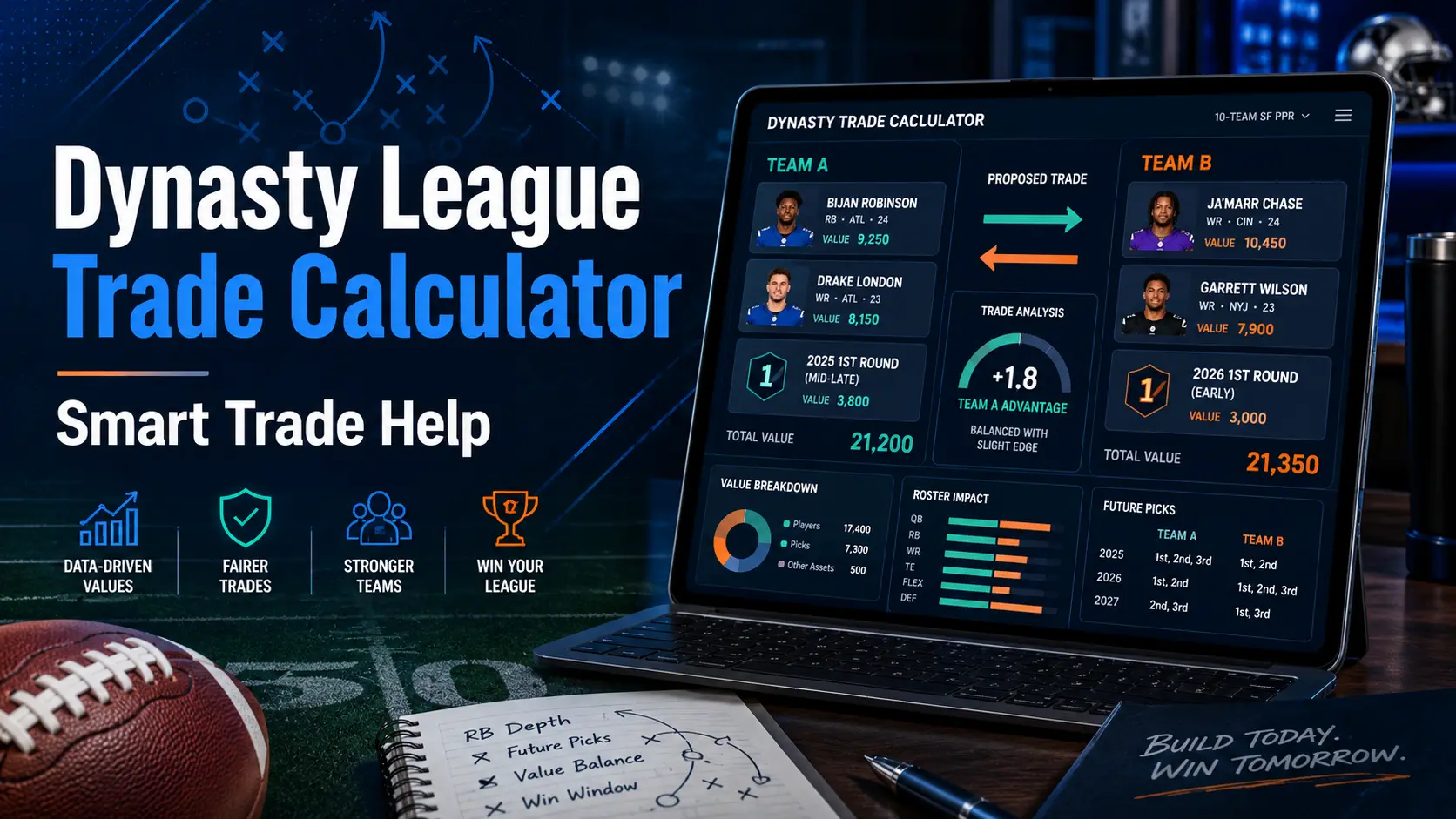
A dynasty league trade calculator values players and rookie picks with your own league’s rules, adds up both sides of a trade and shows which side is ahead. The word league matters: the same deal can be fair in one league and lopsided in another. This guide shows how settings change the answer and how to use the result.
What Is a Dynasty League Trade Calculator?
It is a fantasy football tool that compares players and picks by long-term value, not weekly points. A 29-year-old running back may score well now, while a 22-year-old receiver may be worth more over the next four seasons. The calculator puts both on one scale, so you can see the gap.
Our free dynasty trade calculator works this way and needs no account. Set it to your league before you enter a single player.
How League Settings Change the Result
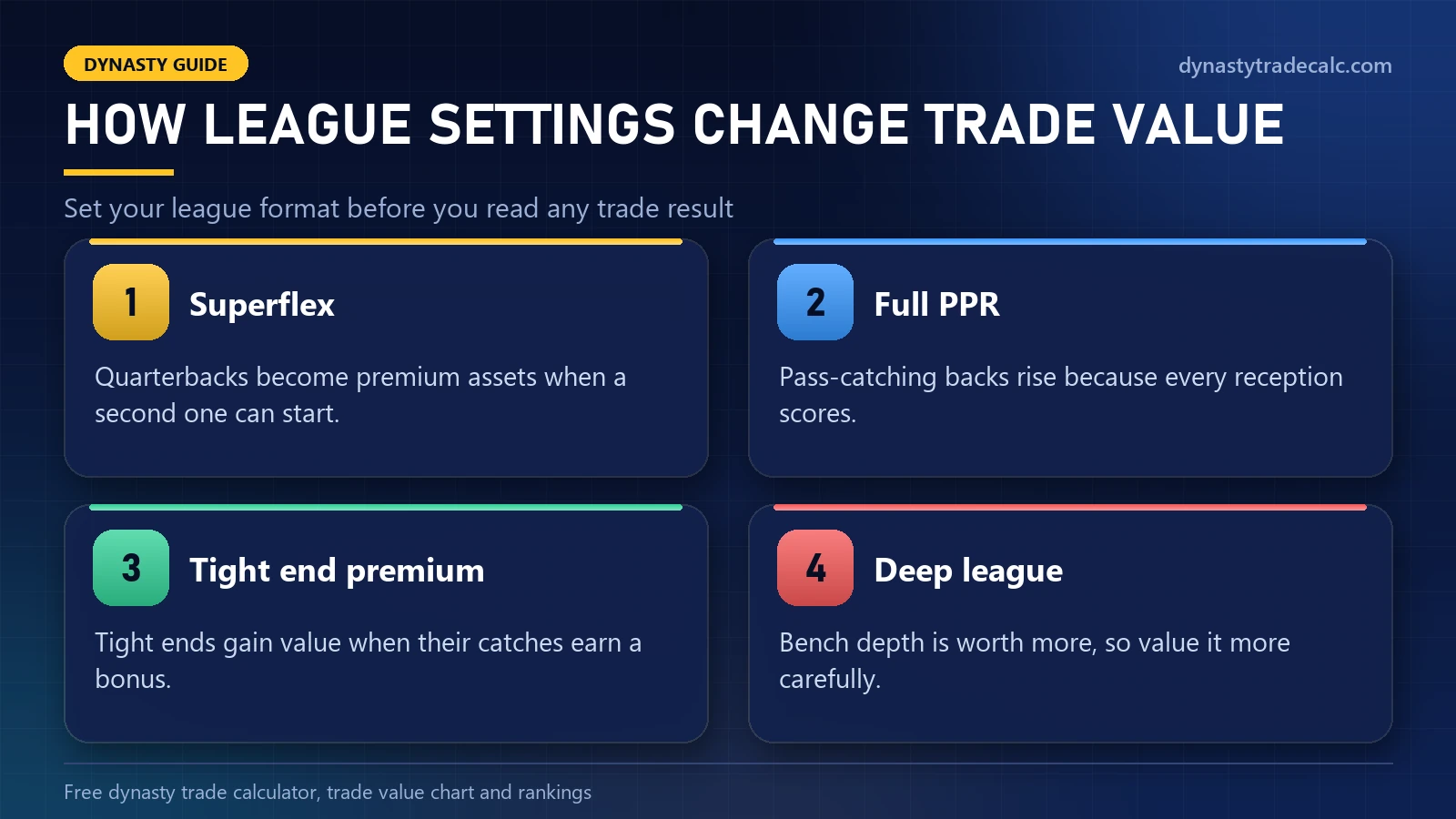
| League setting | What changes |
|---|---|
| Superflex | Quarterbacks become premium assets |
| Full PPR | Pass-catching backs rise |
| Tight end premium | Tight ends gain value |
| Deep league | Bench depth is worth more |
In a Superflex league a starting quarterback can be worth two good receivers; in a 1QB league the same quarterback may be worth one. A dynasty league trade calculator that ignores your settings will give you a confident but wrong answer. See the Superflex guide and the PPR guide for detail.
How to Use a Dynasty League Trade Calculator Step by Step
- Add every player and pick in the offer.
- Choose your league format: lineup type and scoring.
- Review age and role for each player.
- Compare team needs on both sides.
- Decide whether the trade fits your plan, then accept, counter or decline.
Players, Picks and Long-Term Value
| Asset | Best Use |
|---|---|
| Early rookie pick | Rebuild around young upside |
| Mid rookie pick | Add flexible trade value |
| Late rookie pick | Take upside shots |
| Veteran starter | Push for a championship |
| Young bench player | Wait for future opportunity |
Rookie picks gain value before the NFL Draft and change quickly once landing spots are known. Young players gain value as their role grows. Veterans help contenders win now but lose value with age. Current pick prices are on our rookie pick values page.
What Drives Player Value
Player value in dynasty changes like the weather. These are the drivers to check before you trust any number:
| Value Driver | Example Impact |
|---|---|
| Age | Younger stars usually keep value longer |
| Role | More snaps and targets increase trust |
| Injury history | Risk can lower market price |
| Team offense | Strong offenses create more scoring chances |
| Contract status | Future team changes can affect value |
Age and role usually matter most. A young player who is gaining snaps and targets is rising, even if his points have not caught up yet. An older player with a shrinking role is falling, even if he scored well last week. Check usage on Pro Football Reference before you pay for either.
Calculator vs Manual Review
A calculator gives fast value guidance; manual review gives league context. Use both. The calculator may call an offer fair, but you know your league mates: some overpay for rookies, others for veterans. A dynasty league trade calculator shows the market price, and your own review decides whether to take it.
Why Every Manager Needs One
Dynasty offers can include players, future picks, pick swaps and depth pieces all at once. One offer may look generous because it has more names, while another looks small but brings the best player. A calculator gives every manager the same quick reality check, so negotiations start from numbers instead of feelings. It also helps you build offers the other manager will actually consider, which means more trades get done.
Four Trade Situations
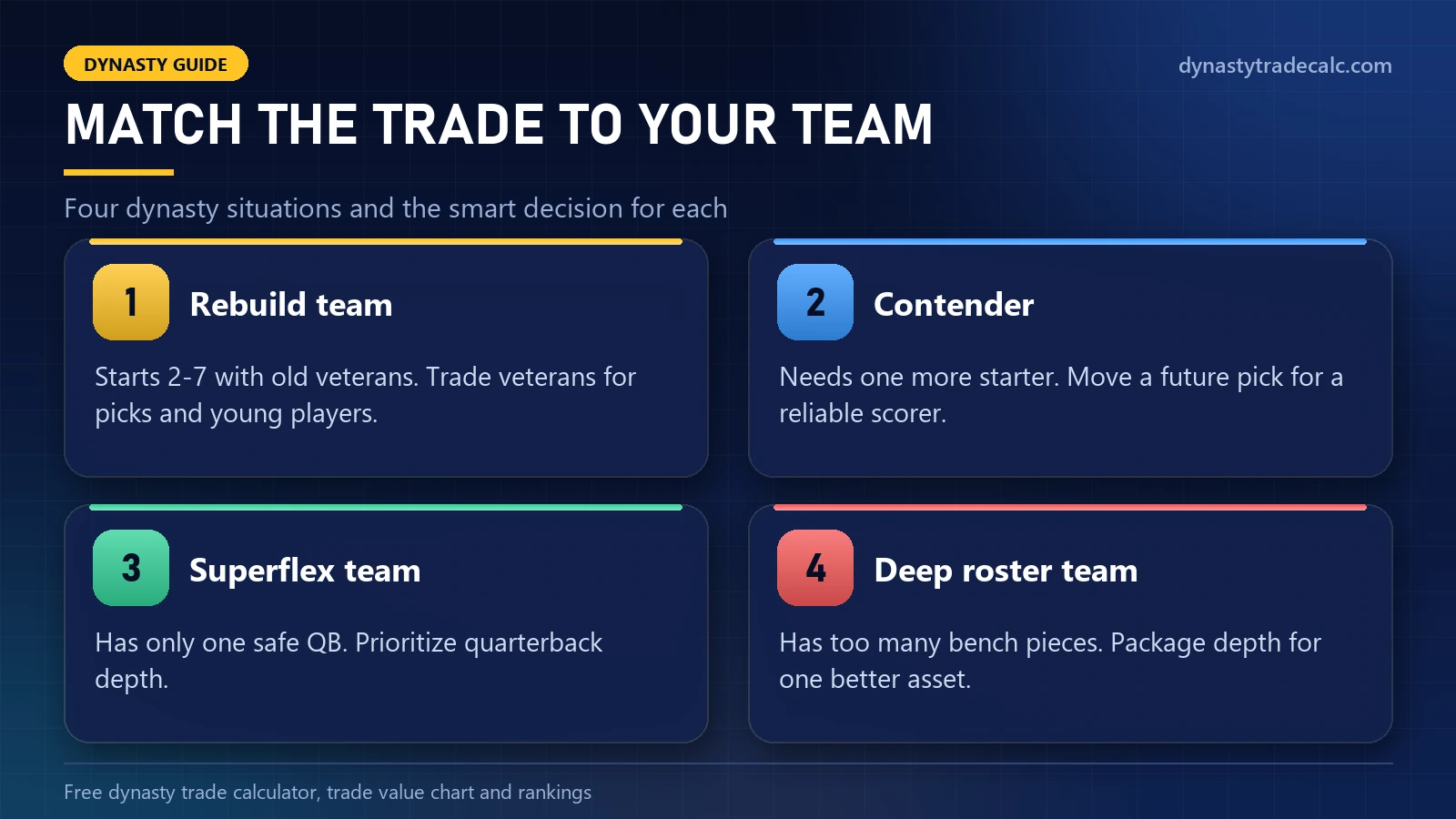
| Case Study | Situation | Smart Decision |
|---|---|---|
| Rebuild team | Starts 2–7 with old veterans | Trade veterans for picks and young players |
| Contender | Needs one more starter | Move future pick for a reliable scorer |
| Superflex team | Has only one safe QB | Prioritize quarterback depth |
| Deep roster team | Has too many bench pieces | Package depth for one better asset |
Tips to Build a Winning Dynasty Team
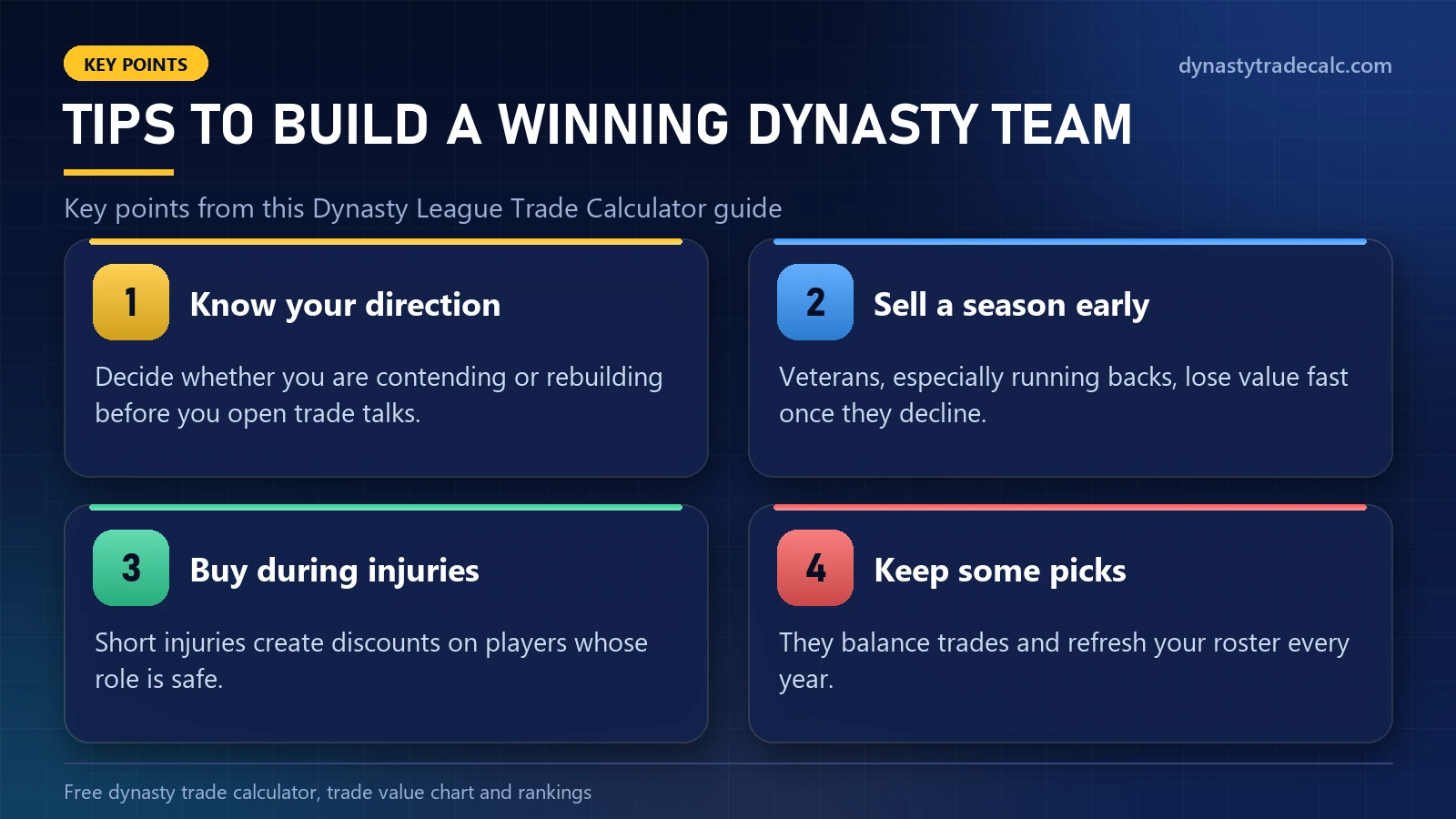
- Know your direction. Decide whether you are contending or rebuilding before you open trade talks.
- Sell a season early. Veterans, especially running backs, lose value fast once they decline.
- Buy during injuries. Short injuries create discounts on players whose role is safe.
- Keep some picks. They balance trades and refresh your roster every year.
- Be patient. No trade is better than a trade that does not fit your plan.
Common Mistakes
- Buying hype. Compare the price with the player’s role and production.
- Selling injured players too cheaply. Check the recovery timeline first.
- Ignoring league format. Adjust values for your scoring and lineup.
- Copying rankings blindly. Rankings show the market, not your roster.
More examples are in the biggest dynasty trade mistakes.
Frequently Asked Questions
What is a fantasy football dynasty league trade calculator?
A fantasy football dynasty league trade calculator values players and rookie picks for leagues where rosters carry over each year. It adds up both sides of a trade and shows the gap, so you can judge a deal first.
What league settings matter most in a dynasty league trade calculator?
Lineup and scoring settings matter most. Superflex raises quarterback value, full PPR lifts pass-catching backs, and tight end premium lifts tight ends, so match all three to your league.
Is the dynasty trade calculator on this site free?
Yes. The calculator on DynastyTradeCalc is free and needs no account. Choose a 1QB, Superflex or 2QB lineup and standard, half-PPR or full-PPR scoring, then add players and picks.
Is a dynasty trade calculator always accurate?
No. It gives useful value guidance, but injuries, depth charts and coaching changes move values fast. Treat the result as a starting point and check your roster too.
Should I trust calculator values over my own strategy?
No. The calculator shows market value, but it cannot know your team’s plan. If a fair trade does not move you toward your goal, you do not have to accept it.
How often should I use a trade calculator?
Use it for every serious offer you send or receive. Also check values during free agency, rookie draft season and after big injuries, when prices move the most.
Is a dynasty league trade analyzer different from a calculator?
Not really. A dynasty league trade analyzer and a trade calculator both compare long-term values of players and picks. An analyzer may also look at your roster to show how the deal changes your lineup.
Conclusion
A dynasty league trade calculator works only as well as its settings. Match your lineup and scoring, enter every player and pick, read the gap and check the deal against your team’s plan. Do that for every offer and you will stop guessing which trades to accept.
Related Guides
Compare With Other Sources
Our values are estimates, not quotes. It is good practice to compare a trade against KeepTradeCut crowd-sourced dynasty values and FantasyCalc as well. For this season’s values, see our dynasty trade calculator 2026 guide.
