

Table of Contents
- TradeCutKeep or KeepTradeCut: Which Name Is Right?
- How KeepTradeCut Values Work
- Using TradeCutKeep Values in a Trade
- Reading a Trade Offer Like a Pro
- Trade Targets by Team Situation
- When to Trust the Crowd, and When Not To
- Draft Picks and Market Timing
- League Format Changes the Values
- Case Study: Turning a Middle Team Into a Contender
- How to Double-Check a Trade
- Common Mistakes
- Frequently Asked Questions
- Conclusion
- Related Guides
TradeCutKeep is the name many managers type when they mean KeepTradeCut, the crowd-sourced dynasty value site. This guide explains how those values work and how to check any trade yourself. You will see what the crowd values are good at, where they go wrong and how to use them with a calculator.
TradeCutKeep or KeepTradeCut: Which Name Is Right?
The site is called KeepTradeCut, after the keep, trade, cut question it asks managers about three players at a time. TradeCutKeep is the same name with the words in a different order. If you searched for TradeCutKeep, the values you want are on KeepTradeCut.
How KeepTradeCut Values Work
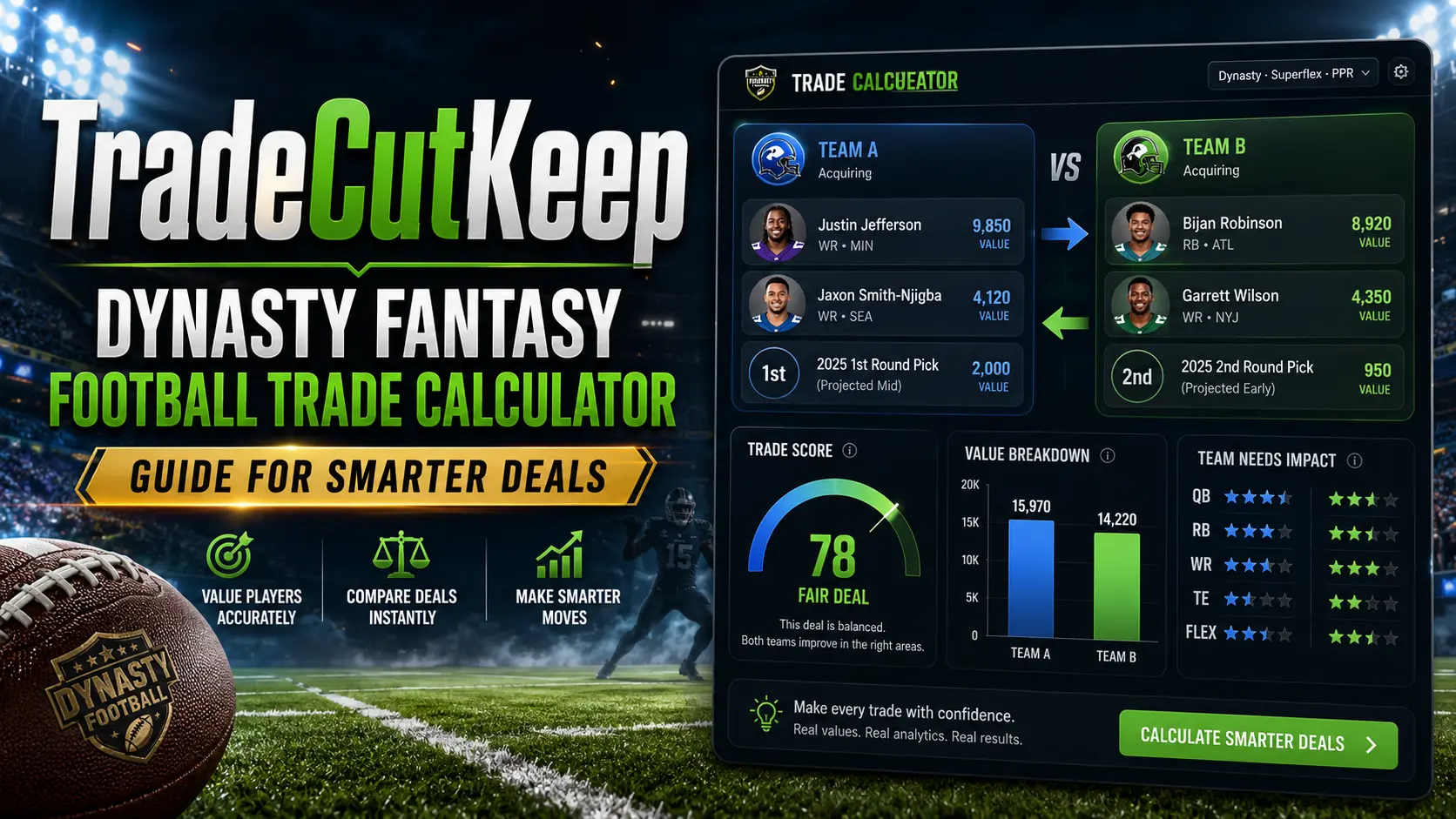
Managers are shown three players and asked which they would keep, trade and cut. Thousands of those answers are turned into a value for every player and rookie pick. The result is a live picture of what the dynasty community thinks right now.
That makes it quick to react to news, and also quick to overreact to hype. A rookie with one big game can jump, and a star with one bad week can fall, even though nothing about their long-term role changed. Read TradeCutKeep values as market mood, not as a final verdict.
Using TradeCutKeep Values in a Trade
- Look up every player and pick in the offer.
- Use the right format: 1QB or Superflex values are very different for quarterbacks.
- Compare the totals, then check how many incoming players would start.
- Check a second source, such as our free dynasty trade calculator.
- Decide by your team direction, not just the gap.
Reading a Trade Offer Like a Pro
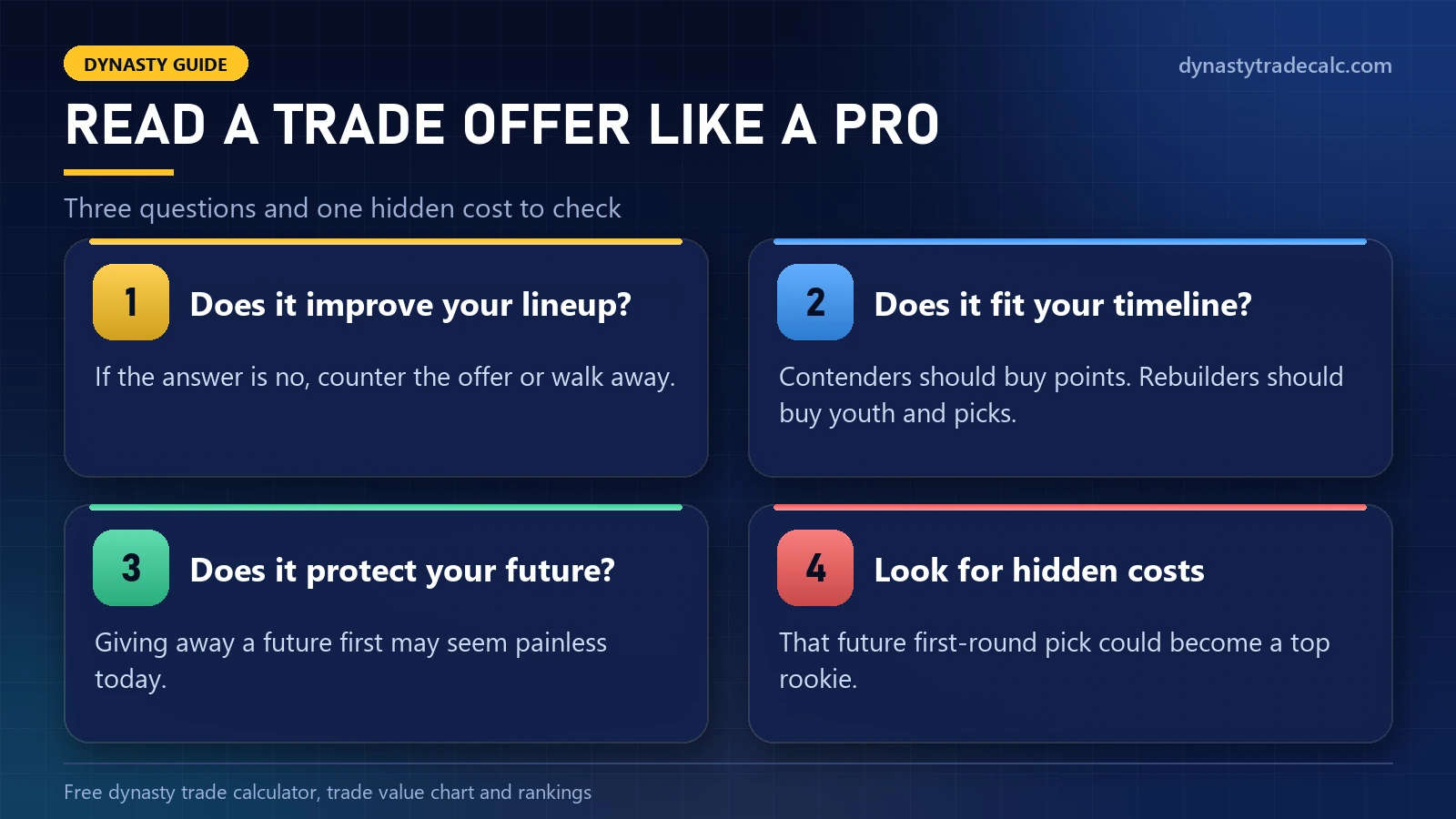
A good offer answers three questions: does it improve your lineup, does it fit your timeline and does it protect your future? Then look for the hidden cost, such as a roster spot you must clear or a bye-week hole. TradeCutKeep values answer the price question; these four checks answer the fit question.
Trade Targets by Team Situation
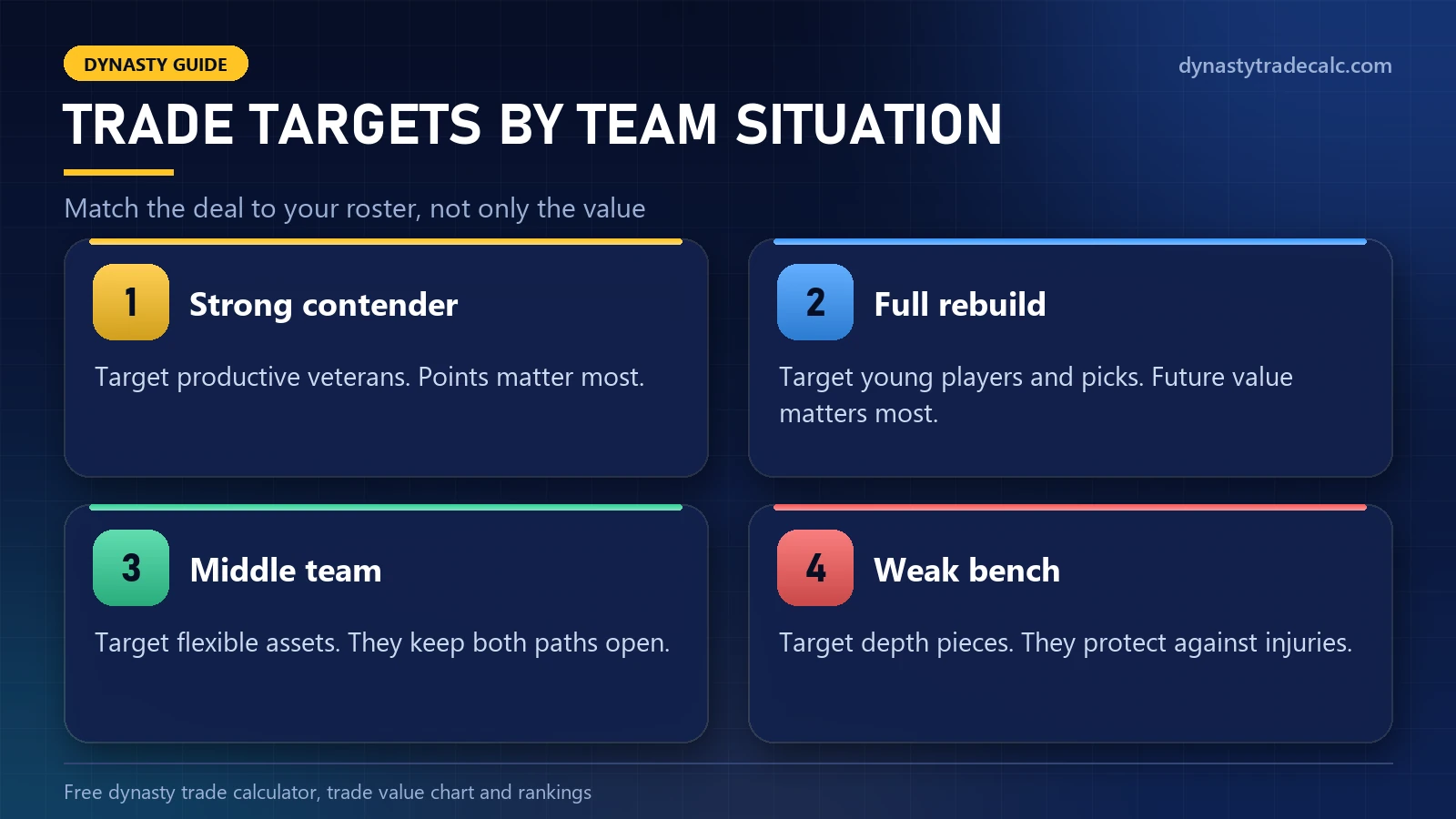
| Team Situation | Better Trade Target | Reason |
| Strong contender | Productive veterans | Points matter most |
| Full rebuild | Young players and picks | Future value matters most |
| Middle team | Flexible assets | Keeps both paths open |
| Weak bench | Depth pieces | Protects against injuries |
| No rookie picks | Future draft capital | Restores long-term options |
Contenders should care about weekly points and stop hoarding picks while their title window is open. Rebuilders should collect young players and picks that can rise in value. Middle teams should choose a lane before they trade. Buying and selling at the same time is the quickest way to lose value, because you pay full price going in and take a discount going out.
When to Trust the Crowd, and When Not To
- Trust it when you want a neutral read on what other managers would pay.
- Be careful right after one big game or one injury report, when hype moves values most.
- Adjust it for your league’s own habits; some leagues overpay for rookies or quarterbacks.
- Double-check it before any trade that changes your starting lineup.
Draft Picks and Market Timing
Picks are the lifeblood of dynasty leagues. On TradeCutKeep searches, managers often want to know what a pick is worth. Pick values rise near the rookie draft and fall during playoff pushes, when contenders sell picks for points. Current prices are on our dynasty rookie pick value chart 2026.
League Format Changes the Values
Format changes everything. In one-quarterback leagues, elite passers matter less than in Superflex, where most teams start two. In tight end premium leagues, the top tight ends gain extra value, and in full PPR, receivers and pass-catching backs rise. Always pick the value list that matches your league, or the comparison will point you the wrong way. Our Superflex guide explains the quarterback effect.
Case Study: Turning a Middle Team Into a Contender
You have strong wide receivers, weak running backs and two future first-round picks. You are good, but not good enough to win. Trade one receiver and one future first for a starting running back. Check the deal on the crowd values and in a second calculator. If both call it close, you have turned surplus into a starter without emptying your pick cupboard, and your lineup is stronger every week.
How to Double-Check a Trade
Different tools price players differently, so a second check is cheap insurance. Run the same trade through another calculator, such as FantasyCalc or ours. If both agree, trust the number more. If they disagree by a lot, the player is likely a buy-low or sell-high candidate worth a closer look.
Common Mistakes
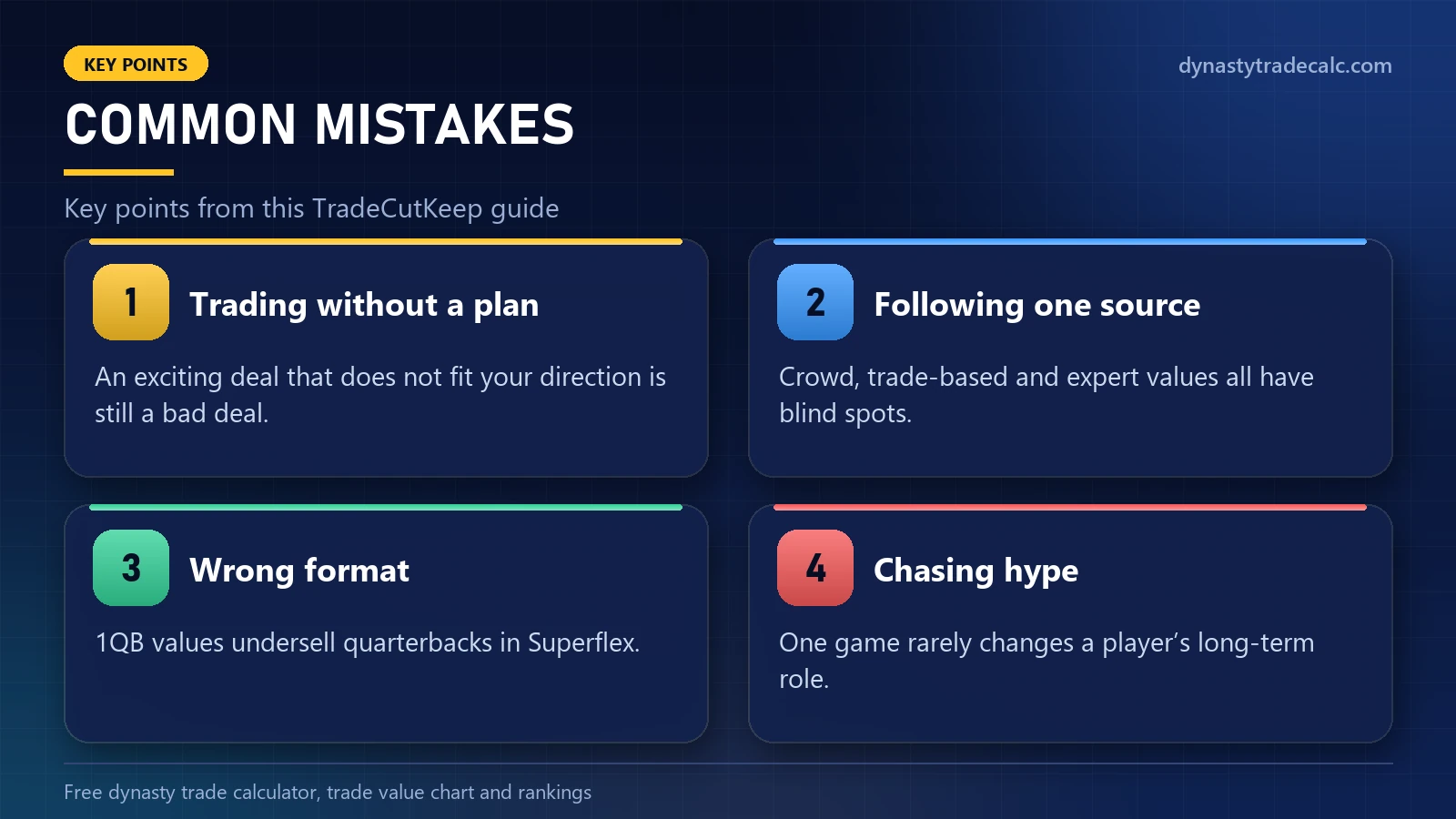
- Trading without a plan. An exciting deal that does not fit your direction is still a bad deal.
- Following one source. Crowd, trade-based and expert values all have blind spots.
- Wrong format. 1QB values undersell quarterbacks in Superflex.
- Chasing hype. One game rarely changes a player’s long-term role.
More examples are in the biggest dynasty trade mistakes.
Frequently Asked Questions
Is TradeCutKeep the same as KeepTradeCut?
Yes. TradeCutKeep is the name KeepTradeCut with the words in a different order. Both searches lead to the same crowd-sourced dynasty value site.
What is TradeCutKeep used for?
People who search TradeCutKeep usually want KeepTradeCut’s dynasty values: player and rookie pick rankings built from managers’ keep, trade and cut votes. They use them to price trades.
Is KeepTradeCut good for beginners?
Yes. It gives a simple value reference that shows how the dynasty community rates each player. Beginners should still check league format and their own roster before trading.
Should I check a second calculator after TradeCutKeep?
Yes. Crowd values can swing on hype, so run the same trade through another calculator. When both agree, trust the number more; when they disagree, look closer.
Can I use KeepTradeCut values for rookie pick trades?
Yes. Picks are listed next to players, so you can compare a first-round pick with a veteran. Remember that pick values change during the year and peak near the rookie draft.
What is the best way to win more dynasty trades?
Trade for your team direction. Contenders should buy points, rebuilders should buy youth and picks, and everyone should check two value sources before a big deal.
Conclusion
TradeCutKeep is simply KeepTradeCut with the words swapped. Use its crowd values to read the market, check the same trade in a second calculator, and let your team’s direction make the final call. A quick double-check takes two minutes and saves many bad trades.
Related Guides
Compare With Other Sources
Different tools price players differently. See how KeepTradeCut crowd-sourced dynasty values, FantasyCalc and DynastyProcess handle the same players. For this season’s values, see our dynasty trade calculator 2026 guide.
