Analyze Fantasy Trade | Free Tool for Smarter Decisions
Trading in fantasy football can make or break your season. To stay ahead, you need to analyze fantasy trade offers carefully. A rushed decision might cost you a key player or valuable draft pick. However, a thoughtful review using a fantasy football team analyzer helps you see value clearly. You compare roles, stats, and team needs to decide which trade improves your lineup most. Using this process saves time and prevents costly mistakes.
Furthermore, a good trade analysis doesn’t rely solely on numbers. It balances dynasty fantasy football rankings with practical roster construction. You must consider immediate production, long-term potential, and positional scarcity. A veteran may offer instant points, while a rookie could dominate seasons later. Therefore, understanding how to evaluate both types of players gives you a lasting advantage.
What It Means to Analyze Fantasy Trade Deals
Analyzing a fantasy trade means more than comparing raw statistics. You assess how the deal affects your lineup, future picks, and positional depth. For instance, if you give up a starting running back for two bench wide receivers, your weekly scoring might drop even if total value seems equal. Using a fantasy football team evaluator helps identify these hidden differences. It calculates player impact beyond simple point totals.
Moreover, analyzing trades allows you to anticipate how other managers in your league act. Observing past trades in fantasy football sleeper and fantasy football espn leagues shows patterns. You can spot which assets are overvalued or underappreciated. Then, you can negotiate from a position of knowledge. The combination of market insight and roster evaluation maximizes your success.
How to Analyze Fantasy Trade Value Accurately
Trade value depends on league format, player age, and positional demand. For example, quarterbacks gain higher trade value in Superflex leagues. Receptions increase running back worth in PPR leagues. Using a fantasy football team analyzer allows you to adjust each player’s score based on these factors. This ensures you’re not just following surface stats, but analyzing true market value.
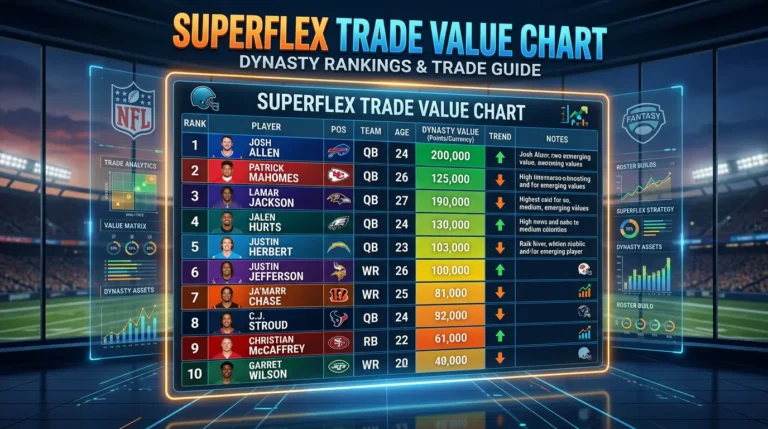
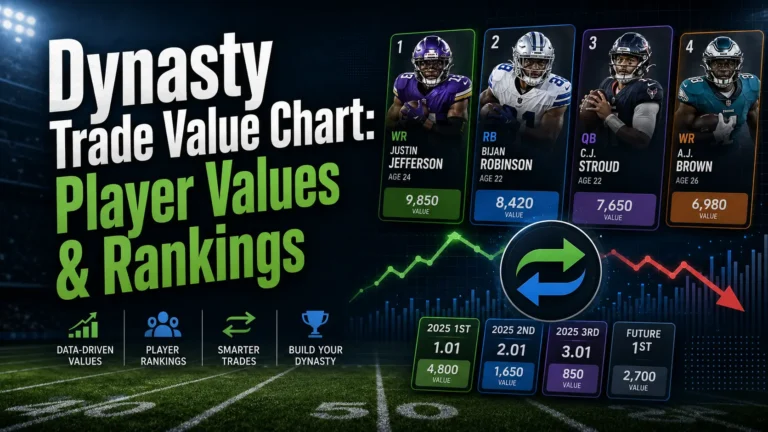
Additionally, check multiple sources for rankings. Fantasy football espn, 15-espn fantasy sports, and dynasty fantasy football rankings all provide context. They help you understand average trade values and trends. When combined, these insights create a clear picture of a fair offer. By evaluating both sides of a trade carefully, you reduce risk and increase league success.
Use a Free Tool to Analyze Fantasy Trade Effectively
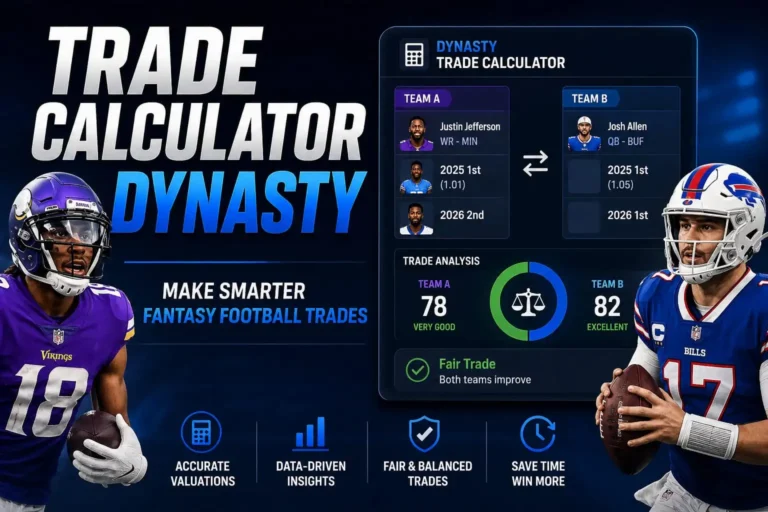
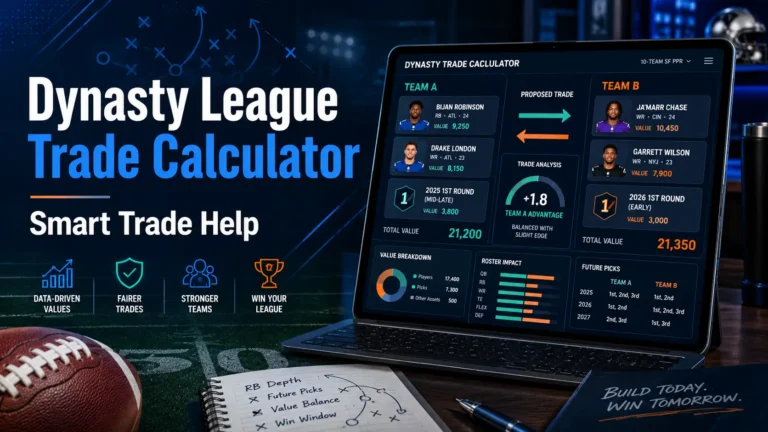
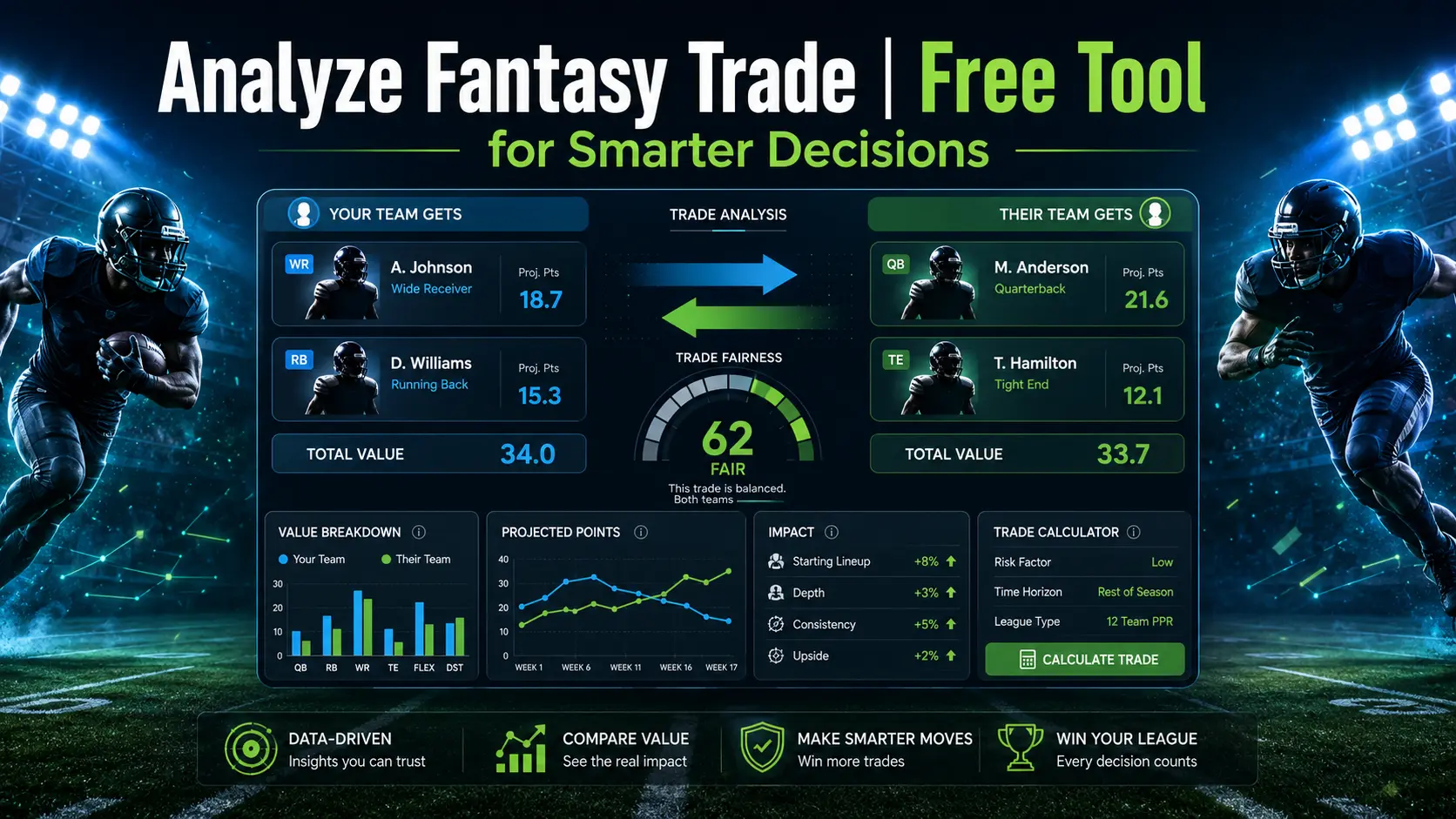
A free online calculator can instantly compare player values. By entering both trade packages into a team analyzer fantasy football, you see side-by-side numerical results. The tool accounts for league size, scoring type, and roster configuration. This helps identify imbalances before you commit. For example, a one-for-one swap may seem fair numerically, but the tool can reveal positional gaps.
Furthermore, free tools allow you to simulate counteroffers quickly. You can remove one player or add a pick to see how it changes value. Using a fantasy team ranker helps test multiple scenarios. This saves you negotiation time and ensures the final trade is equitable. A calculated approach prevents costly mistakes and strengthens your team strategically.
Key Factors That Affect Fantasy Football Trade Value
Player opportunity, injury history, and team context are crucial. High-volume pass-catching running backs are more valuable in PPR leagues. Similarly, a rookie with high projected touches can outweigh a veteran with declining usage. A fantasy team evaluator can model these scenarios, revealing which assets offer maximum benefit.
Market demand also plays a role. Popular players may be overvalued by your league mates. Conversely, a backup with a hidden starting role can be undervalued. By tracking fantasy team analyzer rankings, you can spot these trends. Understanding scarcity, opportunity, and positional importance ensures smarter trade decisions.
| Factor | Effect on Trade Value |
|---|---|
| Position scarcity | Raises value for hard-to-replace roles |
| Recent performance | Adjusts expected production |
| Age | Younger players offer long-term upside |
| Injuries | Reduces short-term reliability |
| League size | Larger leagues increase scarcity |
How to Analyze Fantasy Trade by Player Position
Each position has a unique impact on trade evaluation. Quarterbacks in Superflex leagues carry premium value. Running backs may fluctuate due to workload and injury risk. Wide receivers usually provide consistent output, but context matters. Using a fantasy football team analyzer allows you to compare positions fairly.
Additionally, tight ends can swing matchups in leagues that reward receptions heavily. Evaluating fantasy team evaluator metrics, including red-zone usage and snap share, helps pinpoint underappreciated players. By considering positional scarcity and weekly contribution, you can determine which trades truly improve your lineup.
Compare Player Value, Team Needs, and Future Potential
A trade might have equal point totals but differ in long-term impact. For instance, a rookie’s upside may surpass a veteran’s current points. Meanwhile, giving up depth can harm flexibility. A fantasy football team analyzer evaluates both immediate performance and future potential to balance your roster effectively.
Moreover, team needs influence the best trade strategy. A contending team may prioritize instant scoring, while a rebuilding team seeks draft capital. Comparing fantasy team ranker values alongside your team timeline ensures trades align with strategic goals. Understanding both present and future benefits prevents overpaying for temporary gains.
Analyze Fantasy Trade Options in PPR, Standard, and Superflex Leagues
League format changes player value drastically. PPR scoring elevates high-volume receivers and pass-catching backs. Standard scoring rewards touchdowns and yardage more heavily. Superflex leagues increase quarterback scarcity. A fantasy football team analyzer adjusts player value accordingly, offering accurate trade insights.
Additionally, using multiple sources like fantasy football espn and fantasy football sleeper shows trends for each format. Comparing these with your roster’s strengths reveals gaps or opportunities. This dual approach ensures trades are fair and improve your weekly output consistently.
Common Mistakes to Avoid When Analyzing Trades
One major mistake is overvaluing recent performance. A single breakout game can mislead managers. Another is ignoring roster construction, leading to poor position coverage. Relying on a single source or ignoring league context also results in poor trades. A fantasy team evaluator helps mitigate these errors by analyzing total value and positional impact.
Additionally, some managers treat bench assets as equal replacements for starters. This misleads trade evaluation. Using a fantasy football team analyzer to simulate lineups shows practical value. Understanding true starting impact versus bench depth ensures trades enhance your roster rather than weaken it.
Building Fair Counteroffers After Analyzing Fantasy Trade
A good counteroffer addresses the original manager’s goals while protecting your roster. You can adjust secondary pieces or draft picks to balance the trade. Using a team analyzer fantasy football tool lets you test scenarios before sending the offer, ensuring a fair and strategic deal.
Furthermore, fair counteroffers prevent negotiation delays and foster positive league interactions. By showing clarity and preparation, you increase the chance your offer will be accepted. Combining numerical insight with roster strategy maximizes trade success and team growth.
Advanced Tips to Analyze Fantasy Trade for Long-Term Success
Track your league’s behavior and market trends. Some managers overvalue rookies, while others prioritize veterans. Study fantasy team ranker patterns to anticipate trades and optimize offers. Timing your trades before market hype peaks gives an advantage over impulsive managers.
In addition, consider player longevity and team context. Combining fantasy football sleeper insights with dynasty fantasy football rankings provides deeper perspective. A patient and informed approach ensures that trades not only improve weekly performance but also strengthen your long-term competitive position.
5 FAQ
What is the best way to analyze fantasy trade offers?
Use a combination of fantasy football team analyzer tools, league settings, positional scarcity, and roster needs. Compare multiple sources and simulate lineups to see practical impact.
Can I use a free tool to analyze fantasy trade effectively?
Yes, free calculators provide numerical guidance. Always match scoring and league type to ensure accurate comparison. Use the tool as a guide, not as a replacement for judgment.
How often should I re-evaluate player value before making a trade?
Reassess after injuries, depth-chart changes, or major performance swings. Weekly checks are ideal, but always review before accepting a significant trade.
What mistakes should I avoid when analyzing fantasy trades?
Avoid overvaluing a single performance, ignoring league context, or comparing bench players equally to starters. Check positional impact and replacement options.