

Table of Contents
- What Is a Fantasy Trade Analyzer?
- Trade Analyzer vs Trade Calculator
- How to Use a Fantasy Football Trade Analyzer Step by Step
- PPR and Other Scoring Formats
- What to Focus On by League Type
- Four Trade Cases and the Lesson
- Key Features to Look For
- Why Every Manager Needs One
- Analyzer vs Manual Review
- Rest-of-Season Projections, Byes and Playoffs
- When to Ignore the Analyzer
- Common Mistakes
- Frequently Asked Questions
- Conclusion
- Related Guides
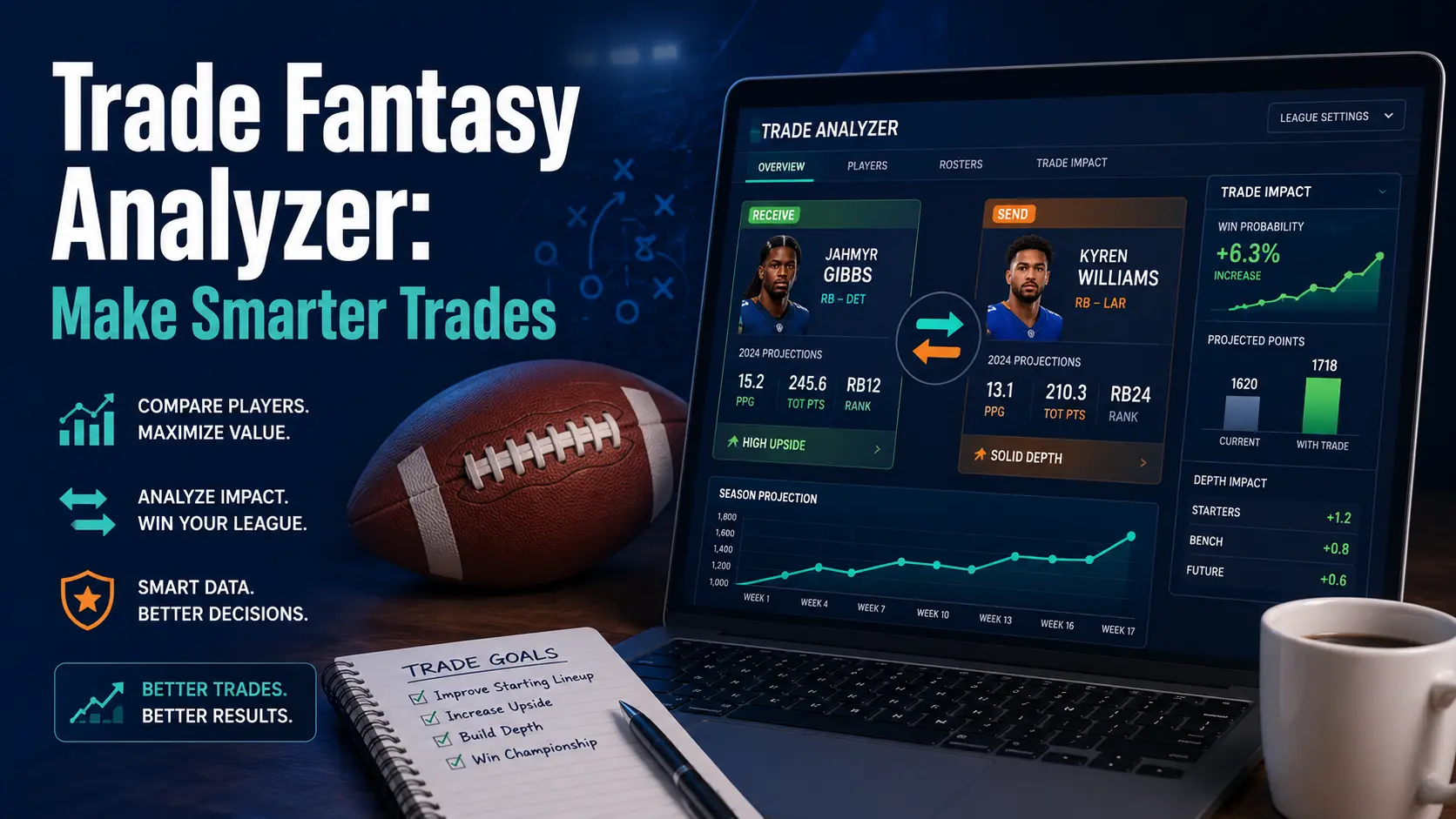
A fantasy trade analyzer, sometimes called a trade fantasy analyzer, checks a fantasy football trade before it damages your season. It compares players by value, position and scoring, and the better tools also look at your roster, so you know whether a deal actually makes your team better. Many managers search for it as a fantasy trade analyzer or a fantasy football trade analyzer; it is the same idea.
What Is a Fantasy Trade Analyzer?
It is an online tool that compares the players in a trade and shows which side gains more. A good one understands your league format: standard scoring is different from PPR, and redraft is different from keeper or dynasty. It gives you a pause before you click accept, which is when you stop most bad trades. Our free dynasty trade analyzer guide shows how to judge long-term deals. An NFL trade analyzer gives a quick second check before you accept.
Trade Analyzer vs Trade Calculator
The two words are often used for the same thing, but they do slightly different jobs:
| Point | Trade calculator | Trade analyzer |
|---|---|---|
| Main question | Is the value on both sides close? | Does this deal improve my team? |
| What it looks at | The names in the trade | The names plus your roster and lineup |
| Best for | Quick checks | Deeper team decisions |
Use both: the calculator for the price, the analyzer for the fit. Our free dynasty trade calculator handles the price side for dynasty leagues.
How to Use a Fantasy Football Trade Analyzer Step by Step
- Add every player in the proposed deal.
- Choose your scoring format: standard, half-PPR or PPR.
- Review your roster needs: which starting spot is weakest?
- Check injuries and bye weeks, especially for the playoff weeks.
- Decide whether the trade improves your lineup, not just your value total.
PPR and Other Scoring Formats
A fantasy trade analyzer is only as good as its settings. The same two players can come out even in standard scoring and uneven in PPR, because each reception adds a point for pass catchers. If your league scores receptions, use a PPR trade analyzer or switch the tool to PPR before you enter the deal. Our dynasty trade calculator PPR guide explains the difference in detail.
What to Focus On by League Type
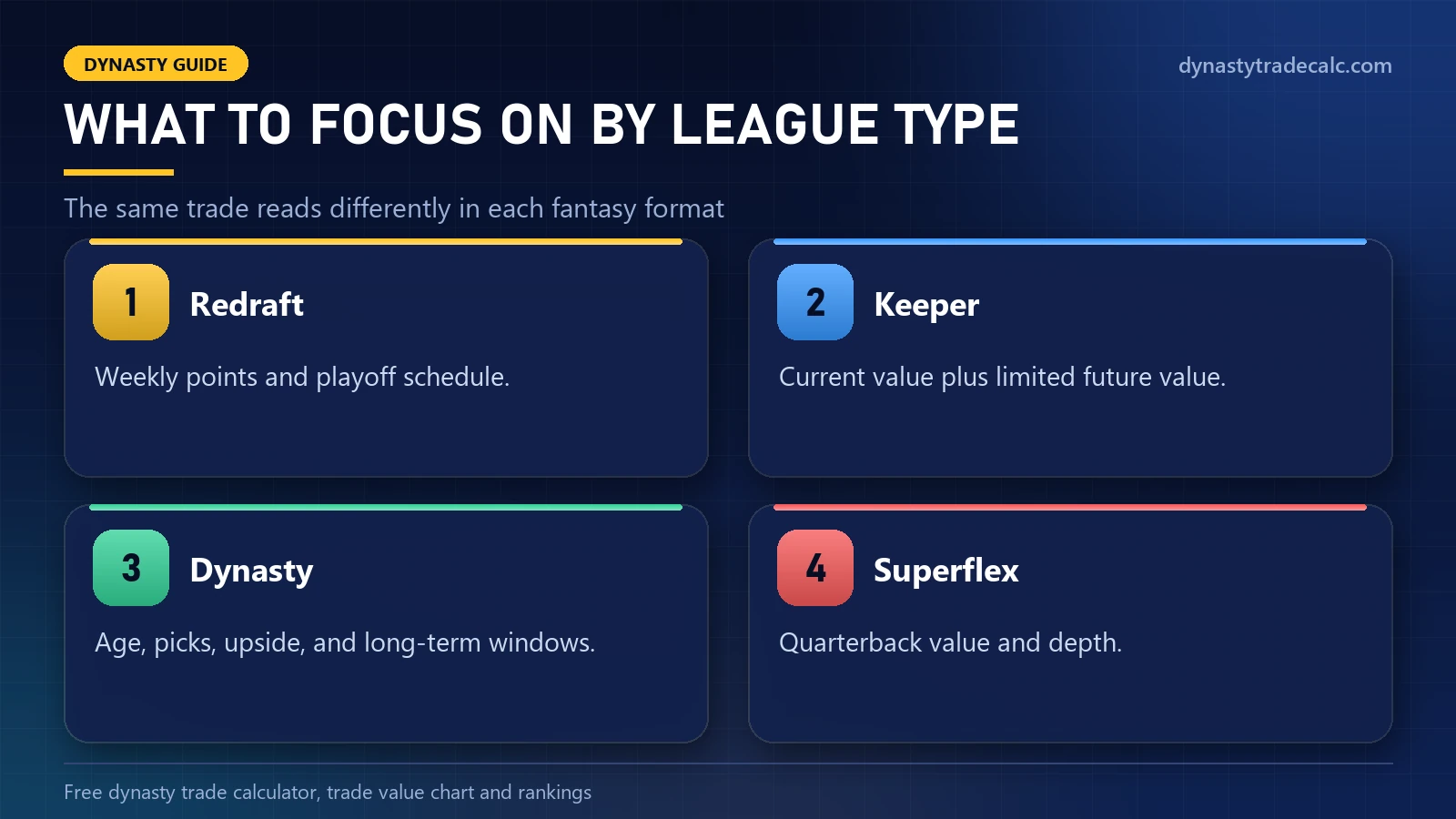
| League Type | Main Trade Focus |
|---|---|
| Redraft | Weekly points and playoff schedule |
| Keeper | Current value plus limited future value |
| Dynasty | Age, picks, upside, and long-term windows |
| Superflex | Quarterback value and depth |
| PPR | Targets, catches, and receiving roles |
Four Trade Cases and the Lesson
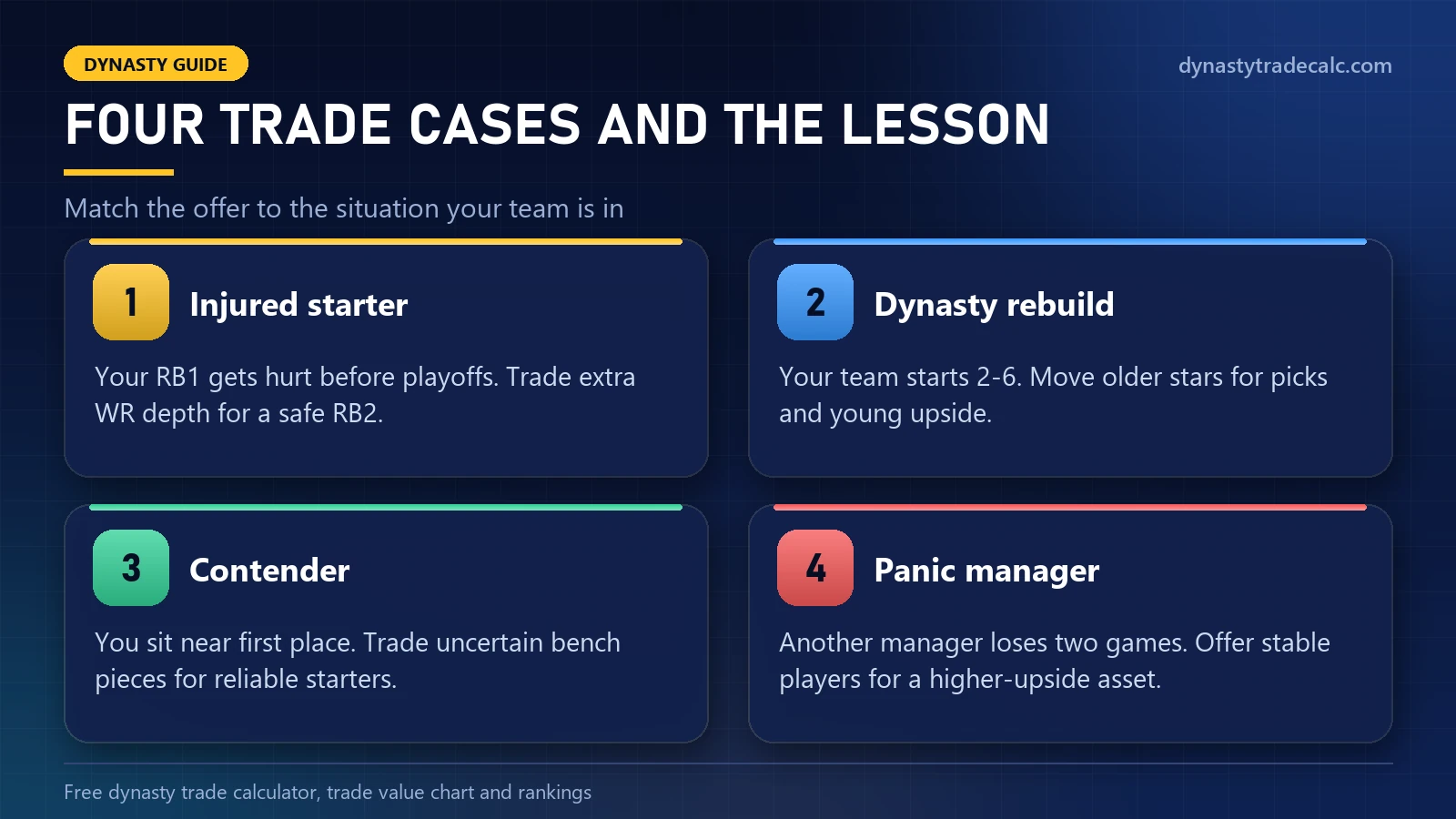
| Case Study | Situation | Smart Trade Lesson |
|---|---|---|
| The injured starter case | Your RB1 gets hurt before playoffs | Trade extra WR depth for a safe RB2 |
| The dynasty rebuild case | Your team starts 2–6 | Move older stars for picks and young upside |
| The contender case | You sit near first place | Trade uncertain bench pieces for reliable starters |
| The panic manager case | Another manager loses two games | Offer stable players for a higher-upside asset |
Key Features to Look For
- Scoring settings: standard, half-PPR and PPR, plus tight end premium if your league uses it.
- League type: redraft, keeper or dynasty, because each one values age and picks differently.
- Roster view: the ability to see how a trade changes your starting lineup, not just the totals.
- Current data: injuries, depth charts and bye weeks that update during the season.
- Draft picks for keeper and dynasty leagues.
Why Every Manager Needs One
Every offer has two stories. One is the shiny version you see at first: a big name coming to your team. The other is what your lineup looks like a week later, with a hole where a steady starter used to be. A quick analysis shows the second story before you accept, which is why managers who check every offer lose far fewer trades. Our free trade analyzer guide covers what to look for, how to use one, and when a paid tool is actually worth it.
Analyzer vs Manual Review
An analyzer gives speed and structure; manual review gives common sense and league knowledge. The tool cannot know that your league mate always overpays for rookies, or that your rival is desperate for a tight end. Use the trade fantasy analyzer for the numbers and your own judgment for the people.
Rest-of-Season Projections, Byes and Playoffs
In season, the best analyzers judge a deal on what is left of the year, not on last month. Look for three things:
- Rest-of-season projections that update at least daily, so injuries and role changes count right away.
- Bye weeks: two incoming players with the same bye can cost you a full week.
- Playoff schedule: matchups in weeks 15 to 17 matter more than the next two games.
The same method works for baseball, basketball and hockey, though each sport needs its own projections.
When to Ignore the Analyzer
Sometimes your league context outweighs the number. If you are one starter away from a title, a small overpay for that starter can be right even when the analyzer says no. If you are rebuilding, a fair offer for an aging veteran can still be wrong if a better one is likely after the next injury in your league.
Common Mistakes
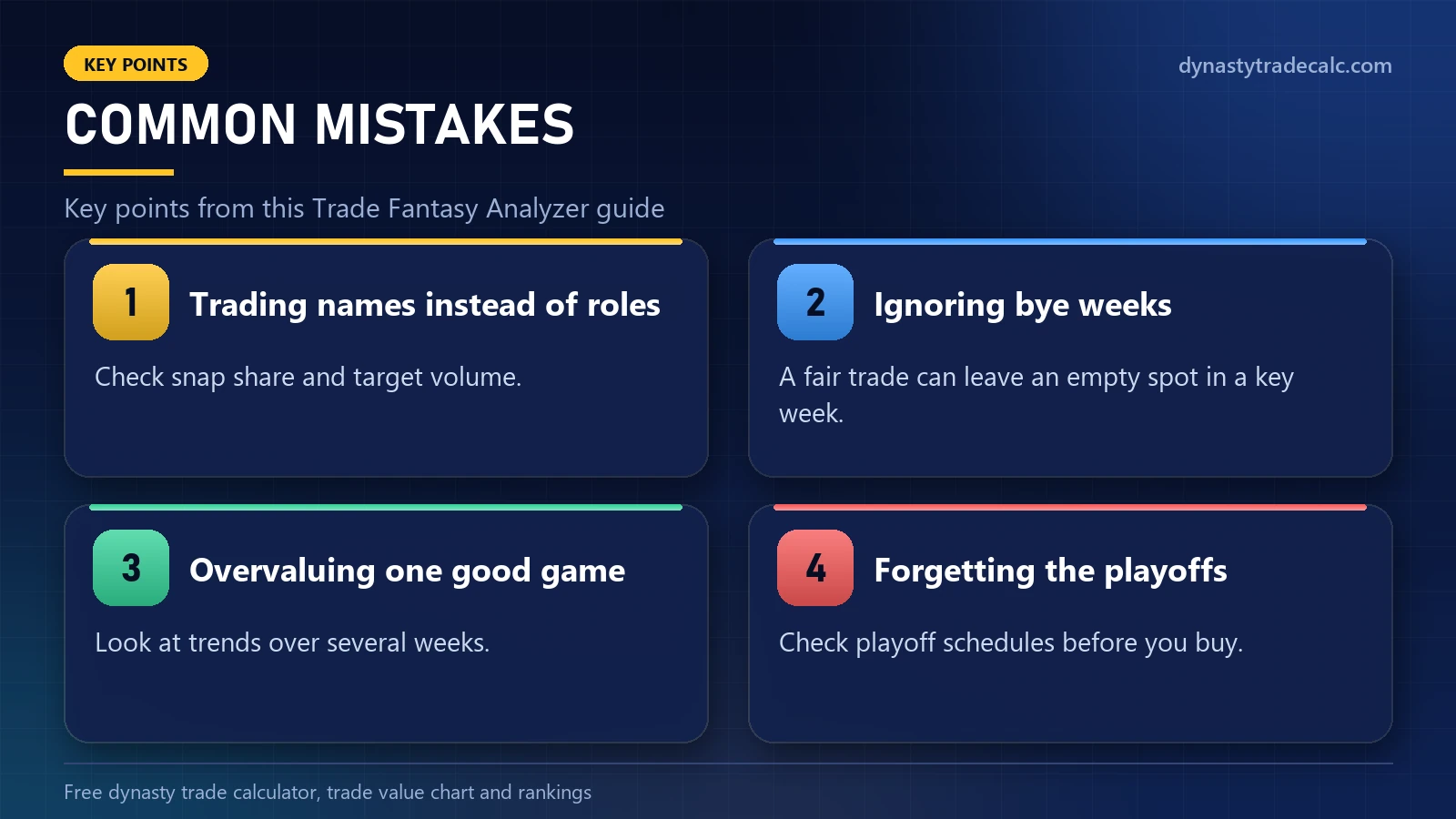
- Trading names instead of roles. Check snap share and target volume.
- Ignoring bye weeks. A fair trade can leave an empty spot in a key week.
- Overvaluing one good game. Look at trends over several weeks.
- Forgetting the playoffs. Check playoff schedules before you buy.
The best strategy is simple: solve your problem while solving the other manager’s problem. More ideas are in our fantasy trade calculator guide.
Frequently Asked Questions
What is a fantasy trade analyzer?
A fantasy trade analyzer compares the players and picks on each side of a trade and tells you which side gains more value. It gives you a quick, neutral check before you accept or send an offer.
What is the best fantasy football trade analyzer?
The best fantasy football trade analyzer matches your league type and scoring. Redraft managers need weekly projections; dynasty managers need age and pick values, like our free calculator offers. Our fantasy trade grader guide covers how to grade any trade from value, lineup impact and timing.
Do I need a PPR trade analyzer for a PPR league?
Yes, or a tool with a PPR setting. Reception points raise the value of pass-catching running backs and busy receivers, so a standard-scoring result can mislead you in a PPR league.
What is the difference between a trade analyzer and a trade calculator?
A trade calculator adds up the value on each side of a deal. A trade analyzer also looks at your roster and lineup, so it tells you whether the deal actually improves your team.
Is a trade fantasy analyzer useful in dynasty leagues?
Yes. In dynasty leagues it helps you weigh age, draft picks and future upside alongside current production, which matters because you keep players for years. Our fantasy football trade analyzer ai guide covers what AI trade tools do well and how to check their advice.
Can a trade analyzer handle draft picks?
Yes, if it targets dynasty or keeper leagues. Redraft analyzers only value this season, so picks show as zero. For trades with picks, use a dynasty tool and set Superflex or 1QB first.
Should I accept every trade the analyzer recommends?
No. A tool may show fair value while your roster needs something else. Check your lineup, bye weeks and team direction before you accept any deal.
Is a fantasy trade evaluator the same as a trade analyzer?
Yes. A fantasy trade evaluator, a trade analyzer and a trade calculator do the same job: they score both sides of a trade so you can see the gap before you decide.
Conclusion
A trade fantasy analyzer turns a tempting offer into a clear decision. Set the right scoring, check your roster needs, compare the result with your own league knowledge and accept only the trades that make your lineup better. Small, steady improvements over a season beat one big gamble.
Related Guides
Compare With Other Sources
No single analyzer is definitive. Sanity-check a close call against FantasyPros dynasty rankings and FantasyCalc. You can also run the same trade through our fantasy football trade analyzer.
