


Table of Contents
- What a Fantasy Football Team Analyzer Does
- Why a Team Analyzer Matters in Dynasty
- Team Analyzer vs Dynasty Trade Calculator
- How the Two Tools Work Together
- What a Team Analyzer Report Shows
- Grade Your Team by Position: A Worksheet
- Common Mistakes When Using a Fantasy Football Team Analyzer
- From Team Grade to Trade Plan
- Tools to Use With a Team Analyzer
- FAQs About Team Analyzers
- Conclusion
- Related Guides
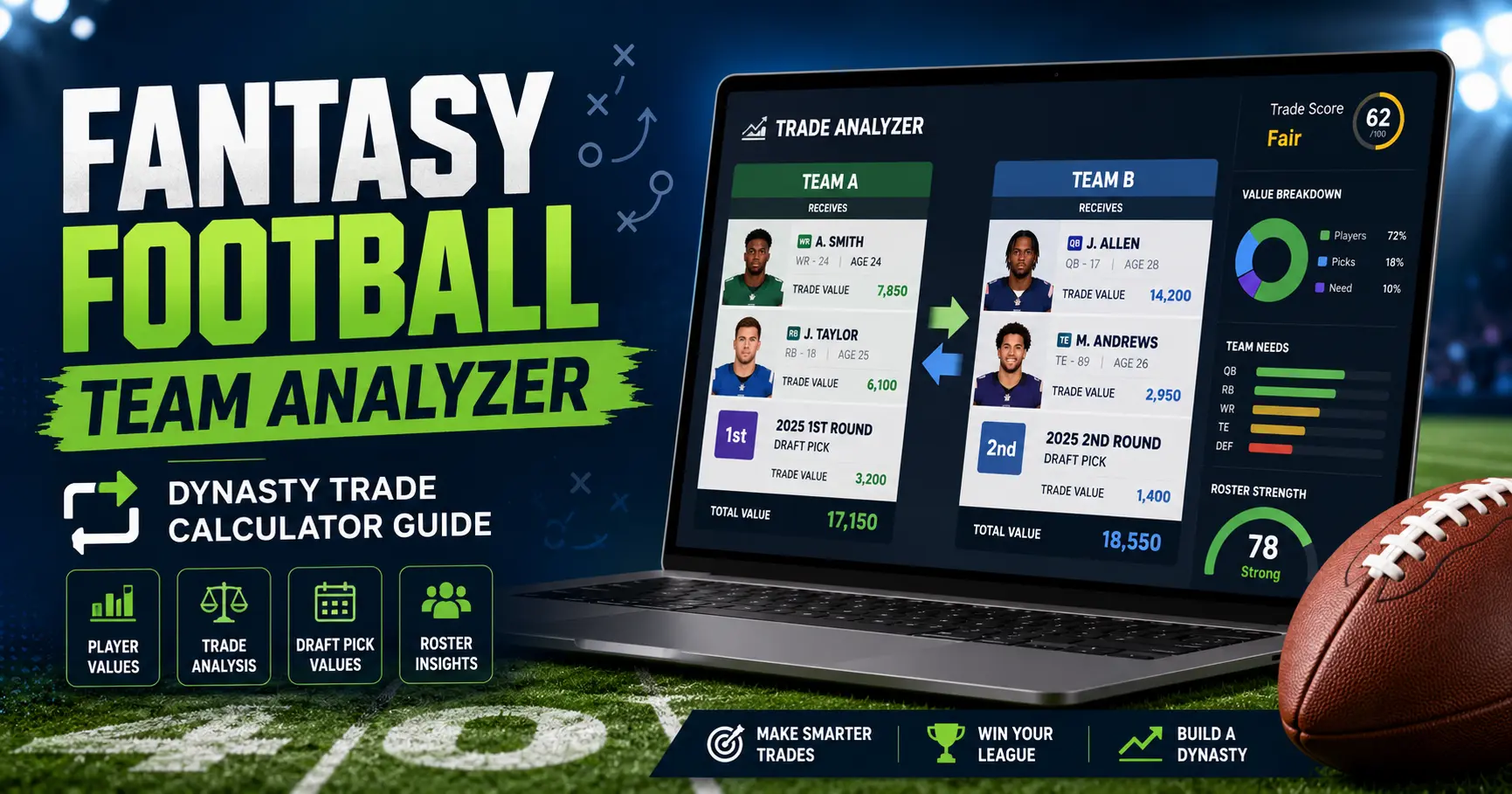
A fantasy football team analyzer looks at your whole roster and tells you where you are strong, where you are thin and what to fix first. This guide shows how to grade a dynasty team position by position, then how to turn that grade into trades, using a dynasty trade calculator to price each move.
What a Fantasy Football Team Analyzer Does
Most trade tools answer one question: is this deal fair? A team analyzer answers a different one: what does this roster need? It reviews your starters, your bench, the age of your core and your draft picks, then points to the weakest area.
In dynasty that matters more than in redraft, because you keep your players from year to year. A roster that scores well today can still be in trouble if its best players are aging and its picks are gone. A fantasy football team analyzer catches that early.
Why a Team Analyzer Matters in Dynasty
Dynasty trades are harder to judge than redraft trades. You may swap young talent for veterans, or picks for a player who helps you win now. A fair trade on paper can still move you in the wrong direction.
Trading a high-upside rookie for a declining veteran can look safe today and cost you years of value. A team grade stops that mistake, because it tells you first whether you should be buying points or buying the future. Run a fantasy football team analyzer check before every big trade, not after.
Team Analyzer vs Dynasty Trade Calculator
A dynasty trade calculator gives every player and pick a value and adds up both sides of a deal. It checks the trade. A team analyzer checks the team. You need both, in that order: the analyzer picks the target and the calculator sets the price. The fantasy football team analyzer always comes first.
| Tool | Question it answers | When to use it |
|---|---|---|
| Team analyzer | What does my roster need? | Before you look for a trade |
| Trade calculator | Is this offer fair? | When you have an offer in mind |
| Value chart | What is this one player worth? | For a quick single-player check |
The value behind each player is on our dynasty trade value chart.
How the Two Tools Work Together
- Grade your roster and find the weakest position group.
- Find your strongest group. That is where your trade chips are.
- Look for a league mate with the opposite problem.
- Build an offer that sends surplus from your strong group for help at your weak one.
- Price the offer in the calculator and adjust it until the totals are close.
What a Team Analyzer Report Shows
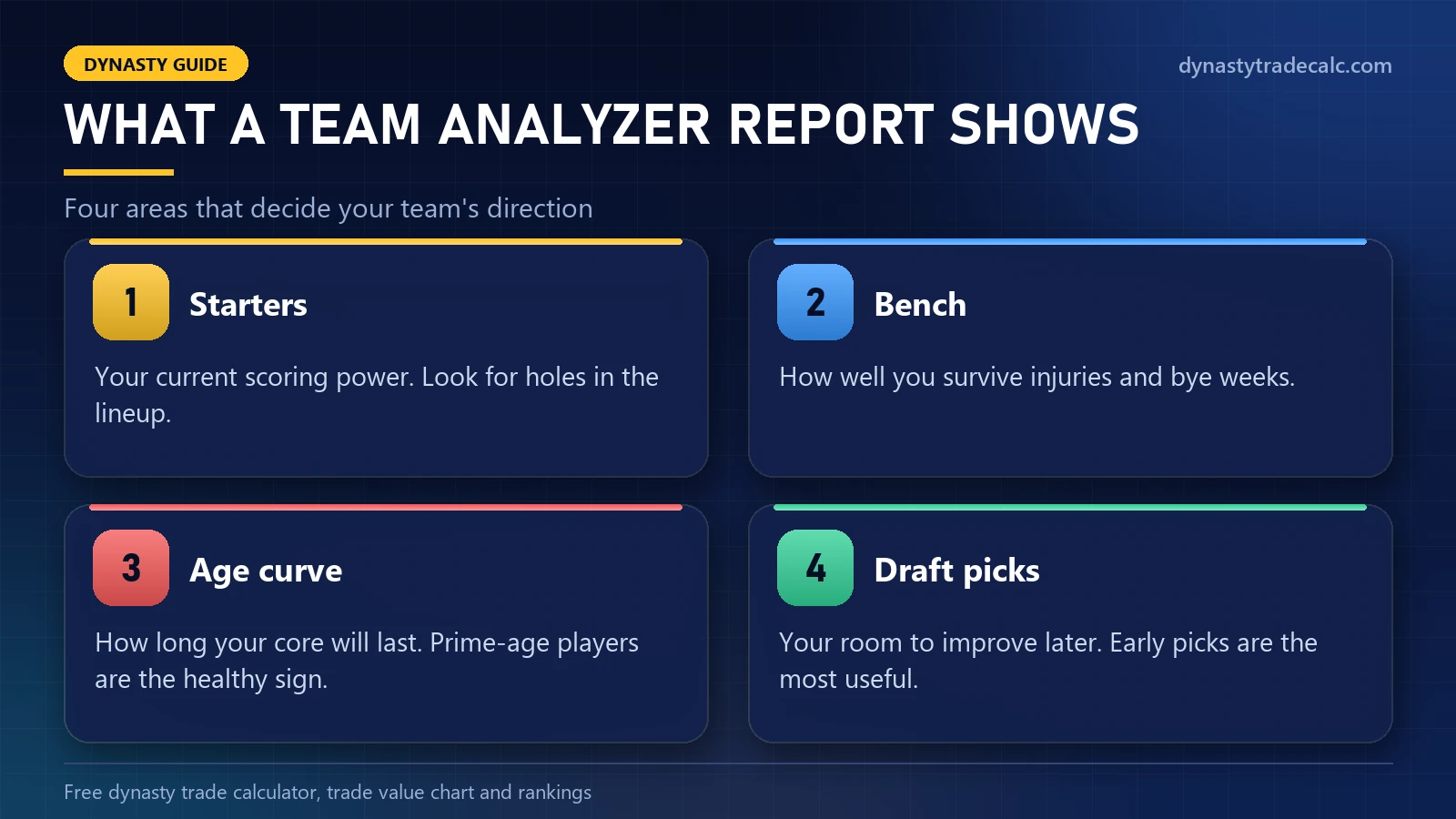
| Roster area | What it tells you | Healthy sign |
|---|---|---|
| Starters | Current scoring power | No obvious hole in the lineup |
| Bench | How well you survive injuries and bye weeks | A usable backup at every position |
| Age curve | How long your core will last | Most key players in their prime years |
| Draft picks | Your room to improve later | You still hold your own early picks |
| Quarterback depth | Format stability | Two steady starters in Superflex |
Grade Your Team by Position: A Worksheet
You can do this by hand in a few minutes. For each position, count the players you would be happy to start and compare that number with your lineup. This worksheet is a fantasy football team analyzer you can run without any software.
| Position | Strong if | Weak if |
|---|---|---|
| Quarterback | You own more reliable starters than you must play | One injury would force a backup into your lineup |
| Running back | You have a startable player beyond your lineup spots | You rely on one back for most of your points |
| Wide receiver | You have depth to cover your flex spots | Your third receiver is a weekly guess |
| Tight end | You own one of the few difference-makers | You change your starter most weeks |
| Picks | You hold your first-round picks | Your early picks are already traded |
Mark each row strong, average or weak. Your weakest row is your shopping list, and your strongest row is your currency.
Common Mistakes When Using a Fantasy Football Team Analyzer
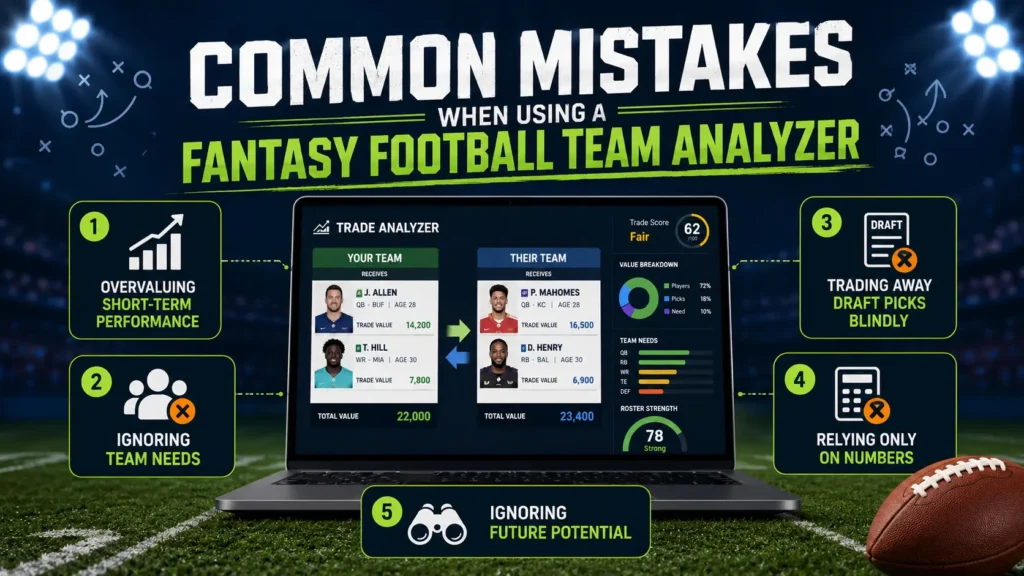
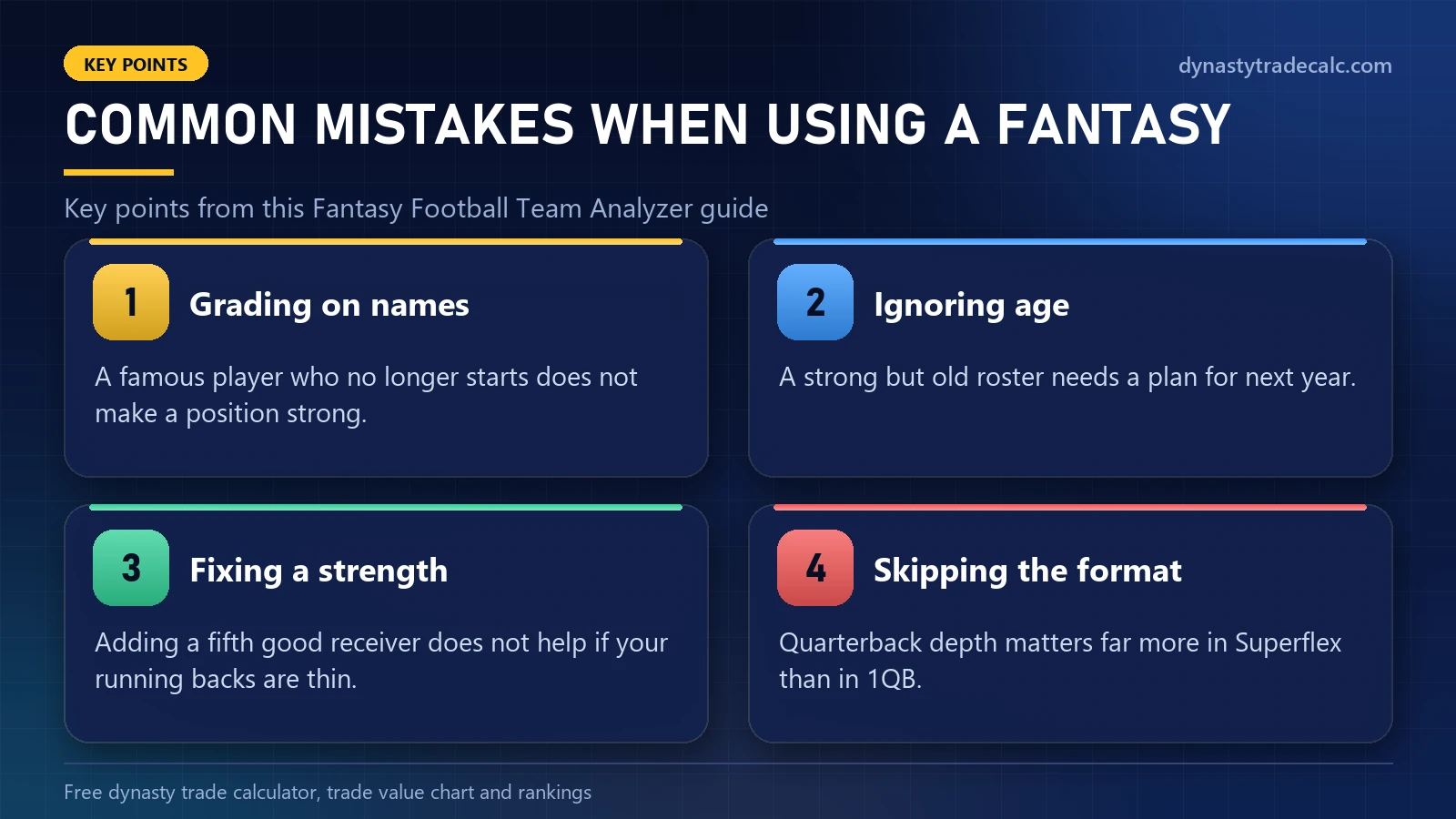
- Grading on names. A famous player who no longer starts does not make a position strong.
- Ignoring age. A strong but old roster needs a plan for next year.
- Fixing a strength. Adding a fifth good receiver does not help if your running backs are thin.
- Skipping the format. Quarterback depth matters far more in Superflex than in 1QB.
More examples are in the biggest dynasty trade mistakes.
From Team Grade to Trade Plan
| Your grade | Direction | What to trade for |
|---|---|---|
| Strong starters, good depth | Contend | A final upgrade at your weakest starting spot |
| Strong starters, no depth | Contend carefully | Reliable depth, paid for with one surplus starter |
| Average everywhere | Pick a lane | Either consolidate into stars or sell veterans for picks |
| Weak starters, aging core | Rebuild | Picks and young players, in exchange for veterans |
A league-wide view helps here as well. Our dynasty league analyzer guide shows how to compare your roster with the rest of your league. Pair the fantasy football team analyzer grade with a league-wide view.
Tools to Use With a Team Analyzer
- The dynasty trade calculator, to price an offer once you know what you need.
- The dynasty rankings, to see where your players sit at each position.
- The rookie pick values page, to value the picks you hold.
- Our fantasy football trade analyzer guide, for reading a single deal in detail.
- A second, independent source, listed at the end of this page.
FAQs About Team Analyzers
What is a fantasy football team analyzer?
A fantasy football team analyzer reviews your whole roster instead of a single trade. It shows how strong your starters are, how deep your bench is, how old your core is and how many picks you hold.
How does a team analyzer grade my roster?
It compares each position group with what your lineup needs. If you start two running backs and own four good ones, that group is strong. If you start three receivers and own two, that group is weak.
Is a team analyzer the same as a trade calculator?
No. A trade calculator checks whether one deal is fair. A team analyzer checks what your roster needs. Use the analyzer to choose a target, then the calculator to price the trade.
How do I know which position to trade for?
Trade from your strongest group to fix your weakest one. Grade each position against your starting lineup, then offer surplus starters to a team that is short at that spot.
Can I use a team analyzer in a dynasty league?
Yes, and it matters more there. In dynasty you also need to grade age and draft picks, because a roster that is strong today can decline quickly if its best players are near the end of their prime.
How often should I grade my fantasy team?
Grade it after your rookie draft, before the trade deadline and at the start of the offseason. Grade it again after a major injury to a starter.
Is a team analyzer useful for beginners?
Yes. It turns a long roster into a short list of strengths and weaknesses. That makes it much easier to see which trades would actually help.
Conclusion
A fantasy football team analyzer gives your trades a purpose. Grade each position, trade from strength to fix weakness, and price every move before you send it. Teams that follow that order make fewer trades and better ones.
Related Guides
Compare With Other Sources
No single analyzer is definitive. Sanity-check a close call against FantasyPros dynasty rankings and FantasyCalc. You can also run the same trade through our fantasy football trade analyzer.
