

Table of Contents
- What Are Fair Trades in Fantasy Football?
- The Four-Part Fair Trade Test
- How to Check the Value
- Why an Uneven Trade Can Still Be Fair
- When Should a League Veto a Trade?
- Who Decides? Commissioner, Committee and Review Period
- How to Make Offers That Feel Fair
- Common Mistakes When Judging Trades
- Frequently Asked Questions
- Conclusion
- Related Guides
- Compare With Other Sources
Fair trades in fantasy football are deals where both managers end up with a better team than they started with. That sounds simple, yet most league arguments begin here. This guide gives you a four-part test, shows how to check the numbers and explains when a league should step in.
Is this a fair trade? A trade is fair when the value gap between the two sides is under about 5% and each team fills a real need. If one side wins on value by more, it needs a clear roster reason, such as a contender buying a starter for the playoffs.
What Are Fair Trades in Fantasy Football?
A fair trade has two parts. First, the value going each way is close. Second, each team has a real reason to do it. A deal can be even on paper and still be bad for your roster, and it can look uneven and still help both sides. That is the simplest definition of fair trades in fantasy football.
Fair does not mean equal. Two managers can look at the same player and see different things, because one is chasing a title this year and the other is building for later. That difference is why trades happen at all.
The Four-Part Fair Trade Test
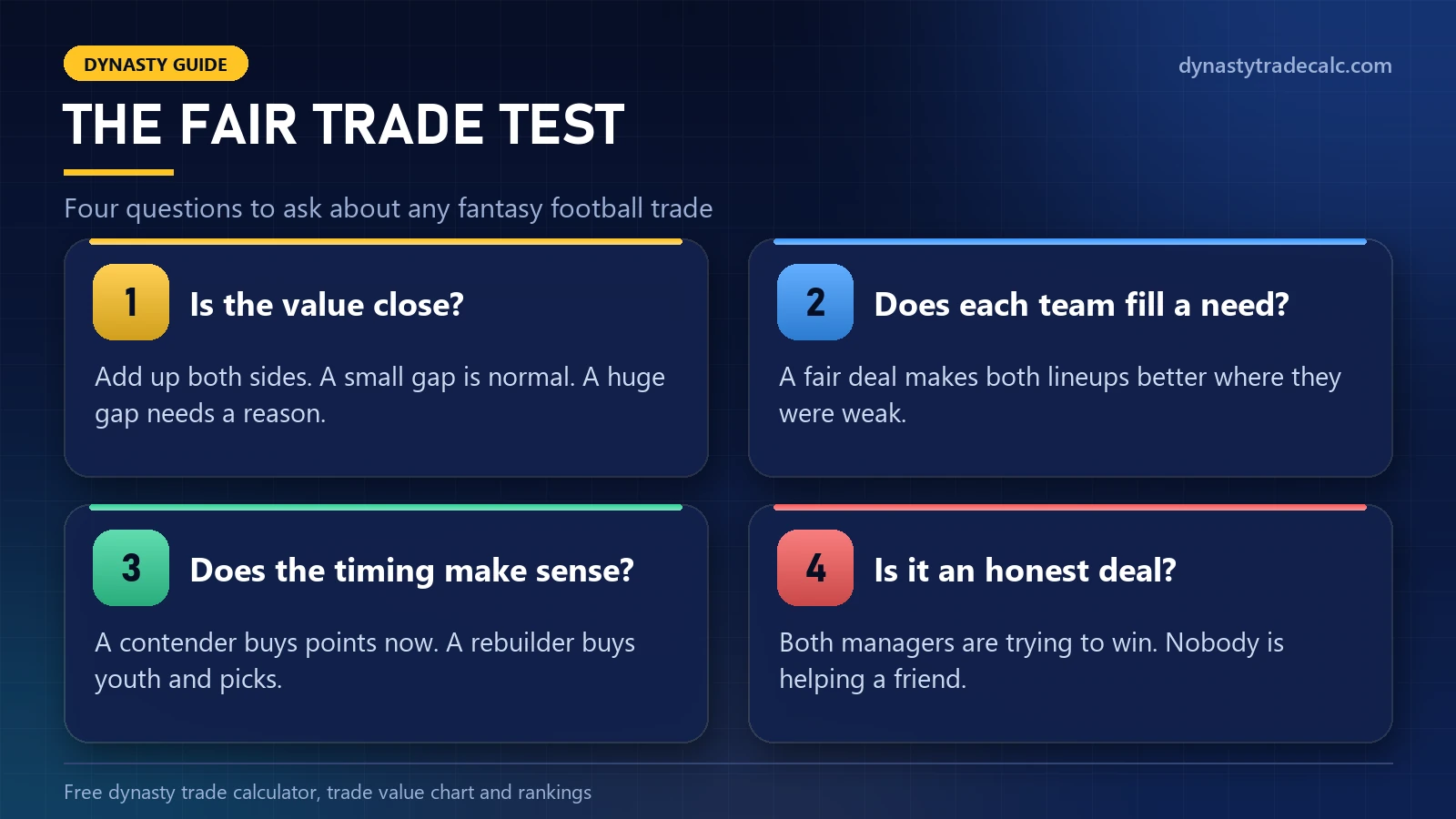
- Is the value close? Add up both sides. A small gap is normal. A very large one needs an explanation.
- Does each team fill a need? A good deal moves players from a team’s strong position to its weak one.
- Does the timing make sense? Contenders pay for points now. Rebuilding teams pay for youth and draft picks.
- Is it an honest deal? Both managers must be trying to win their own league, not helping a friend.
If a trade passes all four, it is fair. If it fails only the first, look at the other three before you judge it. Use the same test for all fair trades in fantasy football, whatever the names involved. For a full check of any offer, use our fantasy trade analyzer guide.
How to Check the Value
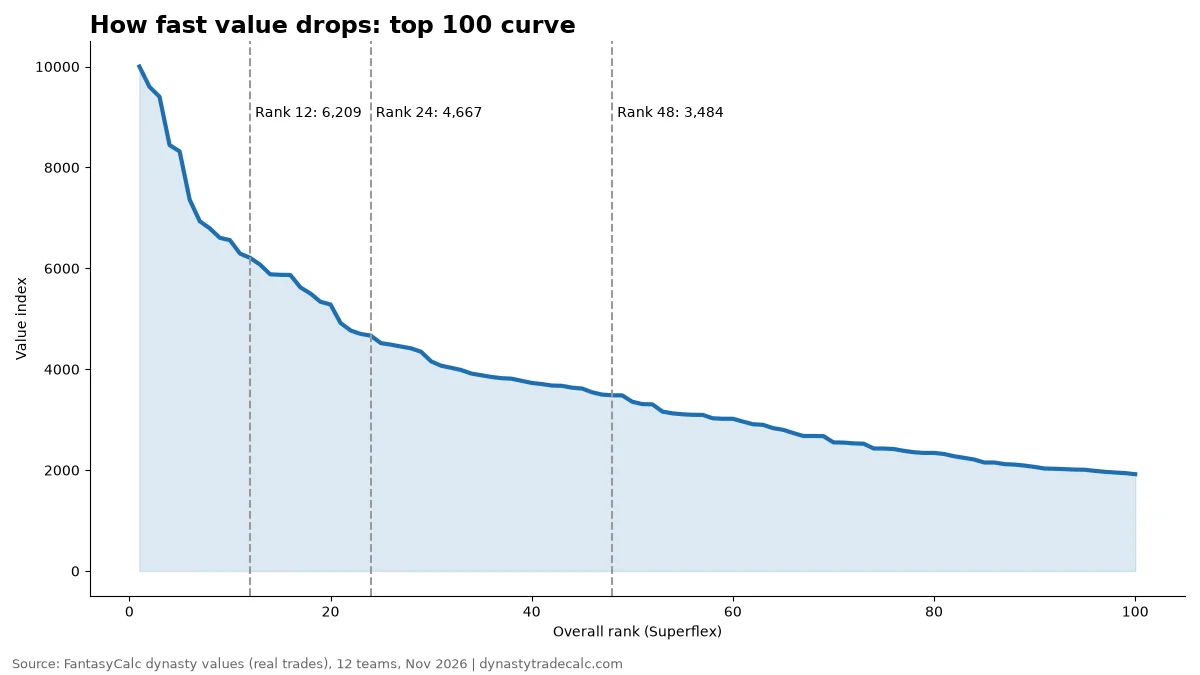
The quickest way to find fair trades in fantasy football is to start with numbers, because they take the emotion out. Put both sides into our free dynasty trade calculator and read the gap between the totals. Then look up each player on the dynasty trade value chart to see where the difference comes from. Our fantasy football trade ideas guide covers deal patterns that other managers actually accept.
- Match your league first. Superflex raises quarterbacks, and PPR raises pass catchers. The wrong setting gives the wrong answer.
- Count picks properly. Rookie picks carry real value in dynasty. See our rookie pick values.
- Check a second source. Tools build their values in different ways, so one number is never the full story.
New to the tool? The steps are in how to use a dynasty trade calculator.
Why an Uneven Trade Can Still Be Fair
| Situation | Why the numbers look uneven | Why it can still be fair |
|---|---|---|
| Two players for one star | The side with two players has the higher total | Only starters score, and the star is the hardest piece to find |
| Veteran for a future pick | The veteran scores more points today | A rebuilding team cannot use those points this year |
| Injured player sold low | The price is below the player’s healthy value | The seller needs points now and the buyer can wait |
| Filling an empty lineup spot | One manager pays a little extra | A starter is worth more to a team with a hole there |
When Should a League Veto a Trade?
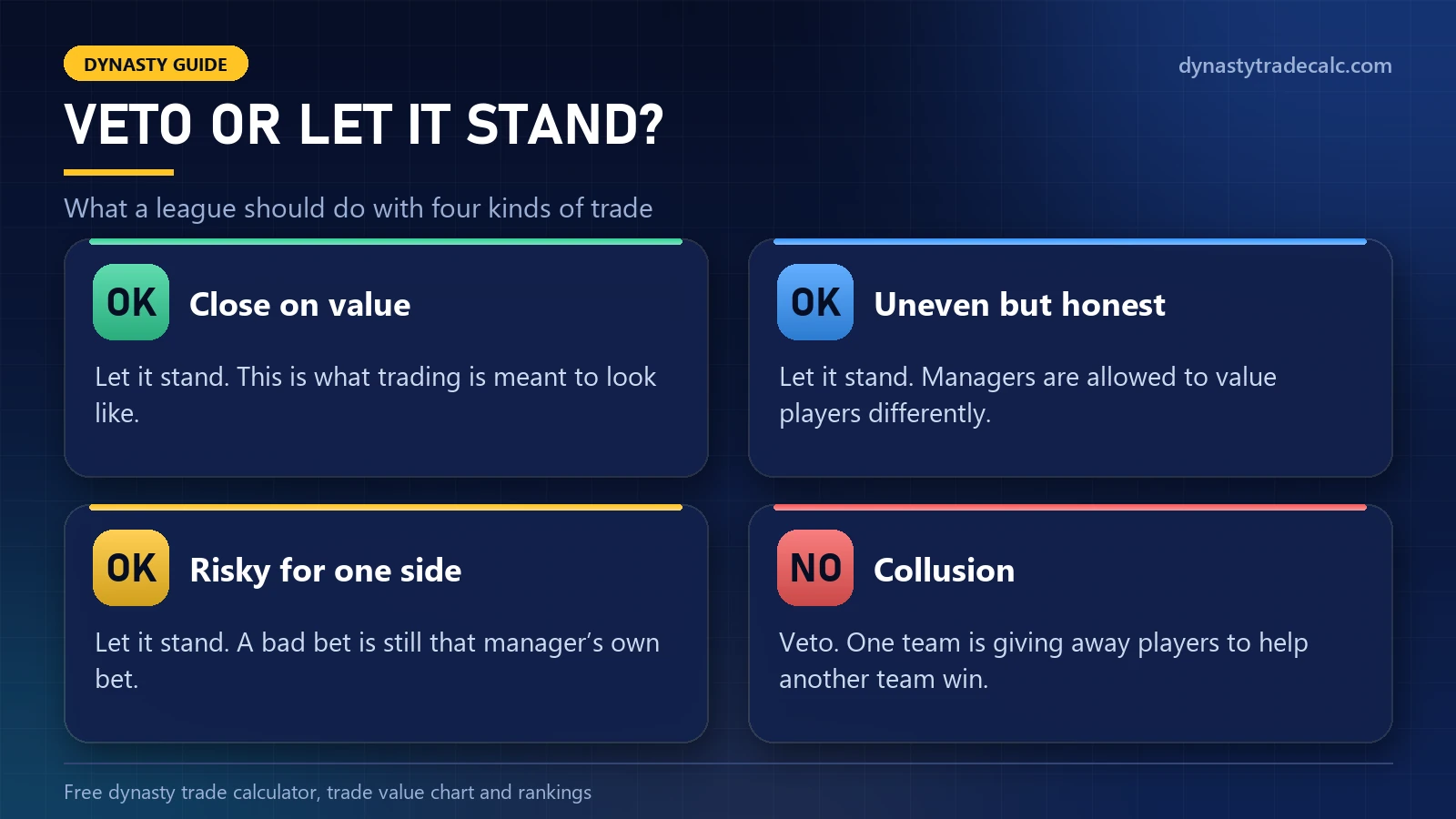
A veto is for cheating, not for trades you would not have made yourself. Collusion means one manager gives away value on purpose to help another team. That harms everyone else in the league, and the league should reverse it. Leagues that protect fair trades in fantasy football veto only collusion.
Everything else should stand. A manager who overpays has made a mistake, not broken a rule. Leagues that veto every lopsided deal soon stop trading, because nobody wants to argue for a week over each offer.
Who Decides? Commissioner, Committee and Review Period
Many leagues judge fair trades in fantasy football through a review step instead of a vote by every manager. The common setups are: Grade your whole roster first with our dynasty team analyzer guide.
- Commissioner review: one person approves or blocks trades. Fast, but it puts a lot of trust in one manager.
- Trade committee: two or three neutral managers review each deal. Committee members should step aside on trades that affect their own team.
- Review period: ESPN, Yahoo and Sleeper hold accepted trades for a set time (often one or two days) so the league can object.
Write the rule down before the season: block a trade only for collusion or a clear attempt to tank, never because one side looks like it won. That keeps fair trades in fantasy football about the deal, not about who made it.
How to Make Offers That Feel Fair
- Start from their roster. Offer something the other team actually needs.
- Give from your surplus. Trade from the position where you have more starters than spots.
- Keep the totals close. Lowball offers end conversations and cost you future deals.
- Explain the deal. One sentence on how it helps them is worth more than a screenshot.
- Leave room to counter. A later pick is the easiest way to close a small gap.
More on building and countering offers is in our fantasy trade calculator guide. Fair trades in fantasy football usually start with offers built this way.
Common Mistakes When Judging Trades
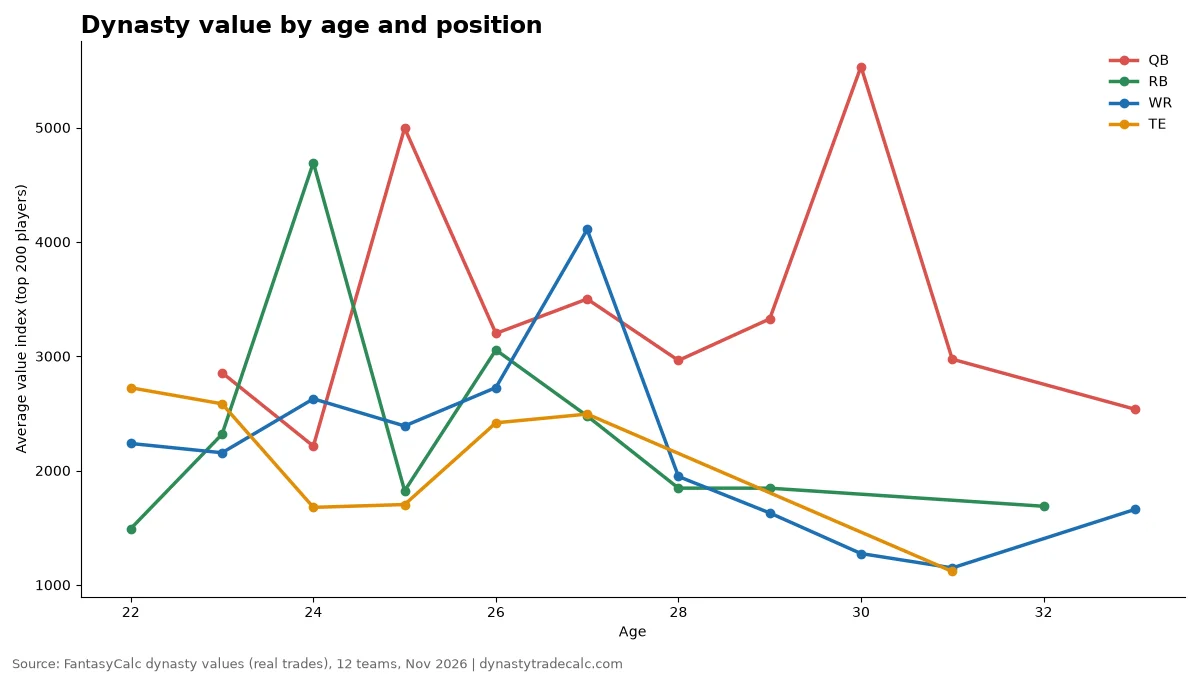
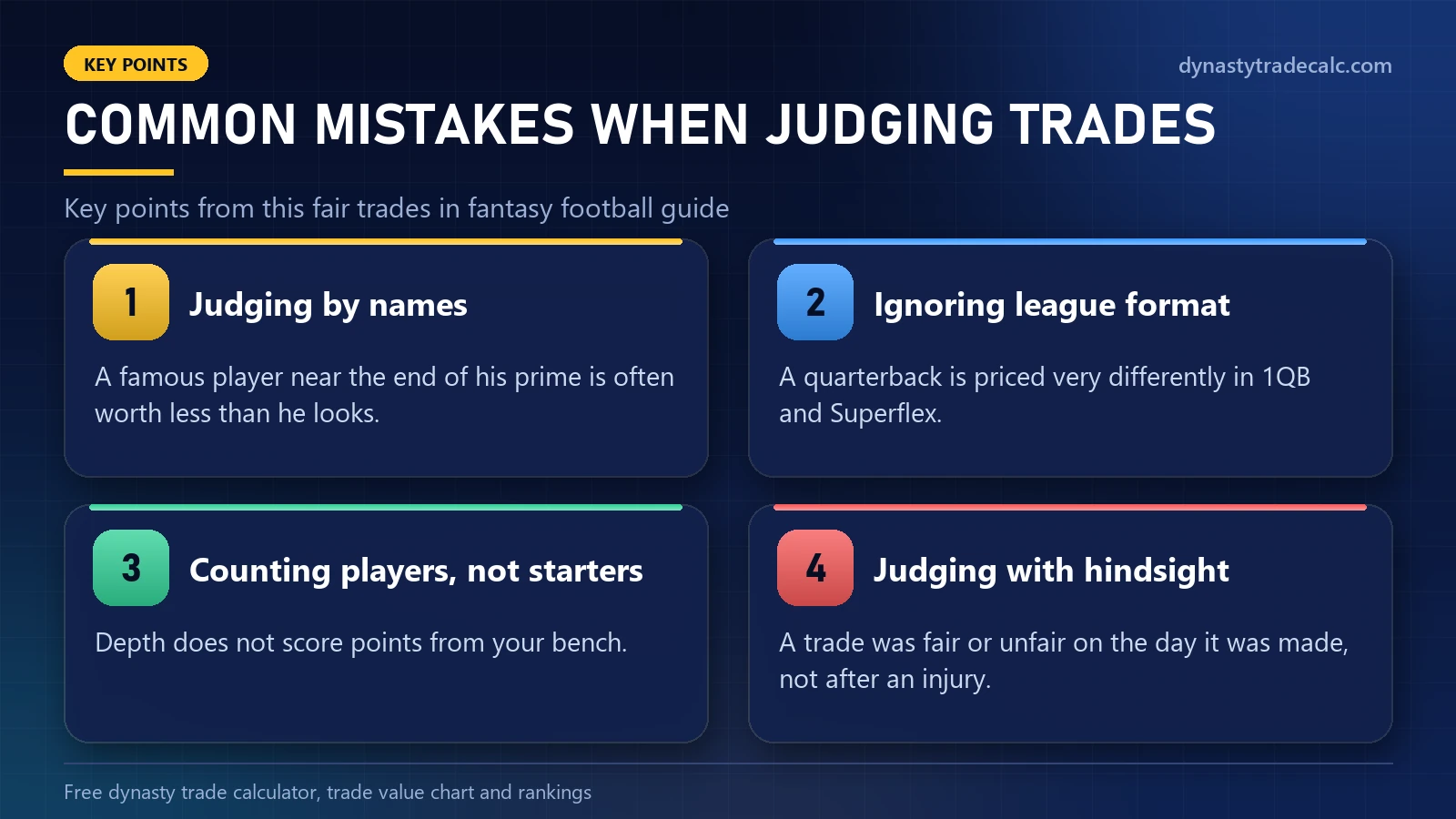
- Judging by names. A famous player near the end of his prime is often worth less than he looks.
- Ignoring league format. Managers price a quarterback very differently in 1QB and Superflex.
- Counting players, not starters. Depth does not score points from your bench.
- Judging with hindsight. A trade was fair or unfair on the day managers made it, not after an injury.
See the biggest dynasty trade mistakes for more examples.
Frequently Asked Questions
Is this a fair trade?
A trade is fair when both sides get close value and each team gets something it needs. Check the value gap in a calculator, then ask whether each manager could reasonably say yes. If both answers are yes, it is fair.
What makes a trade fair in fantasy football?
A trade is fair when the value on each side is close and both teams have a real reason to make it. Both managers should be trying to improve their own roster, not helping someone else.
How do I know if a fantasy football trade is fair?
Add up the value of each side with a trade calculator, then check roster fit. If the totals are close and each team fills a need, the trade is fair even when the names look uneven.
Should a league veto an unfair trade?
Only when there is collusion, which means one manager is helping another on purpose. A trade that looks lopsided but that both managers made honestly should stand, because managers value players differently.
Can a trade be fair if one side loses on the calculator?
Yes. A small loss on paper is normal when you get the best player in the deal or fill a weak lineup spot. The calculator measures market value, not what your team needs.
How big a value gap is too big?
There is no fixed number. A small gap is common in honest trades. When one side gives up far more than it gets, ask why. A clear reason, such as a rebuild, can still make it fair.
Is a two-for-one trade fair?
It can be, but the side getting the single best player usually wins. Two average players rarely equal one star, because only starters score points and a roster spot has value too.
How can I rate my trade in fantasy football?
Put both sides into a trade calculator, then check your starting lineup and timeline. If you want to rate my trade fantasy football style, use the four-part test for fair trades in fantasy football in this guide.
Should I trade in fantasy football right now?
Trade when a deal fixes a weak starting spot or fits your direction, and wait when you would be selling low after one bad week. If you ask yourself should I trade fantasy football players, start with your lineup.
Conclusion
Fair trades in fantasy football come down to four questions: is the value close, does each team fill a need, does the timing fit, and is the deal honest? Check the numbers first, then think about the rosters. If both teams leave stronger, the trade was fair.
Related Guides
- Fantasy trade calculator: build an offer and counter one.
- The biggest dynasty trade mistakes: errors that cost managers value.
- How to use a dynasty trade calculator: the tool, step by step.
- Analyze a fantasy trade: what to check before you accept.
- Dynasty trade value chart: the value behind every player.
- Sleeper Trade Calculator: a related guide.
- Fantasy Keeper Calculator: a related guide.
- Fantasy Trade Grader: a related guide.
- How to Trade Fantasy Football: a related guide.
- Fantasy Football Trade Creator: a related guide.
Compare With Other Sources
Our values are estimates, not quotes. Before a big trade, compare the same players against KeepTradeCut crowd-sourced dynasty values, FantasyCalc and FantasyPros dynasty rankings.
