

Table of Contents
- What Is a Half PPR Trade Analyzer?
- Why Half PPR Is Balanced
- Setting Up the Analyzer
- How to Judge a Half PPR Trade
- Half PPR Examples
- Common Mistakes
- Dynasty Half PPR Tips
- Half PPR Scoring Math
- Tight Ends in Half PPR
- Redraft vs Dynasty in Half PPR
- Frequently Asked Questions
- Conclusion
- Related Guides
- Compare With Other Sources
A half PPR trade analyzer judges trades in leagues that give half a point for every catch. That middle setting changes player values in quieter ways than full PPR, and many managers miss it. This guide explains what changes, how to set up an analyzer and how to judge a trade in a half-point league.
What Is a Half PPR Trade Analyzer?
It is a trade analyzer that uses half-point reception scoring. Catches still count, but yards and touchdowns carry more weight than in full PPR. A half PPR trade analyzer prices players in that balance, so a trade that looks even in full PPR can lean the other way here.
Why Half PPR Is Balanced
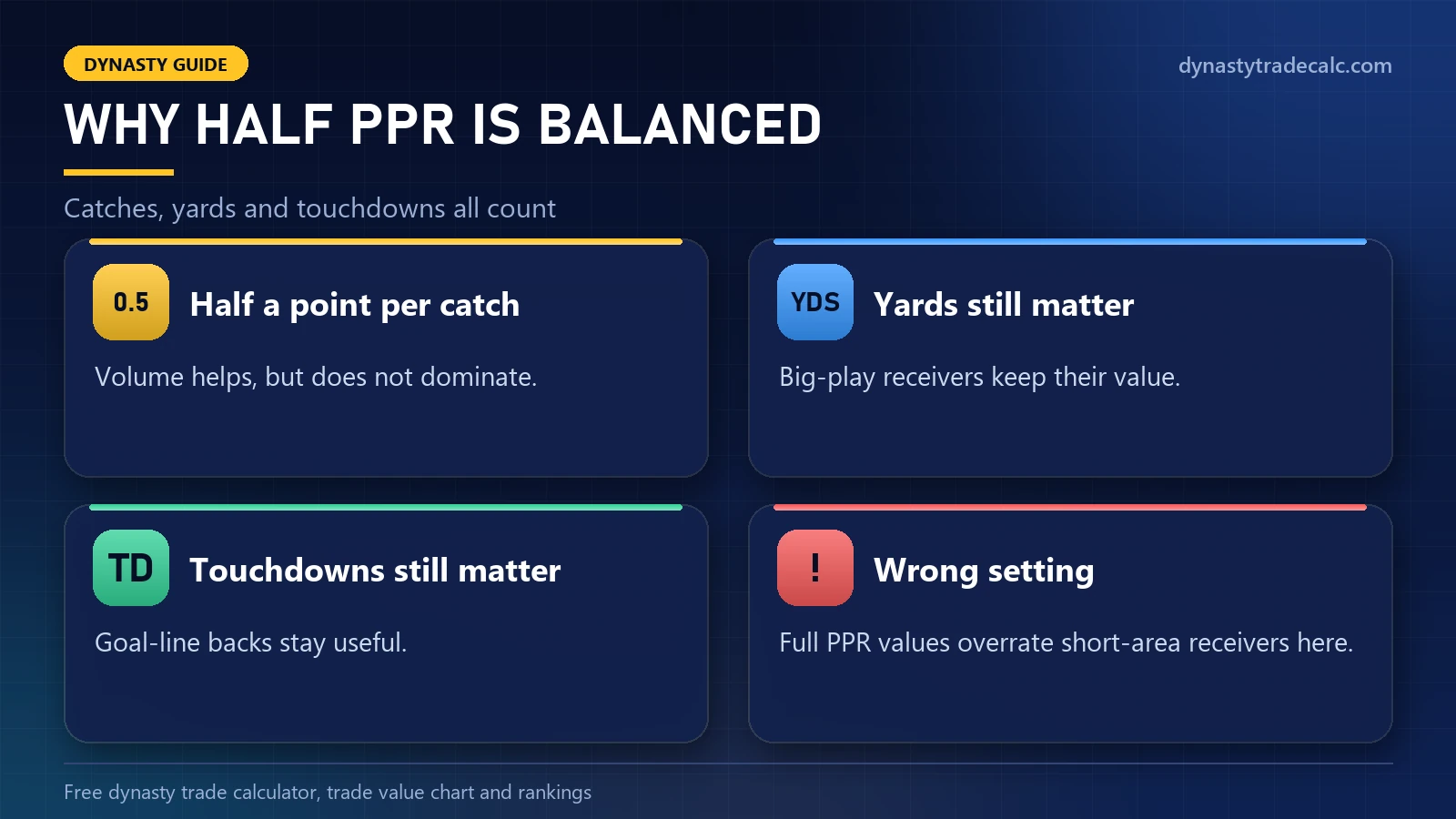
In full PPR, a receiver with many short catches can beat a player who scores long touchdowns. In standard scoring, the opposite happens. Half PPR sits in the middle: volume helps, but big plays and touchdowns still decide many weeks.
| Player type | Standard | Half PPR | Full PPR |
|---|---|---|---|
| Slot receiver, many short catches | Lower | Middle | Higher |
| Deep-threat receiver | Higher | Middle | Lower |
| Goal-line running back | Higher | Middle | Lower |
| Pass-catching running back | Lower | Middle | Higher |
For the full PPR side of this picture, see our dynasty trade calculator PPR guide.
Setting Up the Analyzer
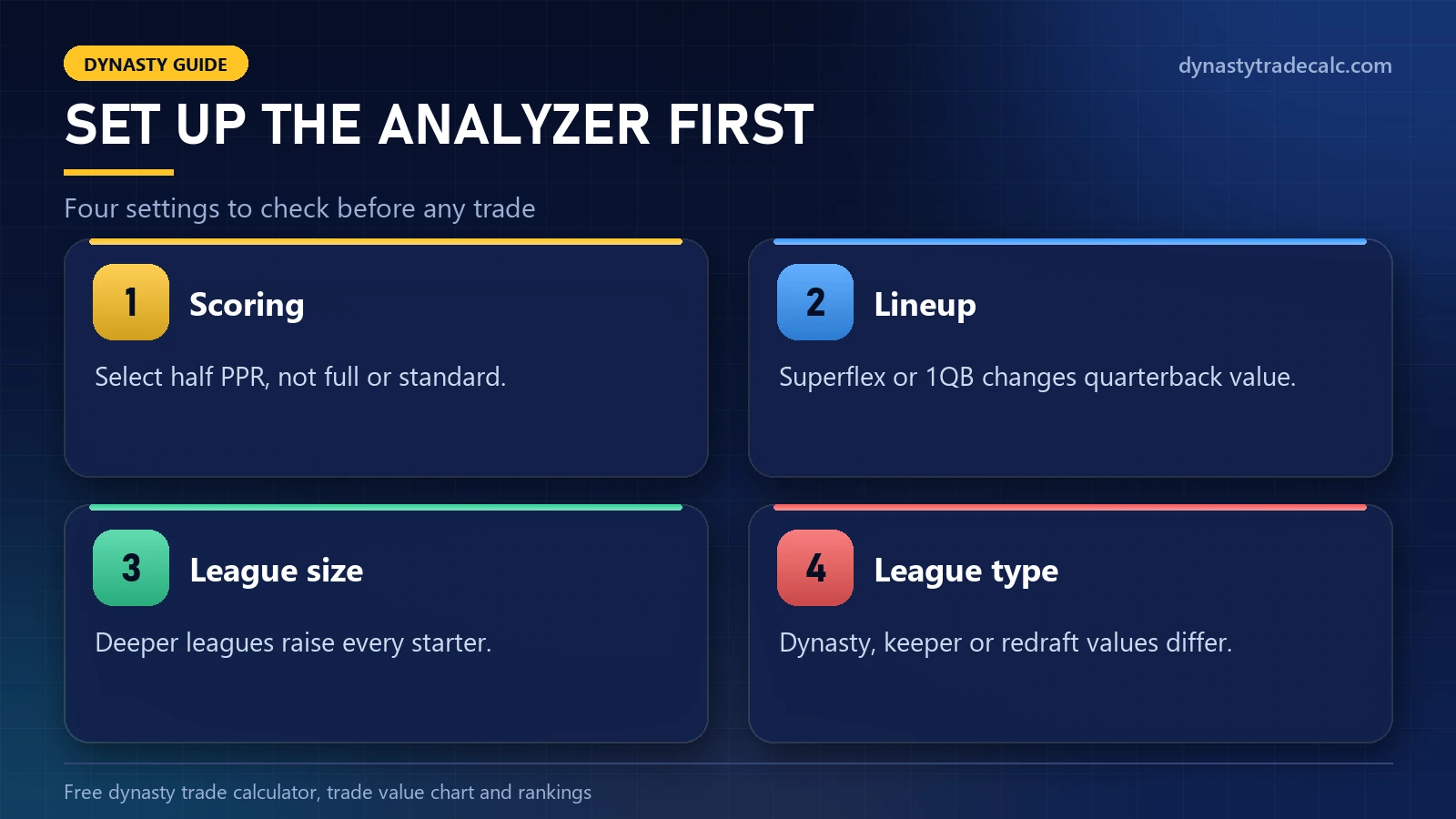
- Scoring: choose half PPR. Many tools default to full PPR.
- Lineup: select Superflex or 1QB.
- League size: set the number of teams.
- League type: dynasty, keeper or redraft.
- Then add both sides and read the gap.
For dynasty leagues, our free dynasty trade calculator compares players and picks. Always check that the scoring setting matches your league before you trust a result.
How to Judge a Half PPR Trade
Start with the gap between the two sides. If it is small, look at your lineup: which trade gives you the stronger weekly starters? Then look at the type of player you are getting. In half PPR, a receiver who catches many passes and also gains yards is the safest asset, because he scores in every part of the system. Our NFL dynasty trade calculator guide covers player and pick values together.
- Small gap: roster need decides.
- Large gap: ask for a small add or decline.
- Two-for-one: count how many incoming players would start.
- Picks involved: check current pick prices on our rookie pick values page.
Half PPR Examples
These examples show the kind of trades a half PPR trade analyzer helps you sort out. They are general cases, not current player advice.
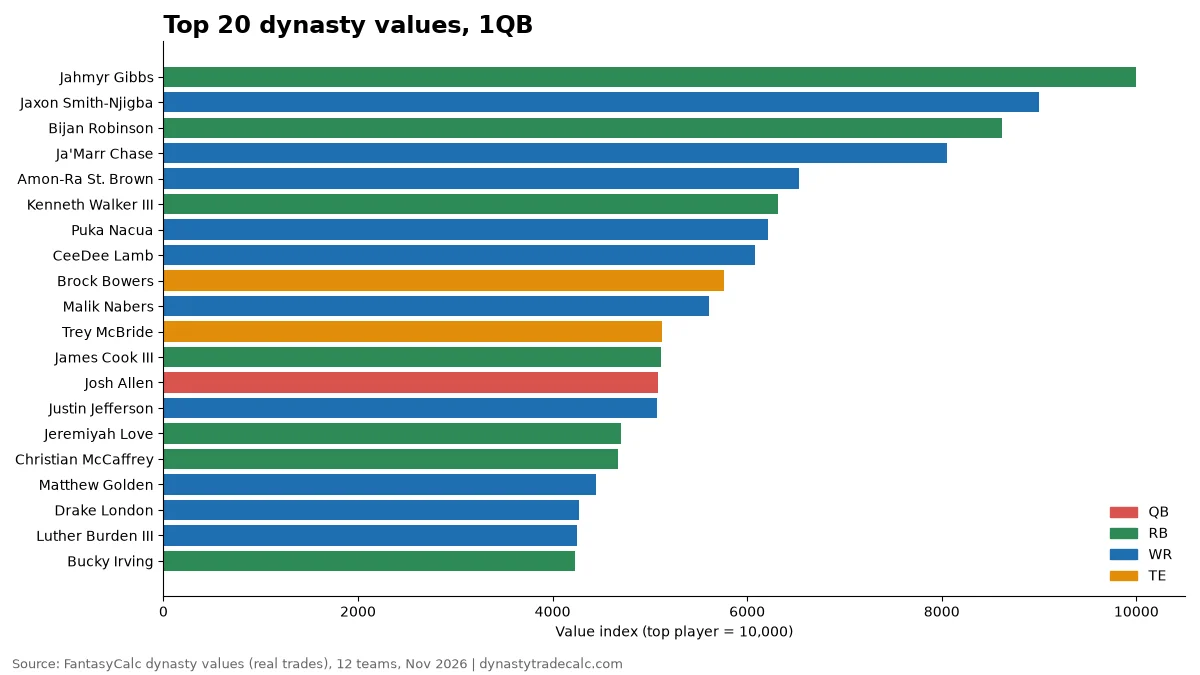
- Possession receiver for a deep threat: close in half PPR, while full PPR favors the possession receiver.
- Third-down back for a goal-line back: often near even in half PPR, while each format pulls one way.
- Tight end with many targets: still valuable, but less of an edge than in full PPR or tight end premium.
Usage numbers on Pro Football Reference help you see whether a player scores through catches, yards or touchdowns.
Common Mistakes
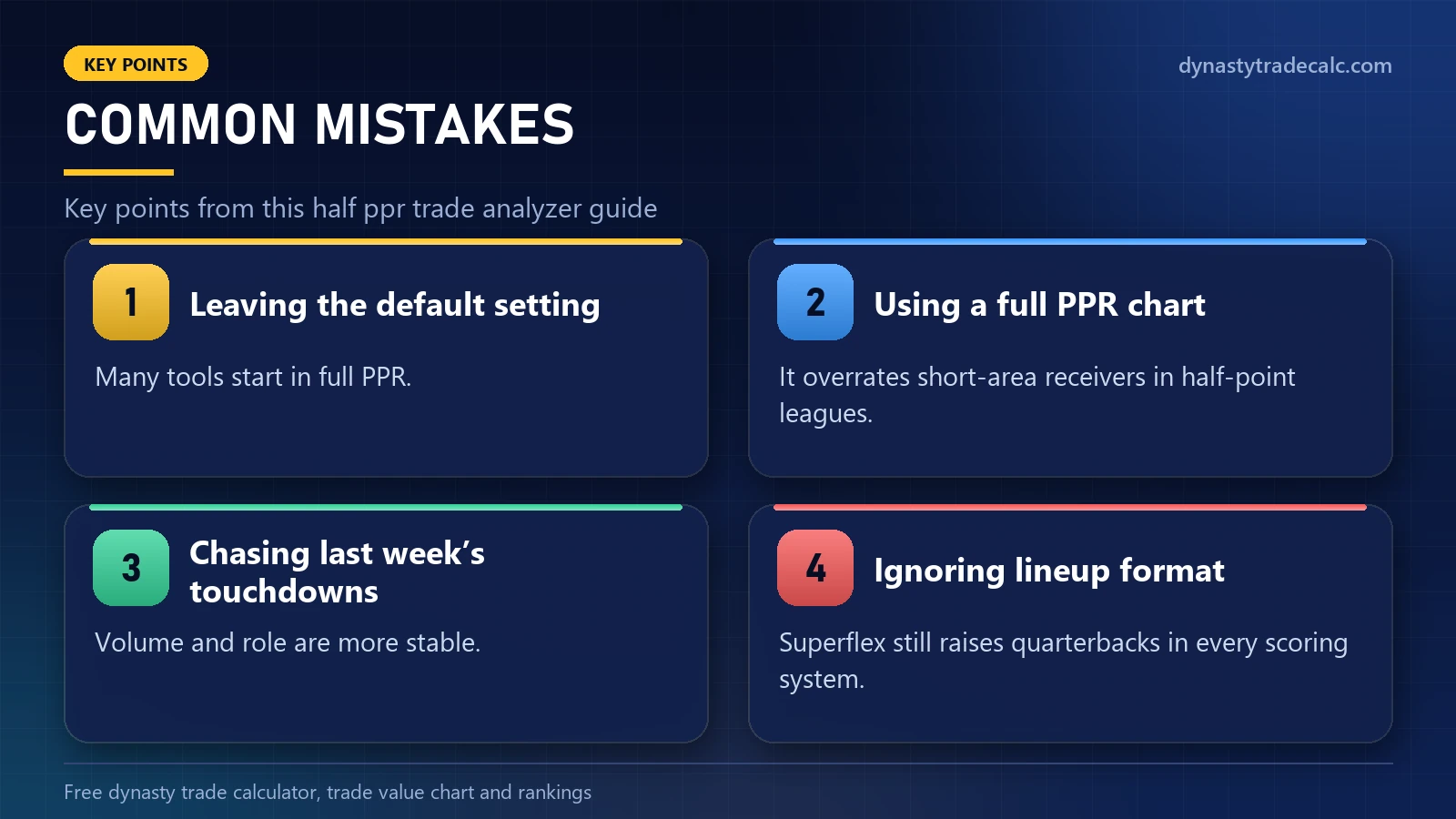
- Leaving the default setting. Many tools start in full PPR.
- Using a full PPR chart. It overrates short-area receivers in half-point leagues.
- Chasing last week’s touchdowns. Volume and role are more stable.
- Ignoring lineup format. Superflex still raises quarterbacks in every scoring system.
More on choosing tools is in our trade fantasy analyzer guide.
Dynasty Half PPR Tips
In dynasty half PPR leagues, balanced young receivers hold value best, because they score in every way and their role usually grows. Running backs who only catch passes lose some of the edge they have in full PPR, so price them carefully in long-term trades. A half PPR trade analyzer with dynasty values makes these differences clear when you compare offers.
Rookie picks change only a little between formats, but a pick that is likely to land a pure slot receiver is slightly less useful than in full PPR. Keep the scoring in mind when you compare picks with players.
Half PPR Scoring Math
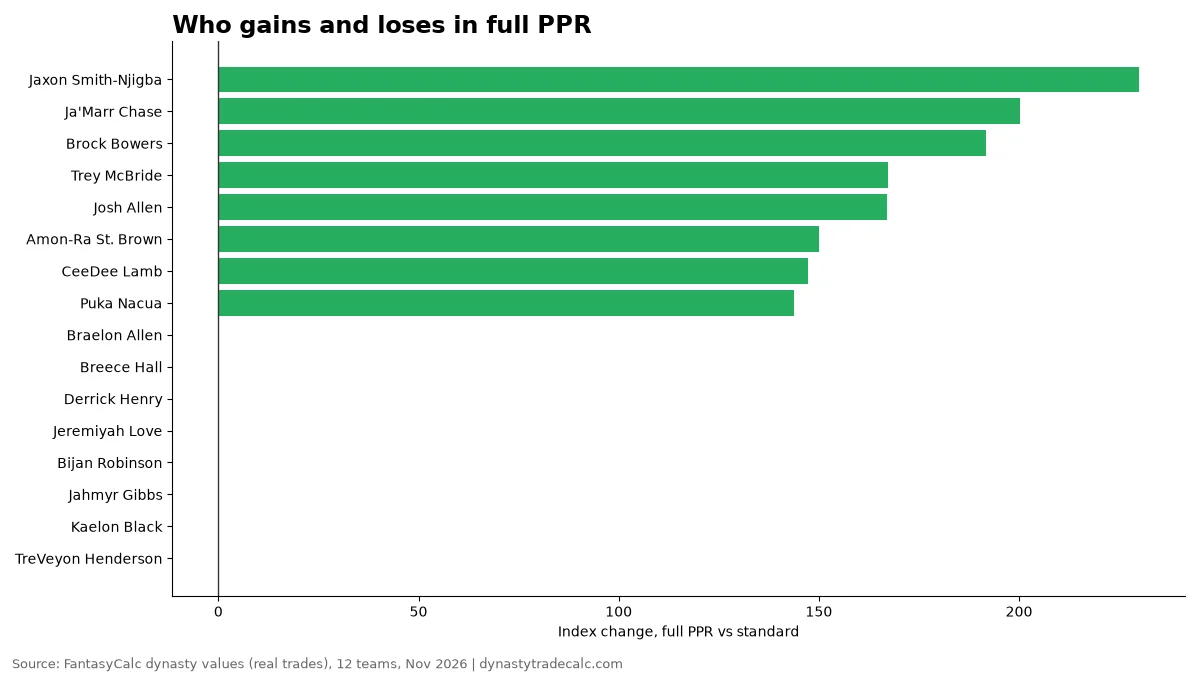
Many competing pages skip the numbers. Here is how the same weekly stat line scores in each format, using common settings of one point per ten yards and six per touchdown. This week’s redraft values are on our fantasy trade value chart.
| Weekly line | Standard | Half PPR | Full PPR |
|---|---|---|---|
| 8 catches, 70 yards, 0 TD | 7.0 | 11.0 | 15.0 |
| 3 catches, 90 yards, 1 TD | 15.0 | 16.5 | 18.0 |
| 15 carries, 60 yards, 1 TD, 2 catches | 12.0 | 13.0 | 14.0 |
These are example lines. The short-catch receiver gains eight points from standard to full PPR, but only four in half PPR, which is why a half PPR trade analyzer often rates him lower than a full PPR tool does.
Tight Ends in Half PPR
Tight ends score mostly through catches, so half PPR narrows the gap between the elite few and the rest. If your league adds tight end premium on top of half PPR, check that the analyzer supports it; otherwise adjust tight end values up by hand.
- Elite tight ends: still a clear edge, but smaller than in full PPR.
- Mid-tier tight ends: often interchangeable, so do not overpay.
- Touchdown-dependent tight ends: relatively more useful than in full PPR.
Snap and route data on Pro Football Reference helps separate tight ends with real roles from touchdown-only options.
Redraft vs Dynasty in Half PPR
In redraft half PPR leagues, rest-of-season points decide everything, so a half PPR trade analyzer should use current projections. In dynasty, age and role security matter more, and young balanced receivers are the safest long-term holds. Make sure the tool’s league type matches yours, because the same trade can grade very differently in each.
Frequently Asked Questions
What is a half PPR trade analyzer?
It is a trade analyzer set to half a point per reception. It values catches, yards and touchdowns in balance, so it prices players the way your half-point league scores them.
Can I use a full PPR analyzer for a half PPR league?
It will be close but not exact. Full PPR values overrate short-area receivers and pass-catching backs in a half-point league. Choose the half PPR setting if the tool has one.
Who gains value in half PPR leagues?
Balanced players gain: receivers who catch passes and also gain yards, and running backs who score touchdowns and catch some passes. Pure possession receivers gain less than in full PPR.
Is half PPR the most common scoring format?
It is one of the most common, along with full PPR. Many public leagues use half PPR because it rewards catches without letting them dominate.
How do I check a trade in half PPR?
Set your tool to half PPR, enter both sides, compare the totals and check your starting lineup. If the gap is small, roster need decides.
Do rookie picks change in half PPR?
Only a little. Pick values depend more on league type and lineup format than on scoring, but receiving backs and slot receivers lose a bit of their full PPR edge.
Conclusion
A half PPR trade analyzer only works if the setting is right. Choose half-point scoring, match your lineup and league type, and value balanced players who score through catches, yards and touchdowns.
Related Guides
- Dynasty trade calculator PPR: full PPR values and points.
- Trade fantasy analyzer: set up any analyzer correctly.
- Dynasty trade calculator Superflex: quarterback values.
- Analyze a fantasy trade: a routine for every offer.
- PPR trade value chart: full PPR values compared.
- Redraft trade calculator: half PPR trades in one-season leagues.
- Redraft Trade Value Chart: a related guide.
Compare With Other Sources
Our values are estimates, not quotes. Before a big trade, compare the same players against KeepTradeCut crowd-sourced dynasty values, FantasyCalc and FantasyPros dynasty rankings.
