


Table of Contents
- What Is a Redraft Trade Calculator?
- What a Redraft Trade Calculator Checks
- Redraft vs Dynasty Tools
- How to Analyze a Redraft Trade
- Timing in Redraft Leagues
- Common Mistakes
- Rest-of-Season Value Explained
- Playoff Schedule Matters Most
- Contenders vs Teams Out of Contention
- Quick Redraft Trade Checklist
- Redraft Trades Around Injuries
- How Fantasy Trade Value Works
- Frequently Asked Questions
- Conclusion
- Related Guides
- Compare With Other Sources
A redraft trade calculator, or redraft trade analyzer, judges trades in leagues that start fresh every year, where only this season’s points matter. That changes everything: age, rookie picks and future seasons drop out, and schedule, health and playoff weeks move in. This guide shows how to analyze a redraft trade.
What Is a Redraft Trade Calculator?
It is a tool or method that compares the rest-of-season value of each side of a trade. Many sites call it a fantasy redraft trade calculator. Unlike a dynasty tool, it ignores long-term value and focuses on points from now until your fantasy championship.
What a Redraft Trade Calculator Checks
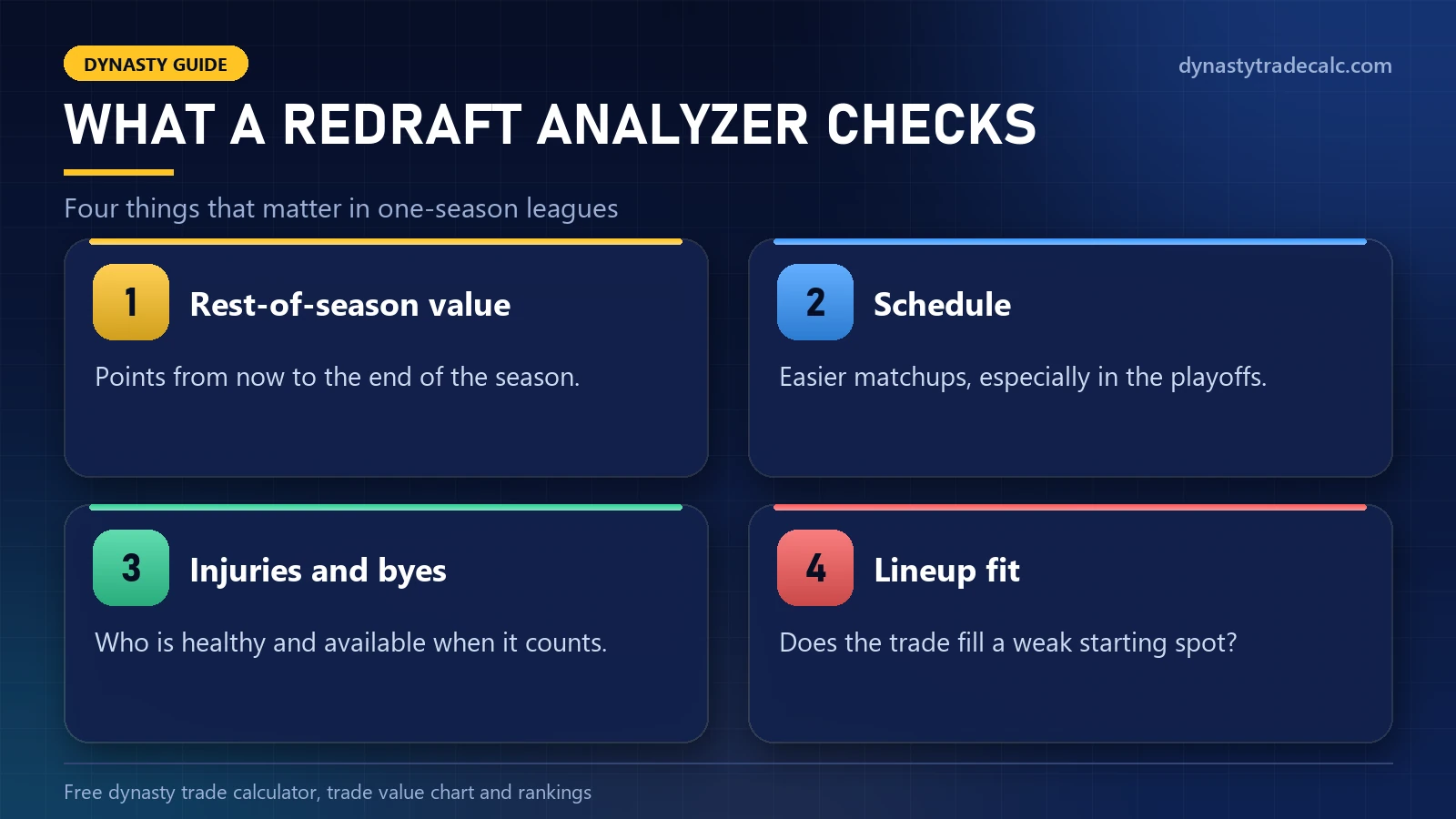
- Rest-of-season value: projected points for the remaining weeks.
- Schedule: easier matchups, especially in fantasy playoff weeks.
- Injuries and bye weeks: who is available when it counts.
- Lineup fit: does the trade fill a weak starting spot?
Redraft vs Dynasty Tools
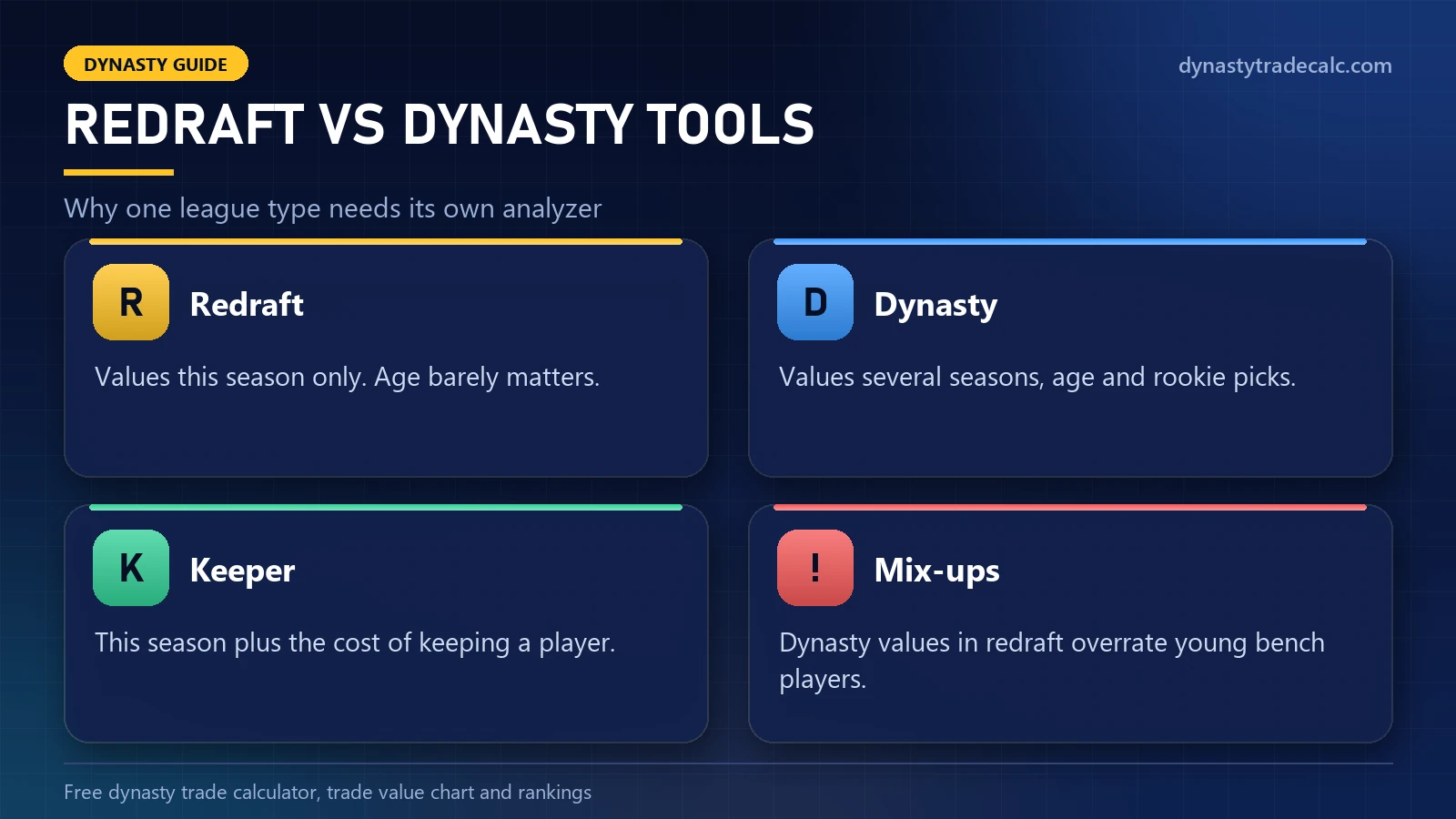
| What it measures | Redraft | Dynasty |
|---|---|---|
| Time frame | This season only | Several seasons |
| Player age | Matters little | Matters a lot |
| Rookie picks | Not used | Major trade currency |
| Best use | Winning this year | Building for years |
Use a dynasty tool in a redraft league and young bench players will look far too valuable. For dynasty leagues, use our dynasty trade calculator; for redraft, use rest-of-season values.
How to Analyze a Redraft Trade
- Compare rest-of-season projections for both sides.
- Check the playoff schedule for each player.
- Look at injuries and bye weeks in the weeks ahead.
- Count your starters before and after the trade.
- Decide, or counter with a bench player.
Usage trends on Pro Football Reference help you separate a real role from a lucky week.
Timing in Redraft Leagues
Trade early enough that new players help for many weeks. Buy good players after a quiet stretch when their role is unchanged, and sell after a touchdown spike that the volume does not support. Every trade before the deadline should make your team stronger for the playoffs, not just next week.
Common Mistakes
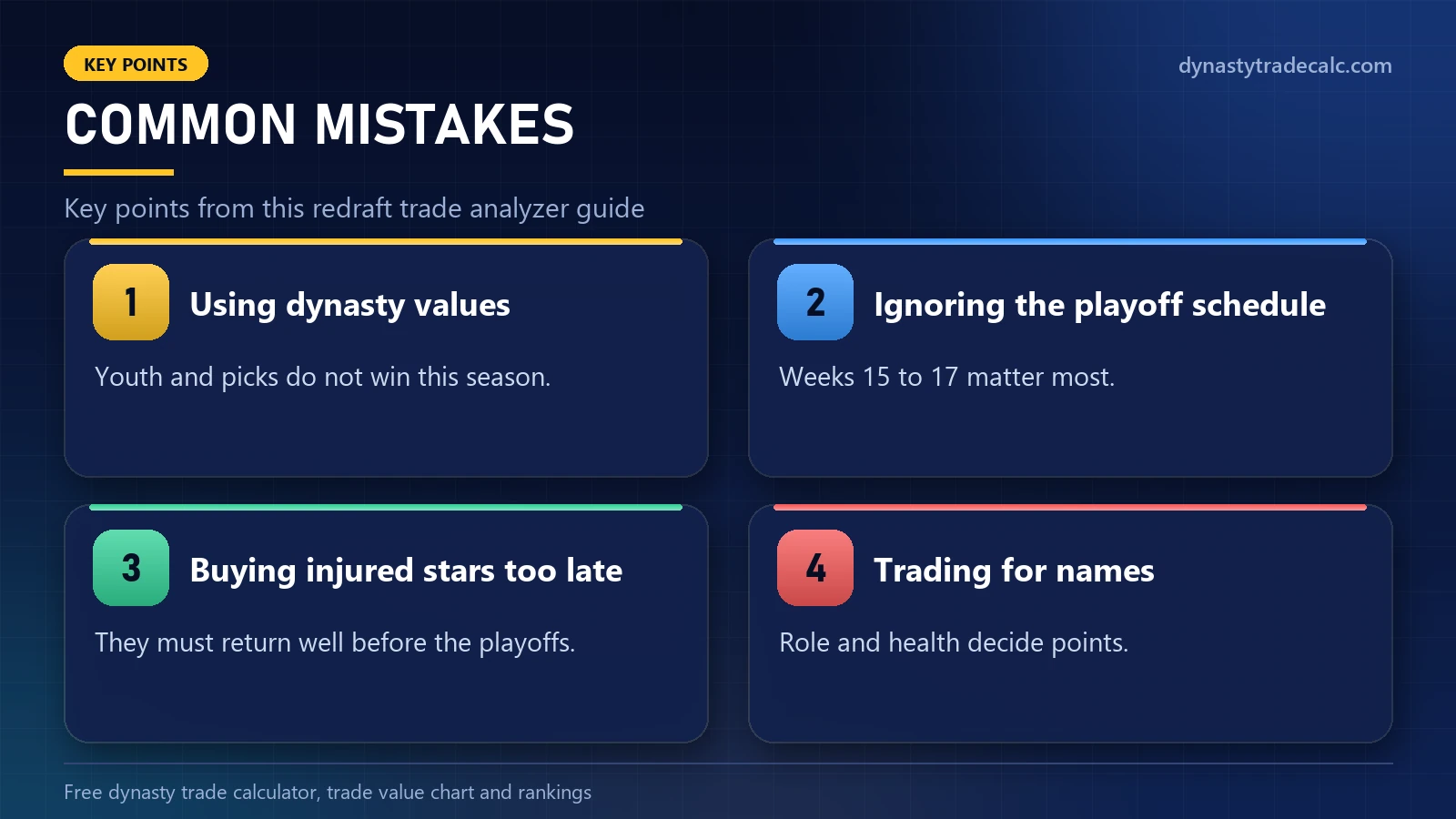
- Using dynasty values. Youth and picks do not win this season.
- Ignoring the playoff schedule. Weeks 15 to 17 matter most.
- Buying injured stars too late. They must return well before the playoffs.
- Trading for names. Role and health decide points.
For more on choosing the right tool, see our trade analyzer guide and trade calculator fantasy football. Our sleeper trade calculator guide covers how to check a trade in a Sleeper league before you accept.
Rest-of-Season Value Explained
Rest-of-season value is the number of fantasy points a player should score from today until the end of your fantasy playoffs. It changes every week with injuries, depth charts and schedules. A redraft trade analyzer built on rest-of-season projections reflects those changes; one built on preseason rankings does not.
A simple way to think about it: count the weeks left, think about the player’s likely weekly score and adjust for byes and injuries. A player with ten healthy weeks left is worth more than a slightly better player with six.
| Player | Weekly points (example) | Weeks available | Rest-of-season total |
|---|---|---|---|
| Player A | 15 | 10 | 150 |
| Player B | 18 | 6 | 108 |
| Player C | 12 | 11 | 132 |
These are example numbers. They show how availability can matter more than weekly scoring when you compare players.
Playoff Schedule Matters Most
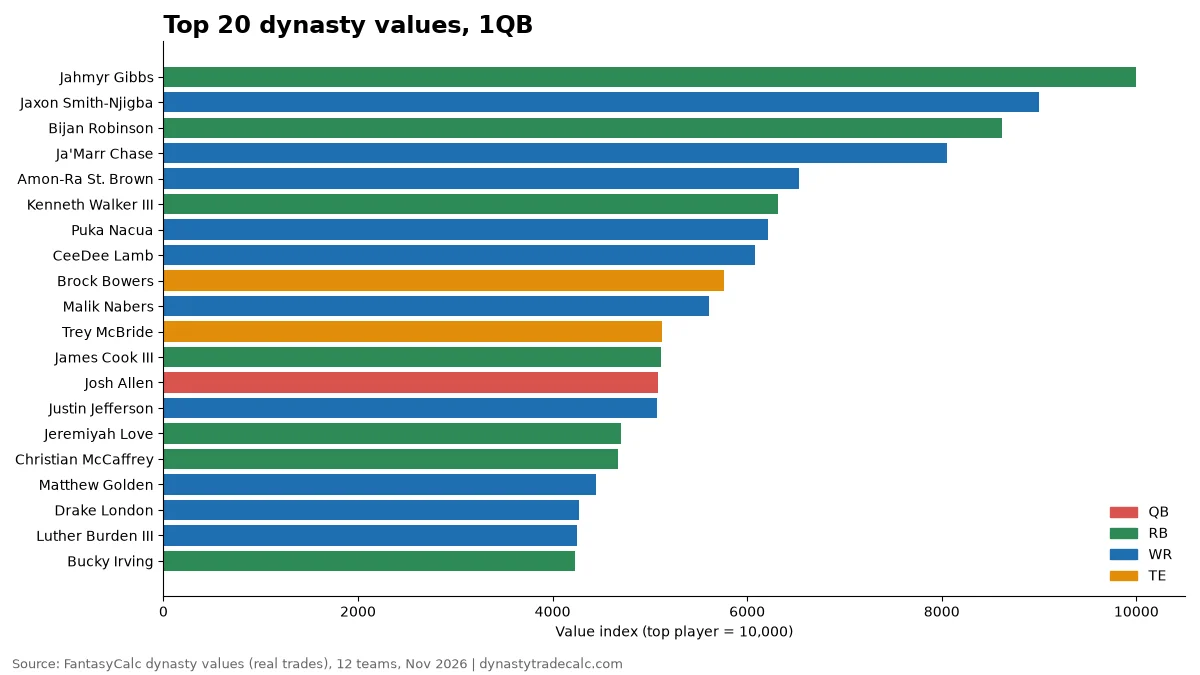
Most fantasy leagues hold their playoffs in the last three or four weeks of the season. A player with easy matchups in those weeks is worth more to a contender than his season average suggests. Check each player’s opponents for your playoff weeks before you accept, and give extra weight to weak pass defenses for receivers and weak run defenses for backs. Our NFL dynasty trade calculator guide covers player and pick values together. Our KeepTradeCut (KTC) guide explains how crowd values compare with ours.
A redraft trade analyzer that shows schedule strength is useful here, but a quick look at the NFL schedule works too. Bye weeks matter as well: a player whose bye falls in your first playoff week is a real cost.
Contenders vs Teams Out of Contention
- Contenders: trade depth for a better starter, even at a small value loss.
- Middle teams: fix one weak position instead of chasing stars.
- Teams out of contention: there is no next season to build for, so trade fairly and do not help one team unfairly.
Fair play matters in redraft leagues because there is no next season to rebuild for. Our guide to fantasy trade value charts explains how to keep trades even.
Quick Redraft Trade Checklist
- Is the player healthy and in a stable role?
- How many weeks will he play before the playoffs end?
- What does his playoff schedule look like?
- Does the trade make my starting lineup better?
- Would I still make this trade if the other player had a big game this week?
If the answers favor your side, the deal is likely a win. If not, use the redraft trade analyzer result as a starting point for a counter offer rather than a final answer.
Redraft Trades Around Injuries
Injuries create the most redraft trades. When a starter gets hurt, his manager needs a replacement now, and that is the moment to sell depth at a fair price. On the other side, an injured star can be a smart buy for a team that is safely in playoff position, as long as he returns well before the playoffs.
Before you buy, read the injury report and give yourself a margin: if the return date is close to your playoff weeks, the risk is too high. Run both sides through a redraft trade analyzer with the missed games removed, and compare the result with what you would get by keeping your current player.
- Short injuries: often a good buy for strong teams.
- Long injuries: usually not worth it in redraft.
- Backups who take over: sell high when the starter is close to returning.
How Fantasy Trade Value Works
In redraft, a player’s trade value equals the points he will score for the rest of this season, adjusted for his position.
- Rest-of-season points: past points no longer count; only the weeks left do.
- Replacement level: a player gains value by how much he beats the best free agent at his position.
- Schedule and byes: bye weeks and playoff matchups shift value as the season goes on.
- Injuries: a short injury lowers value only for the weeks he misses.
That is why redraft values move every week. For leagues you keep, use our dynasty trade calculator instead.
Frequently Asked Questions
What is a redraft trade calculator?
It is a tool or method that judges trades in leagues that reset every season. It looks at rest-of-season points, schedule, injuries and playoff weeks, not long-term value.
Is there a fantasy redraft trade calculator?
Yes. A fantasy redraft trade calculator uses rest-of-season projections instead of dynasty values. Many free tools offer a redraft setting; check that you selected it before you compare.
Can I use a dynasty calculator for redraft trades?
Not reliably. Dynasty values reward youth and rookie picks, which do not help you win this season. In redraft, use rest-of-season values.
What matters most in a redraft trade?
Points between now and the end of the fantasy playoffs. Health, role and the playoff schedule decide that, so weigh them more than age or name value.
When should I make redraft trades?
Early enough that the new players help for many weeks, and before your trade deadline. Buy when a good player has a quiet stretch and sell after a lucky spike.
Should I trade for injured players in redraft?
Only if they return well before the fantasy playoffs and you can survive without them until then. Otherwise the discount is not worth it.
Conclusion
A redraft trade calculator keeps you focused on this season: rest-of-season value, schedule, health and lineup fit. Use the right values, check the playoff weeks and trade early enough for the new players to make a difference.
Related Guides
- Trade analyzer fantasy football: choose the right type of tool.
- Trade calculator fantasy football: redraft, keeper and dynasty compared.
- Analyze a fantasy trade: a routine for every offer.
- Trade analyzer: trade tips for ESPN leagues.
- Fantasy trade grader: a quick grade for any deal.
- Fantasy keeper calculator: for leagues that keep a few players.
- Half PPR Trade Analyzer: a related guide.
- Fantasy Football Trade Analyzer AI: a related guide.
- Fantasy Trade Sheets: a related guide.
Compare With Other Sources
Our values are estimates, not quotes. Before a big trade, compare the same players against KeepTradeCut crowd-sourced dynasty values, FantasyCalc and FantasyPros dynasty rankings.
