


Table of Contents
- What Is a Dynasty Superflex Trade Calculator?
- Superflex vs 1QB vs 2QB
- How Dynasty Superflex Trade Values Move
- How to Use It Step by Step
- Superflex and PPR Together
- Key Factors That Change the Result
- Quarterback Value in Superflex Trades
- Rookie Picks in Superflex
- Three Superflex Trade Situations
- Tips to Win More Superflex Trades
- Common Mistakes
- Frequently Asked Questions
- Conclusion
- Related Guides
A dynasty superflex trade calculator shows what quarterbacks, picks and players are worth when your league can start two passers. Some managers search for it as a superflex dynasty trade calculator or a dynasty superflex trade analyzer; the job is the same. This guide shows how Superflex changes values and how to trade well in it.
What Is a Dynasty Superflex Trade Calculator?
It compares players, draft picks and packages in long-term leagues using Superflex values. Those values price quarterbacks far above 1QB levels, because a flex spot that can hold a quarterback makes reliable starters scarce. Our free dynasty trade calculator has a Superflex setting and needs no account.
Superflex vs 1QB vs 2QB
| Format | Quarterbacks you start | Quarterback trade value |
|---|---|---|
| 1QB | One quarterback | Lowest. Usable starters are easy to find. |
| Superflex | One, plus a flex spot that can hold a second | High. Most teams start two, so reliable starters are scarce. |
| 2QB | Two, every week | Highest. Every team must start two, including bye weeks. |
The same quarterback can be a bench piece in one league and a cornerstone in another. A superflex trade calculator uses the middle row; see our 1QB and 2QB guides for the others.
How Dynasty Superflex Trade Values Move
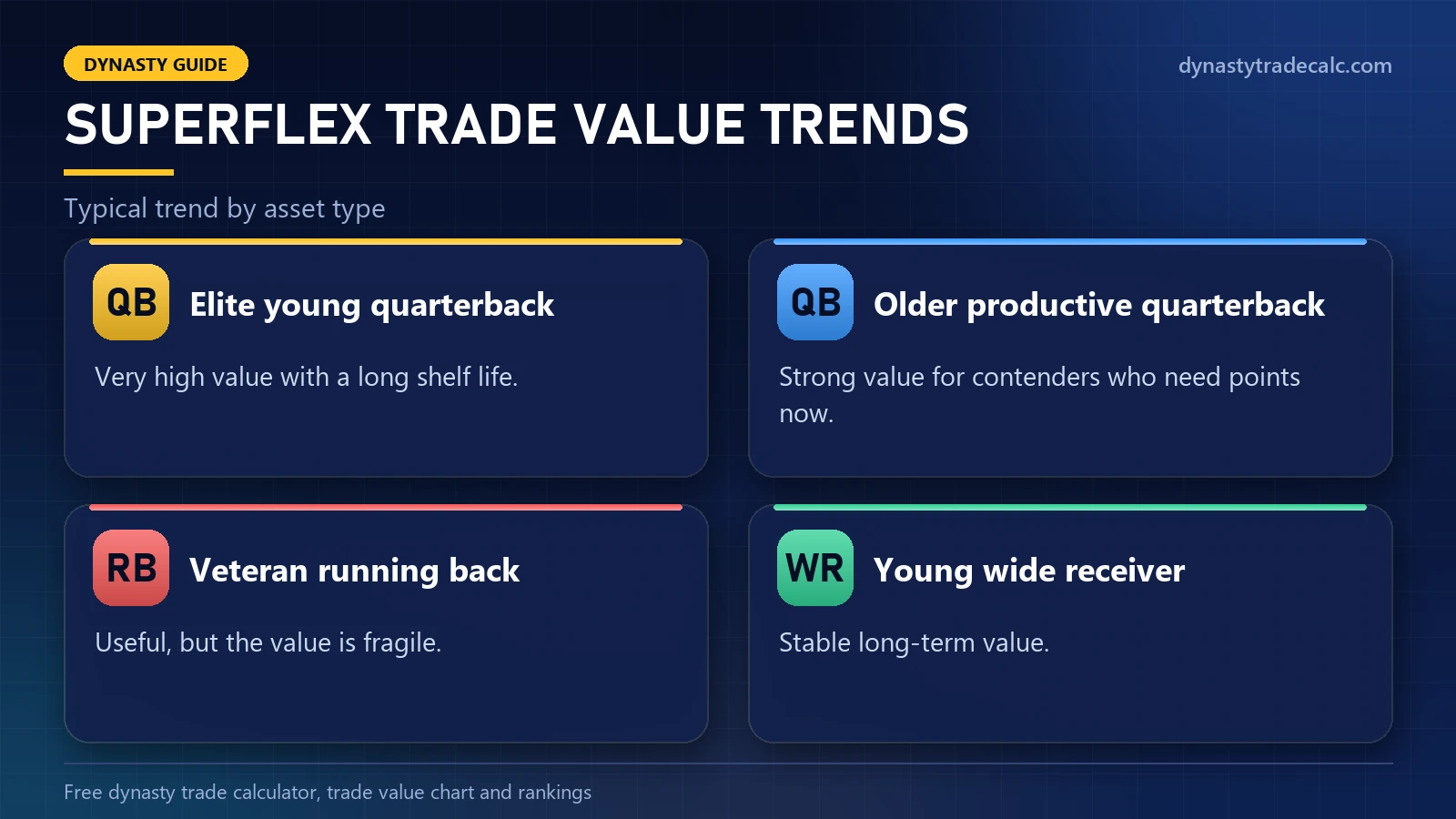
| Asset Type | Typical Superflex Value Trend |
|---|---|
| Elite young QB | Very high, long shelf life |
| Older productive QB | Strong for contenders |
| Rookie first-round pick | Depends on class strength |
| Veteran RB | Useful but fragile |
| Young WR | Stable long-term value |
Dynasty superflex trade values rise with scarcity. In a 12-team league almost every starting quarterback has value, and a young starter with a secure job is the most valuable asset in the format. Older quarterbacks still matter for contenders; running backs are useful but fragile. Any dynasty superflex trade calculator should reflect that order.
How to Use It Step by Step
- Enter every player and pick on both sides.
- Set Superflex and your scoring: PPR, half-PPR or standard, and tight end premium if used.
- Read the gap between the two totals.
- Count your quarterbacks after the trade: aim for at least three.
- Counter with a pick if the deal is close but leaves you thin.
Superflex and PPR Together
In a dynasty superflex PPR trade calculator, every catch scores a point, so pass-catching running backs and high-volume receivers move up while quarterbacks keep their Superflex premium. Set both options before you read the result, because each one shifts values. Our dynasty trade calculator PPR guide covers the scoring side.
Key Factors That Change the Result
League size, lineup depth and scoring all move Superflex values. Bigger starting lineups reward depth; smaller ones reward stars. In a 14-team league even a bridge quarterback is hard to find, while in a 10-team league the waiver wire may still hold a spot starter. Tight end premium lifts the few tight ends with real target shares. Set every rule in the dynasty superflex trade calculator before you trust the total, and check a second source such as KeepTradeCut crowd-sourced dynasty values when the result is close.
Quarterback Value in Superflex Trades
Quarterbacks are the engine room of Superflex dynasty. In one-quarterback leagues you can often stream the position; in Superflex, waiting can leave you with an empty slot every week. Do not overpay for every passer, though. Look at age, job security, rushing upside and weekly ceiling before you pay a starter’s price.
Rookie Picks in Superflex
Picks are liquid currency, and everyone wants them before the NFL Draft. In Superflex, picks in a class with top quarterback prospects gain extra value. The 1.02 in a strong quarterback class can be worth far more than the same pick in a weak one. Current values are on our dynasty rookie pick value chart 2026.
Three Superflex Trade Situations
- A mid-tier quarterback for a flashier receiver. In 12-team Superflex, the quarterback is usually the harder piece to replace.
- A late first for a veteran quarterback. Right for a contender whose Superflex slot is weak.
- An elite young quarterback for a big package. Only right for a deep rebuild; elite young passers rarely come back.
Tips to Win More Superflex Trades
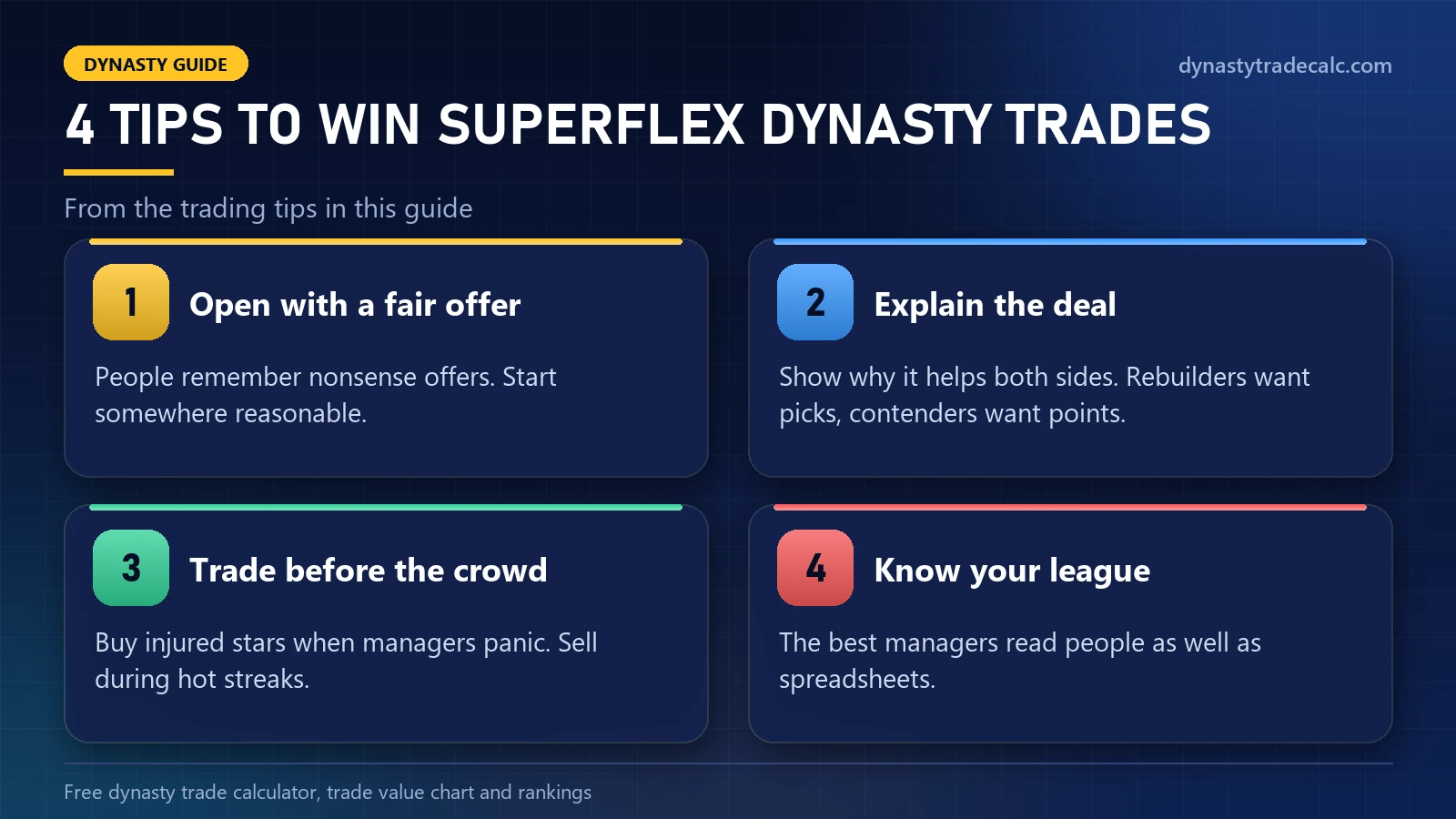
- Open with a fair offer. People remember lowball offers.
- Explain the deal. Say how it helps the other team.
- Trade before the market moves. Buy quarterbacks before the rookie draft hype.
- Protect your depth. Never drop below two reliable starters.
Common Mistakes
- Treating the calculator as the judge. It does not know your rival overpays for rookies every April.
- Using 1QB values. Every quarterback in the deal will look too cheap.
- Selling a starter for flex pieces. The most expensive Superflex error.
Frequently Asked Questions
Is there a free dynasty superflex trade analyzer?
Yes. The calculator on DynastyTradeCalc has a Superflex setting, is free and needs no account. Enter the players and picks on each side, choose Superflex and your scoring, and it shows which side is ahead.
Do dynasty superflex trade values change with PPR scoring?
Yes. Superflex raises quarterback values, and PPR raises pass catchers. In a Superflex PPR league both effects apply together, so choose both settings in the calculator before you compare a trade.
Is a superflex trade calculator different from a 1QB one?
Yes. A superflex trade calculator prices quarterbacks much higher, because most teams start two. Using 1QB values in a Superflex league will undervalue every quarterback in the deal.
Why are quarterbacks so valuable in superflex dynasty leagues?
Because you can start two. In a 12-team league that uses most of the NFL’s starters each week, so even a steady mid-level quarterback is hard to replace.
Is a Superflex league the same as a 2QB league?
Not quite. A 2QB league makes you start two quarterbacks every week. A Superflex league gives you a flex spot that can hold a second quarterback, so prices are high but a little lower than 2QB.
How many quarterbacks should I roster in a Superflex dynasty league?
Most managers aim for at least three. Two start most weeks, and the third covers bye weeks and injuries. Going into a season with only two is a real risk.
Conclusion
A dynasty superflex trade calculator prices quarterbacks the way your league really values them. Set Superflex and your scoring, keep at least three quarterbacks, and trade for your team’s direction rather than the headline names.
Related Guides
Compare With Other Sources
Format changes value more than almost anything else. For a second opinion on these numbers, compare KeepTradeCut crowd-sourced dynasty values, FantasyCalc and DynastyProcess. You can also run the same trade through our Superflex dynasty trade calculator. To see how a trade result is read step by step, try our dynasty fantasy trade calculator walkthrough.
