Dynasty-Trade-Calculator-2-QB-Guide-for-Smarter-Trades

Dynasty Trade Calculator 2 QB Guide for Smarter Trades

A two-quarterback dynasty league can humble even a sharp fantasy manager. Quarterbacks carry more weight, depth disappears quickly, and one careless trade can haunt your roster for years. That is why you need a smart value system before you accept any offer.

This guide explains how to use a calculator, compare players, protect quarterback depth, and understand pick value in simple English. You will also see when a tool helps, when it misleads, and how to think like a patient dynasty manager instead of a panicked trader.

1. What Is a Dynasty Trade Calculator 2 QB?

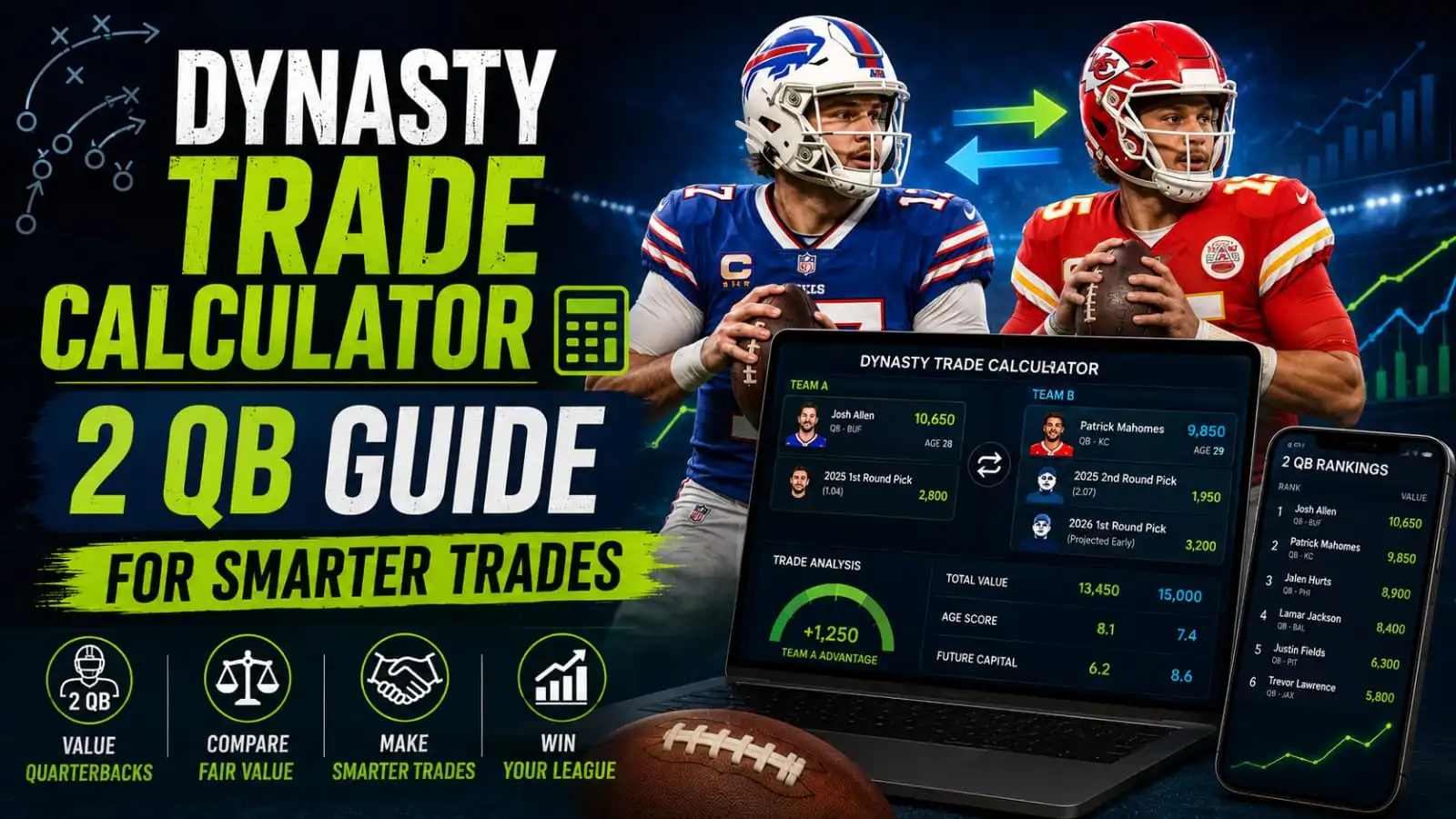
A Dynasty Trade Calculator 2 QB is a fantasy football tool that helps you compare trade value in leagues where managers usually start two quarterbacks. That one rule changes the whole market. Quarterbacks become scarce, expensive, and harder to replace than most casual managers expect.

In a normal 1QB league, you can often wait on quarterback. However, in a 2 QB dynasty league, every reliable starter matters. A calculator helps you compare quarterbacks, running backs, wide receivers, tight ends, rookie picks, and future picks before you make a costly move.

Simple meaning for beginners

A 2 QB dynasty calculator gives value scores to players and picks. You add both sides of a trade, then review the value difference. It does not make the decision for you. It simply gives your brain a calmer place to start.

How 2 QB leagues change trade values

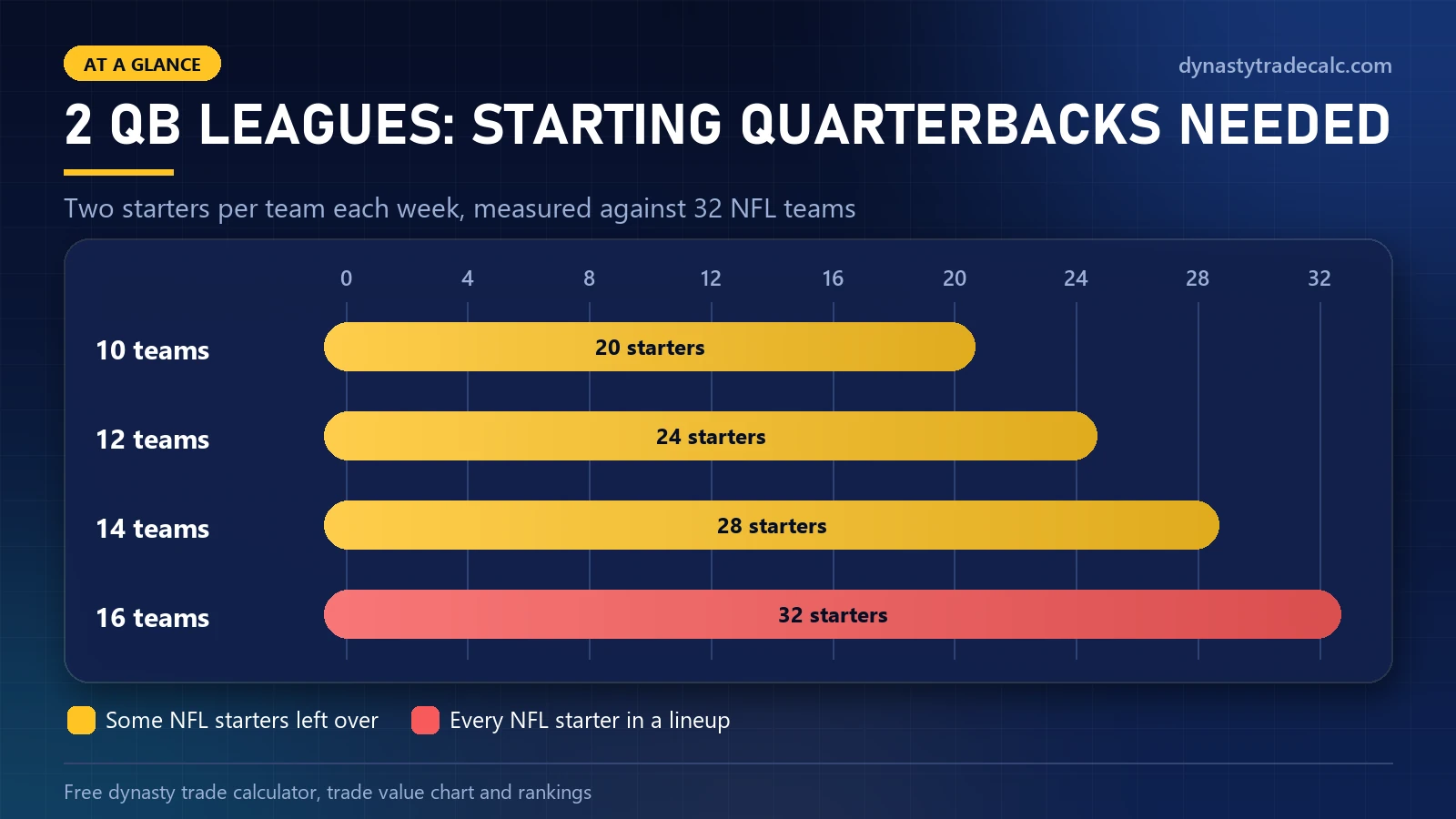
Two starting quarterback spots create fierce demand. In a 12-team league, managers may need 24 starting quarterbacks every week. That leaves little room for injury, bye weeks, or bad starters. Because of that, even average quarterbacks can become valuable trade pieces.

Why calculators matter in dynasty fantasy football

Dynasty fantasy football rewards long-term thinking. You do not only chase Sunday points. You manage age, market value, roster windows, and future draft picks. A calculator helps you see the trade from above, like a drone view of a crowded highway.

2. Why a Dynasty Trade Calculator 2 QB Helps You Make Better Trades

A Dynasty Trade Calculator 2 QB helps because quarterback value can look strange in this format. A solid QB2 may cost more than a famous wide receiver. That feels odd at first, but scarcity changes everything. The thinner the supply, the louder the price.

However, no calculator knows your league room perfectly. Some USA dynasty leagues hoard quarterbacks like canned food before a storm. Others trade them freely. You should use calculator value as a guide, then match it with league habits and roster needs.

Shows fair player value

Fair value protects you from emotional mistakes. A player’s name may sound bigger than his actual market value. A calculator gives each asset a number, which helps you compare offers with less guesswork. That matters when a trade includes quarterbacks and rookie picks together.

Helps compare quarterbacks with other positions

Comparing quarterbacks with receivers or running backs can feel awkward. They score in different ways and hold value differently. A calculator makes the comparison easier by creating one shared value language. It helps you ask, “Does this trade actually solve my problem?”

Reduces emotional trade mistakes

Emotions ruin trades fast. You may overpay after a quarterback injury or undersell after one bad game. A calculator slows the moment down. It gives you a quick sanity check before you turn a temporary feeling into a permanent roster scar.

3. How to Use a Dynasty Trade Calculator 2 QB Before Accepting a Trade

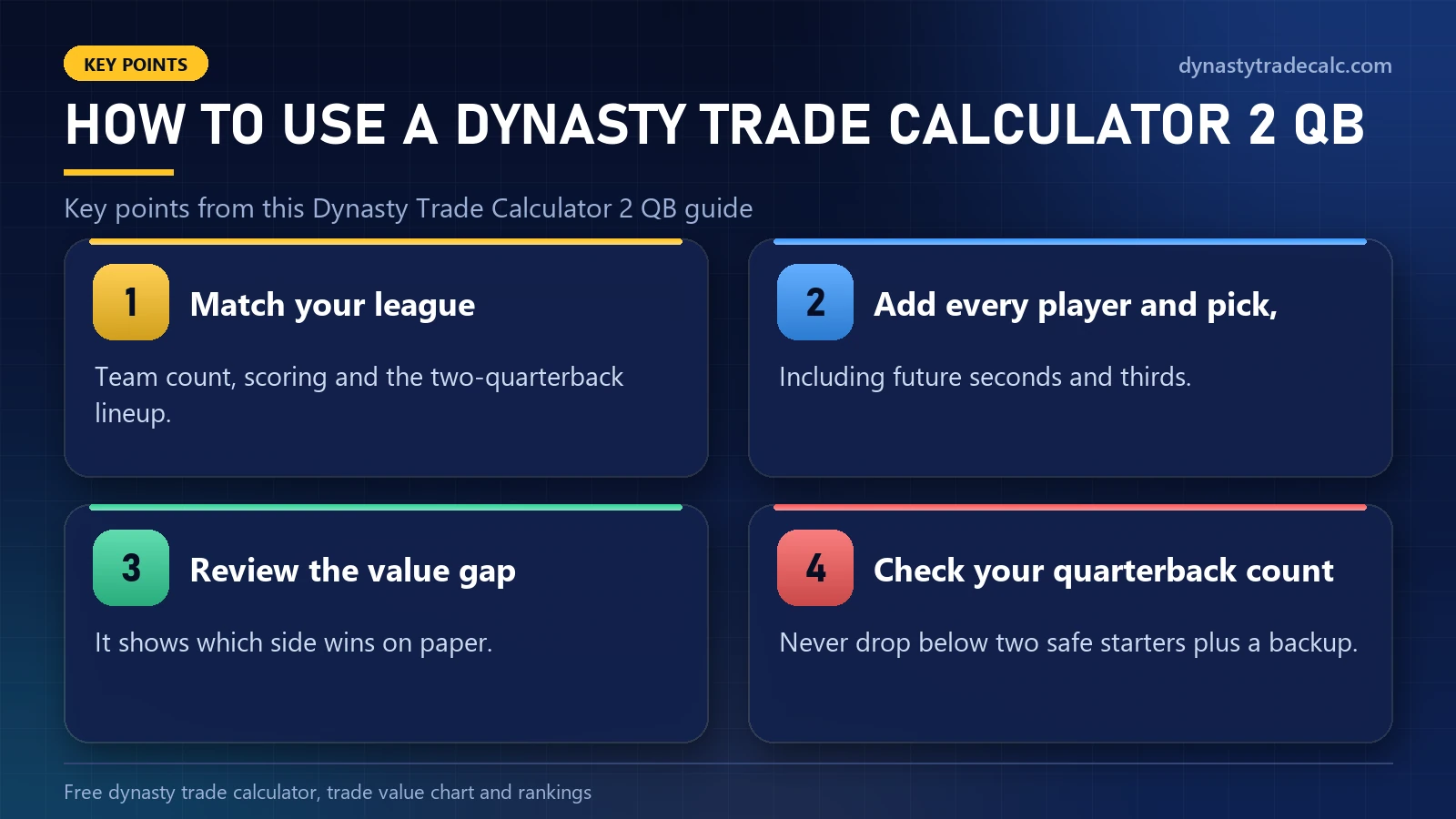
A Dynasty Trade Calculator 2 QB works best when your settings match your league. League size, scoring, starting lineup, bench depth, and quarterback rules all matter. If you use the wrong format, the calculator may serve you a clean-looking but crooked answer.

Before accepting any trade, enter every asset. Add players, rookie picks, future picks, and small throw-ins. Then check your roster after the deal. A trade can look fair in value, yet still hurt your weekly lineup or future flexibility.

Enter league settings correctly

Settings are the bones of trade value. A 10-team league plays differently from a 16-team league. PPR scoring changes pass-catcher value. Two-quarterback settings lift quarterback prices. If the setup is wrong, the result will not reflect your real league.

Add players, picks, and future assets

A complete trade check includes every piece. Future firsts, seconds, and thirds can change a deal. Small assets can matter too. This is especially true when using a fantasy football dynasty trade calculator with draft picks, because picks act like flexible currency.

Review value gaps before making a final decision

A value gap shows which side wins on paper. However, roster fit still matters. If you trade your only safe QB2 for a small value profit, you may lose more in weekly stability. Fair value should also make football sense.

4. Why Quarterbacks Are More Valuable in 2 QB Dynasty Leagues

Quarterbacks become premium assets because every team needs more of them. In a deep 2 QB league, a boring starter may still carry useful weekly value. He may not make your heart sing, but he keeps your lineup breathing.

This scarcity also makes quarterback trades harder. Managers rarely sell stable passers cheaply. If they do, you should look closely. Sometimes you find a bargain. Other times, the player has job risk, age concerns, or a shaky weekly floor.

Two starting QB spots create scarcity

Scarcity drives price. When every lineup needs two quarterbacks, the player pool dries quickly. A league may have more fantasy managers than safe NFL starters. That makes quarterback depth valuable, even when the player feels dull in real football terms.

Backup quarterbacks become more useful

Backup quarterbacks matter because injuries, benchings, and bye weeks happen. A backup with a real path to starts can gain value overnight. In deep leagues, a backup is not just bench clutter. He is a lottery ticket with shoulder pads.

Elite quarterbacks hold long-term trade power

Elite quarterbacks hold value because they offer points and stability. A young star passer can anchor a dynasty roster for many seasons. If you have one, avoid selling just because the offer looks busy. Premium assets deserve premium returns.

5. Dynasty Trade Calculator 2 QB Strategy for Player and Pick Value

A Dynasty Trade Calculator 2 QB strategy starts with position value. Quarterbacks sit near the top because replacement options get ugly fast. Still, you should not ignore elite receivers, strong tight ends, or future first-round rookie picks. Balance keeps your roster flexible.

Draft picks also change value across the year. Rookie picks often gain steam before rookie drafts because managers love fresh hope. During the season, proven players may matter more. Smart managers know when to buy the dream and when to sell it.

How to compare players and rookie picks

Players offer clearer production. Rookie picks offer flexibility. If your team can win now, a stable veteran may help more than a mystery pick. If your roster needs time, picks may fit better. The right answer depends on your team’s calendar.

When future first-round picks matter more

Future firsts matter most when they could become early picks. A future first from a weak team can hold serious upside. It may become a top rookie selection later. Treat it like an unopened envelope that might contain something expensive.

Why positional scarcity changes every deal

Scarcity changes every trade because not all positions replace equally. You can often find usable receivers. You cannot always find starting quarterbacks. That is why a modest quarterback may outvalue a more exciting flex player in a two-quarterback format.

6. Best Dynasty Trade Calculator 2 QB Tips for Superflex and PPR Formats

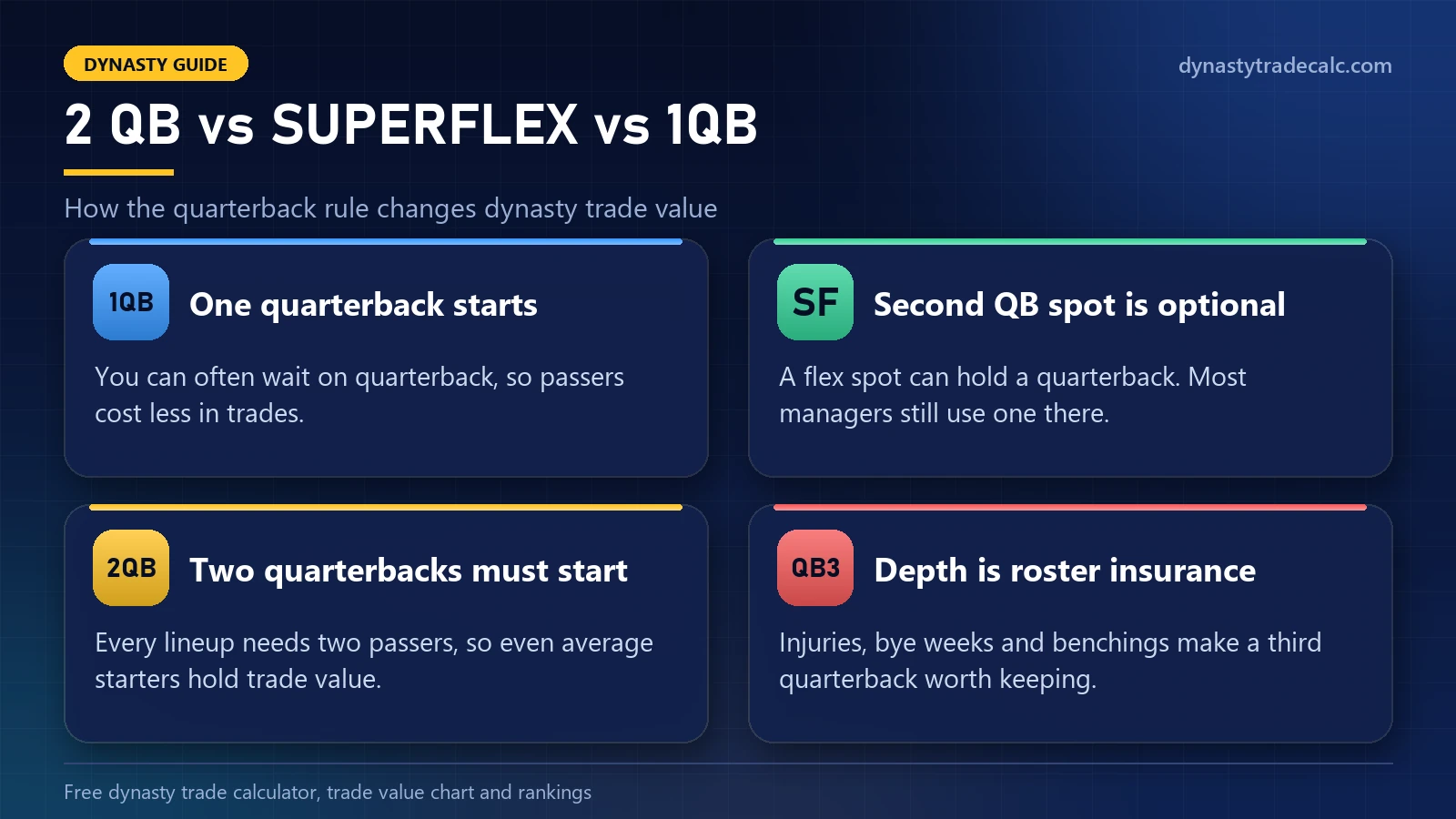
A Dynasty Trade Calculator 2 QB is similar to a Superflex calculator, but the formats are not always identical. In many 2 QB leagues, you must start two quarterbacks. In Superflex, you can usually choose another position if needed.

PPR scoring also matters. A full ppr dynasty trade calculator gives extra value to players who catch passes. This helps receivers, receiving backs, and target-heavy tight ends. Still, quarterback scarcity remains the main engine in two-quarterback leagues.

2 QB vs Superflex value difference

In 2 QB, the lineup usually requires two quarterbacks. In Superflex, the second quarterback spot is optional, though most managers still use a QB there. That small rule difference can change price pressure, especially when the league has deep benches.

How PPR scoring affects non-QB players

PPR scoring raises the floor for pass catchers. A receiver with steady targets becomes more useful. A running back who catches passes becomes safer. This does not erase quarterback value, but it makes elite non-QB players more competitive in trade talks.

When wide receivers and running backs gain value

Wide receivers gain value when they are young, durable, and tied to strong passing volume. Running backs gain value when you are ready to win now. However, backs can lose value quickly, so buy them with a clear purpose.

7. Common Mistakes When Using a Dynasty Trade Calculator 2 QB

A Dynasty Trade Calculator 2 QB can help you make smarter moves, but it can also tempt you into lazy thinking. Some managers see a small value edge and accept instantly. That is risky. A green number cannot manage your roster.

Another mistake is ignoring league personality. Your league may overprice young quarterbacks, underrate older veterans, or chase rookie picks every spring. If you understand those habits, you can use calculators better than managers who only copy the final number.

Trusting the calculator too much

A calculator is a tool, not a judge with a gavel. It cannot know your rival’s urgency, your roster plan, or your league’s weird habits. Use the value result, then add your own football judgment before you accept.

Ignoring team depth and roster needs

Depth matters more in 2 QB leagues because one quarterback injury can sink your lineup. If you sell your QB3, make sure the return improves your roster enough. Do not win the calculator and lose your season.

Undervaluing young quarterbacks

Young quarterbacks with stable jobs can become dynasty gold. Even if they are not elite, they may hold trade value for years. Do not sell them cheaply for older skill players unless your roster is clearly built to win now.

8. How to Trade Quarterbacks Smartly in a 2 QB Dynasty League

Smart quarterback trading starts with patience. If you have depth, you have leverage. If another manager needs a starter badly, do not rush. Let the market breathe. A desperate buyer may pay more after waivers fail and bye weeks arrive.

However, buying quarterbacks also takes discipline. Do not pay elite prices for a shaky starter. Study job security, age, weekly floor, rushing upside, and team situation. A quarterback trade should feel sturdy, not like a chair with three legs.

When to buy a quarterback

Buy a quarterback when your lineup lacks weekly safety or when the market discounts a useful starter. Injured quarterbacks, boring veterans, and post-hype passers can create windows. The best buys often feel plain at first, then look clever later.

When to sell a quarterback

Sell a quarterback when you have real depth and another manager faces pressure. If your QB3 can bring a strong receiver, premium pick, or package upgrade, consider it. Just make sure your remaining starters can survive injuries and bye weeks.

How to avoid overpaying for QB depth

Avoid overpaying by separating safety from hype. A famous quarterback may not be safer than a quieter starter. Check role security, scoring floor, age, and offensive environment. Pay for useful points, not just a helmet logo and name memory.

9. Comparing Players, Rookie Picks, and Future Picks in 2 QB Trades

Two-quarterback trades often include several assets at once. You may see a quarterback, a young receiver, and a future first in one offer. That can feel messy. A calculator helps organize the trade, but your roster plan gives it meaning.

You should also understand tool types. A non dynasty trade calculator focuses more on short-term redraft value, so it may not fit your league. A trade calculator dynasty baseball tool serves a different sport. For NFL dynasty, use football-specific dynasty values.

Veteran QB vs rookie pick value

A veteran quarterback gives immediate stability. A rookie pick gives future choice and possible upside. If you are competing, the veteran may help more. If you are rebuilding, the pick may carry better long-term shape and cleaner flexibility.

Young QB vs elite skill player value

A young quarterback with job security can rival elite skill players in 2 QB leagues. That surprises some managers. However, weekly quarterback scarcity changes the equation. Do not trade a young starter unless the return gives your roster a clear leap.

Future picks as trade sweeteners

Future picks can close value gaps without breaking a deal. A second-round pick can balance a small difference. A future first can reshape the whole trade. Use picks carefully, because dynasty managers often regret tossing them around like parade candy.

10. Final Checklist Before Using a Dynasty Trade Calculator for 2 QB Trades

Before you accept any trade, slow down. Check format, scoring, team count, depth, and your roster direction. A 16 team dynasty trade calculator setup needs different thinking from a 10-team league because depth gets scarce much faster.

Also compare more than one value source when the deal matters. One calculator may use rankings. Another may lean on real trades. A tool like an ai dynasty trade calculator may offer quick analysis, but you should still check the logic.

Check scoring format

Scoring format changes value. PPR boosts pass catchers. Six-point passing touchdowns can lift quarterbacks. Tight end premium changes elite tight end prices. Before trusting a calculator, make sure the scoring matches your actual league rules.

Review your roster direction

Your team direction should guide every move. A contender may pay for points. A rebuilder may prefer youth and picks. If you do not know your direction, every offer will look tempting. That is how teams drift into mediocrity.

Compare more than one calculator

Different calculators can disagree because they use different data. Some rely on expert rankings. Others use crowdsourced votes or real trades. Compare more than one view. It gives you a safer range and keeps one tool from steering everything.

Think long-term before accepting

Dynasty rewards managers who think beyond one week. A trade should help your present, your future, or both. If it does neither, pass. You do not need constant action. Sometimes the smartest trade is the one you politely decline.

Helpful 2 QB Trade Calculator Comparison Table

A good calculator fits your league before it gives advice. If your league has unusual settings, you need a tool that can handle them. This table shows how different search terms and calculator types relate to 2 QB dynasty decisions.

Calculator termBest useWhat to remember
2qb dynasty trade calculatorChecking quarterback-heavy dynasty tradesBest for two-quarterback formats
3 team trade calculator dynastyReviewing trades with three managersUseful when assets move across several teams
3 way trade calculator dynastySolving multi-manager trade ideasHelps when one direct trade does not work
32 man dynasty trade calculatorStudying extreme league depthValues change sharply in massive leagues
ai dynasty trade calculatorGetting quick trade feedbackStill needs human judgment

Mini Case Study: The QB2 Trap

Imagine you manage a 12-team 2 QB dynasty roster. You have two safe quarterbacks and one young backup starter. Another manager offers an older running back and a future second for your QB3. The calculator says the deal looks close.

However, the hidden cost is lineup safety. If one starter gets injured, your team loses stability. The running back may help for six weeks, but the quarterback protects your roster for years. In 2 QB leagues, boring depth can be beautiful.

Trade questionQuick answerSmart manager move
Does the trade improve weekly points?MaybeCheck your title window
Does it weaken QB depth?YesRaise the asking price
Is the RB value stable?Not alwaysConsider age and role
Can the QB gain value later?YesAvoid selling too cheaply

“In 2 QB dynasty leagues, quarterback depth is not bench waste. It is roster insurance with trade power.”

FAQ: Dynasty Trade Calculator 2 QB

Two-quarterback dynasty leagues create more trade tension than standard leagues. Quarterbacks cost more, rookie picks need sharper context, and depth matters every week. Once you understand scarcity, the format becomes less scary and much more fun to manage.

What does dynasty trade calculator 2 QB mean?

It means a dynasty fantasy football calculator built for leagues where managers start two quarterbacks. It helps compare players, rookie picks, future picks, and trade packages while adjusting for the higher value of quarterbacks in that format.

Why are quarterbacks so expensive in 2 QB leagues?

Quarterbacks cost more because demand is much higher. Most teams need two starters every week, and the NFL only has so many reliable passers. When supply gets tight, even mid-tier quarterbacks become useful and expensive.

Should I trade away my QB depth in dynasty?

You can trade quarterback depth, but only for a strong return. Depth protects you from injuries, bye weeks, and benchings. If you sell it cheaply, you may spend the rest of the season trying to buy it back.

Is a 2 QB league the same as a Superflex league?

No, they are similar but not exactly the same. A 2 QB league usually requires two starting quarterbacks. A Superflex league lets you start a quarterback in the flex spot, but you can use another position if needed.

Can I use a dynasty trade calculator for rookie picks?

Yes, you can use a calculator for rookie picks if it supports pick values. Rookie picks matter because they offer flexibility and future upside. Their value often rises before rookie drafts, when managers start chasing the next breakout star.

Final Thoughts

A 2 QB dynasty league rewards patient managers. Quarterbacks matter more, picks need context, and every trade should match your roster direction. You do not need to fear the format. You only need to respect its market.

Use calculators to check value, but trust your full process. Study settings, compare tools, understand scarcity, and think beyond one week. When you blend numbers with football sense, your trades become sharper and your roster becomes harder to beat.

Similar Posts

Leave a Reply

Your email address will not be published. Required fields are marked *