

Table of Contents
- What Is a Trade Calculator Fantasy Football Tool?
- How Does a Fantasy Trade Calculator Work?
- Why You Need a Trade Strategy
- Key Features of the Best Trade Calculators
- How to Use a Trade Calculator Fantasy Football Tool Step by Step
- Redraft, Dynasty and Keeper Leagues
- Redraft vs Keeper vs Dynasty: What Changes in the Calculator
- Important Player Value Factors Before Making a Fantasy Trade
- Common Fantasy Football Trade Mistakes to Avoid
- When Should You Accept or Reject a Fantasy Football Trade?
- Accept or Reject: A Five-Point Checklist
- Best Tips to Win More Trades in Fantasy Football
- Frequently Asked Questions
- Related Guides
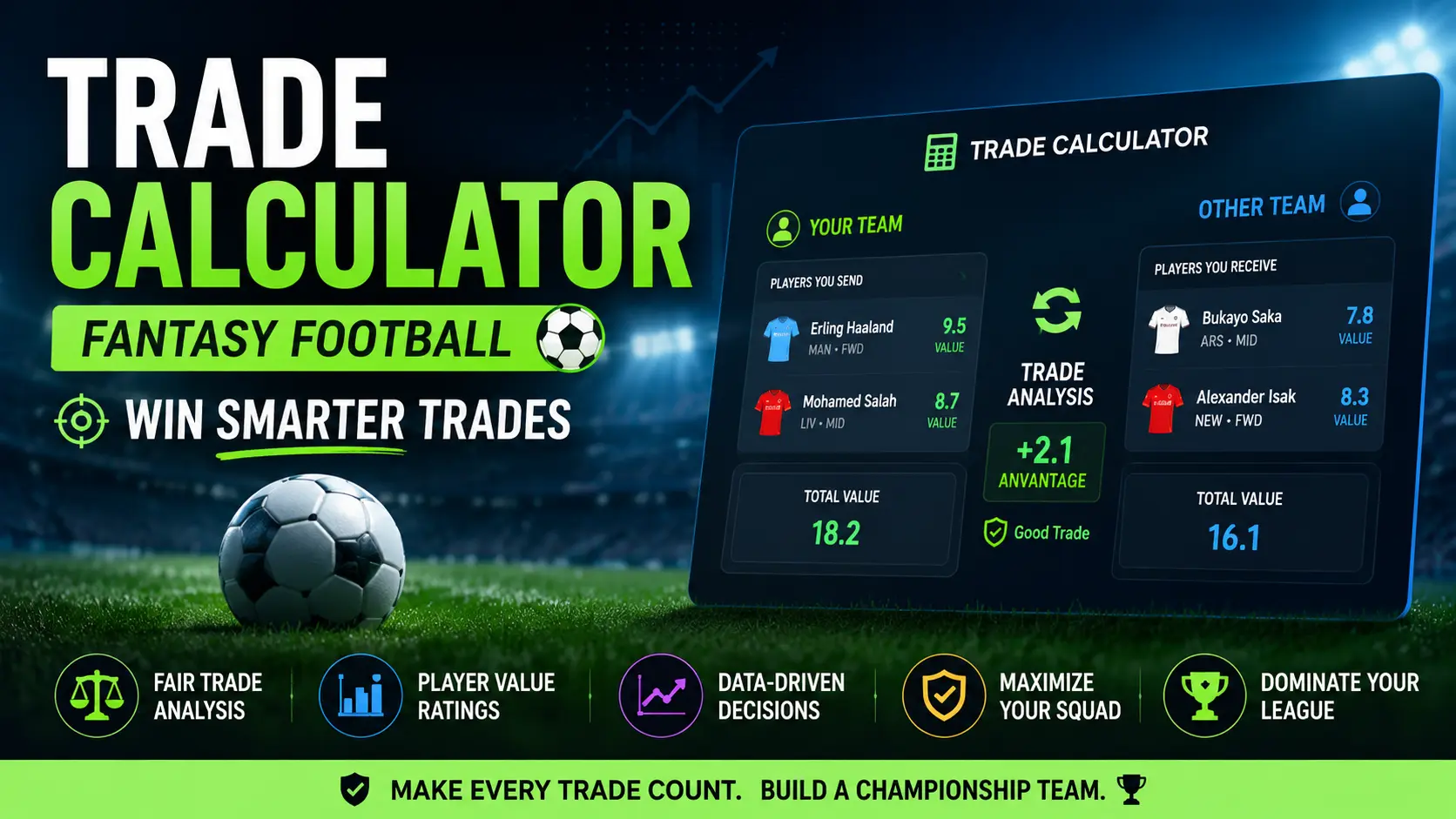
A trade calculator fantasy football managers can rely on compares the players on each side of a deal and shows which side is ahead. One move can lift your roster. One sloppy swap can wreck your playoff hopes. That is why smart managers use player values, league settings, and real roster needs before shaking hands on any deal.
However, no calculator should replace your brain. It shows value gaps, scoring context, and trade balance. You still decide whether the deal fits your team’s rhythm, schedule, and championship plan.
What Is a Trade Calculator Fantasy Football Tool?
A fantasy trade tool compares players from both sides of a deal. It helps you see whether a swap looks fair, lopsided, or sneaky-good. Instead of guessing, you check fantasy value, roster fit, and scoring impact before clicking accept.
The best tools usually weigh rankings, projections, injuries, usage trends, and scoring formats. For example, a pass-catching running back can shine in PPR scoring but look less special in standard leagues. That little detail can flip a trade verdict fast. Our PPR trade calculator guide shows how much that scoring change matters.
How Does a Fantasy Trade Calculator Work?
A calculator works by assigning trade values to players. Those values often come from expert rankings, rest-of-season projections, recent production, and market movement. Then, it compares both sides and shows whether one manager gets more trade equity.
However, the smartest tools go deeper than raw names. They consider league size, roster slots, scoring style, and sometimes team depth. A wide receiver may score more total points, yet a scarce running back may carry more leverage in your league.
Why You Need a Trade Strategy
A strong trade strategy protects you from emotional moves. A clear process helps you avoid chasing smoke while ignoring usage rate, snap share, and weekly opportunity.
For example, imagine trading a steady WR2 for a running back who scored twice on only seven touches. However, volume tells the real story.
Key Features of the Best Trade Calculators
Great tools should support PPR, half-PPR, standard, dynasty, keeper, and redraft formats. They should also adjust player value by league settings. If the tool ignores scoring format, it may hand you a pretty answer with a cracked foundation.
Look for injury notes, playoff schedule context, bye weeks, age curves, target share, rushing workload, and depth-chart movement. Also, check whether the tool updates often. Fantasy football moves quickly.
How to Use a Trade Calculator Fantasy Football Tool Step by Step
Start by adding every player involved in the deal. Next, choose your league format. Then review the trade score, value gap, and roster impact. Do not stop there. Check your bench, lineup holes, and waiver wire options too. The full walkthrough is in how to use a dynasty trade calculator.
For example, trading two solid starters for one star can make sense if your bench has muscle. However, it can hurt badly if injuries hit. A calculator shows value, but your roster tells the fuller story.
Redraft, Dynasty and Keeper Leagues
Redraft leagues focus on the current season. Dynasty leagues stretch the chessboard across years. Keeper leagues sit somewhere between both. That means dynasty value, player age, draft picks, and contract rules can change a trade completely. For long-term leagues, use our dynasty trade calculator, which also counts age and rookie picks.
In redraft, an older star can help you win now. In dynasty, that same player may carry declining long-term value. However, context matters. A rebuilding team should seek youth while a contender can pay for immediate firepower.
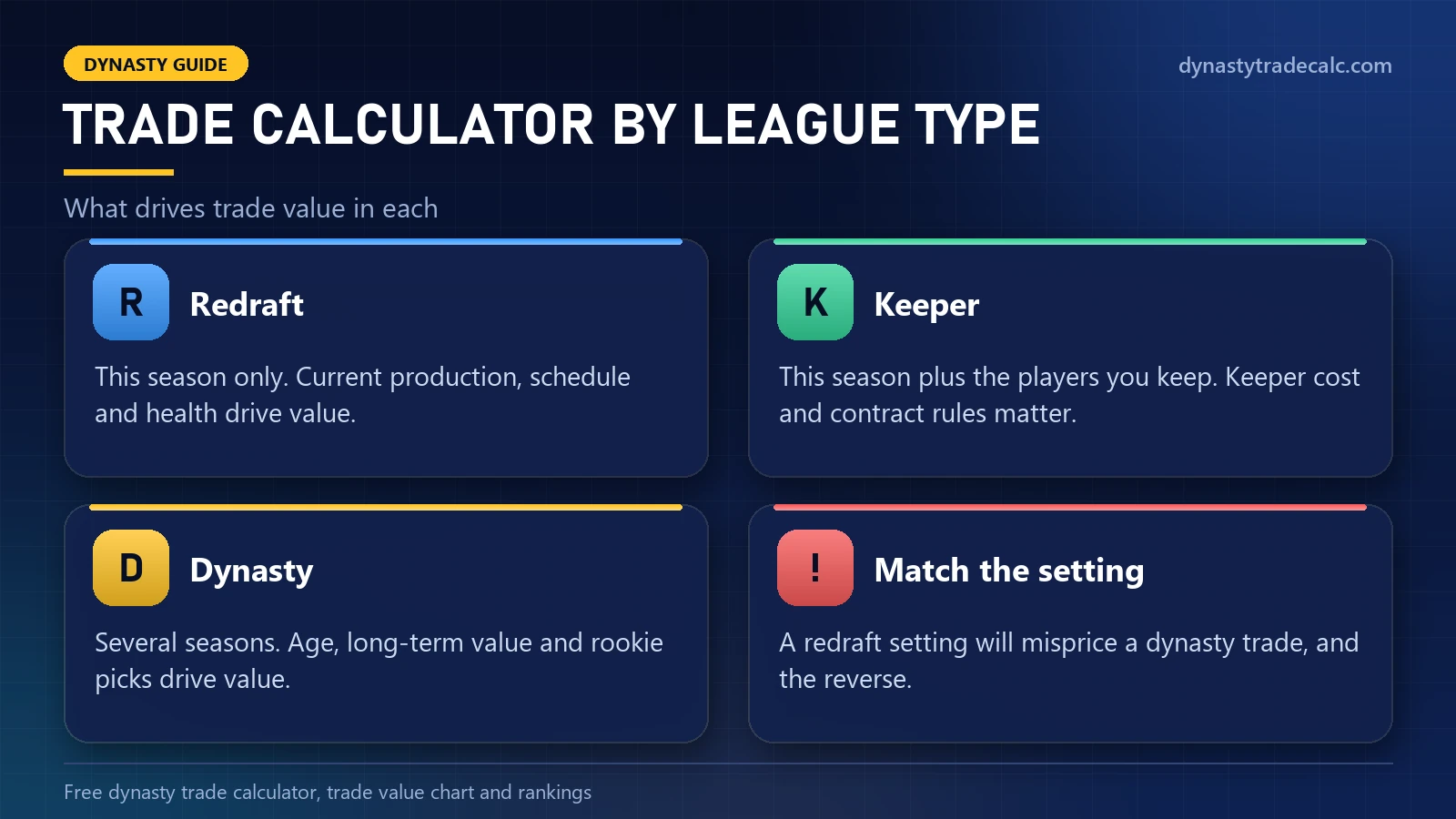
Redraft vs Keeper vs Dynasty: What Changes in the Calculator
The same player can be a buy in one league type and a sell in another. Pick the calculator setting that matches your league before you compare anything.
| League type | Time horizon | What drives trade value |
|---|---|---|
| Redraft | This season only | Current production, schedule and health |
| Keeper | This season, plus the players you keep | Production, plus keeper cost and contract rules |
| Dynasty | Several seasons | Age, long-term value and rookie picks |
An older star is the clearest case. In redraft that player can help you win now. In dynasty the same player may carry declining long-term value, so the calculator will show a lower number.
Important Player Value Factors Before Making a Fantasy Trade
Player value starts with opportunity. Targets, carries, red-zone touches, route participation, and snap share matter more than one lucky touchdown. A player with steady volume gives you a sturdier floor than a boom-bust option riding chaos.
You should also weigh injuries, bye weeks, playoff matchups, quarterback quality, team pace, and coaching tendencies. For example, a receiver on a pass-heavy offense may offer more weekly oxygen than a similar talent stuck in a sluggish attack.
Common Fantasy Football Trade Mistakes to Avoid
The biggest mistake is trading for names instead of roles. Big names feel safe, yet fantasy points come from usage. If a player’s workload shrinks, his reputation will not rescue your lineup when Sunday arrives. See the biggest dynasty trade mistakes for the long-term versions of the same errors.
Another common mistake is ignoring roster construction. You may “win” a trade on paper but weaken your starting lineup. However, balance matters.
When Should You Accept or Reject a Fantasy Football Trade?
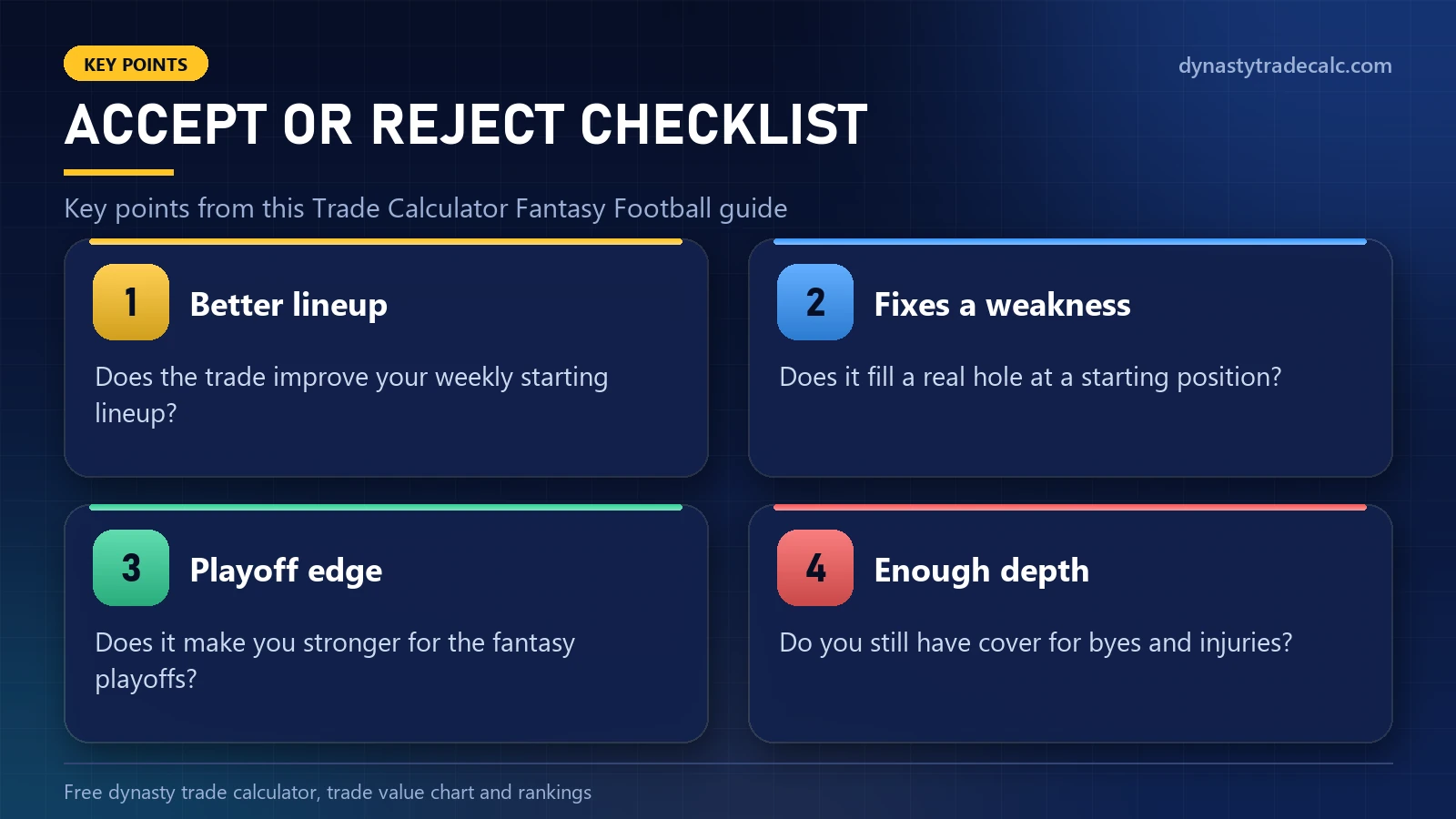
Accept a trade when it improves your weekly lineup, fixes a roster weakness, or gives you a clear playoff edge. A fair deal should make sense beyond the calculator. It should fit your team’s actual path to winning.
Reject a trade when it creates depth problems, relies on wishful thinking, or sells a stable asset too cheaply. However, do not fear risk completely.
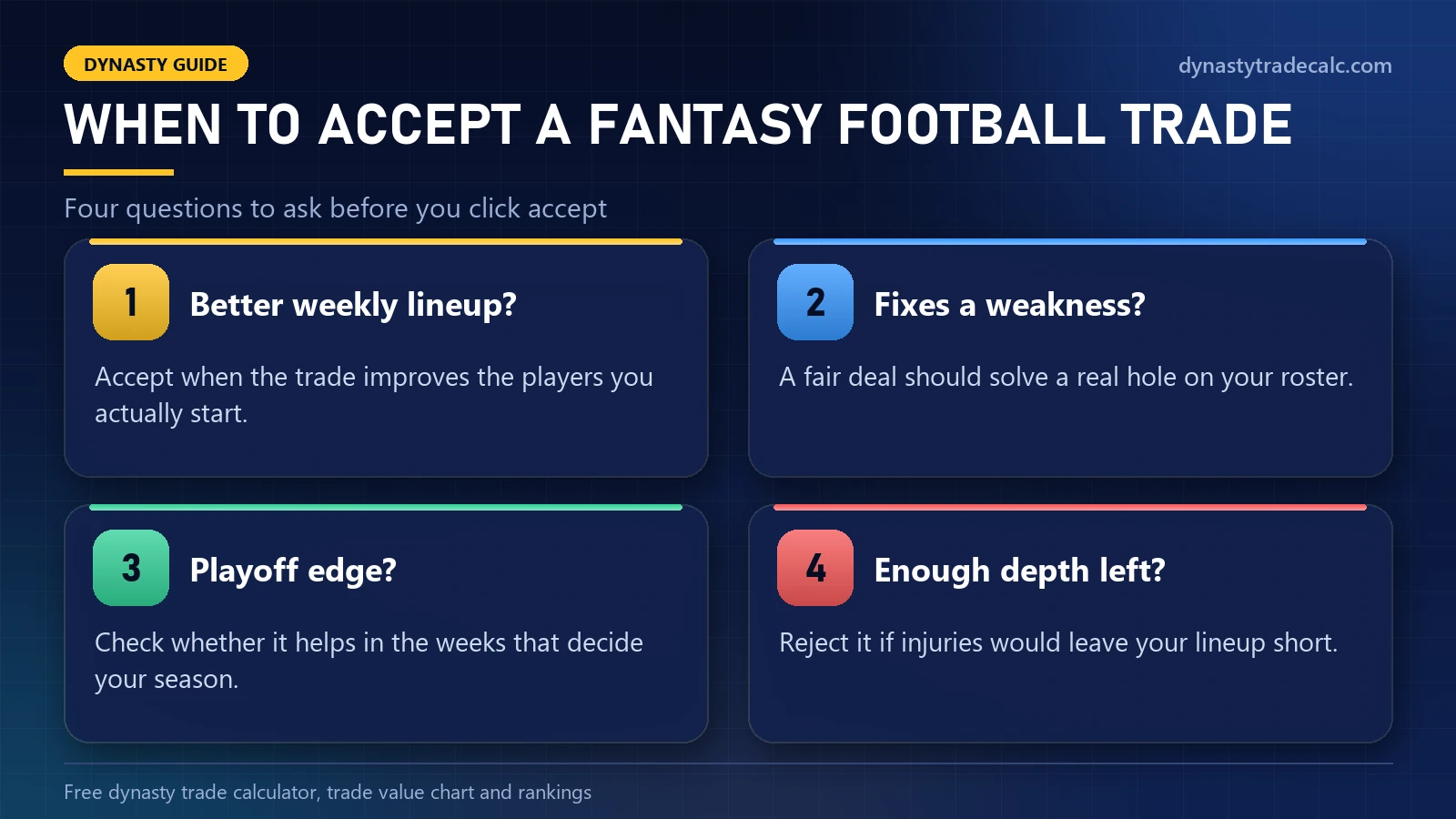
Accept or Reject: A Five-Point Checklist
- Does it improve your weekly starting lineup?
- Does it fix a real roster weakness?
- Does it give you a clear playoff edge?
- Does it leave you with enough depth if injuries hit?
- Are you selling a stable player too cheaply, or relying on wishful thinking?
Accept when the first three answers are yes and the last two do not worry you. Reject when the trade creates a depth problem or only works if everything goes right.
Best Tips to Win More Trades in Fantasy Football
Start trade talks before you feel desperate. Offer deals that solve the other manager’s problem too. Give them a reason to care.
Also, buy low when volume stays strong and sell high when touchdowns hide weak usage. For example, a player with eight targets and no score may be more valuable than someone who scored on two fluky touches.
Frequently Asked Questions
Is a fantasy football trade calculator always accurate?
No tool is always accurate because fantasy football changes fast. Injuries, weather, coaching shifts, and depth-chart surprises can alter value overnight. Use the result as a smart checkpoint, then compare it with team needs, league rules, and player trends.
Can a trade calculator help in dynasty leagues?
Yes, it can help a lot in dynasty leagues because long-term value matters. Age, rookie picks, contract windows, and future opportunity all change the math. However, you should still judge your team direction before accepting any deal.
Should I trust a fantasy football trade calculator completely?
No, you should not trust any tool completely. A calculator can spot value gaps, but it cannot fully understand your league’s personalities. Some managers overpay for favorites. Others chase rookies. That human wrinkle matters.
What makes a fantasy football trade fair?
A fair trade helps both teams based on their needs, format, and competitive window. Equal value alone does not guarantee fairness. For example, a rebuilding dynasty team and a win-now contender may value the same player very differently.
How often should I use a trade calculator during the season?
Use one whenever you receive, send, or consider a serious offer. Weekly checks help too, especially after injuries, breakout games, and depth-chart changes. However, do not obsess over every tiny value swing. Stay sharp, not frantic.
What is a trade calculator in fantasy football?
A fantasy football trade calculator gives each player a value and adds up both sides of a trade. It shows which side is ahead so you can judge an offer before you accept it.
Can I use the same trade calculator for redraft and dynasty leagues?
Only if it has a setting for each. Redraft values cover this season. Dynasty values also count age, future seasons and rookie picks, so a redraft setting will misprice a dynasty trade.
What is an FF trade calculator?
FF trade calculator is short for fantasy football trade calculator. It adds up both sides of a trade and shows which side is ahead before you accept or send an offer.
Related Guides
Compare With Other Sources
Our values are estimates, not quotes. It is good practice to compare a trade against KeepTradeCut crowd-sourced dynasty values and FantasyCalc as well. For a third view, check FantasyPros dynasty rankings. The value behind each player is on our dynasty trade value chart. To see how a trade result is read step by step, try our dynasty fantasy trade calculator walkthrough. To value players and picks across several seasons, see our dynasty calculator guide.
