

Table of Contents
- What Is a Fantasy Football Trade Calculator?
- How Does a Fantasy Trade Calculator Work?
- Why You Need a Trade Strategy
- Key Features of the Best Trade Calculators
- How to Use a Fantasy Football Trade Calculator Step by Step
- Redraft, Dynasty and Keeper Leagues
- Standard, Half PPR and Full PPR
- Important Player Value Factors Before Making a Fantasy Trade
- Common Fantasy Football Trade Mistakes to Avoid
- When Should You Accept or Reject a Fantasy Football Trade?
- Best Tips to Win More Trades in Fantasy Football
- Frequently Asked Questions
- Related Guides
A fantasy football trade calculator compares the players on each side of a deal and shows which side is ahead; many managers search for it as a trade calculator fantasy football tool. One move can lift your roster. One sloppy swap can wreck your playoff hopes. That is why smart managers use player values, league settings, and real roster needs before shaking hands on any deal.
However, no calculator should replace your brain. It shows value gaps, scoring context, and trade balance. You still decide whether the deal fits your team’s rhythm, schedule, and championship plan.
What Is a Fantasy Football Trade Calculator?
A fantasy trade tool compares players from both sides of a deal. It helps you see whether a swap looks fair, lopsided, or sneaky-good. Instead of guessing, you check fantasy value, roster fit, and scoring impact before clicking accept.
The best tools usually weigh rankings, projections, injuries, usage trends, and scoring formats. For example, a pass-catching running back can shine in PPR scoring but look less special in standard leagues. That little detail can flip a trade verdict fast. Our PPR trade calculator guide shows how much that scoring change matters.
How Does a Fantasy Trade Calculator Work?
A calculator works by assigning trade values to players. Those values often come from expert rankings, rest-of-season projections, recent production, and market movement. Then, it compares both sides and shows whether one manager gets more trade equity.
However, the smartest tools go deeper than raw names. They consider league size, roster slots, scoring style, and sometimes team depth. A wide receiver may score more total points, yet a scarce running back may carry more leverage in your league.
Why You Need a Trade Strategy
A strong trade strategy protects you from emotional moves. A clear process helps you avoid chasing smoke while ignoring usage rate, snap share, and weekly opportunity.
For example, imagine trading a steady WR2 for a running back who scored twice on only seven touches. However, volume tells the real story.
Key Features of the Best Trade Calculators
Great tools should support PPR, half-PPR, standard, dynasty, keeper, and redraft formats. They should also adjust player value by league settings. If the tool ignores scoring format, it may hand you a pretty answer with a cracked foundation.
Look for injury notes, playoff schedule context, bye weeks, age curves, target share, rushing workload, and depth-chart movement. Also, check whether the tool updates often. Fantasy football moves quickly.
How to Use a Fantasy Football Trade Calculator Step by Step
Start by adding every player involved in the deal. Next, choose your league format. Then review the trade score, value gap, and roster impact. Do not stop there. Check your bench, lineup holes, and waiver wire options too. The full walkthrough is in how to use a dynasty trade calculator.
For example, trading two solid starters for one star can make sense if your bench has muscle. However, it can hurt badly if injuries hit. A calculator shows value, but your roster tells the fuller story. Our trade analyzer guide covers how to check trades in ESPN leagues.
Redraft, Dynasty and Keeper Leagues
Redraft leagues focus on the current season. Dynasty leagues stretch the chessboard across years. Keeper leagues sit somewhere between both. That means dynasty value, player age, draft picks, and contract rules can change a trade completely. For long-term leagues, use our dynasty trade calculator, which also counts age and rookie picks.
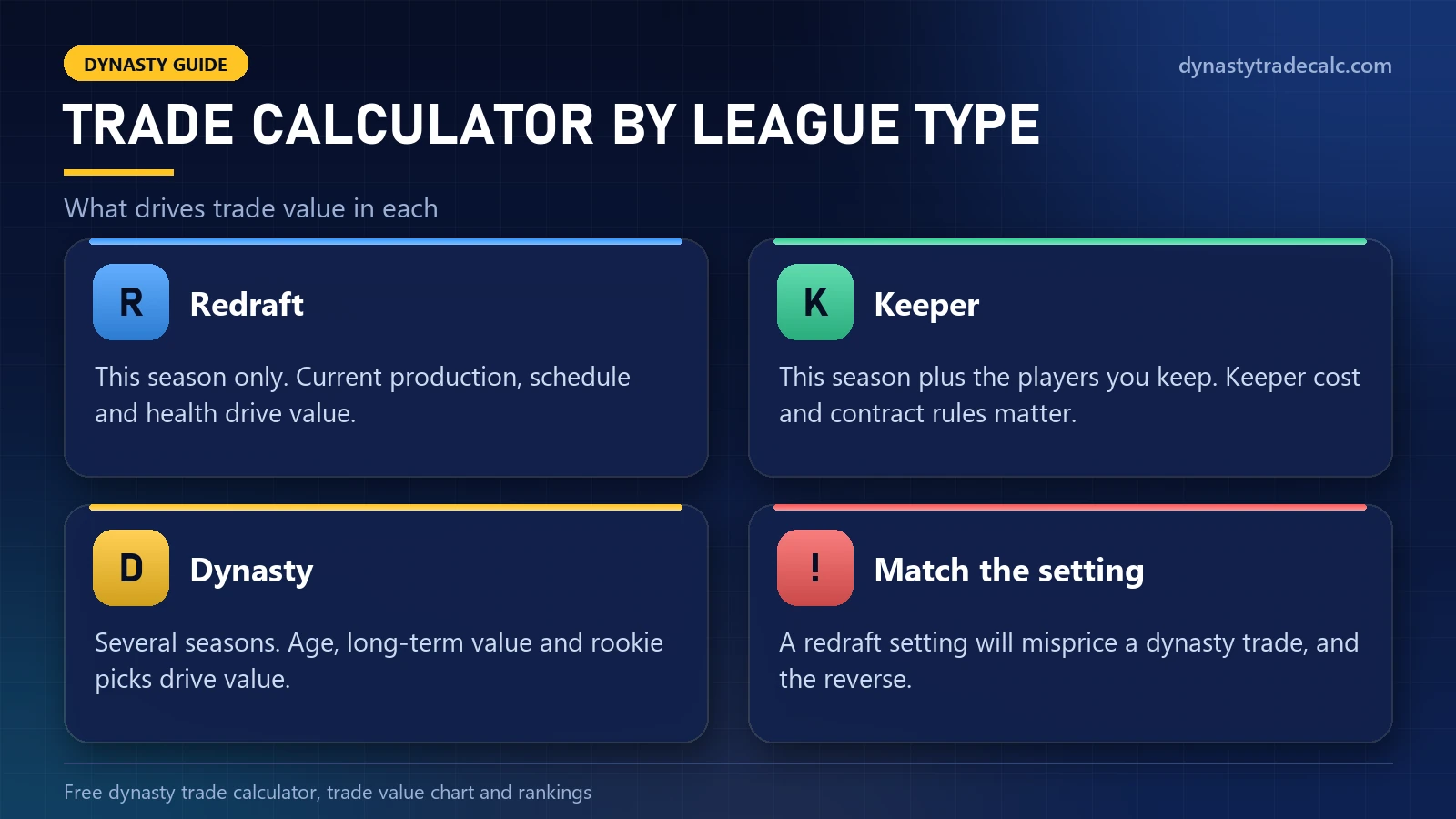
| League type | Time horizon | What drives trade value |
|---|---|---|
| Redraft | This season only | Current production, schedule and health |
| Keeper | This season, plus the players you keep | Production, plus keeper cost and contract rules |
| Dynasty | Several seasons | Age, long-term value and rookie picks |
The same player can be a buy in one league type and a sell in another. An older star helps a redraft team win now, but in dynasty the calculator shows a lower number because his long-term value is falling.
Standard, Half PPR and Full PPR
Scoring changes values as much as league type. Set it before you compare:
- Standard: touchdowns and yards rule, so lead running backs gain.
- Half PPR: half a point per catch; the most common setting on ESPN and Yahoo.
- Full PPR: a point per catch lifts slot receivers and pass-catching backs. Sleeper leagues often use it.
Important Player Value Factors Before Making a Fantasy Trade
Player value starts with opportunity. Targets, carries, red-zone touches, route participation, and snap share matter more than one lucky touchdown. A player with steady volume gives you a sturdier floor than a boom-bust option riding chaos.
You should also weigh injuries, bye weeks, playoff matchups, quarterback quality, team pace, and coaching tendencies. For example, a receiver on a pass-heavy offense may offer more weekly oxygen than a similar talent stuck in a sluggish attack.
Common Fantasy Football Trade Mistakes to Avoid
The biggest mistake is trading for names instead of roles. Big names feel safe, yet fantasy points come from usage. If a player’s workload shrinks, his reputation will not rescue your lineup when Sunday arrives. See the biggest dynasty trade mistakes for the long-term versions of the same errors.
Another common mistake is ignoring roster construction. You may “win” a trade on paper but weaken your starting lineup. However, balance matters.
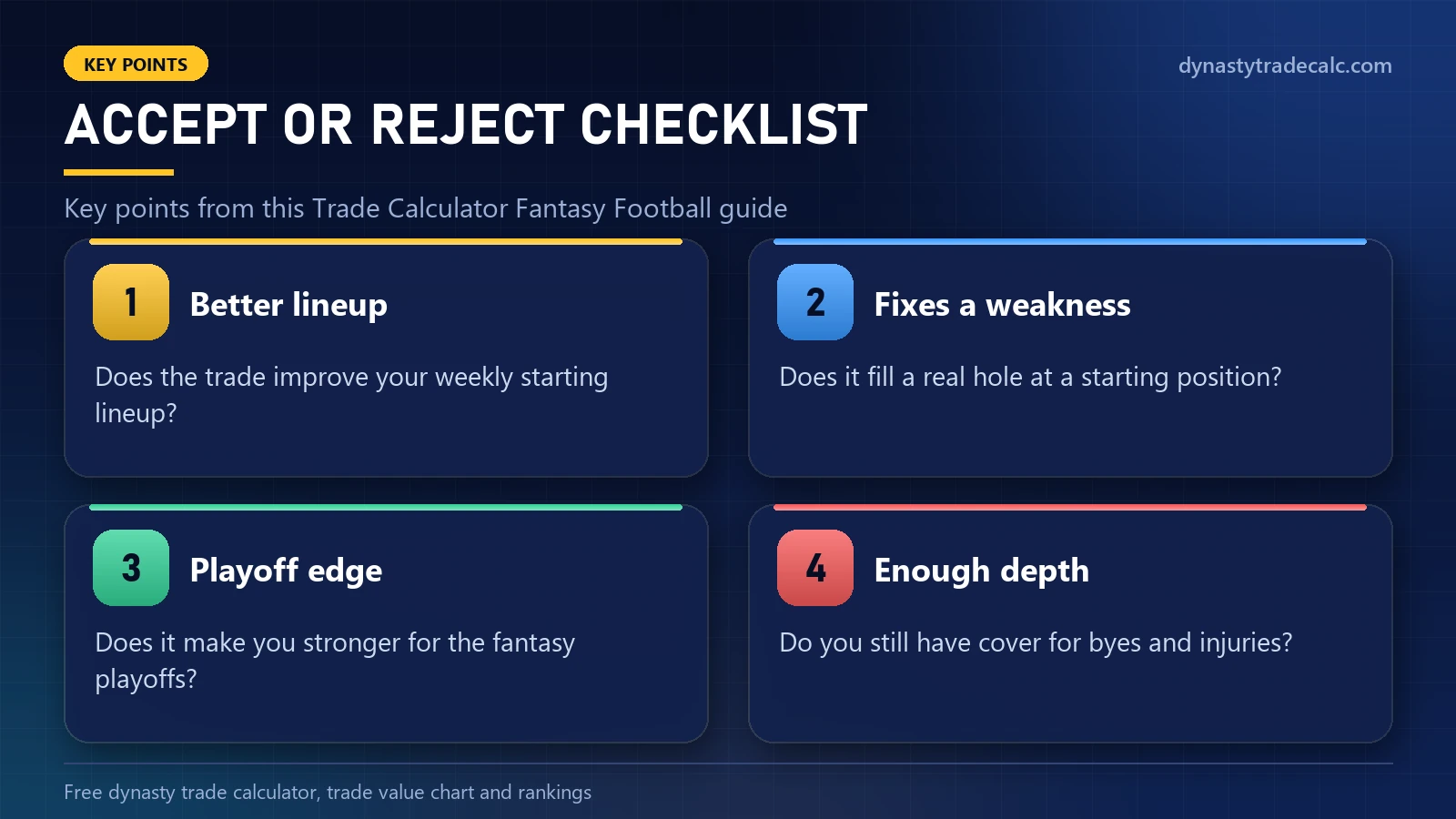
When Should You Accept or Reject a Fantasy Football Trade?
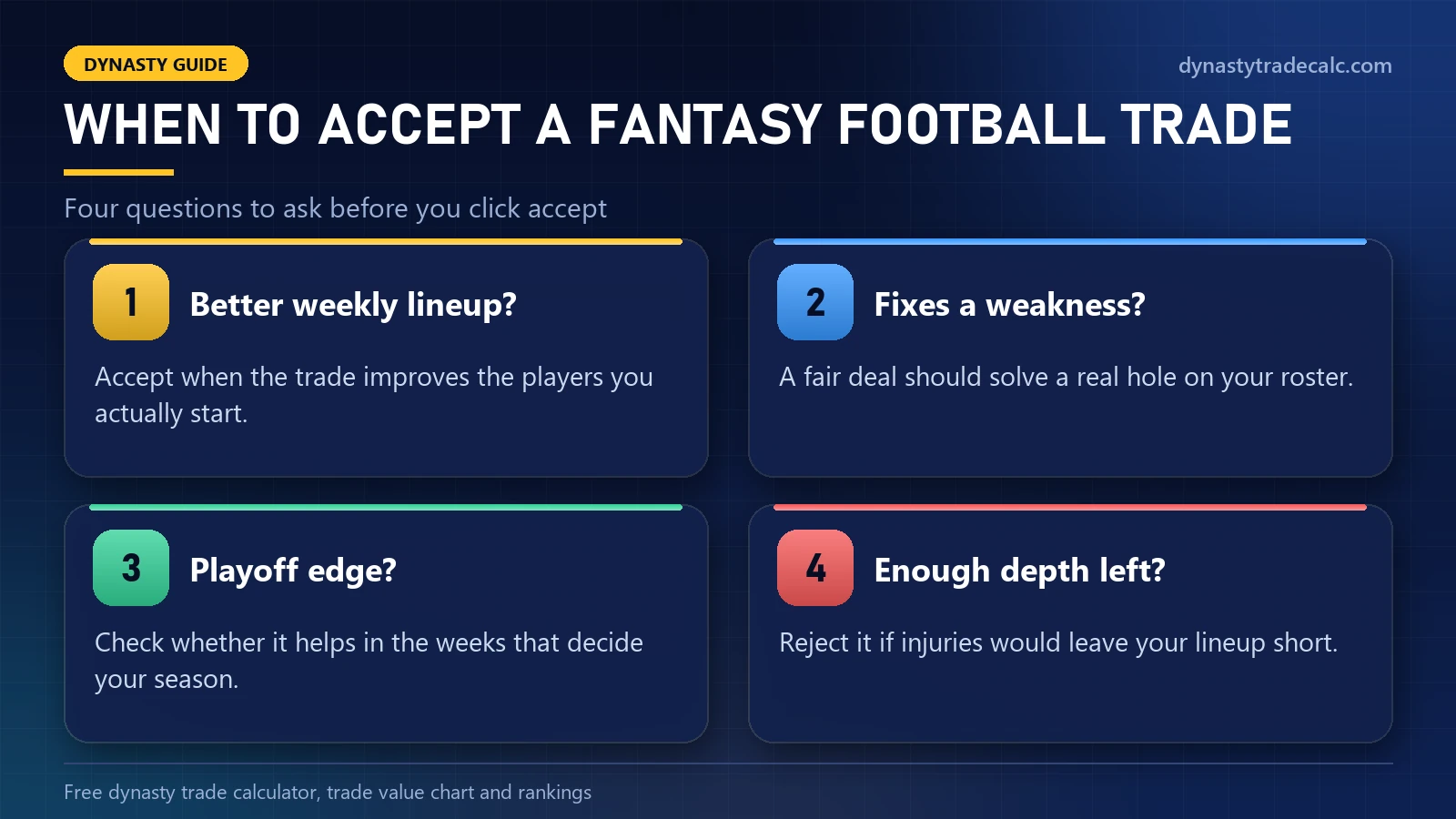
- Does it improve your weekly starting lineup?
- Does it fix a real roster weakness?
- Does it give you a clear playoff edge?
- Does it leave you with enough depth if injuries hit?
- Are you selling a stable player too cheaply, or relying on wishful thinking?
Accept when the first three answers are yes and the last two do not worry you. Reject when the trade creates a depth problem or only works if everything goes right. Our espn fantasy football guide covers roster and lineup decisions in ESPN leagues.
Best Tips to Win More Trades in Fantasy Football
Start trade talks before you feel desperate. Offer deals that solve the other manager’s problem too. Give them a reason to care.
Also, buy low when volume stays strong and sell high when touchdowns hide weak usage. For example, a player with eight targets and no score may be more valuable than someone who scored on two fluky touches.
Frequently Asked Questions
Is a fantasy football trade calculator always accurate?
No tool is always accurate because fantasy football changes fast. Injuries, weather, coaching shifts, and depth-chart surprises can alter value overnight. Use the result as a smart checkpoint, then compare it with team needs, league rules, and player trends.
Can a trade calculator help in dynasty leagues?
Yes, it can help a lot in dynasty leagues because long-term value matters. Age, rookie picks, contract windows, and future opportunity all change the math. However, you should still judge your team direction before accepting any deal.
What makes a fantasy football trade fair?
A fair trade helps both teams based on their needs, format, and competitive window. Equal value alone does not guarantee fairness. For example, a rebuilding dynasty team and a win-now contender may value the same player very differently.
How often should I use a trade calculator during the season?
Use one whenever you receive, send, or consider a serious offer. Weekly checks help too, especially after injuries, breakout games, and depth-chart changes. However, do not obsess over every tiny value swing. Stay sharp, not frantic.
What is a trade calculator in fantasy football?
A fantasy football trade calculator gives each player a value and adds up both sides of a trade. It shows which side is ahead so you can judge an offer before you accept it.
What is an FF trade calculator?
FF trade calculator is short for fantasy football trade calculator. It adds up both sides of a trade and shows which side is ahead before you accept or send an offer.
Related Guides
Compare With Other Sources
Our values are estimates, not quotes. It is good practice to compare a trade against KeepTradeCut crowd-sourced dynasty values and FantasyCalc as well. For a third view, check FantasyPros dynasty rankings. The value behind each player is on our dynasty trade value chart. To see how to read a trade result step by step, try our dynasty fantasy trade calculator walkthrough. To value players and picks across several seasons, see our dynasty calculator guide.
