


Table of Contents
- What Is a Dynasty Fantasy Trade Calculator?
- Same Tool, Different Names
- How to Use It
- Worked Example: Reading a Trade Result
- Contending vs Rebuilding
- Calculator vs Expert Rankings
- Rookie Picks in a Dynasty Fantasy Trade
- Factors That Move Trade Value
- Tips to Win More Dynasty Trades
- Common Mistakes
- Frequently Asked Questions
- Conclusion
- Related Guides
A dynasty fantasy trade calculator measures player and pick value before you make a deal, so you trade on numbers instead of gut feeling. Some managers call it a fantasy football dynasty trade calculator or a dynasty fantasy football trade calculator; it is the same tool. This guide shows how to use it, how to read a result and how to win more trades.
What Is a Dynasty Fantasy Trade Calculator?
It is a tool that estimates whether a trade gives fair value to both teams. You enter the players and picks on each side, and it compares the totals. Because dynasty rosters carry over every year, the values include age, role and future picks, not just this week’s points.
Our free dynasty trade calculator works this way and needs no account. It covers 1QB, Superflex and 2QB lineups and standard, half-PPR and full-PPR scoring.
Same Tool, Different Names
People search for this tool under several names. A fantasy football dynasty trade calculator, a dynasty fantasy football trade calculator and a fantasy dynasty trade calculator are all the same thing: a tool that values players and rookie picks for leagues where you keep your roster from year to year. What matters is that it is built for dynasty, matches your format and shows when its values were updated.
How to Use It
- Enter every player and pick, including future rookie picks.
- Choose your format: lineup type and scoring.
- Compare both sides, not just the star names.
- Read the score as a snapshot, not a prediction.
- Check roster fit before you accept or counter.
The full walkthrough is in how to use a dynasty trade calculator.
Worked Example: Reading a Trade Result
You are offered a promising rookie and a first-round pick for an aging superstar. The calculator may show the two sides as close. Now add context. If you are rebuilding, the rookie and the pick fit your timeline and the deal is good. If you are contending, the superstar’s points may be worth more to you this season. The same score leads to different decisions depending on your team.
Contending vs Rebuilding
Your team’s direction should shape every trade. Contenders usually want dependable veterans who score now and can afford to pay a little extra for the best player in a deal. Rebuilding teams want young players and picks that will grow in value, and they should sell veterans a season before the decline rather than a season after. Middle teams are in the hardest spot: choose one direction, because buying and selling at the same time wastes value. Whatever your plan, the calculator tells you the price; your direction tells you whether to pay it.
Calculator vs Expert Rankings
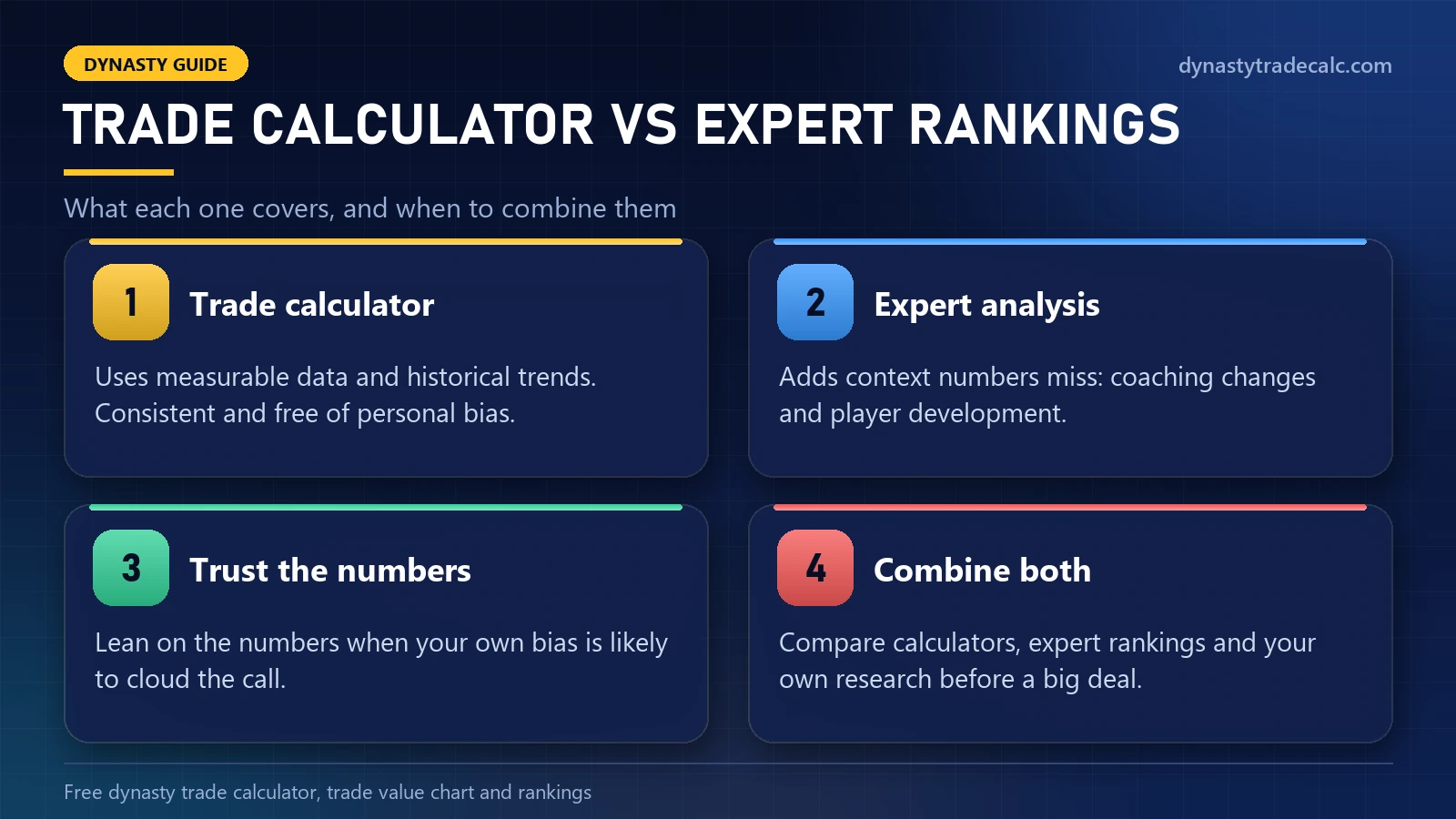
A calculator uses measurable data and market values; experts add coaching changes, film and context. Neither is enough alone. Numbers remove personal bias but cannot predict every surprise, such as a rookie landing in a perfect offense. Compare a dynasty fantasy trade calculator with FantasyPros dynasty rankings and your own research before a big deal.
Rookie Picks in a Dynasty Fantasy Trade
Rookie picks are often the most flexible currency in dynasty. An early first carries elite potential; later firsts carry more risk. If your team is ready to contend, trading picks for a proven starter can make sense. If you are rebuilding, keep them. Current prices are on our rookie pick values page.
Factors That Move Trade Value
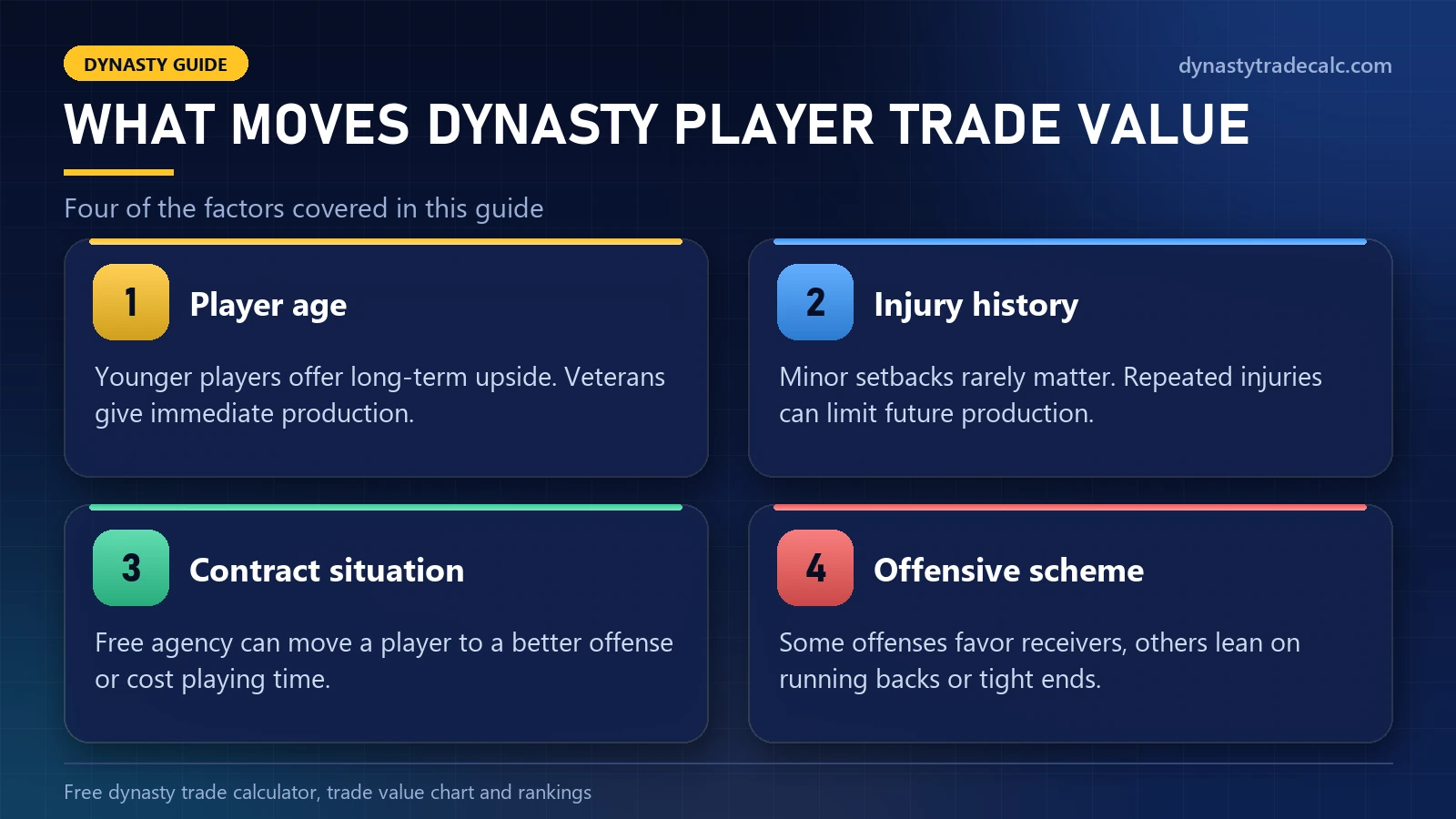
| Factor | Why it matters |
|---|---|
| Player age | Younger players usually keep value longer |
| Injury history | Repeated injuries lower future value |
| Contract situation | Free agency can change a player’s role |
| Offensive scheme | Some systems favour receivers, others running backs |
| Market trends | Hype in the offseason can push prices up and down |
Tips to Win More Dynasty Trades
- Buy low, sell high. Injuries and slumps create buying chances; breakout games create selling chances.
- Match your direction. Contenders buy reliable starters; rebuilders buy youth and picks.
- Respect league settings. Superflex, PPR and tight end premium all change values.
- Check a second source before any big trade.
Common Mistakes
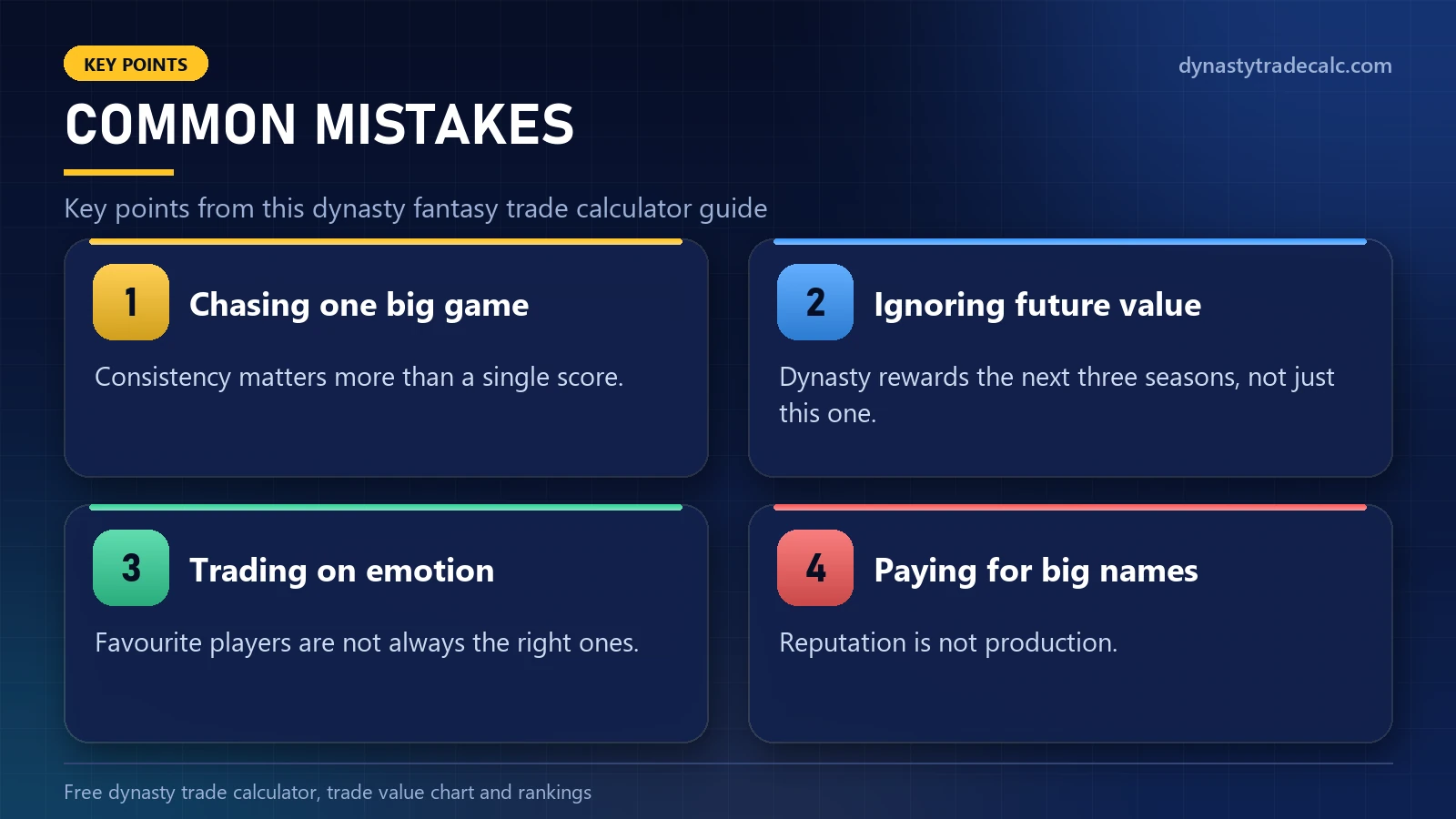
- Chasing one big game. Consistency matters more than a single score.
- Ignoring future value. Dynasty rewards the next three seasons, not just this one.
- Trading on emotion. Favourite players are not always the right ones.
- Paying for big names. Reputation is not production.
More examples are in the biggest dynasty trade mistakes.
Frequently Asked Questions
What is a dynasty fantasy trade calculator?
It estimates the long-term value of every player and draft pick in a trade, adds up both sides and shows which team comes out ahead. It is a second opinion before you accept an offer.
Is a fantasy football dynasty trade calculator a different tool?
No. It is the same tool under a longer name. It gives every player and rookie pick a long-term value, adds up each side of a trade and shows which side is ahead.
Can I use a regular fantasy trade calculator in a dynasty league?
Only if it has a dynasty setting. A redraft calculator values this season alone, so it underrates young players and ignores rookie picks. For a dynasty league, use multi-year values.
How are rookie draft picks valued in a dynasty calculator?
By expected draft position and market demand. Early first-round picks carry the most value, late firsts much less, and picks usually gain value as the rookie draft gets closer.
Does a dynasty fantasy trade calculator work for Superflex leagues?
Yes, as long as you choose the Superflex setting. Quarterbacks are worth much more when you can start two, so a 1QB result can be badly wrong in a Superflex league.
Should I trust a trade calculator completely?
No. Let it guide your decision, not make it. Check your roster, your league settings and your team direction before you accept any trade.
Which dynasty trade calculator for fantasy football should I use?
Use one that matches your lineup format and scoring, includes rookie picks and shows when its values were updated. Our free dynasty trade calculator fantasy football managers use here does all of that.
Is a fantasy trade calculator for dynasty different from redraft?
Yes. A fantasy trade calculator for dynasty leagues values several seasons and rookie picks, while redraft tools value one season. Pick the fantasy trade calculator dynasty setting for long-term leagues.
Conclusion
A dynasty fantasy trade calculator gives you a fair starting point for every offer. Enter every asset, match your format, read the result in the context of your team and compare a second source on big deals. Winning trades follow from that habit.
Related Guides
Compare With Other Sources
Our values are estimates, not quotes. It is good practice to compare a trade against KeepTradeCut crowd-sourced dynasty values and FantasyCalc as well. For a third view, check FantasyPros dynasty rankings. This season’s values are covered in our dynasty trade calculator 2026 guide. Some managers search for the same tool as dynasty trade calcl. For the broader picture of what these tools can work out, see our dynasty calculator guide. Not sure whether to accept, reject or counter? See our free dynasty trade calculator decision guide. To grow roster value over many trades, read our trade calculator dynasty guide to league value.
