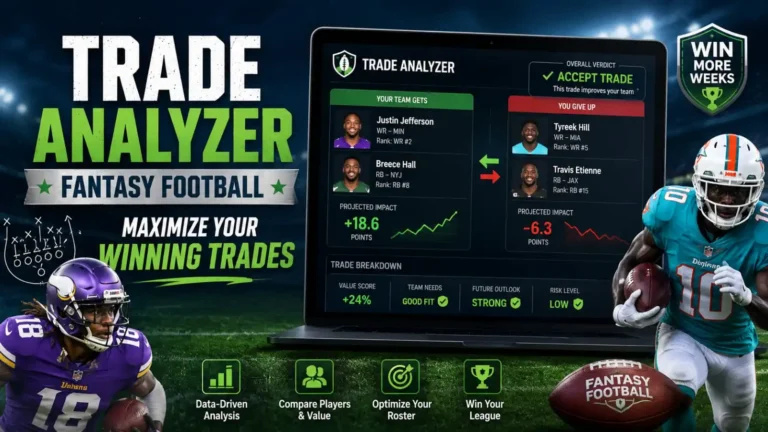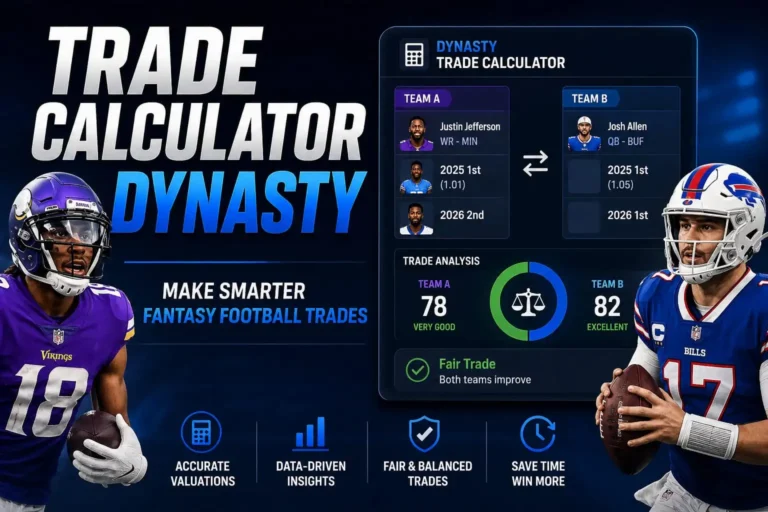
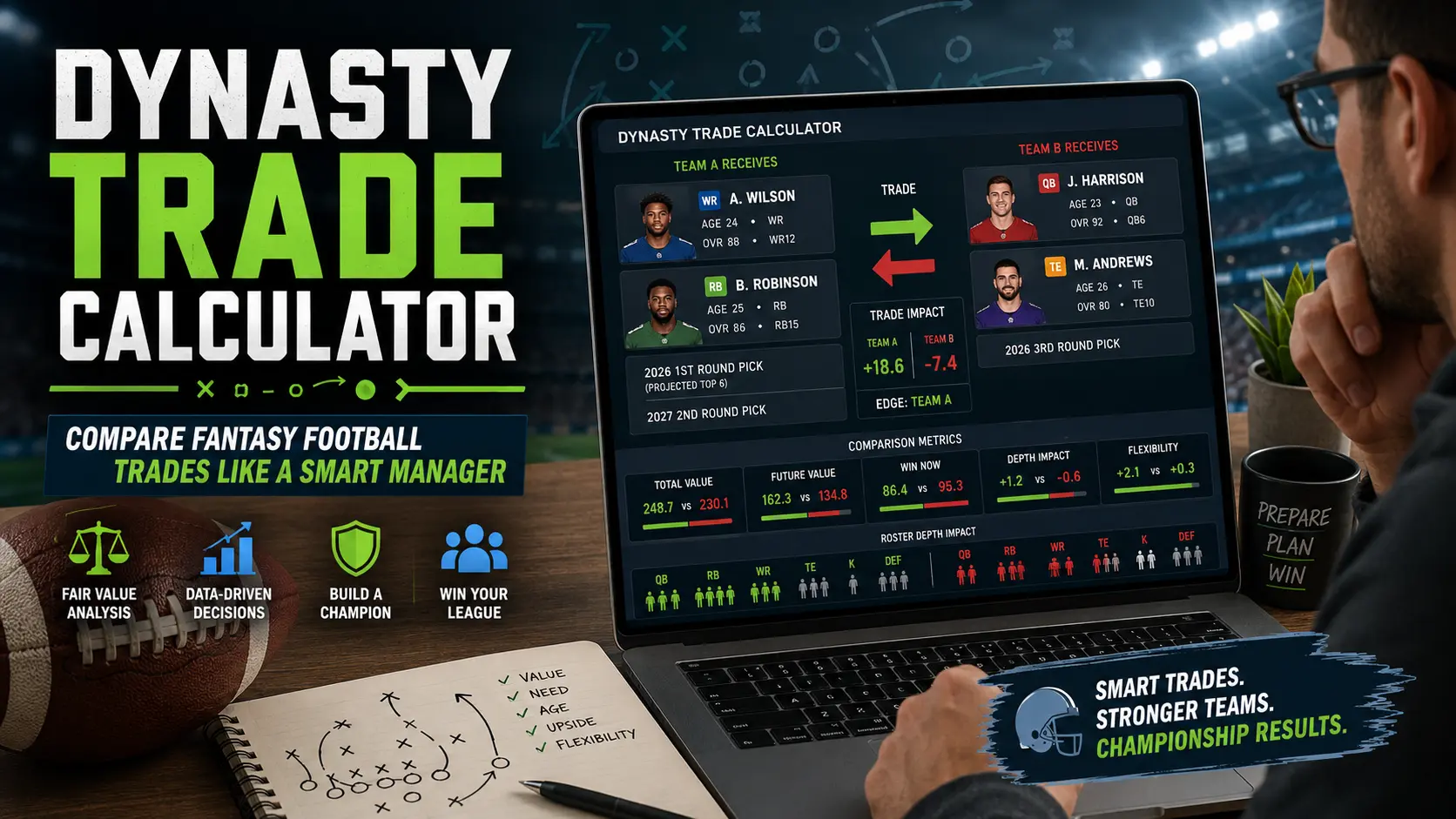
Dynasty Trade Calculator: Compare Fantasy Football Trades Like a Smart Manager
Fantasy football trades can feel simple until dynasty value enters the room. However, a redraft trade only cares about this season. In contrast, a dynasty trade carries age, future picks, roster windows, scoring format, and long-term upside. That is why smart managers study value before they accept any offer.
A good dynasty rankings trade calculator gives you a cleaner starting point. It does not replace your football brain. However, it helps you avoid wild overpays, emotional moves, and sneaky bad deals. In dynasty leagues, one careless trade can echo for years.
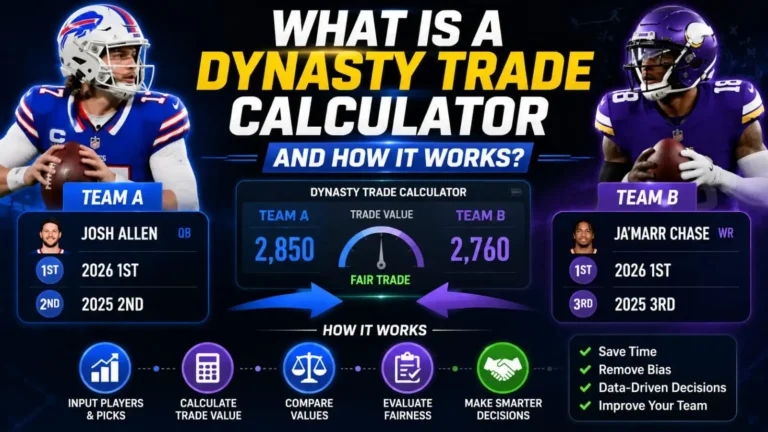
What Is a Dynasty Trade Calculator?
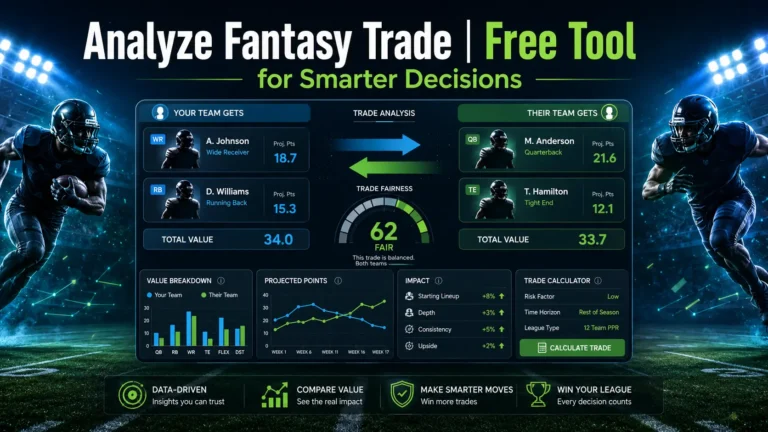
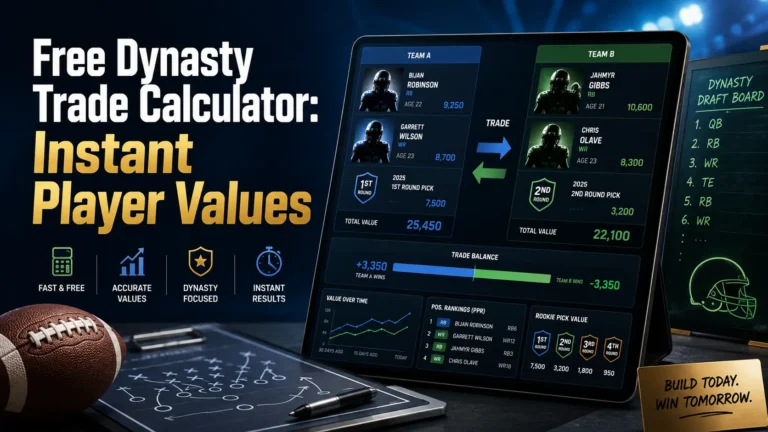
A Dynasty Trade Calculator is a tool that compares player values and draft pick values in dynasty fantasy football. It helps you check whether one side of a trade looks stronger. In simple terms, think of it like a trade mirror. It shows the deal more clearly.
However, you still need context. League size, scoring rules, roster depth, and starting lineup settings can change everything. For example, a dynasty full ppr trade calculator may value pass-catching running backs differently than a standard scoring tool. That detail matters more than many beginners think.
How a Dynasty Trade Calculator Helps Fantasy Football Managers
A Dynasty Trade Calculator helps you slow down before making a move. Fantasy managers often love their own players too much. That is normal. After all, we all get attached. Yet trade tools bring cooler air into a hot decision.
For example, you may think your young wide receiver is worth two future firsts. Meanwhile, the market may disagree. A dynasty rookie trade calculator can show how younger players compare with rookie picks. Then you can send better offers that do not get laughed out of the chat.
Why You Need a Dynasty Trade Calculator for Smart Trades
A Dynasty Trade Calculator becomes useful because dynasty leagues never sleep. Player value can rise after one breakout game. Likewise, it can fall after one injury report. As a result, a trade that looks fair in August may look terrible by October.
That is why U.S. fantasy managers check several sources before moving key assets. You can review player news on NFL.com, league settings on ESPN Fantasy Football, or platform rules on Sleeper. Then you can use the calculator as your value compass.
Best Features of a Dynasty Trade Calculator
A Dynasty Trade Calculator should do more than compare two players. Ideally, the best tools handle multi-player deals, rookie picks, Superflex settings, PPR scoring, and future draft capital. Dynasty trades often look messy. Thankfully, a useful tool keeps the mess readable.
Some managers also compare tools by format. For instance, a dynasty half ppr trade calculator may shift value away from reception-heavy players. Meanwhile, a dynasty ppr superflex trade calculator may push quarterbacks far higher. Small scoring changes can create big value gaps.
| Feature | Why It Matters | Best Use |
|---|---|---|
| Player value scores | Shows current market value | Comparing trade sides |
| Rookie pick values | Helps with draft capital trades | Rebuild planning |
| Superflex settings | Raises quarterback importance | QB-heavy leagues |
| PPR settings | Adjusts pass-catching value | Full PPR leagues |
| Multi-player support | Tests complex offers | Package trades |
| Market movement | Tracks value changes | Buy-low and sell-high moves |
How to Use a Dynasty Trade Calculator Before Accepting a Trade
A Dynasty Trade Calculator works best when you enter every part of the offer. First, add each player. Next, add every pick. Then look at the result and compare it with your roster needs. Even so, a fair trade can still hurt your team.
After that, ask whether the deal fits your timeline. Contenders need points now. Rebuilders need youth and picks. Meanwhile, middle teams need flexible assets. A dynasty rookie draft pick trade calculator helps most when rookie selections become part of the offer.
Beginner Tips for Dynasty Fantasy Trades
New dynasty players often chase famous names. However, that can be dangerous. A popular veteran may score points today yet lose value fast. Meanwhile, a young player with a growing role may become much more valuable next season.
Start by studying age curves, team depth charts, and scoring format. Then compare deals with a dynasty keeper trade calculator when your league keeps players across seasons. In short, you should not trade like a tourist. Learn the map first.
Understanding Player Value in Dynasty Fantasy Football
Player value comes from production, age, role, talent, health, position, and contract situation. Usually, wide receivers hold value longer than running backs. Quarterbacks matter much more in Superflex. Also, tight ends can swing leagues when scoring rewards them heavily.
Still, value is not always clean. A young player with hype can cost too much. On the other hand, an older player can become a title-winning bargain. A dynasty sf trade calculator helps in Superflex leagues because quarterback value behaves like a different animal there.
| Player Type | Dynasty Value Pattern | Smart Manager View |
|---|---|---|
| Young wide receiver | Often holds value well | Strong long-term asset |
| Aging running back | Can lose value quickly | Better for contenders |
| Elite quarterback | Huge value in Superflex | Core roster piece |
| Rookie pick | Gains value near draft season | Flexible trade asset |
| Productive veteran | Helps win now | Best for playoff teams |
How Draft Picks Change Dynasty Trade Value
Draft picks act like future currency. They get more exciting as rookie draft season gets closer. For example, in the fall, managers may ignore a future second. By spring, that same pick may feel like a lottery ticket with fireworks.
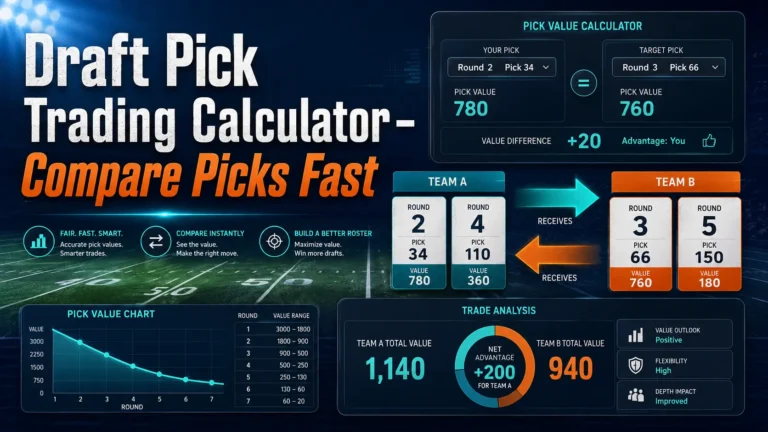
A dynasty rookie draft trade calculator helps you compare picks with current players. This matters because pick range changes value. In fact, an early first is not the same as a late first. A weak team’s future first can become gold.
Common Dynasty Trading Mistakes to Avoid
The worst dynasty mistake is trading without direction. Many managers accept a deal because it feels fun. Then they realize it does not fit their roster. Honestly, that is like buying a boat when your house needs a roof.
Another mistake is copying values from the wrong sport or format. For example, a dynasty nba trade calculator may help basketball managers, but fantasy football has different roster needs, injury patterns, and scoring rules. Therefore, always use tools that match your league.
Best Strategies for Winning More Dynasty Trades
Winning dynasty trades starts with knowing your team honestly. If you can win now, buy reliable starters. If your roster needs work, collect picks and young players. However, if you sit in the middle, choose a lane before the season chooses one for you.
Good managers also solve problems for other teams. So, do not send random offers. Study your trade partner’s roster. If they need a quarterback, offer quarterback help. Likewise, if they need depth, build a package. Smart trades feel useful to both sides.
Case Study: Turning a Weak Team Into a Future Contender
Imagine your dynasty team has two aging running backs, one strong quarterback, and weak wide receiver depth. You are not ready to win. Then a rival offers a productive veteran receiver for your future first. It feels tempting because the name is shiny.
However, your timeline says wait. Instead, you trade one older running back for a young receiver and a second-round pick. You lose some weekly points now. Yet you gain future value. That is how rebuilds grow roots.
| Team Situation | Better Move | Reason |
|---|---|---|
| Strong contender | Buy veterans | Points win titles |
| Clear rebuilder | Sell aging assets | Future value matters |
| Middle team | Add flexible players | Keeps options open |
| Weak bench | Trade for depth | Injuries hurt less |
| No draft picks | Regain pick capital | Restores flexibility |
FAQ
What is a dynasty trade calculator used for?
A dynasty trade calculator helps fantasy managers compare players, rookie picks, and full trade packages. It gives you a value check before you accept, reject, or counter an offer. However, you still need league context, but the tool helps you think clearly.
Is this type of trade tool accurate?
It can be accurate as a market guide, but it is not perfect. Values change because of scoring rules, roster depth, injuries, and manager demand. Therefore, treat it like a map. It helps you travel, but you still steer.
Can I use it for rookie picks?
Yes, you can use it for rookie picks. In fact, this is one of its best uses. Rookie pick value changes during the year. Picks often rise near draft season because managers start dreaming about the next breakout star.
How does it help with player value?
It helps by showing how the market views different players and picks. As a result, you can compare age, position, upside, and team direction more clearly. This keeps you from overpaying for hype or selling a strong asset too cheaply.
Should beginners use one?
Yes, beginners should use one as a learning tool. It helps new managers understand dynasty value faster. However, beginners should also study scoring settings, roster needs, and player news. A tool helps most when you understand why the number matters.