

Table of Contents
- What Is a Dynasty League Analyzer?
- A Five-Check Roster Audit You Can Run Today
- Trade Targets by Team Type
- Using a Dynasty League Analyzer to Evaluate Trades
- Understanding Rankings and Player Value
- Starters vs Depth
- Rookie Picks in a League Audit
- Common Mistakes
- Frequently Asked Questions
- Conclusion
- Related Guides
A dynasty league analyzer reviews your whole roster, not just one trade. It shows your starters, depth, rookie picks and age curve side by side, so you know whether to buy, sell or hold before you make an offer. This guide shows how to run a five-check roster audit and turn the result into better trades.
What Is a Dynasty League Analyzer?
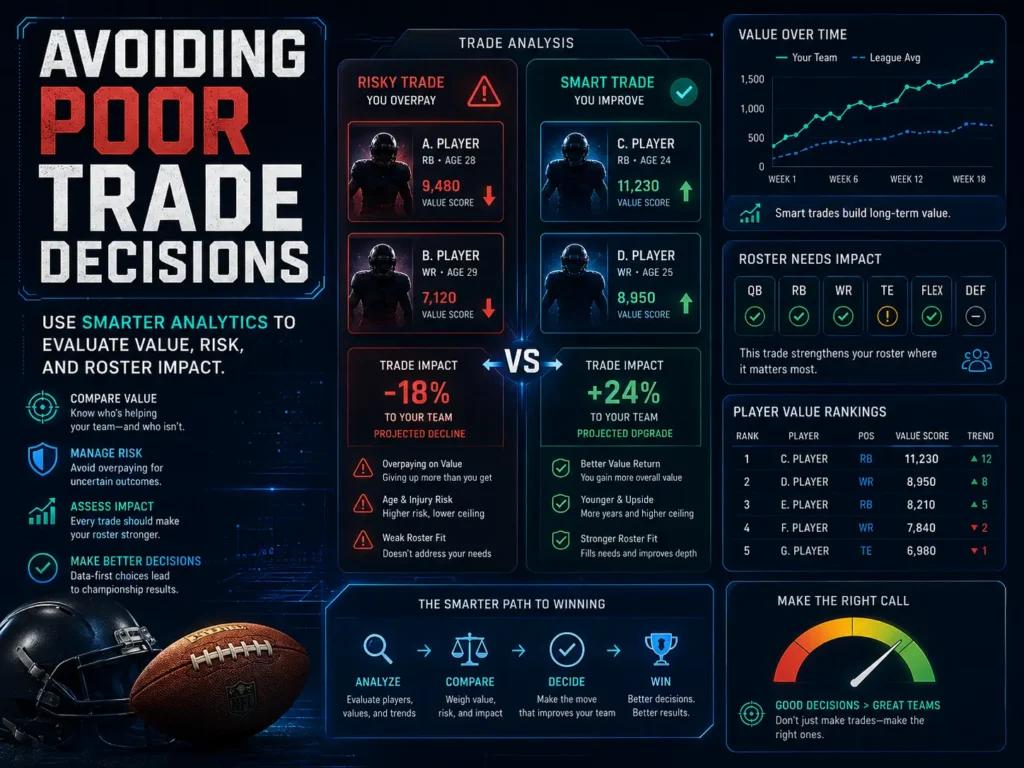
A dynasty league analyzer studies players, draft picks, league format and team direction together. It compares production, upside, age, injury risk and roster need, then tells you where your team stands against the rest of the league. Dynasty is slow cooking: a decision you make today shapes your team for years.
It is different from a trade calculator. The calculator checks whether one deal is fair; a league analyzer tells you which deals you should be looking for.
A Five-Check Roster Audit You Can Run Today
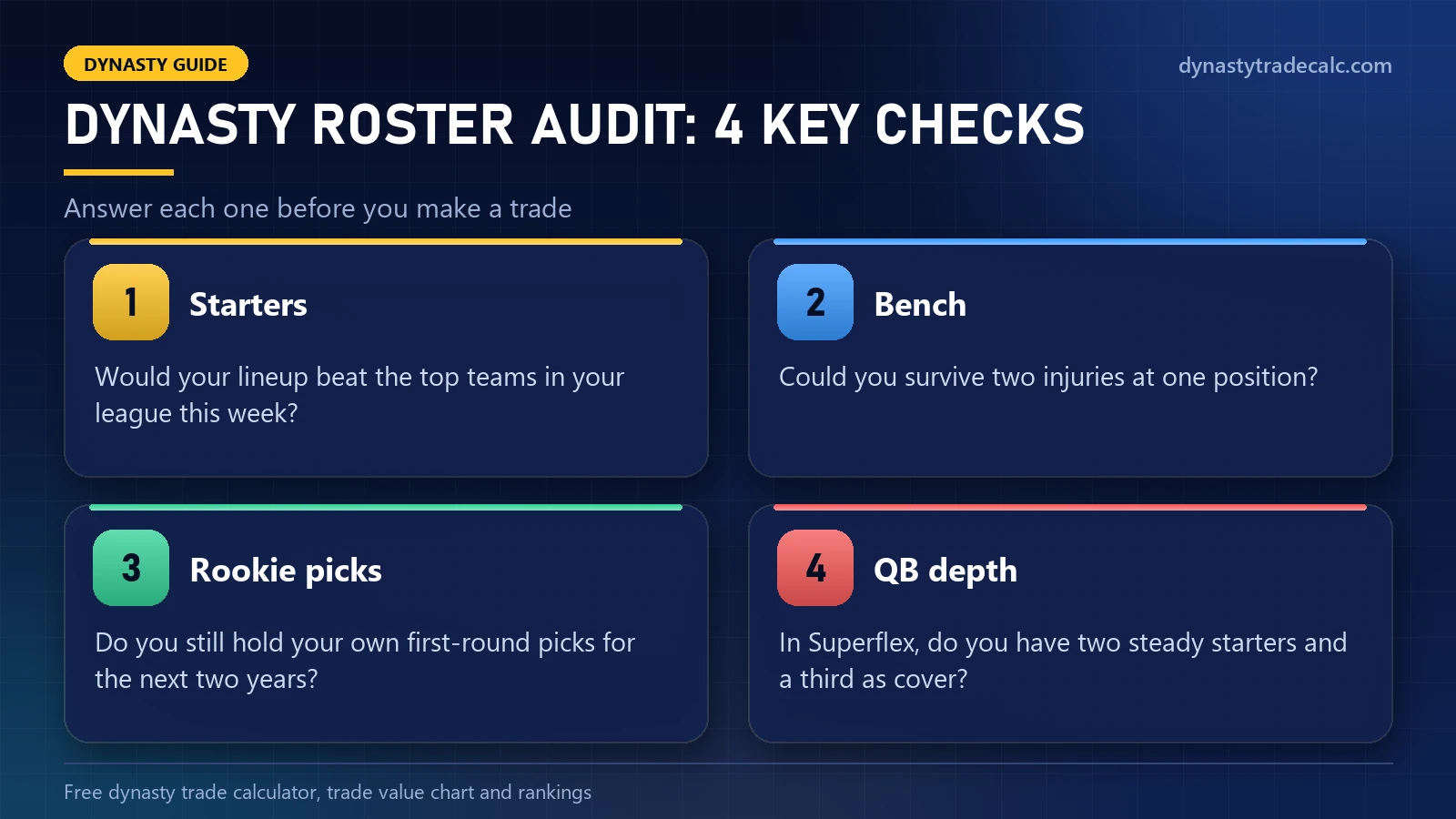
You do not need special software. Work through these five checks in order and write down the answers:
| Check | Question to ask | What the answer tells you |
|---|---|---|
| Starters | Would your lineup beat the top teams in your league this week? | If not, you are not a contender yet |
| Bench | Could you survive two injuries at one position? | If not, trade a surplus starter for depth |
| Rookie picks | Do you hold your own first-round picks for the next two years? | If not, be careful about selling more |
| Age curve | Are your best players in their prime years? | If most are older, sell one before the value drops |
| QB depth | In Superflex, do you have two steady starters and a third as cover? | If not, fix this before anything else |
Your answers place your team in one of three groups: contender, rebuilder or middle team. That label decides which trades make sense for you.
Trade Targets by Team Type
| Team Type | Best Trade Target | Main Risk | Smart Goal |
|---|---|---|---|
| Contender | Proven weekly scorer | Paying too much for age | Win now without emptying picks |
| Rebuilder | Young player or rookie pick | Waiting too long to sell veterans | Build future value |
| Middle team | Flexible assets | Chasing both paths | Pick a clear direction |
| Superflex team | Quarterback stability | Ignoring QB scarcity | Protect long-term lineup power |
Win-now teams should buy points without burning every future asset. Rebuilding teams should sell fragile veterans before their value drops. Middle teams should choose a direction, because staying in between usually means paying contender prices for rebuilder results.
Using a Dynasty League Analyzer to Evaluate Trades
- Start from your audit. Which check failed? That is the problem the trade must solve.
- Find a partner whose audit fails the opposite check.
- Price the deal in our free dynasty trade calculator.
- Re-run the audit on your roster after the trade. Did the weak spot improve without opening a new one?
Multi-player trades need extra care. Three average players do not equal one star; they often just fill your bench. Count how many incoming players would actually start.
Understanding Rankings and Player Value
Dynasty rankings show a market view, not your roster’s needs. Value is a blend of age, talent, role, production, health and demand. A young receiver with strong usage can outvalue an older star; a young player with no role can be worth less than an older starter. Position matters by format: quarterbacks rise in Superflex, receivers keep value longest and running backs can fall fast. See our dynasty rankings for the current order.
Starters vs Depth
Starters win matchups; depth wins seasons. Your bench should hold upside players, injury insurance and trade chips, not old names you no longer start. The best dynasty teams refresh while they compete: they keep some picks, add one or two young players a year and sell veterans a season early. If your audit shows strong starters but a thin bench, a two-for-one trade that brings back depth can be worth a small loss on paper. If it shows deep benches but no stars, consolidate two good players into one great one.
Rookie Picks in a League Audit
Rookie picks are currency. They gain value before and during rookie draft season and become sharper once landing spots are known. Trade a first for a proven player only when you are close to a title and the player starts every week. Current prices are on our rookie pick values page.
Common Mistakes
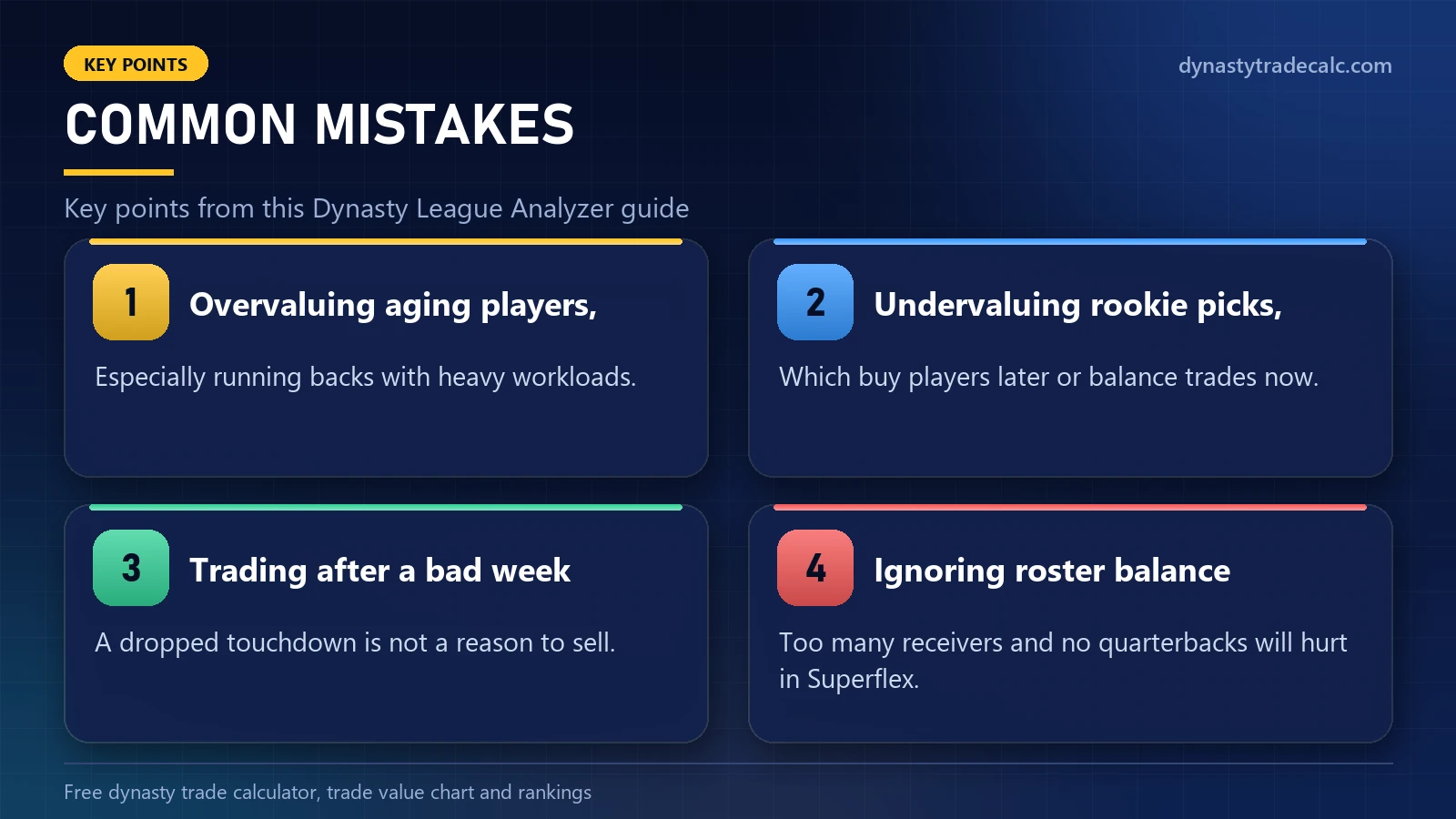
- Overvaluing aging players, especially running backs with heavy workloads.
- Undervaluing rookie picks, which buy players later or balance trades now.
- Trading after a bad week. A dropped touchdown is not a reason to sell.
- Ignoring roster balance. Too many receivers and no quarterbacks will hurt in Superflex.
More examples are in the biggest dynasty trade mistakes.
Frequently Asked Questions
What is a dynasty league analyzer?
It is a way to review your whole dynasty roster: starters, depth, rookie picks, age and quarterback room. It shows where your team is strong, where it is thin and which trades would help.
What is the difference between a dynasty trade calculator and a dynasty league analyzer?
A dynasty trade calculator checks whether one trade looks fair. A league analyzer looks at your whole roster and your league, so it tells you which trades you should be looking for in the first place.
How do I know if my dynasty team is a contender or a rebuilder?
Compare your starting lineup with the best teams in your league. If you can beat them most weeks, you are a contender. If not, and your best players are older, it is usually time to rebuild.
How often should I analyze my dynasty roster?
At least three times a year: after your rookie draft, before your league’s trade deadline and at the start of the offseason. Check again after any major injury.
Is a dynasty league analyzer useful for rookie drafts?
Yes. It shows which positions you need for the future, so you can draft for value at the right spots and trade picks you do not need for players you do.
Can beginners use a dynasty league analyzer?
Yes, and they often gain the most. It teaches player value, roster balance and trade timing, and it stops new managers making emotional deals after one bad week.
Conclusion
A dynasty league analyzer turns a roster into a plan. Run the five checks, decide whether you are contending or rebuilding, and make only the trades that fix your weakest check. Repeat the audit a few times a year, keep notes on each answer, and your roster will improve steadily from one season to the next.
Related Guides
Compare With Other Sources
No single analyzer is definitive. Sanity-check a close call against FantasyPros dynasty rankings and FantasyCalc. You can also run the same trade through our fantasy football trade analyzer.
