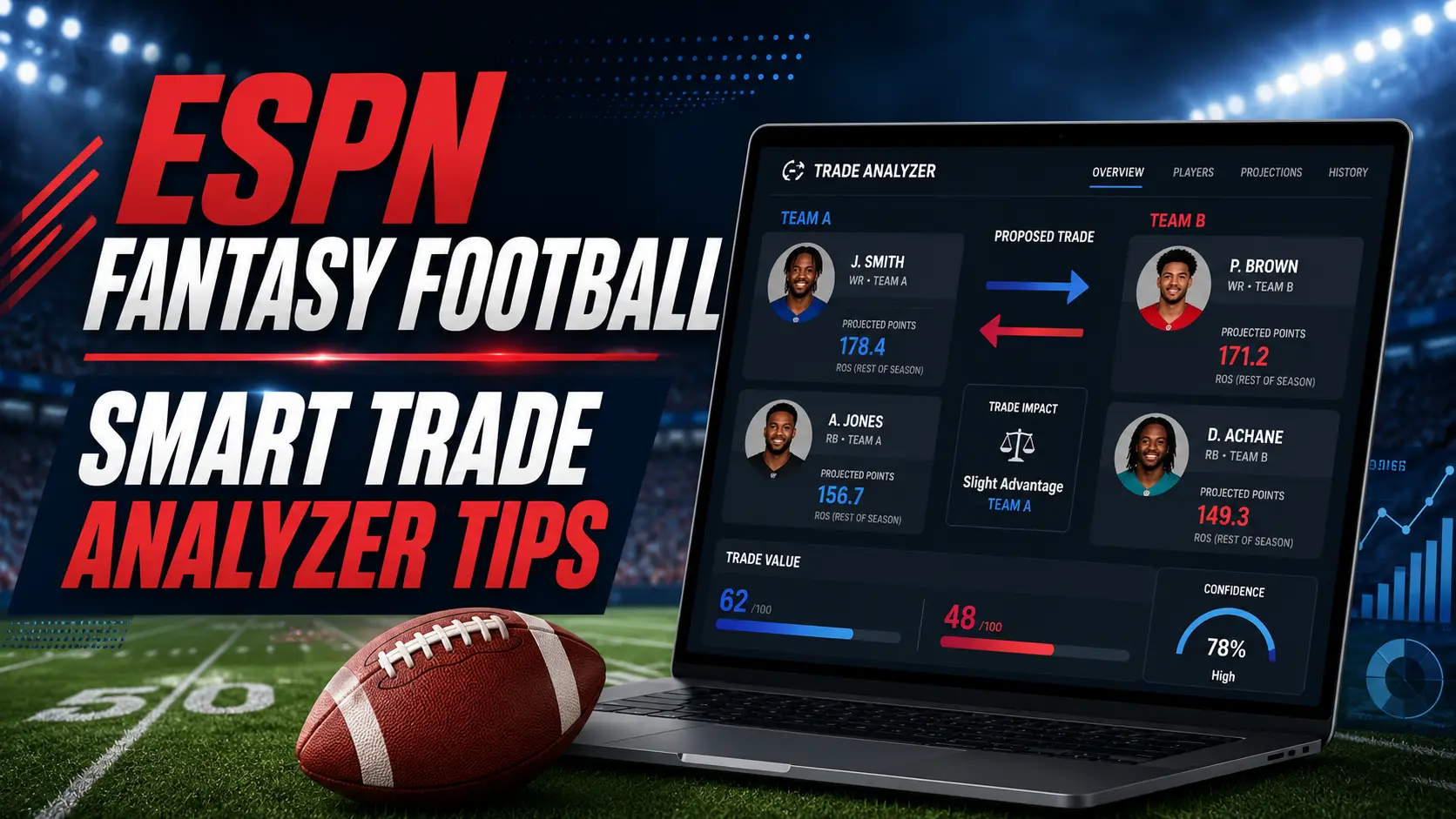
ESPN Fantasy Football: Smart Trade Analyzer Tips
ESPN Fantasy Football can feel like a friendly game until your best player gets hurt, your bench looks thin, and a trade offer lands like a mystery box. You need more than hope. You need smart trade logic, clean player research, and a simple way to judge value before you accept anything.
A good trade plan helps you manage your team with calmer eyes. It also protects you from shiny-name fever. In any fantasy football league, one poor trade can damage weeks of work. However, one clever trade can fix a roster hole and push you toward the playoffs.
What Is ESPN Fantasy Football and How Does It Work?
ESPN Fantasy Football is a fantasy sports game where you draft real NFL players and score points from their real game stats. You manage a roster, set starters, watch matchups, and adjust your team during the season. It feels like coaching without needing a headset.
The platform gives you tools for drafts, rankings, projections, player news, and lineup choices. You can join public leagues or create private leagues with friends. If you enjoy nfl fantasy football, ESPN gives you a simple home base for weekly competition.
Simple Meaning of ESPN Fantasy Football
ESPN Fantasy Football means you build a virtual team using real NFL players. Their touchdowns, yards, catches, and field goals become your fantasy points. You compete against another manager each week. The team with more points wins that matchup.
How Players Create and Manage Teams
You create or join a league, draft players, and fill positions like quarterback, running back, wide receiver, tight end, kicker, and defense. After the draft, you manage waivers, trades, injuries, and bye weeks. A strong manager checks the roster often and avoids lazy lineup choices.
Why Trades Matter in Fantasy Football
Trades matter because your draft will not stay perfect. Injuries happen. Roles change. Young players break out. Veterans slow down. A smart trade can fix weakness before it becomes a weekly headache. In nfl football fantasy, timing often turns average managers into serious contenders.
Why ESPN Fantasy Football Trade Analyzer Tips Matter
Trade analyzer tips matter because trades are rarely as simple as two player names. You must check team needs, scoring rules, player roles, schedule strength, and future risk. A deal may look fair on the surface while quietly weakening your starting lineup.
A fantasy trade analyzer helps you slow down before making a move. It can compare players, measure value, and show roster impact. However, you should treat it like a smart friend, not a magic judge wearing a crown.
Making Smarter Trade Decisions
Smarter trade decisions start with one question. Does this deal help your lineup score more points? If the answer feels foggy, wait. Check projections, roles, and positional depth. A famous player does not always solve your actual problem.
Avoiding Bad Player Swaps
Bad swaps often happen after one wild week. A player scores twice, and everyone suddenly treats him like gold. However, one hot game can hide weak volume. Use a fantasy trade calculator to check whether the player’s role supports the hype.
Understanding Player Value Before Trading
Player value depends on role, touches, targets, matchup quality, and scoring format. A running back with steady carries may beat a more exciting receiver. Before trading, compare weekly floor, upside, health, and playoff schedule. Value is more than a name on a jersey.
How to Use a Trade Analyzer in ESPN Fantasy Football
A trade analyzer works best when you enter the deal and then review the full picture. Do not only look at who “wins” the trade. Study what your roster gains, what it loses, and whether your starting lineup improves.
You should also compare the analyzer result with ESPN rankings and outside tools. A trade calculator can help, yet your league context matters. If your team needs a running back badly, a fair wide receiver trade may still be the wrong move.
Compare Player Rankings
Player rankings help you judge market value. Weekly rankings show short-term strength. Rest-of-season rankings show longer value. If you use fantasypros rankings, compare them with ESPN data, player news, and your league scoring. One ranking source should not run your whole team.
Check Weekly Projections
Weekly projections show expected points for the next matchup. They help you compare short-term value before accepting a trade. Still, projections are not promises. They work like weather reports. Useful, practical, sometimes wrong, and always worth checking again.
Review Team Needs Before Accepting Trades
Your roster needs should lead every trade decision. If you already have strong wide receivers, adding another one may not help much. Look for weak spots first. A balanced roster usually beats a flashy roster that falls apart during bye weeks.
Best ESPN Fantasy Football Trade Strategies for Beginners
Beginners often chase big names because those names feel safer. I get it. It is hard to reject a famous player. However, fantasy success comes from role, usage, health, and schedule. The best move may look boring at first.
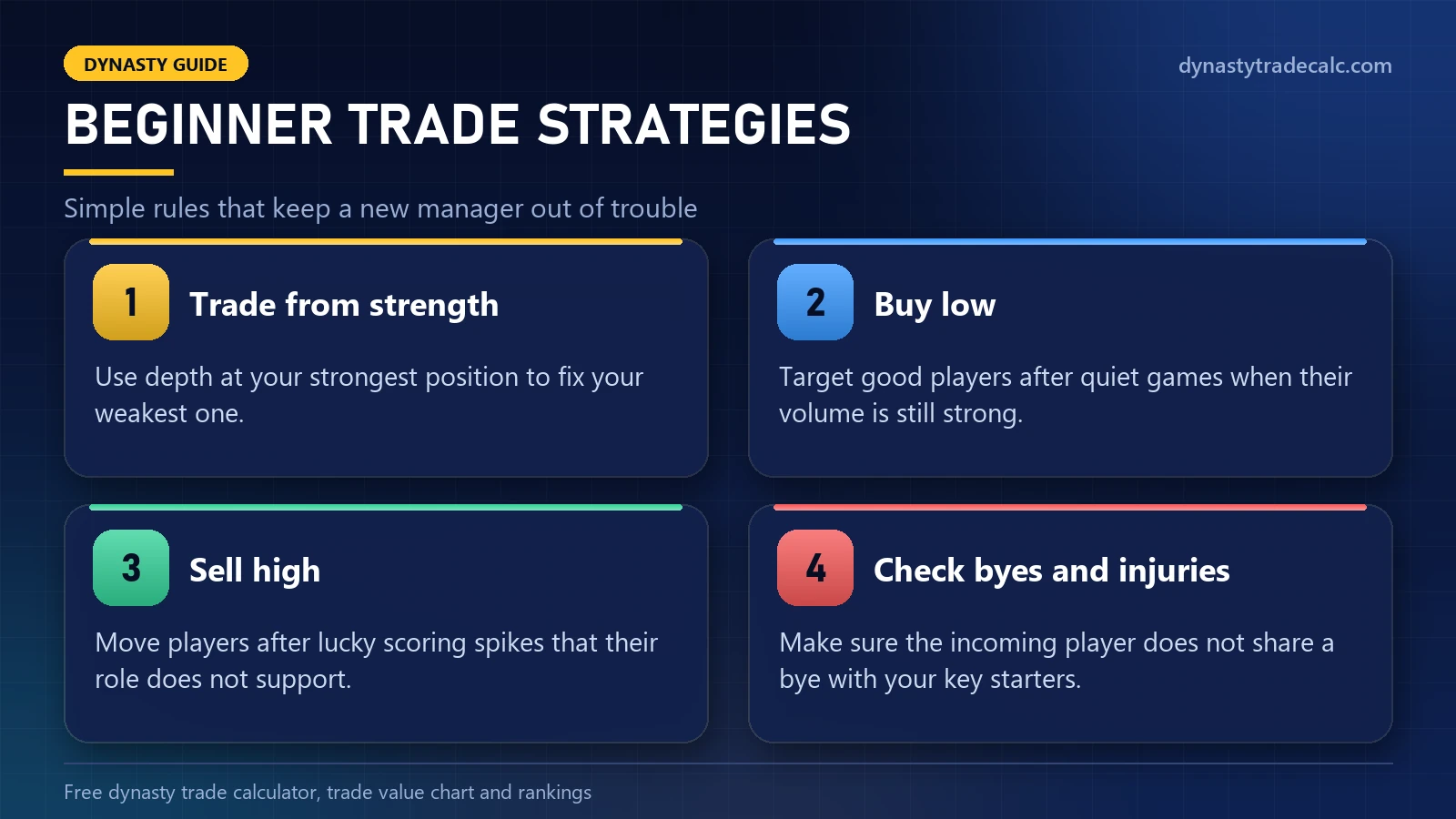
A strong beginner strategy is simple. Trade from strength and fix weakness. If you have receiver depth but weak running backs, use that extra receiver value. Do not trade just because your phone buzzed and the offer looked spicy.
Trade From Your Strongest Position
Trading from your strongest position protects your roster. For example, if you have four usable receivers and only two solid running backs, you can trade receiver depth for running back stability. This helps your starting lineup without leaving your bench completely empty.
Buy Low and Sell High
Buy low means targeting good players after quiet games. Sell high means moving players after lucky scoring spikes. The secret is role analysis. If a player gets strong volume but poor points, he may rebound soon. That is where patient managers find treasure.
Study Bye Weeks and Injuries First
Bye weeks and injuries can ruin a trade that looked clever yesterday. Always check if your incoming player shares a bye week with your key starters. Also read recent injury reports. A discounted star may become expensive if he misses three weeks.
Key Player Metrics to Check Before Making a Trade
Player metrics give you a cleaner view than raw points. A player may score well because of one long touchdown. Another may score poorly but still earn strong touches. The second player may offer better future value.
In ESPN Fantasy Football, you should study projections, opponent rank, roster percentage, start percentage, target share, touches, and injury status. These numbers do not remove uncertainty. They simply help you make fewer blind decisions.
Player Projections
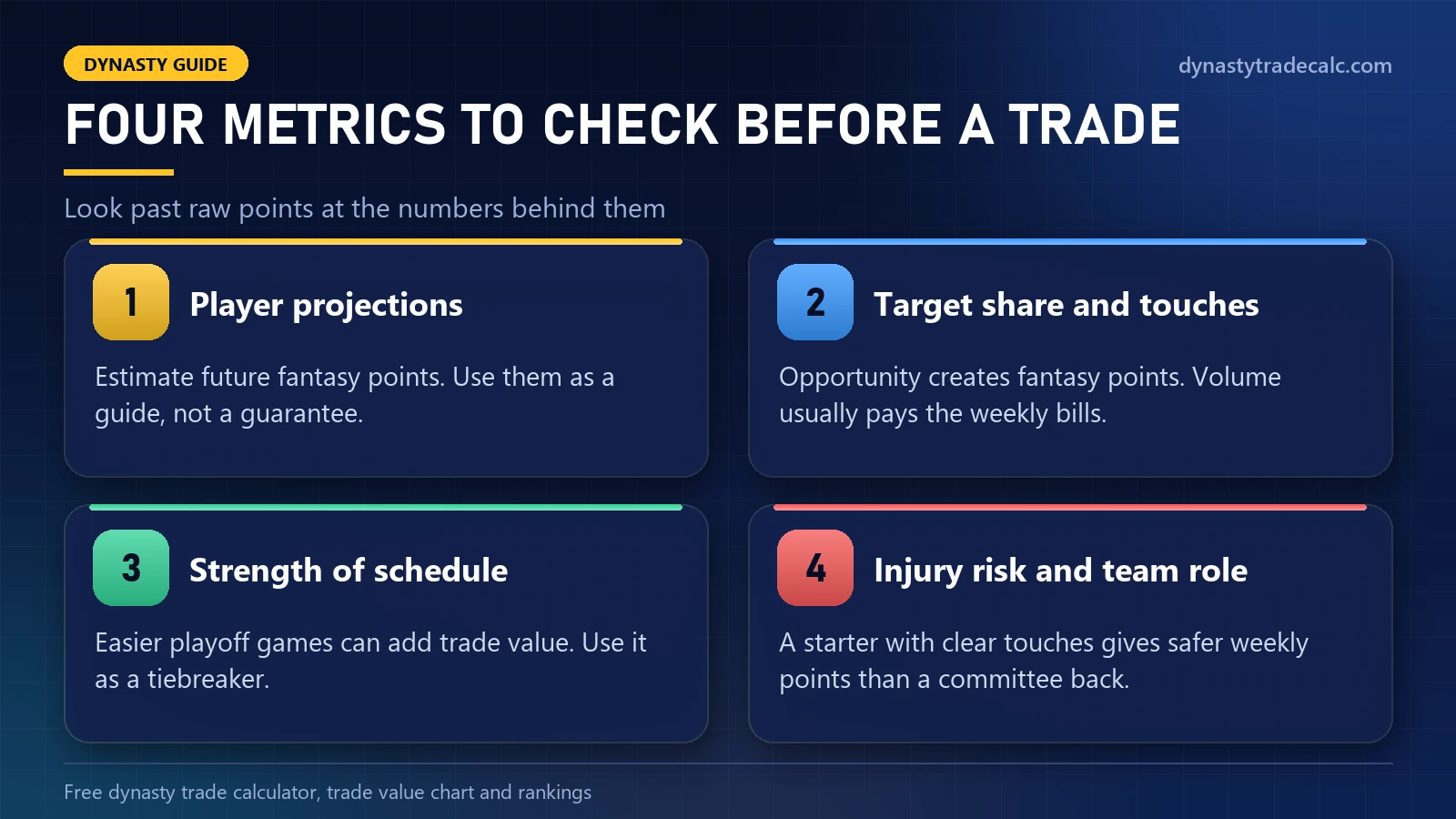
Player projections estimate future fantasy points. They consider matchup, role, past production, and expected game flow. Use them as a guide, not a guarantee. A good projection with weak playing time can disappear like snacks at a draft party.
Target Share and Touches
Target share shows how often a receiver gets passing-game chances. Touches show running back usage through carries and catches. These numbers matter because opportunity creates fantasy points. Talent matters too, but volume usually pays the weekly bills.
Strength of Schedule
Strength of schedule shows how hard future matchups may be. A player with easier playoff games can gain trade value. A player facing strong defenses may still score, but the path gets bumpier. Use schedule as a tiebreaker, not a final verdict.
Injury Risk and Team Role
Injury risk changes player value quickly. Team role matters just as much. A healthy committee back may still disappoint if he splits work. A slightly less flashy starter with clear touches may give your lineup safer weekly points.
Common ESPN Fantasy Football Trade Mistakes to Avoid
Common trade mistakes usually come from panic, impatience, or name worship. You lose one matchup, and suddenly your whole team looks broken. That emotional fog can make you sell valuable players too cheaply.
Another mistake is ignoring roster balance. You can win a trade on paper and still hurt your team. If a deal removes your only strong tight end or leaves you short during byes, the value chart may not save you.
Trading Based on One Big Game
One big game can fool smart managers. A backup may score because of a temporary injury or strange game script. Before trading for him, check snaps, routes, targets, and carries. If the role is thin, the breakout may be smoke.
Ignoring Roster Balance
Roster balance matters more than collecting stars. If you trade two steady starters for one elite name, your ceiling may rise. However, your weekly floor may fall hard. A thinner roster can crack when injuries and bye weeks arrive.
Overpaying for Popular Players
Popular players often cost extra because managers remember past greatness. That can create bad trades. Before overpaying, check current usage, health, and schedule. Your lineup needs points now. It does not need a museum of famous jerseys.
ESPN Fantasy Football Trade Analyzer vs Manual Trade Review
A trade analyzer gives quick structure. Manual review gives human context. You need both. The tool can compare values fast, while your own judgment handles league habits, injury rumors, and negotiation leverage.
For example, a tool may call a trade even. Yet you may know the other manager desperately needs a quarterback. That changes the deal. Smart managers use tools for clarity and use common sense for the final call.
Speed and Accuracy
Trade analyzers work quickly because they compare values, projections, and rankings in seconds. Manual review takes more time. However, fast does not always mean accurate. Check the scoring format, roster settings, and latest player news before trusting any result.
Data-Based Advice vs Personal Judgment
Data-based advice gives you a steady foundation. Personal judgment adds nuance. A player may have poor recent points but strong usage. Another may look great because of unsustainable touchdowns. The best answer often lives between the spreadsheet and your gut.
When Manual Research Still Helps
Manual research helps when news changes fast. Practice reports, weather, coaching comments, and depth chart moves can shift value. A dynasty trade analyzer may help with long-term decisions, but fresh news still matters before you accept.
How ESPN Fantasy Football Rankings Help With Trade Decisions
Rankings help you compare players without guessing. They show how experts and platforms view current value. Weekly rankings help with short-term choices, while rest-of-season rankings help with bigger trade decisions.
However, rankings do not know your full roster pain. They may rank two players closely, yet one fits your team much better. Use rankings as a map. Then choose the road that fits your lineup and schedule.
Weekly Rankings
Weekly rankings help when you need immediate points. If your team must win this week, short-term value matters. A player with a strong matchup may help more than a bigger name with a rough draw. Context gives rankings their real meaning.
Rest-of-Season Rankings
Rest-of-season rankings help you judge value over many weeks. They matter most near trade deadlines. A player with a quiet upcoming matchup may still hold strong future value. Do not trade him away only because this week looks difficult.
Position-Based Player Value
Position value changes by scarcity. Elite running backs and tight ends can carry extra weight because reliable options are limited. Receivers may be easier to replace in many leagues. Use dynasty rankings for long-term formats and redraft rankings for seasonal leagues.
Best Tools for Fantasy Football Trade Analysis
The best tools help you compare players, sync leagues, inspect roster needs, and study future value. ESPN gives useful platform data. FantasyPros offers trade analysis. Dynasty tools add age, picks, and long-term value.
The table below shows how each tool type can help. Use it as a quick decision guide. No tool should replace your judgment, but the right tool can stop you from making a loud mistake.
| Tool Type | Best Use | Main Strength | Watch Out For |
|---|---|---|---|
| ESPN fantasy tools | League management | Projections, roster data, news, and rankings | May need outside comparison for deeper trade value |
| fantasy trade analyzer tools | Redraft trade checks | Quick value comparison and roster review | Settings must match your league |
| fantasy trade calculator tools | Player value checks | Simple trade math and side-by-side value | May miss league context |
| dynasty trade analyzer tools | Dynasty and keeper leagues | Age, picks, and long-term value | Redraft value may differ |
| dynasty ranker tools | Long-term player sorting | Youth, upside, and future market value | Rankings can change after NFL news |
ESPN Fantasy Tools
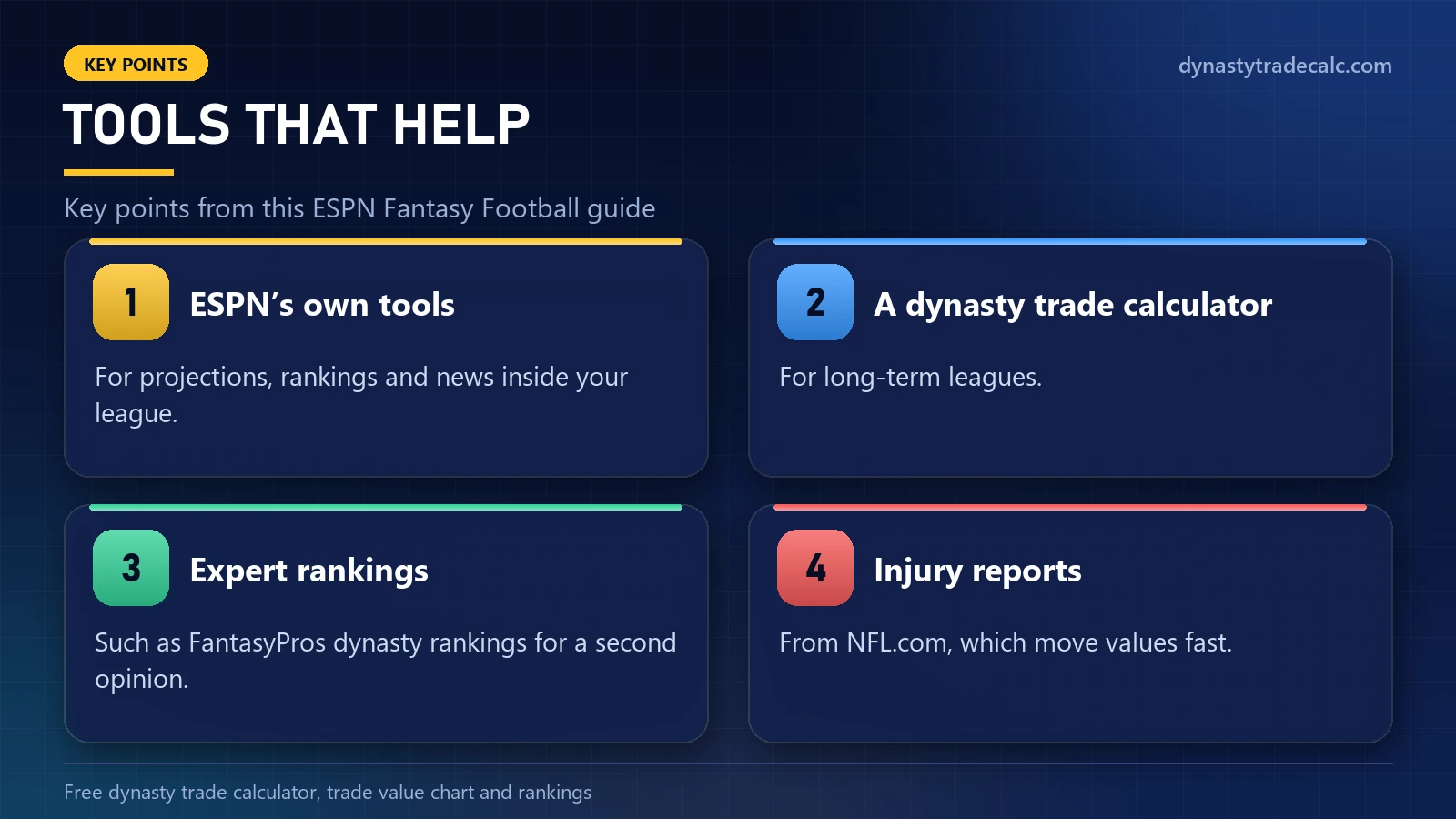
ESPN fantasy tools help you manage your team inside the same platform. You can view projections, rankings, player news, roster trends, and matchup data. These details help you understand whether a trade fits your league environment.
FantasyPros Trade Analyzer
FantasyPros Trade Analyzer can compare trades using expert views, league settings, and roster needs. It adds another opinion beyond ESPN data. That extra viewpoint helps when a deal feels close. Still, always check the latest injuries and role changes.
Dynasty Trade Calculator
A dynasty trade calculator helps managers value young players, veterans, picks, and future upside. Dynasty leagues work differently because long-term value matters. A veteran may help this season, while a younger player may become more valuable later.
Player News and Injury Reports
Player news and injury reports can change everything. A practice upgrade, coach quote, or depth chart change can move trade value fast. Before accepting any serious offer, check recent news. Old information can turn a smart trade into a sour one.
Final Thoughts on ESPN Fantasy Football Trade Analyzer Tips
ESPN Fantasy Football rewards managers who stay calm, curious, and prepared. Trade analyzer tips help you avoid panic trades, overpaying, and weak roster balance. They also help you think beyond names and focus on real value.
Use rankings, tools, projections, injury reports, and your own judgment together. That blend gives you a sharper edge. Fantasy football still brings chaos, but a clear trade process keeps you from driving blind through it.
Who Should Use Trade Analyzer Tips?
Every manager should use trade analyzer tips, especially beginners. They make trade decisions easier and less emotional. Experienced managers benefit too because confidence can create blind spots. A second opinion is not weakness. It is smart team management.
How These Tips Improve Your Team
These tips improve your team by making every trade more intentional. You stop chasing random names and start fixing real problems. You also protect depth, prepare for bye weeks, and build stronger playoff plans before your rivals notice.
Why Smart Trading Can Help You Win Your League
Smart trading can help you win because fantasy seasons change quickly. Injuries, waivers, and player roles shift every week. One sharp trade can turn weakness into strength. Over time, that steady improvement can carry your team toward the title.
5 FAQ’s
Is ESPN Fantasy Football good for beginners?
Yes, ESPN Fantasy Football works well for beginners because it offers leagues, rankings, projections, and player tools in one place. New managers should learn scoring rules first. Then they should practice lineup decisions, waivers, bye weeks, and trades.
What is a fantasy trade analyzer?
A fantasy trade analyzer is a tool that compares both sides of a fantasy football trade. It checks value, projections, league settings, and roster needs. It helps you decide whether a trade improves your team or only looks exciting.
Should I use a trade calculator before every deal?
Yes, using a trade calculator before a deal is a smart habit. It gives you a quick value check and protects you from emotional offers. Still, you should also study injuries, roles, and team needs before accepting.
Are dynasty rankings useful for ESPN leagues?
Dynasty rankings help if your ESPN league uses dynasty or keeper settings. They focus on long-term value, age, and future upside. In redraft leagues, weekly and rest-of-season rankings usually matter more than future player value.
What is the biggest trade mistake in fantasy football?
The biggest mistake is trading without checking roster balance. A deal may bring a star player, but it can weaken your depth. Always ask whether the trade improves your weekly lineup and protects your team during injuries or bye weeks.