

Table of Contents
- How ESPN Fantasy Football Works
- How to Evaluate a Trade on ESPN
- Why Trade Tips Matter
- Beginner Trade Strategies
- Key Metrics to Check
- Weekly vs Rest-of-Season Rankings
- A Simple Example
- Trade Analyzer vs Manual Review
- Common Trade Mistakes
- Tools That Help
- Frequently Asked Questions
- Conclusion
- Related Guides
ESPN Fantasy Football gives you projections, rankings, player news and roster data in one place. Used well, those tools make you a better trader: you spot weak trades before you accept them and build offers that fix your lineup. This guide shows how to use them, step by step.
How ESPN Fantasy Football Works
You join or create a league, draft real NFL players and score points from their real games: touchdowns, yards and, in PPR leagues, catches. Your draft will not stay perfect. Injuries happen, roles change and young players break out, which is why trades matter so much over a season. Most leagues also have a trade deadline, so the best chances to improve come in the first half of the year.
How to Evaluate a Trade on ESPN
Start with one question: does this deal help your lineup score more points? Then work through these checks in order:
| Check | What it tells you |
|---|---|
| Roster needs | Whether the deal fixes a weak spot or only adds to a strong one |
| Weekly projections | Expected points for the next matchup |
| Rest-of-season rankings | Value over many weeks, which matters most near the trade deadline |
| Target share and touches | Whether the player’s role supports the points |
| Strength of schedule | A tiebreaker for playoff weeks, not a final verdict |
| Bye weeks and injuries | Whether the incoming player will actually be in your lineup |
For dynasty and keeper leagues on ESPN, add our free dynasty trade calculator to price young players and picks, which ESPN’s weekly tools do not value for the long term.
Why Trade Tips Matter
Trades are rarely as simple as two player names. You have to check team needs, schedule, injuries and how each player is used. Bad swaps often happen after one wild week: a player scores twice and suddenly everyone treats him like gold. Value depends on role, touches, targets, matchup and scoring format, and a running back with steady carries is usually worth more than a flashier player with an uncertain job. A short routine before every deal stops most of these mistakes.
Beginner Trade Strategies
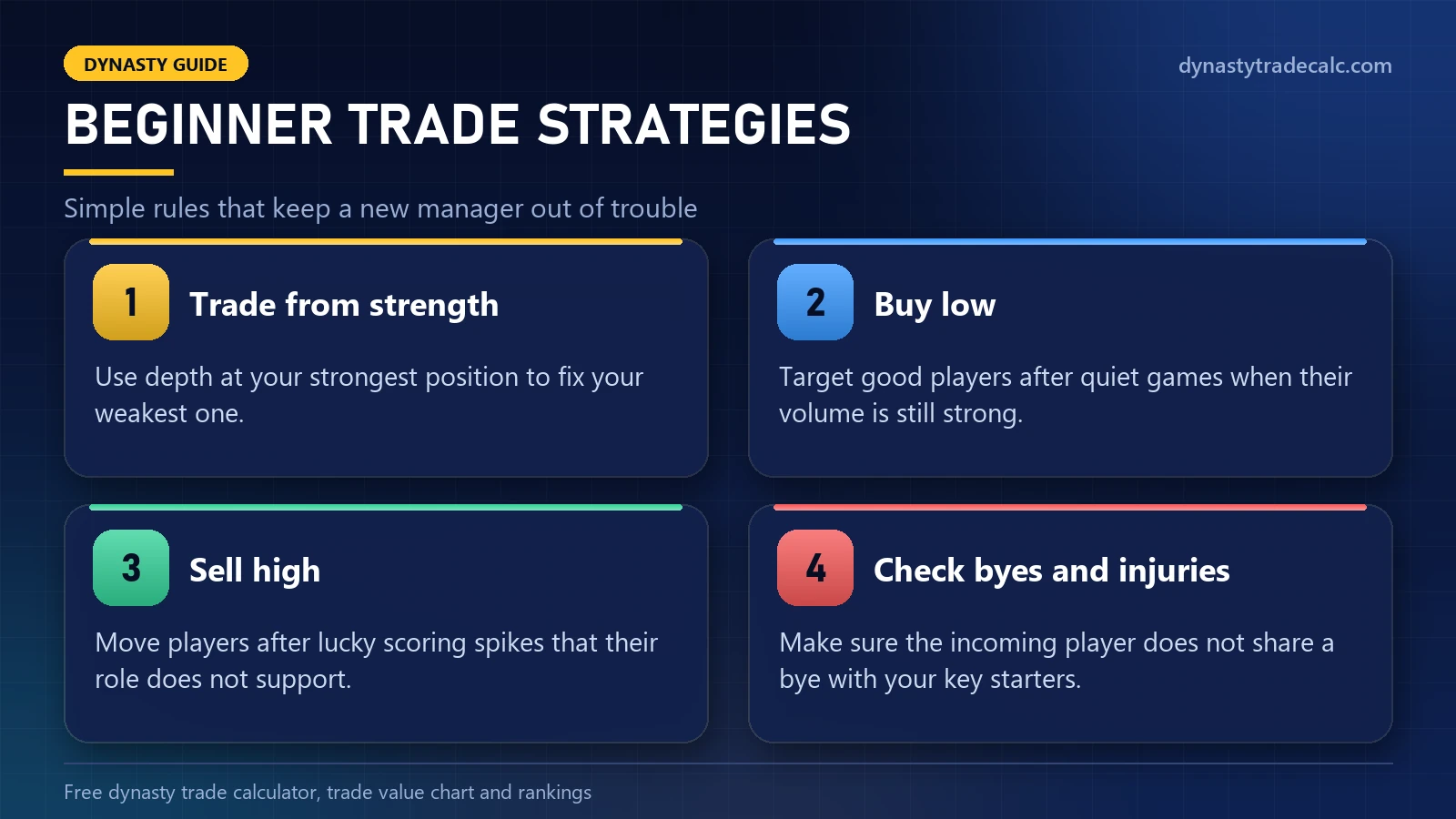
- Trade from your strongest position. Four usable receivers and two running backs means your receivers are the currency.
- Buy low, sell high. Target good players after quiet games; move players after lucky scoring spikes.
- Check bye weeks and injuries first. A clever trade can leave an empty spot in a key week.
- Do not chase names. Famous players feel safer, but role and usage matter more.
Key Metrics to Check
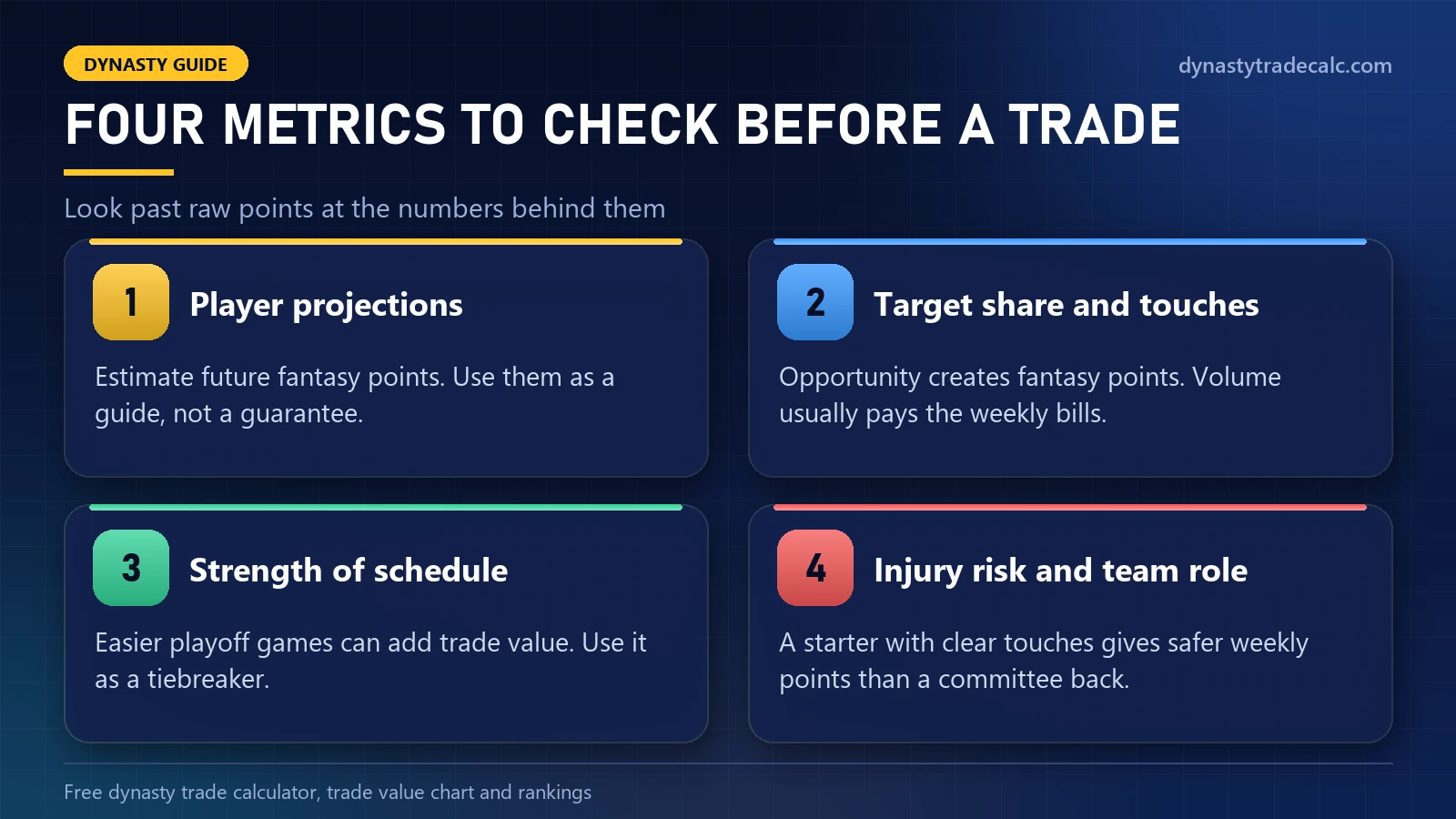
Raw points can mislead you: a player may score well because of one long touchdown. These numbers give a cleaner view:
- Projections: expected points for the next matchup, a guide rather than a promise.
- Target share and touches: how much of the offense runs through a player.
- Strength of schedule: easier playoff matchups raise a player’s value.
- Injury risk and role: a healthy committee back can still disappoint.
Usage data on Pro Football Reference helps when ESPN’s player cards are not enough.
Weekly vs Rest-of-Season Rankings
ESPN Fantasy Football shows both. Weekly rankings help when you need points right now. Rest-of-season rankings matter more for trades, especially near the deadline, because a deal affects many weeks, not one. Position matters too: elite running backs and tight ends carry extra weight because reliable options are limited.
A Simple Example
You play in a 12-team PPR league on ESPN. Your receivers are deep, but your second running back changes every week. Another manager offers a steady RB2 for your WR3. The rankings say the two players are close. In your lineup they are not: the running back starts every week, while the receiver would sit on your bench. That trade raises your weekly total even though it looks even on paper, which is exactly the kind of deal to look for.
Trade Analyzer vs Manual Review
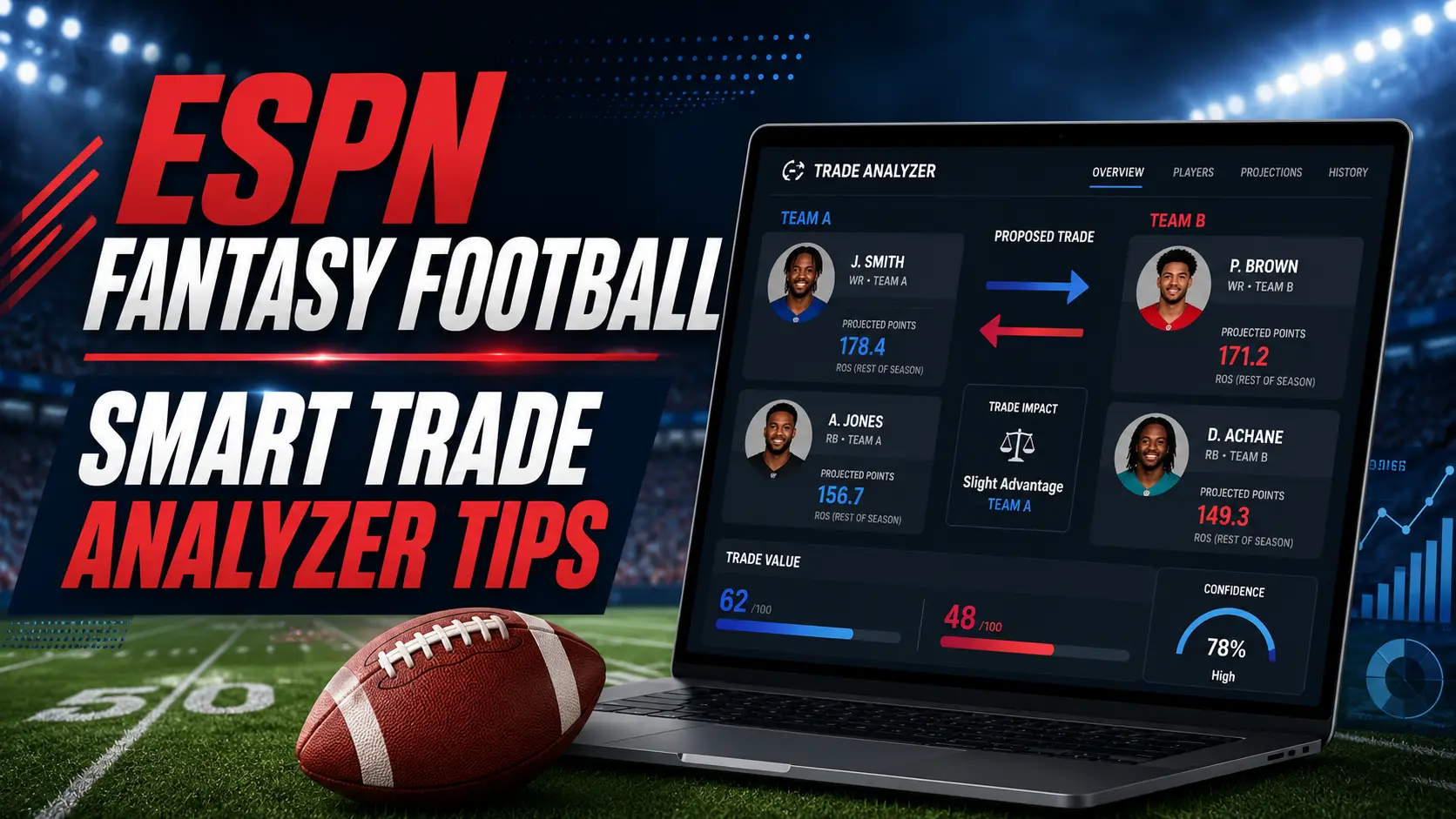
A trade analyzer gives quick structure; manual review gives human context. The tool compares values in seconds, while you know practice reports, coaching comments and what your league mates actually need. Use both. Our trade analyzer guide for ESPN leagues covers the tool side in more detail.
Common Trade Mistakes
Most bad trades in ESPN Fantasy Football come from panic, impatience or name worship:
- Trading after one big game. A backup may have scored because of a temporary injury.
- Ignoring roster balance. Two steady starters for one star can lower your weekly floor.
- Overpaying for popular players. Past greatness is not current production.
- Forgetting bye weeks. Check them before every trade.
Tools That Help
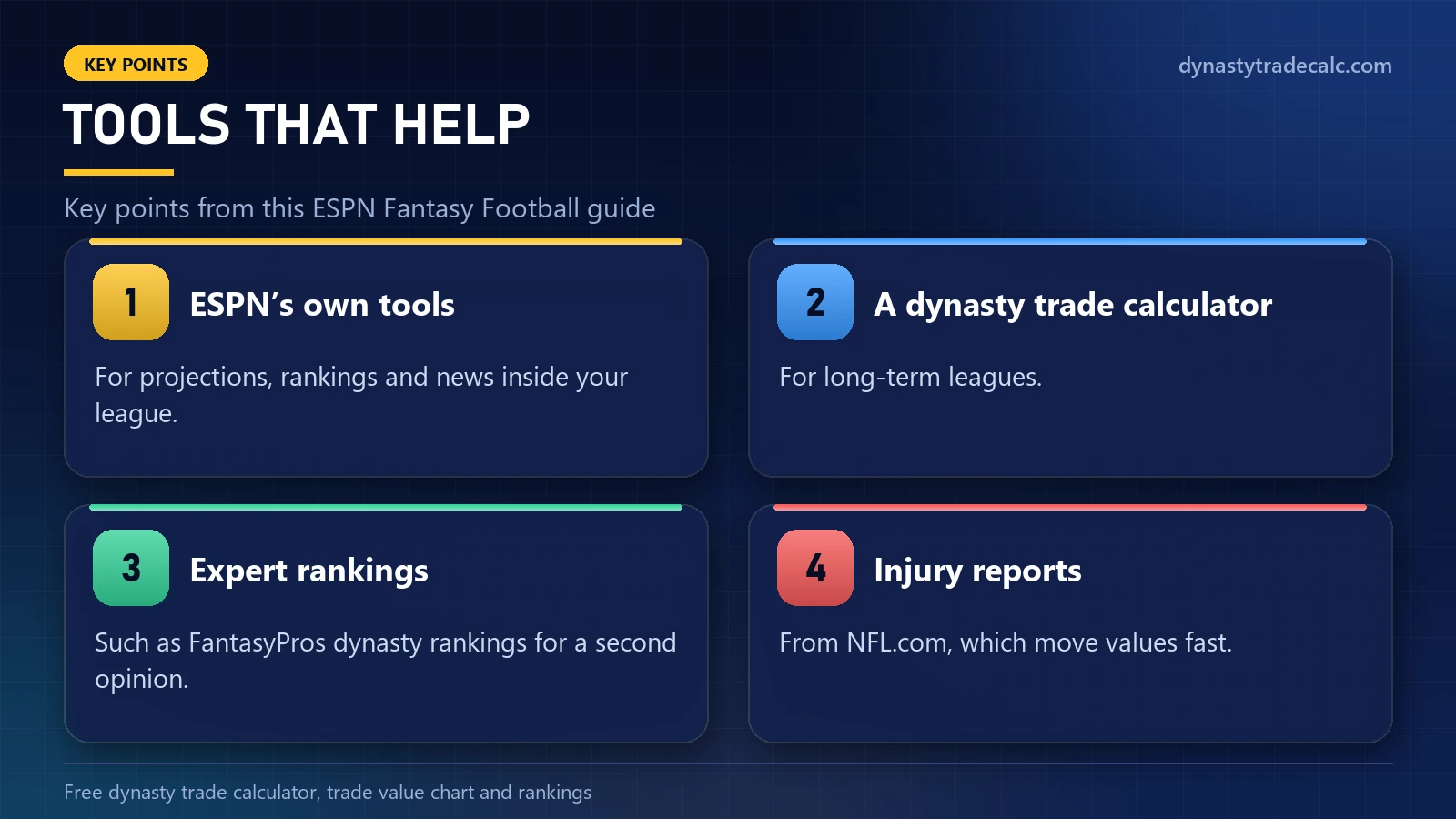
- ESPN’s own tools for projections, rankings and news inside your league.
- A dynasty trade calculator for long-term leagues.
- Expert rankings such as FantasyPros dynasty rankings for a second opinion.
- Injury reports from NFL.com, which move values fast.
Frequently Asked Questions
Is ESPN Fantasy Football good for beginners?
Yes. ESPN Fantasy Football gives you leagues, rankings, projections and player news in one place, which makes it easy to start. Beginners should still learn their league’s scoring before trading.
How do I evaluate a trade in ESPN Fantasy Football?
Start with your roster needs, then compare weekly projections and rest-of-season rankings for each player. Check bye weeks and injuries, and accept only if your lineup scores more afterwards.
Should I use a trade calculator before every deal?
Yes, it is a smart habit. It gives you a quick value check and protects you from emotional trades. Then decide using your own roster and your league’s needs.
Should ESPN redraft leagues use dynasty trade values?
No. Redraft leagues should lean on weekly and rest-of-season rankings, because only the current season counts. Dynasty values matter only in ESPN dynasty or keeper leagues.
What is the biggest trade mistake in fantasy football?
Trading without checking roster balance. A deal may bring a star but leave you short at another position, so your weekly total falls even though you got the best player.
Are dynasty rankings useful for ESPN leagues?
Only if your ESPN league uses dynasty or keeper settings. Then age, picks and future role matter, and a dynasty calculator gives a better read than weekly projections.
Conclusion
ESPN Fantasy Football rewards managers who stay calm and prepared. Check roster needs first, compare projections and rest-of-season rankings, watch bye weeks and injuries, and trade from strength to fix weakness. Small, steady upgrades across a season beat one dramatic trade. For ESPN’s own tools, see ESPN Fantasy Football.
Related Guides
Compare With Other Sources
If your league is on ESPN, it is worth reading their own tools alongside ours — see ESPN Fantasy Football and FantasyPros dynasty rankings. You can also run the same trade through our fantasy football trade analyzer.
