


Table of Contents
- What Is a Superflex League?
- How a Superflex Dynasty Trade Calculator Works
- Quarterback Value in Superflex
- Rookie Picks in Superflex
- How to Build Around Quarterbacks
- League Settings That Change Superflex Values
- Superflex Strategy for Contenders and Rebuilders
- Superflex Trade Examples
- Common Superflex Mistakes
- Go Deeper by League Format
- Frequently Asked Questions
- Conclusion
- Related Guides
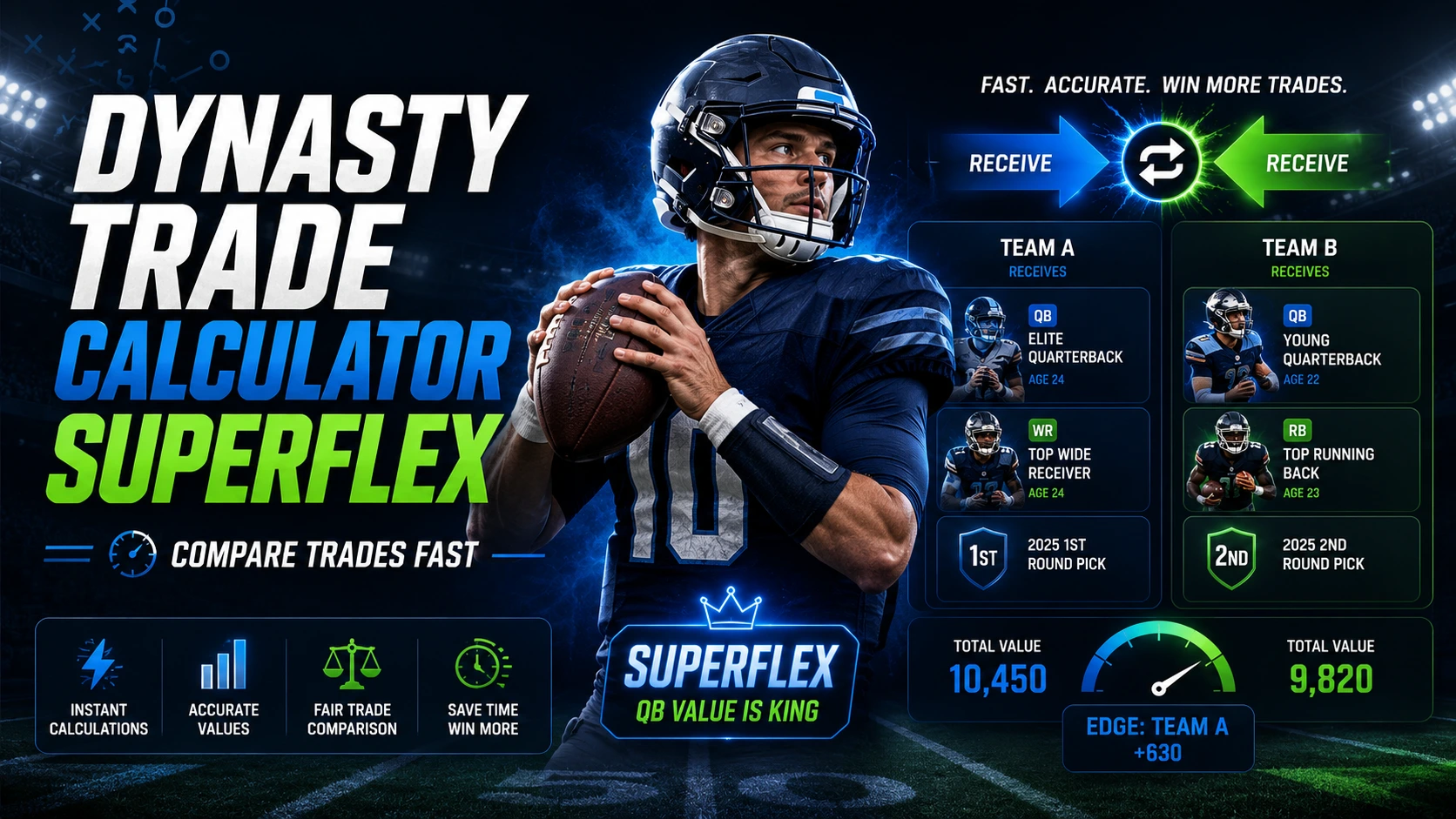
A dynasty trade calculator Superflex setting prices quarterbacks the way your league actually values them: as the scarcest players on the board. Use the wrong setting and you can trade away a starting quarterback for flex pieces without noticing. This guide covers how Superflex changes values, which quarterbacks are worth paying for, how picks fit in and how to build a roster around the position.
What Is a Superflex League?
A Superflex league has one flex spot that can hold a quarterback as well as a running back, wide receiver or tight end. Most teams put a second quarterback there, because quarterbacks score the most points. With about 32 NFL starters and most teams wanting two, starting quarterbacks become scarce.
That is why a dynasty trade calculator for Superflex must use different values from a 1QB tool. Our free dynasty trade calculator has a Superflex setting; choose it before you add a single player.
How a Superflex Dynasty Trade Calculator Works
Every player and pick gets a value, you add assets to both sides, and the dynasty trade calculator compares the Superflex totals. If one side leads by a lot, the deal needs another player or pick. Scoring still matters: PPR lifts pass catchers and tight end premium lifts tight ends, so set those too.
- Choose Superflex and your scoring.
- Enter every player and pick on both sides.
- Read the gap between the totals.
- Check your quarterback count after the trade.
- Counter with a small pick if the deal is close but short.
Quarterback Value in Superflex
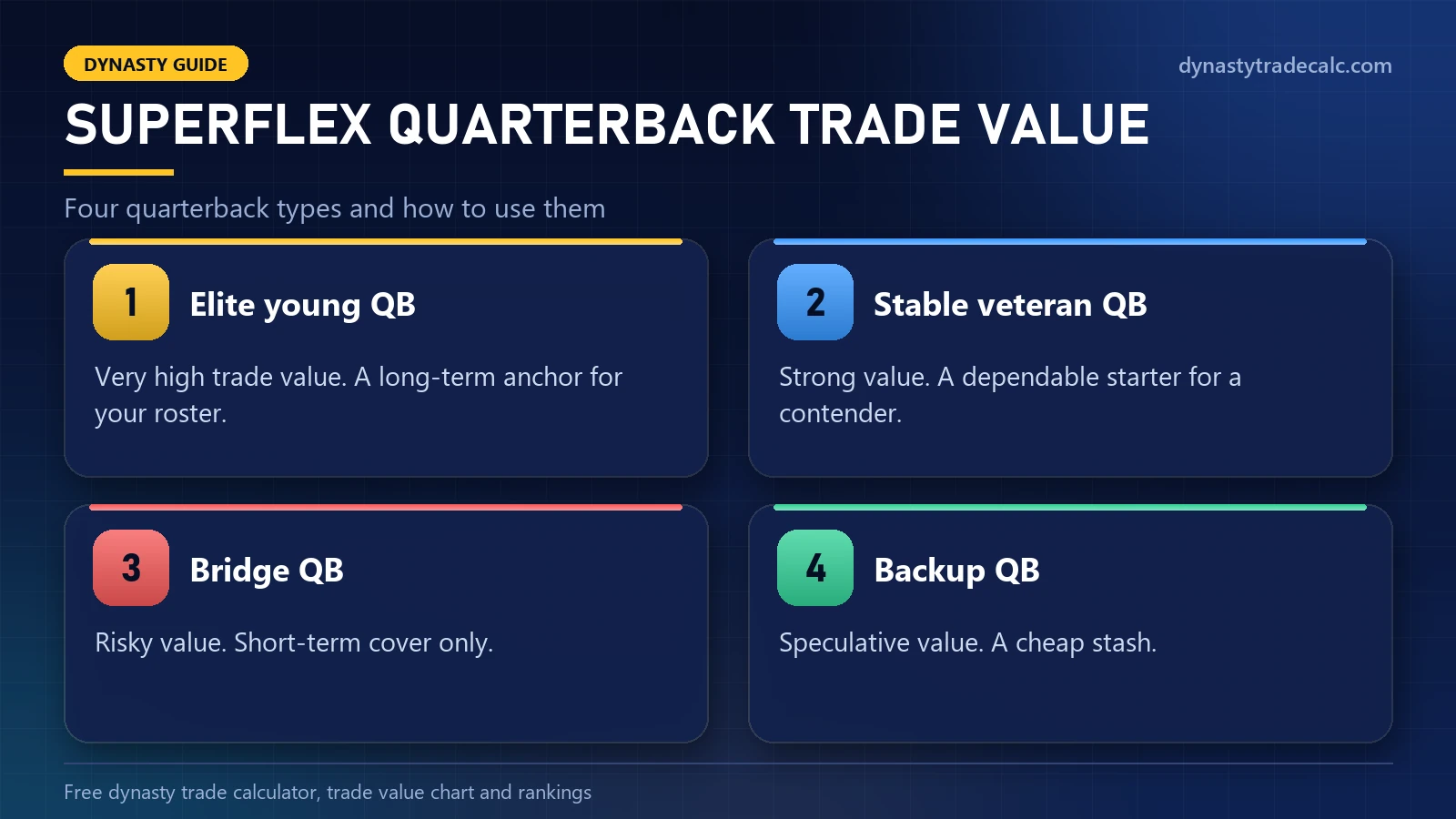
| QB Type | Trade Value | Best Use |
|---|---|---|
| Elite Young QB | Very high | Long-term anchor |
| Stable Veteran QB | Strong | Contender starter |
| Bridge QB | Risky | Short-term cover |
| Backup QB | Speculative | Cheap stash |
Do not overpay for every passer. Look at age, job security, rushing upside and weekly ceiling. A bridge quarterback with a short-term role is risky, while a young starter with a secure job is a long-term anchor. Check our Superflex trade value chart for where each tier sits.
Rookie Picks in Superflex
Picks are dynasty currency, and in Superflex they gain extra value in classes with top quarterback prospects. Prices rise before rookie drafts, so that is often the best time to sell a pick for a proven quarterback. An early first can land a premium quarterback prospect; seconds and thirds work as sweeteners. See our dynasty rookie pick value chart 2026 for prices.
How to Build Around Quarterbacks
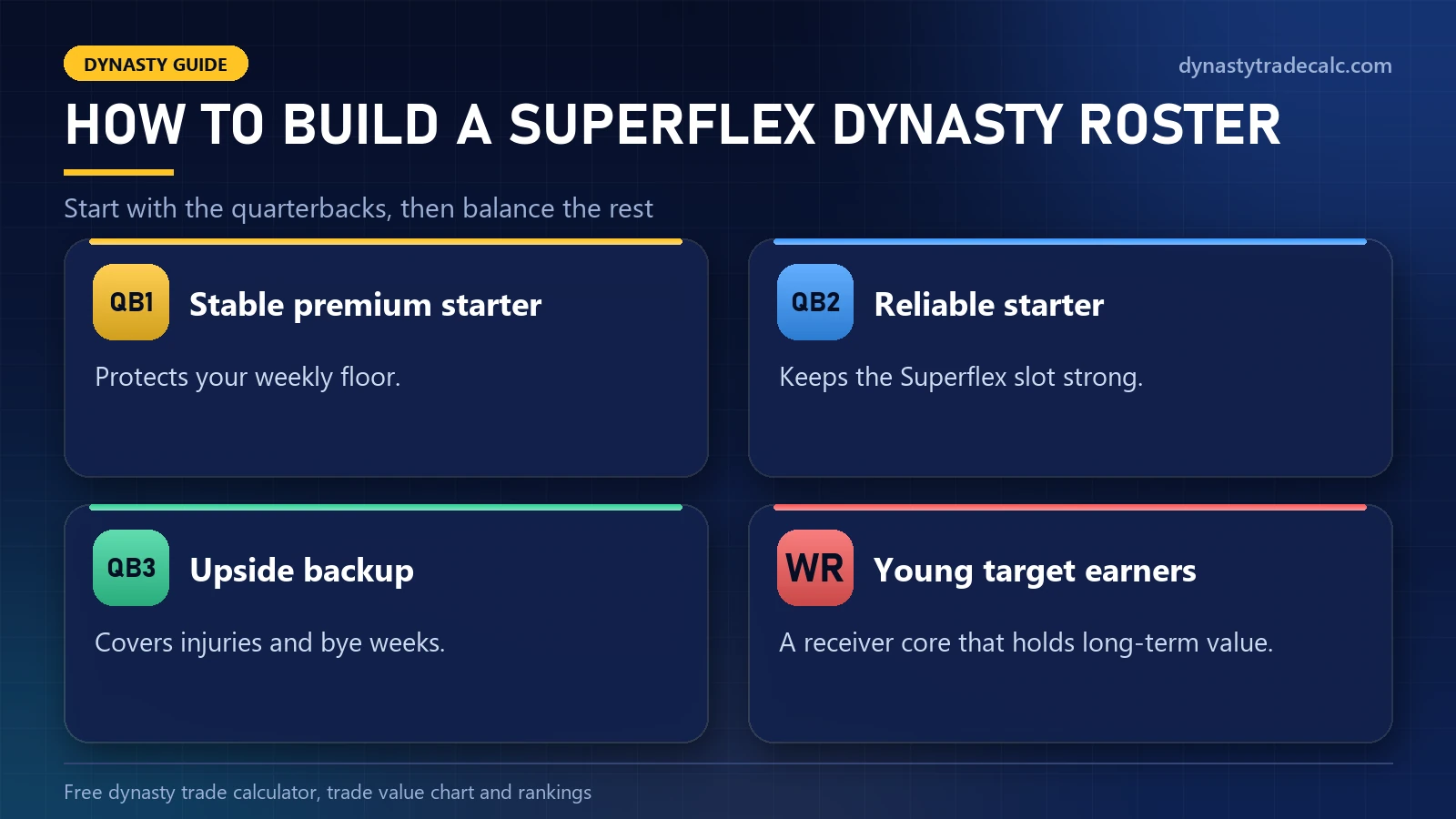
- QB1: a stable premium starter who protects your weekly floor.
- QB2: a reliable starter so the Superflex slot never sits empty.
- QB3: an upside backup for injuries and bye weeks.
- Receivers: young target earners, who hold value longest.
- Running backs: productive veterans when you are contending.
League Settings That Change Superflex Values
Superflex is the biggest setting, but not the only one. League size and lineup depth change prices as well:
| League Rule | Who Gains Value | Reason |
|---|---|---|
| 10-Team | Elite players | Depth is easier |
| 14-Team | Starters | Scarcity grows |
| Start-8 | Stars | Lineups are shallow |
| Start-11 | Depth | More players matter |
| TE Premium | Tight Ends | Catches score extra |
In a 14-team Superflex league even a bridge quarterback can be hard to find, while in a 10-team league elite players matter more than depth. Set every rule in your dynasty trade calculator before you trust a Superflex total, then compare the result with a second source.
Superflex Strategy for Contenders and Rebuilders
Start with your team’s lane. If you are contending, buy weekly points and quarterback stability, and do not let the Superflex slot sit with a bye-week backup. If you are rebuilding, collect picks, young receivers and rising quarterbacks before their price jumps. The middle feels safe, but it usually means paying contender prices for rebuilder results. Watch your league’s habits too: some managers overpay for rookies, others for veterans, and both create chances to trade.
Superflex Trade Examples
| Example Trade | Best For | Why It Works |
|---|---|---|
| Late 1st for Veteran QB | Contender | Adds weekly stability |
| Older RB for Future 1st | Rebuilder | Converts fading value |
| WR Depth for QB2 | QB-needy team | Fixes scarce position |
| Elite QB for Huge Package | Deep rebuild | Adds many assets |
A contender sending a late first for a steady veteran quarterback can be right if that player fills the Superflex slot every week. A rebuilder trading an older running back for a future first and a young backup quarterback loses points today but builds tomorrow. Run either deal through a dynasty trade calculator with Superflex values and the gap will look very different from a 1QB result.
Common Superflex Mistakes
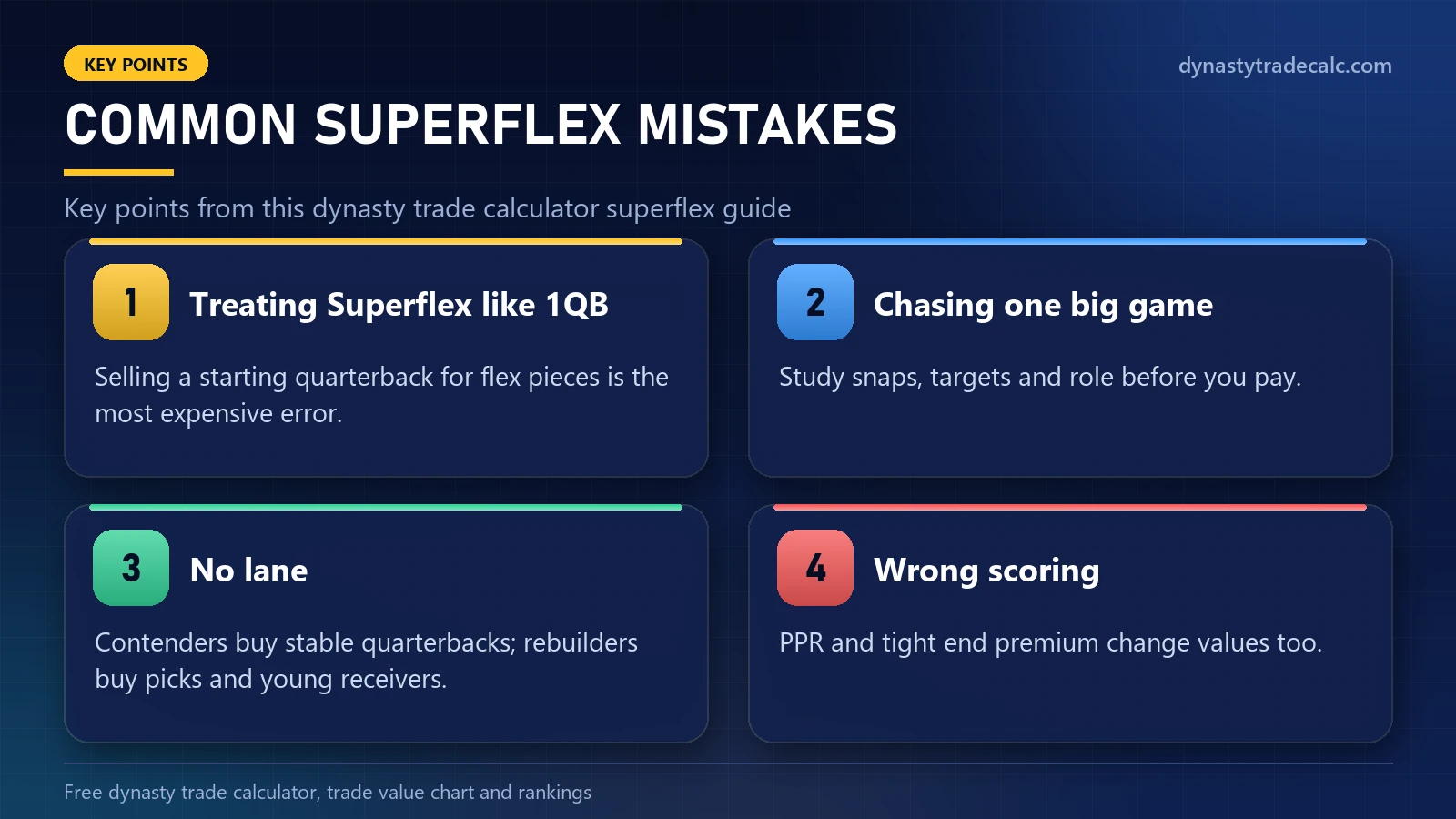
- Treating Superflex like 1QB. Selling a starting quarterback for flex pieces is the most expensive error.
- Chasing one big game. Study snaps, targets and role before you pay.
- No lane. Contenders buy stable quarterbacks; rebuilders buy picks and young receivers.
- Wrong scoring. PPR and tight end premium change values too.
Go Deeper by League Format
This page is the main guide for league formats. For a specific setting, see:
- dynasty Superflex trade calculator
- how 1QB scoring changes player value
- 2QB league values
- PPR scoring and trade value
- pricing picks in a startup draft
Frequently Asked Questions
What is a dynasty trade calculator Superflex setting?
It is a trade calculator set to Superflex values, where a quarterback can start in the flex spot. It prices quarterbacks much higher than a 1QB tool, which changes which side of a trade is ahead.
Why are quarterbacks so valuable in Superflex?
Most teams start two quarterbacks, but the NFL only has about 32 starters. That scarcity pushes quarterback prices far above their 1QB values, even for steady mid-level starters.
How many quarterbacks do I need in a Superflex dynasty league?
At least two steady starters, plus a third as cover for injuries and bye weeks. One quarterback injury can turn a title roster into a weekly guessing game.
Should I trade rookie picks for a quarterback in Superflex?
Yes, if the quarterback is stable and you are contending. Rebuilding teams should keep their picks, because a future first can become very valuable when rookie quarterback hype grows.
Do running backs lose value in Superflex?
Not fully. They still help contenders win weekly matchups. They simply cost less than quarterbacks, because quarterbacks are harder to replace in a Superflex league.
Is a Superflex trade calculator always accurate?
No. It gives a strong estimate, but check injuries, depth charts, scoring and your team direction before you accept. Treat the result as a starting point for the decision.
Conclusion
Superflex turns starting quarterbacks into the most valuable assets in your league. Use a dynasty trade calculator Superflex setting, keep at least two steady starters, and price every quarterback by age, role and job security before you trade. Check the values again after injuries, the NFL Draft and preseason news, because Superflex prices move faster than any other format.
Related Guides
Compare With Other Sources
Format changes value more than almost anything else. For a second opinion on these numbers, compare KeepTradeCut crowd-sourced dynasty values, FantasyCalc and DynastyProcess.
