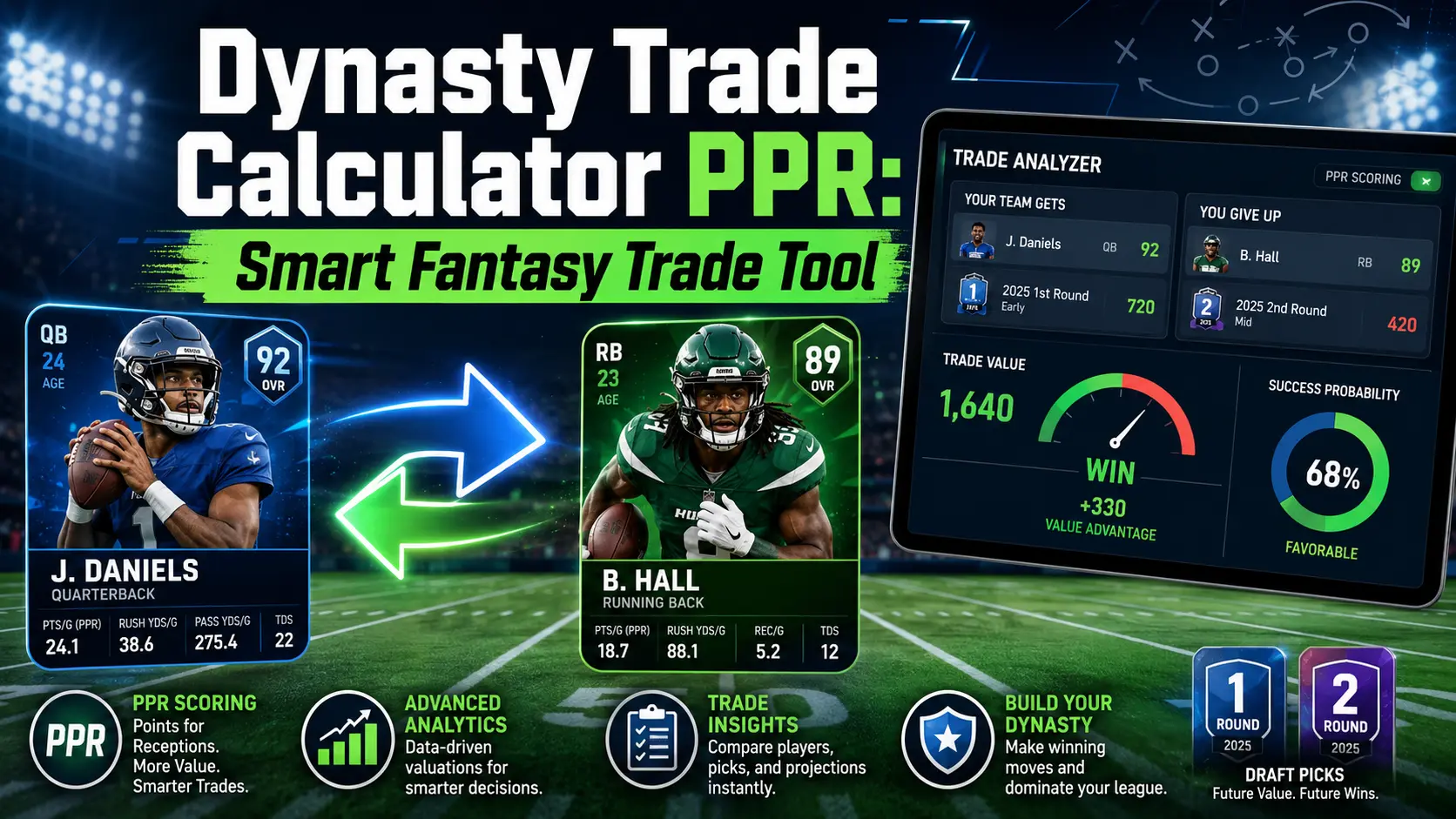
Dynasty-Trade-Calculator-PPR-Smart-Fantasy-Trade-Tool

Dynasty Trade Calculator PPR: Smart Fantasy Trade Tool

A Dynasty Trade Calculator PPR helps you compare players, picks, and long-term value in point-per-reception fantasy football leagues. It gives you a clearer view before you accept a trade. That matters because one dynasty deal can shape your roster for years.

Fantasy football feels simple on draft day. Then trades arrive. Suddenly, you must compare a young wide receiver, an older running back, and a future rookie pick. That is where a smart dynasty trade calculator helps you slow down and think like a sharp manager.

What Is a Dynasty Trade Calculator PPR and Why Does It Matter?

A Dynasty Trade Calculator PPR is a tool that checks trade value in dynasty fantasy football leagues using PPR scoring. In PPR, catches matter. So, a player with steady targets can carry more value than a touchdown-only player who disappears some weeks.

This tool matters because dynasty leagues are not short-term games. You keep players for future seasons. That means age, role, team depth, rookie picks, and scoring format all matter. A fair trade today can still become painful next year.

Simple Meaning for New Fantasy Football Players

Think of this tool like a digital trade scale. You place players and picks on both sides. Then it shows which side looks stronger. It cannot read your mind, but it can stop you from making a wild trade after one big game.

Why PPR Scoring Makes Trade Decisions Different

PPR scoring changes player value because each catch adds points. A receiver with eight short catches can beat a deep-threat player who only catches two passes. That makes target volume very important when you compare wide receivers, running backs, and tight ends.

Who Should Use This Tool?

You should use this tool if you play dynasty, keeper, superflex, IDP, or deep fantasy football leagues. New managers can avoid bad trades. Experienced managers can test market value. Even confident players need a second look before sending a major offer.

How a Dynasty Trade Calculator PPR Works for Player Values

A Dynasty Trade Calculator PPR works by comparing player value, future upside, league settings, and draft picks. Many tools also adjust for scoring format. That matters because full PPR gives extra weight to players who catch many passes each week.

However, the tool should not make the full decision for you. It gives you a starting point. You still need to check team goals, player role, injury history, and league behavior. Good dynasty managers mix numbers with football sense.

Player Ranking, Age, Role, and Long-Term Value

Age plays a huge role in dynasty trades. A 23-year-old receiver with rising targets may hold more value than a 29-year-old star. Role matters too. A starter with weekly volume usually beats a bench player with only exciting highlights.

How PPR Points Affect Wide Receivers and Running Backs

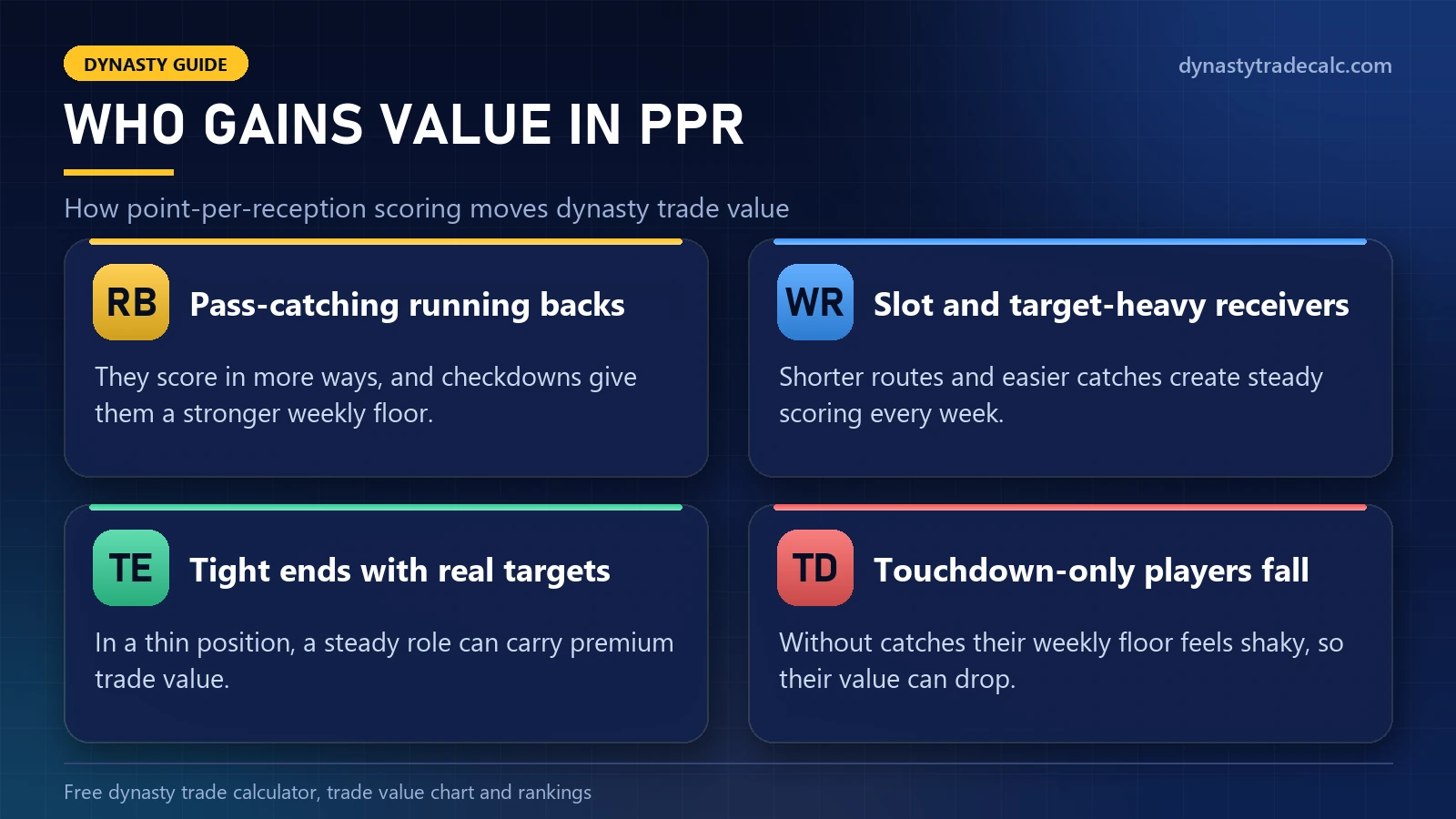
PPR points often lift wide receivers and receiving running backs. A back who catches five passes has a safer weekly floor. A receiver with steady routes can stay useful even without touchdowns. That makes weekly consistency a serious trade factor.

Why Trade Value Changes During the Season

Trade value moves quickly during the season. Injuries happen. Rookies break out. Veterans lose snaps. Coaches change roles. Because of that, a trade that looked fair in August may look strange in November. Dynasty managers should recheck values often.

Dynasty Trade Calculator PPR vs Standard and Half-PPR Trade Tools

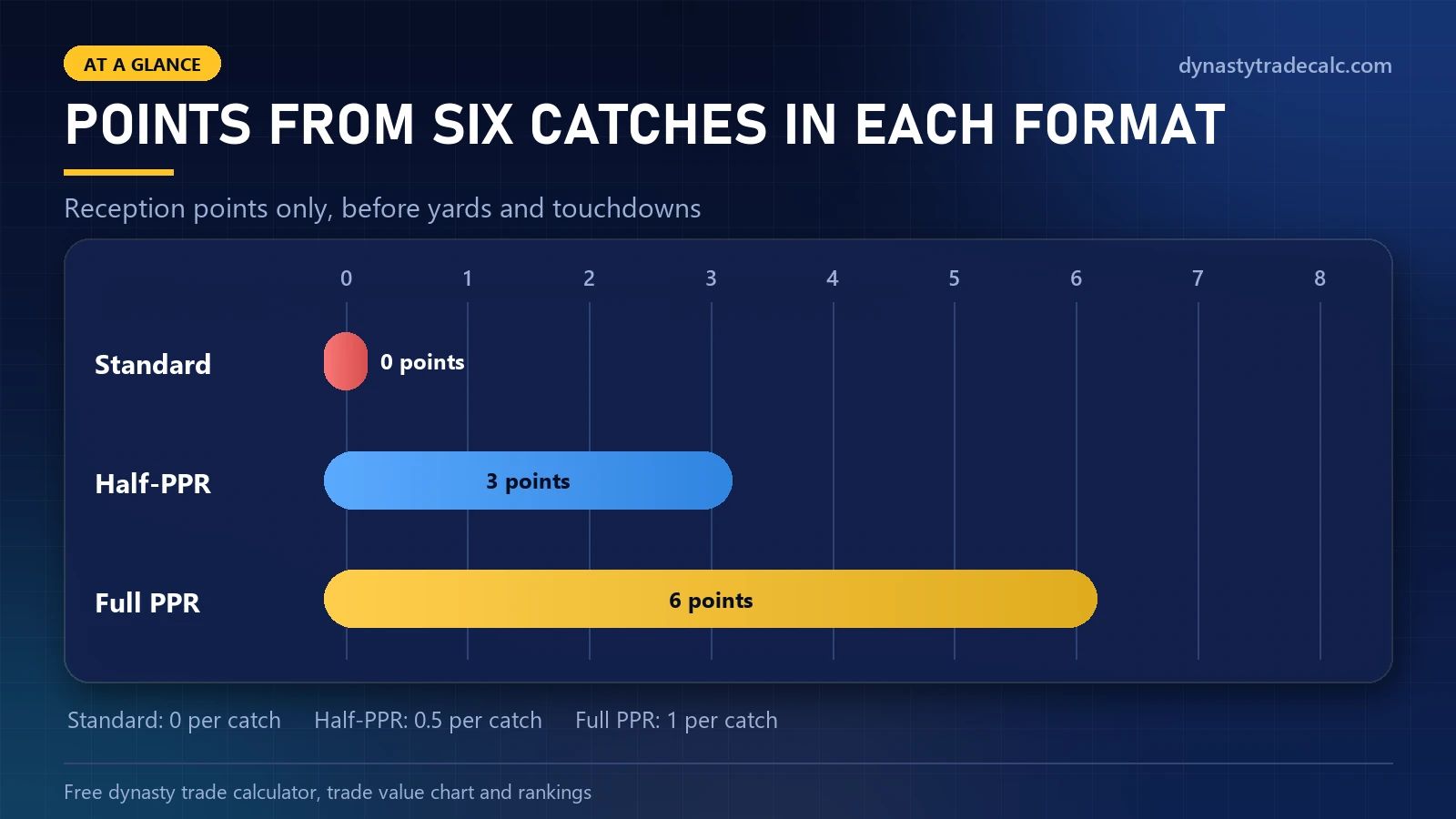
A Dynasty Trade Calculator PPR should value players differently than standard or half-PPR tools. Standard scoring gives no extra point for a catch. Half-PPR gives half a point. Full PPR gives one full point for each reception.

That small scoring change can reshape your trade board. A slot receiver can become more useful. A pass-catching running back can jump in value. Meanwhile, a touchdown-only player may fall because his weekly floor feels shaky.

Difference Between Standard, Half-PPR, and Full PPR

Standard scoring rewards yards and touchdowns only. Half-PPR adds a small bonus for catches. Full PPR gives the biggest boost to reception-heavy players. So, before you judge a trade, make sure the tool matches your league format.

Scoring FormatReception ValuePlayer Type That Gains Value
Standard0 pointsTouchdown scorers and high-yardage players
Half-PPR0.5 pointsBalanced volume players
Full PPR1 pointTarget-heavy receivers and receiving backs

Why Full PPR Can Increase Receiver Value

Full PPR can make wide receivers more valuable because targets turn into points. A receiver who catches six passes every week brings a useful floor. He may not always explode, but he keeps your lineup breathing during tough matchups.

Which Scoring Format Is Best for Dynasty Leagues?

The best format depends on your league style. Full PPR creates more scoring and deeper player value. Half-PPR feels balanced for many leagues. Standard feels more old-school. For dynasty, PPR often adds better trade depth and more weekly strategy.

Key Features to Look for in a Dynasty Trade Calculator PPR

A good Dynasty Trade Calculator PPR should include player comparisons, draft picks, scoring settings, league size, and superflex options. It should also update often. Dynasty values can change fast, especially after injuries, depth chart moves, and rookie breakouts.

You should also look for tools that explain value clearly. A number alone is not enough. The best tools help you understand why one side wins. That makes your trade talks easier and stops you from guessing in the dark.

Player Value Comparison

Player comparison is the heart of any trade tool. It lets you see whether one side gives more value. Still, a perfect number does not always mean a perfect trade. Your roster need can make a small overpay smart.

Rookie Pick and Future Pick Support

Rookie picks matter a lot in dynasty leagues. A future first can become a premium asset before the rookie draft. A late second may still help in deep leagues. Good tools should compare picks with real players, not ignore them.

League Size, Superflex, and Team Need Settings

League size changes everything. A 12-team league feels different from a 32 team dynasty trade calculator setup. Superflex also raises quarterback value. Team need matters as well because a loaded roster can trade depth for one stronger starter.

Updated Rankings and Market Data

Fresh rankings are important because player markets move all year. A tool using old data can mislead you. Updated market data helps you catch rising players early. It also protects you from overpaying for names that already peaked.

How to Use a Dynasty Trade Calculator PPR Before Accepting a Trade

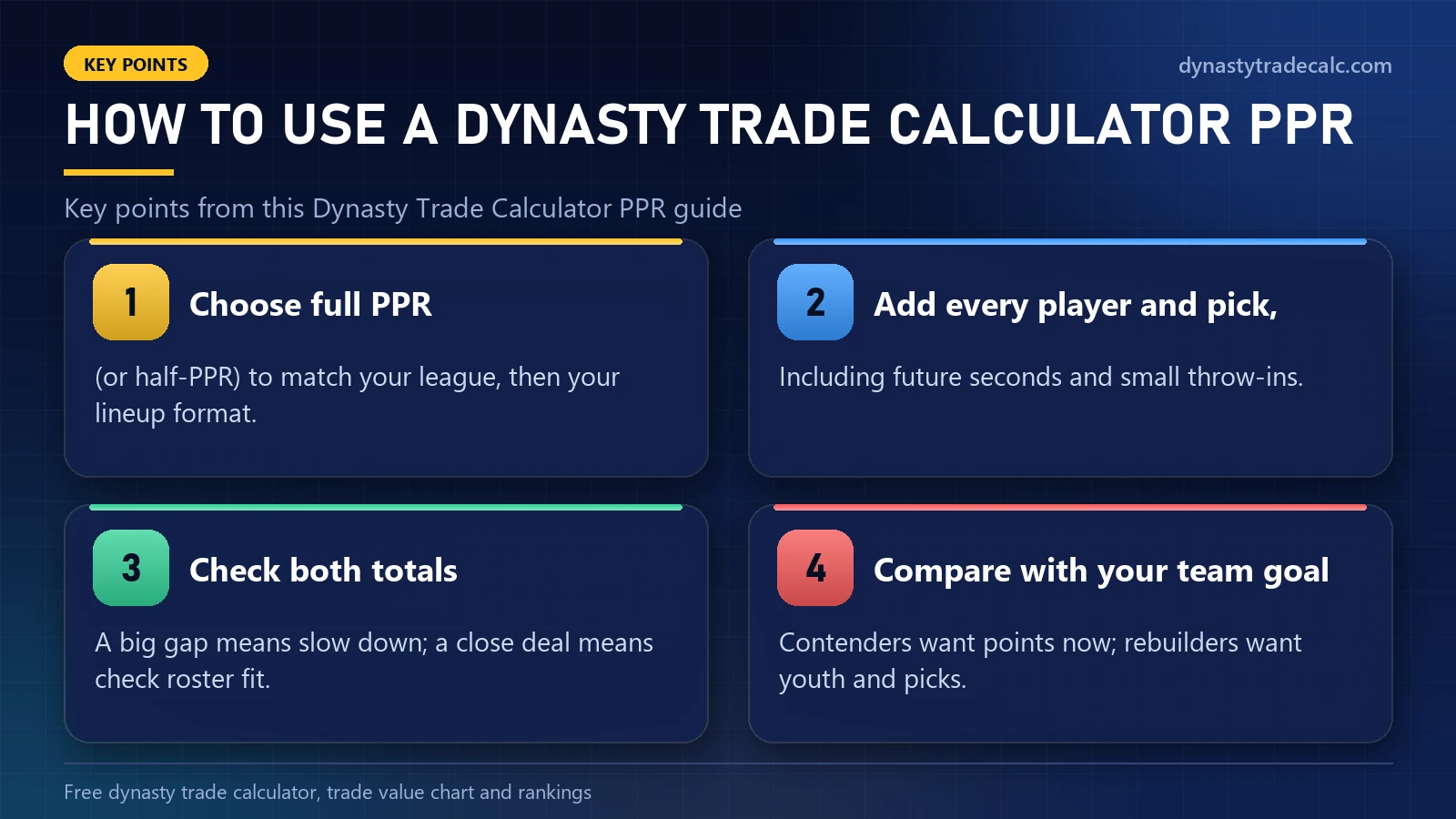
A Dynasty Trade Calculator PPR works best before emotions take over. Add every player and pick. Choose the right scoring format. Then compare the result with your roster direction. Are you trying to win now or rebuild for later?

After that, look beyond the number. Ask if the trade improves your starting lineup or future assets. A deal can look equal on paper and still hurt your team. That is why smart managers use context before they click accept.

Step 1: Add Players and Picks Correctly

Add every part of the trade. Include future firsts, seconds, thirds, and small throw-in players. Tiny pieces can change the result. If you forget one pick, the trade may look cleaner than it really is.

Step 2: Check Both Teams’ Value

Check both sides with a calm eye. If one side wins by a large margin, slow down. If the deal looks close, move to context. Fair trades often depend on roster build, league market, and playoff timing.

Step 3: Compare Result With Your Team Goal

Your team goal should guide your decision. A contender may trade youth for weekly points. A rebuilder may trade an older star for picks. A middle team must be careful because chasing both directions can create a messy roster.

Step 4: Make the Final Decision Smartly

Make the final decision after checking value, role, schedule, and risk. If the deal fits your plan, move forward. If it only feels exciting because of one recent game, pause. Dynasty regret can bite harder than a bad waiver claim.

Common Mistakes When Using a Dynasty Trade Calculator PPR

A Dynasty Trade Calculator PPR can help a lot, but it cannot think for you. Some managers follow the number blindly. That creates problems because every league has different habits, scoring rules, roster sizes, and trade personalities.

Another common mistake is ignoring team direction. A rebuilding team should not trade young assets for short-term points. A contender should not collect only future picks. The right trade depends on timing, not just total value.

Trusting the Calculator Without Context

A calculator gives you a value estimate. It does not know your standings, schedule, depth, or league mood. For example, a slight overpay for a starter can make sense if you are one piece away from winning.

Ignoring Age, Injury Risk, and Team Situation

Age and injury risk can change value quickly. A player may look great today but face a shrinking role next season. You should also check quarterback changes, coaching shifts, and contract situations before treating a value as safe.

Overvaluing Big Names

Big names can trick managers. A famous player may feel safer than he really is. Sometimes you pay for last year’s story instead of next year’s points. In dynasty, the next breakout can matter more than the old headline.

Forgetting Future Draft Picks

Future picks are easy to ignore because they do not score today. Still, they give you power later. You can draft rookies, trade during rookie hype, or package picks for a star. Picks are flexible football currency.

How PPR Scoring Changes Player Value in Dynasty Leagues

PPR scoring rewards catches, so opportunity matters more than highlight plays. A player who earns seven short targets can be very useful. This is why target share, route participation, and passing-game role matter so much in dynasty trades.

In full PPR, managers should not only chase touchdowns. Touchdowns are noisy. Targets are more stable. That does not mean touchdowns are useless. It means catches help players survive bad weeks and keep your lineup from falling apart.

Why Pass-Catching Running Backs Become More Valuable

Pass-catching running backs become more valuable because they score in more ways. They can gain rushing yards, catch passes, and find touchdowns. Even when their team trails, they may catch checkdowns. That makes their weekly floor stronger.

Why Slot Receivers Matter More in PPR

Slot receivers often run shorter routes and catch easier passes. That can create steady scoring in PPR leagues. They may not always post huge yardage, but six catches can still matter. Reliable points win more weeks than flashy guesses.

How Tight Ends Can Gain Extra Trade Value

Tight ends with real targets gain extra value in PPR. Many tight ends need touchdowns to matter. A tight end who catches five passes often feels safer. In a thin position, that steady role can carry premium trade value.

How to Value Rookie Picks, Future Picks, and Young Players

Rookie picks bring hope, risk, and trade power. Early picks can turn into stars. Late picks can still become useful depth. However, picks are uncertain. That is why you should compare draft capital with proven production and team direction.

Young players also need careful study. Do not buy youth just because it sounds exciting. Look for playing time, draft capital, target growth, and team trust. Youth without opportunity is like a sports car with no gas.

Early Rookie Picks vs Proven Players

Early rookie picks are valuable because they offer access to top prospects. Proven players are valuable because you already know their role. Rebuilders often prefer picks. Contenders often prefer points. The best choice depends on your competitive window.

When to Sell Future Picks

Sell future picks when your roster can truly compete. If one strong starter helps you chase a title, moving a pick can make sense. Do not sell picks just because trade talks feel fun. That is how teams get old fast.

When to Buy Young Breakout Players

Buy young breakout players before the market fully wakes up. Look for rising snaps, stronger routes, and better target share. If a player’s role is growing faster than his trade price, you may find a hidden gem.

How Rebuilders Should Think About Draft Capital

Rebuilders should collect picks and young players with real paths to value. Still, they should not hoard picks forever. At some point, a rebuild needs scorers. A roster full of future picks looks pretty, but it cannot win matchups.

Best Dynasty Trade Strategy for Contenders, Rebuilders, and Balanced Teams

Your trade strategy should match your roster window. Contenders need points now. Rebuilders need future value. Balanced teams need discipline because they can drift into no clear plan. Dynasty managers win faster when they know their direction.

However, you should stay flexible. A team can change quickly after injuries or breakout games. Review your roster during the season. Then decide whether to buy, sell, or hold. Good dynasty strategy is steady, but not stubborn.

Trade Strategy for Win-Now Teams

Win-now teams should target players who enter the starting lineup right away. Bench depth is useful, but weekly starters win titles. A contender can overpay a little for reliable points. Still, do not empty every future pick without reason.

Trade Strategy for Rebuilding Teams

Rebuilding teams should sell older producers before value drops. Target young players, injured discounts, and rookie picks. Patience matters here. If your league knows you are rebuilding, managers may send weak offers. Do not accept crumbs for cake.

Trade Strategy for Middle-Ranked Teams

Middle-ranked teams face the hardest decisions. They are not terrible, but they may not be true contenders. These teams should study points, age, depth, and schedule. If the ceiling looks low, sell early and gain future value.

When to Overpay and When to Walk Away

Overpay when a player fits your roster perfectly and fills a rare need. Walk away when the price damages your future. Some managers ask for the moon in every trade. Smile, decline, and let someone else buy the telescope.

Real Trade Examples to Understand Fair Player Value

Real examples make trade value easier to understand. Imagine a contender trading a future first for a veteran wide receiver who becomes a weekly starter. That can be smart. If the same receiver sits on your bench, the deal wastes value.

Now imagine a rebuilder trading an aging running back for a young receiver and a second-round pick. That move may lose points today, but it can build value tomorrow. Context changes the answer, even when the trade calculator shows similar numbers.

Team SituationExample Trade IdeaWhy It Can Work
ContenderFuture pick for weekly starterAdds playoff points now
RebuilderOlder RB for young WR and pickBuilds future value
Middle teamDepth player for future secondCreates flexibility
Superflex teamExtra WR for QB depthProtects a scarce position

Dynasty Trade Calculator IDP and Defensive Player Value

The phrase dynasty trade calculator idp matters because IDP leagues add defensive players to fantasy football. Linebackers, defensive backs, and edge rushers can hold real value in these leagues. A normal offensive calculator may not judge them correctly.

A dynasty trade calculator with idp should understand tackles, sacks, interceptions, pass breakups, and big-play scoring. Defensive scoring can vary wildly. That is why IDP managers must check settings first. One league may love linebackers, while another rewards pass rushers more.

Why IDP Scoring Needs Extra Care

IDP scoring is not one-size-fits-all. Tackle-heavy leagues lift linebackers. Big-play leagues lift edge rushers and defensive backs with splash plays. If your tool ignores that scoring style, it may undervalue defensive stars or overvalue replaceable players.

How to Compare Offensive and Defensive Assets

Compare offensive and defensive assets by scarcity and scoring impact. If top defenders score like strong flex players, they deserve respect. If many similar defenders sit on waivers, be careful. Replacement value matters more than name value.

Advanced Trade Tools for Other Dynasty Sports

A dynasty trade calculator. can also inspire tools in other fantasy sports. Some managers search for a basketball dynasty trade calculator, a dynasty fantasy baseball trade calculator, or a dynasty fantasy basketball trade calculator because keeper formats exist beyond football.

Still, every sport works differently. Basketball values minutes, usage, age, and category strength. Baseball values prospects, positions, and long-term development. Football values role, scoring format, and roster scarcity. So, never apply one sport’s values to another blindly.

Football vs Basketball and Baseball Dynasty Values

Fantasy football value can change overnight after an injury or depth chart shift. Basketball often depends on usage and minutes. Baseball prospects may need years to develop. That makes a fantasy trade dynasty calculator useful only when it matches the sport.

Why League Format Matters More Than Tool Name

Tool names can sound similar, but settings change everything. A trade value calculator dynasty setup for football should not guide baseball or basketball trades. Even in football, a 10-team league and a 16-team league can value depth very differently.

FAQs

Fantasy managers ask these questions because dynasty trading feels both exciting and stressful. A tool can help you make better choices, but it cannot replace your judgment. Use the answers below as simple guidance before you accept, reject, or counter a trade.

What is the best way to use a dynasty trade calculator ppr?

The best way to use a dynasty trade calculator ppr is to enter all players and picks, choose the correct scoring settings, and compare the result with your team goal. Use it before trading, not after regret starts knocking.

Is a dynasty trade calculator ppr accurate?

A dynasty trade calculator ppr can be helpful, but it is not perfect. It estimates value through rankings, trades, or market data. Your league may value players differently. That is why context should always sit beside the number.

Does PPR scoring make wide receivers more valuable?

Yes, PPR scoring often makes wide receivers more valuable because every catch adds points. Target-heavy receivers gain safer weekly floors. Slot receivers can also become useful. However, elite running backs and tight ends still matter when they get volume.

Should I trade rookie picks in dynasty fantasy football?

You should trade rookie picks when the return fits your roster plan. Contenders can move picks for proven starters. Rebuilders should protect early picks unless the offer is strong. Rookie picks bring risk, but they also bring flexibility.

Can a trade calculator help in superflex leagues?

Yes, a trade calculator can help in superflex leagues because quarterbacks carry more value. In superflex, starting two quarterbacks is possible. That creates scarcity. Always turn on superflex settings before judging any quarterback-heavy trade.

Should I always follow the calculator result?

No, you should not always follow the calculator result. Use it as a guide, not a command. Check roster fit, team window, injury risk, and league market. The tool shows value, but you make the final call.

Similar Posts

Leave a Reply

Your email address will not be published. Required fields are marked *