

Table of Contents
- What It Means to Analyze a Fantasy Trade
- A Step-by-Step Checklist
- Factors That Move Trade Value
- How League Format Changes a Trade
- Why a Routine Matters
- Analyzing by Position
- Value, Needs and Future Potential
- A Worked Example
- Using a Free Tool
- Building a Fair Counteroffer
- Tips for Long-Term Success
- Common Mistakes
- Frequently Asked Questions
- Conclusion
- Related Guides
To analyze a fantasy trade well, you need more than two player names and a gut feeling. You need to know what each side is worth in your league’s format, how the deal changes your starting lineup and whether it fits your plan. This guide gives you a simple routine you can use every time an offer arrives.
What It Means to Analyze a Fantasy Trade
It means looking past raw points at lineup impact, future picks and positional depth. A trade can have equal point totals and still help one team far more, because one side fills an empty starting spot and the other only adds bench depth.
A Step-by-Step Checklist
- Match your league format: scoring, lineup and roster size.
- Enter both sides into a calculator such as our free dynasty trade calculator.
- Check positional scarcity: how hard is each player to replace?
- Compare your lineup before and after the trade.
- Decide by your direction: contending or rebuilding.
Factors That Move Trade Value
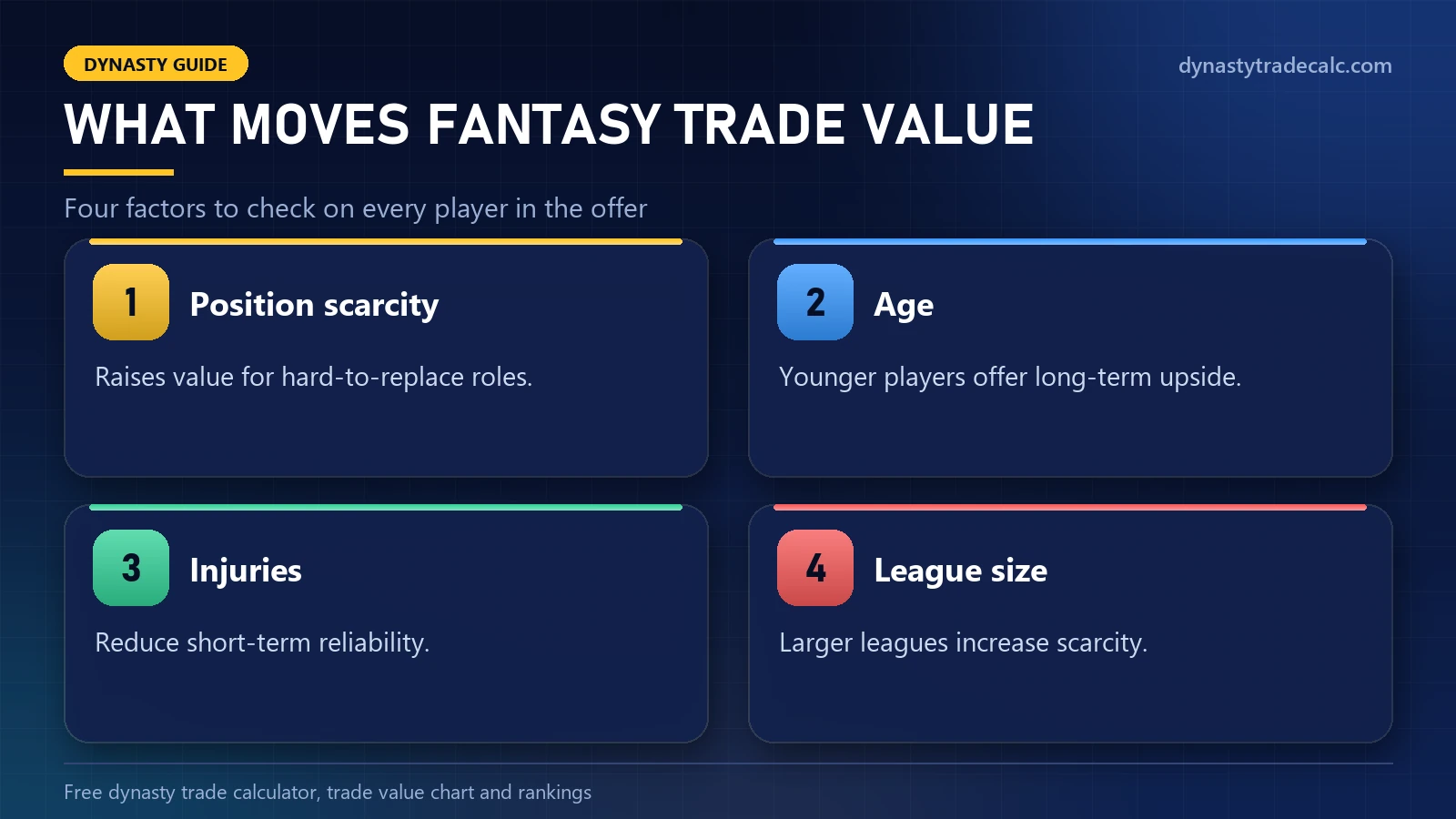
| Factor | Effect on Trade Value |
|---|---|
| Position scarcity | Raises value for hard-to-replace roles |
| Recent performance | Adjusts expected production |
| Age | Younger players offer long-term upside |
| Injuries | Reduces short-term reliability |
| League size | Larger leagues increase scarcity |
Opportunity matters most. A player with steady snaps and targets keeps his value; a player whose role depends on a teammate’s injury can lose it overnight. Check usage on Pro Football Reference before you pay for a breakout.
How League Format Changes a Trade
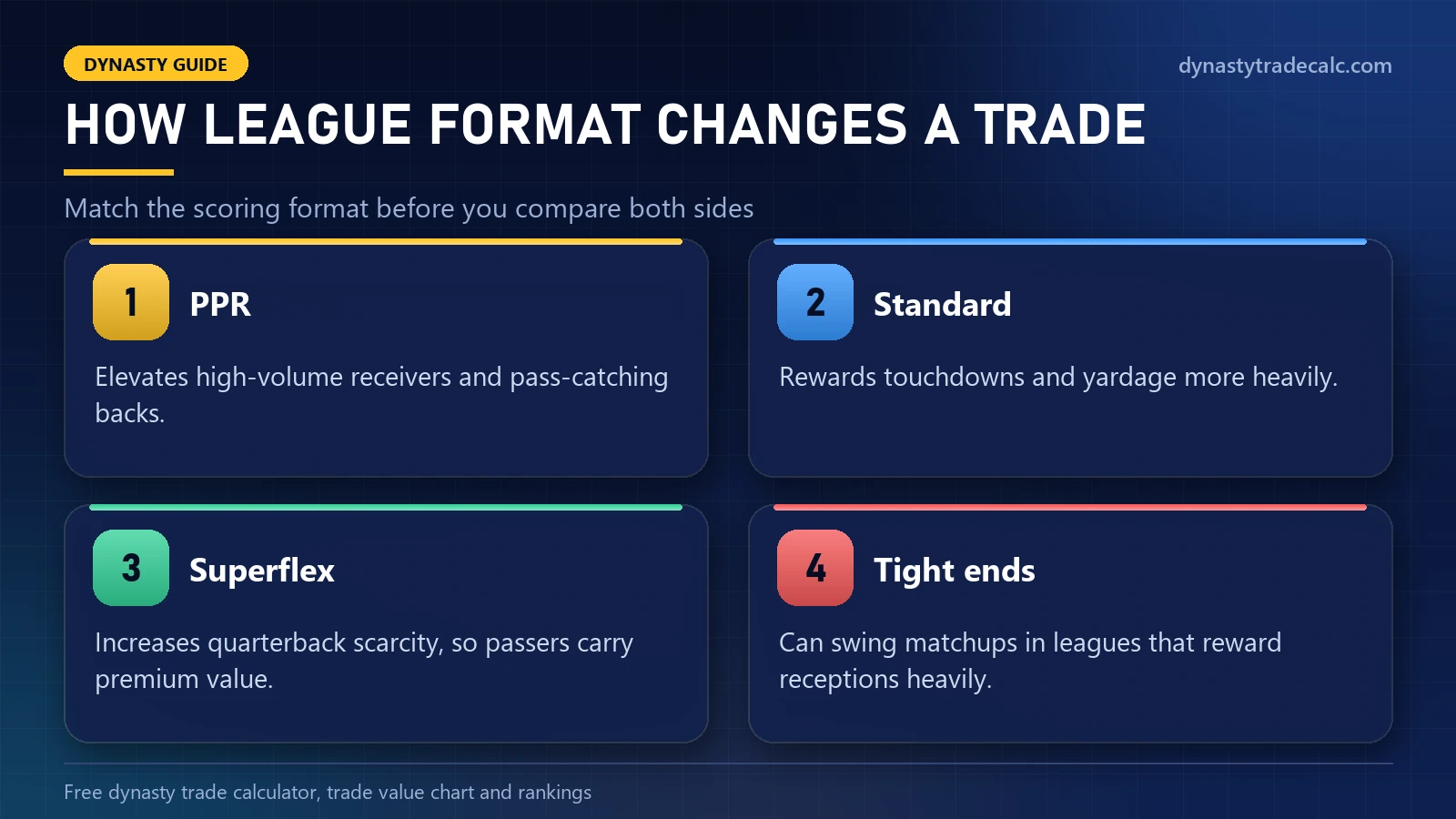
| Format | Who gains value | What to watch |
|---|---|---|
| PPR | High-volume receivers and pass-catching backs | Touchdown-only players lose value |
| Standard | Yardage and touchdown scorers | Reception volume matters less |
| Superflex | Starting quarterbacks | Even a steady backup has trade value |
| Tight end premium | Tight ends with real target shares | Only a few qualify |
When you analyze a fantasy trade, the format is the first setting and the most important one. See the Superflex guide and the PPR guide for detail.
Why a Routine Matters
A rushed decision can cost you a key player or leave a hole you cannot fill on waivers. A routine slows you down just enough. When you analyze a fantasy trade the same way every time, you stop reacting to big names and start comparing roles, values and needs. It also makes you faster: after a few weeks, the checklist takes only a couple of minutes.
Analyzing by Position
- Quarterbacks: premium in Superflex, replaceable in 1QB.
- Running backs: score fast but lose value quickly after injuries or role changes.
- Wide receivers: hold value longest, especially young target earners.
- Tight ends: a few elite ones, then a big gap.
Value, Needs and Future Potential
Equal totals can hide different futures. A rookie’s upside may outweigh a veteran’s current points in dynasty, while in redraft the veteran is usually the better bet. Weigh each side against what your roster needs now and what it will need next season.
A Worked Example
You play in a 12-team PPR league. You have four good receivers and one reliable running back. Another manager, short of receivers, offers a steady RB2 for your third receiver. The calculator shows the two players as close. Your lineup tells the rest: the running back starts every week, while your third receiver would sit behind the other two most weeks. The trade raises your weekly total and fills a hole, so it is a good deal even though the values are level. The other manager gains too, because their receiver hole gets filled. That is what a good trade looks like: both teams start better players afterwards.
Using a Free Tool
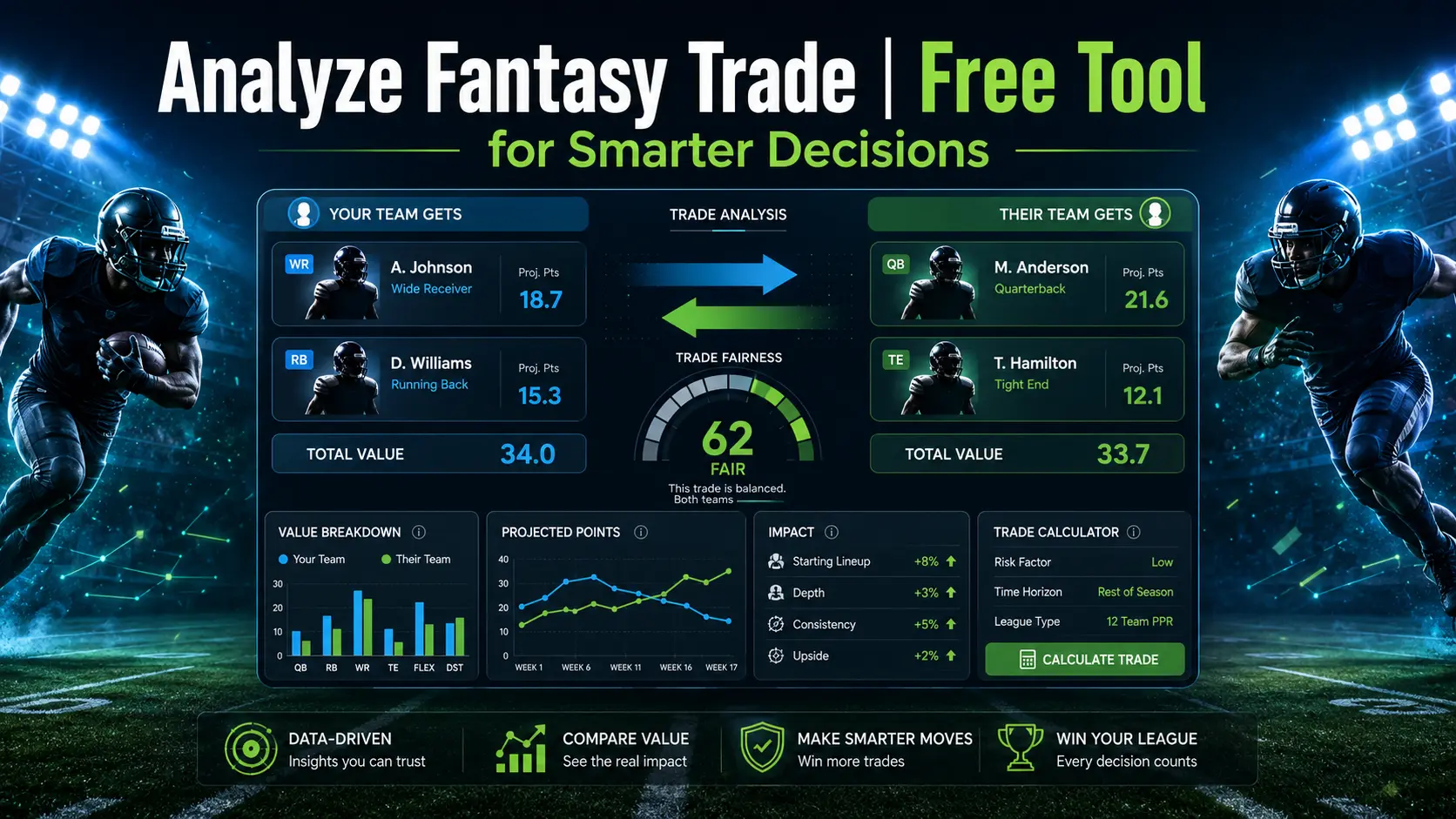
A free calculator compares player values instantly. Enter both packages, choose your scoring and lineup, and read the totals. Then use a team-level view, like our fantasy football team analyzer guide describes, to see what your roster needs. The two together answer both questions: is the price fair, and does the deal help me?
Building a Fair Counteroffer
A good counter keeps what the other manager wants at the centre and adjusts the smaller pieces. Swap one bench player, add a later pick or ask for a younger player. Fair counters keep the conversation going; lowball counters end it. More ideas are in our fantasy trade calculator guide.
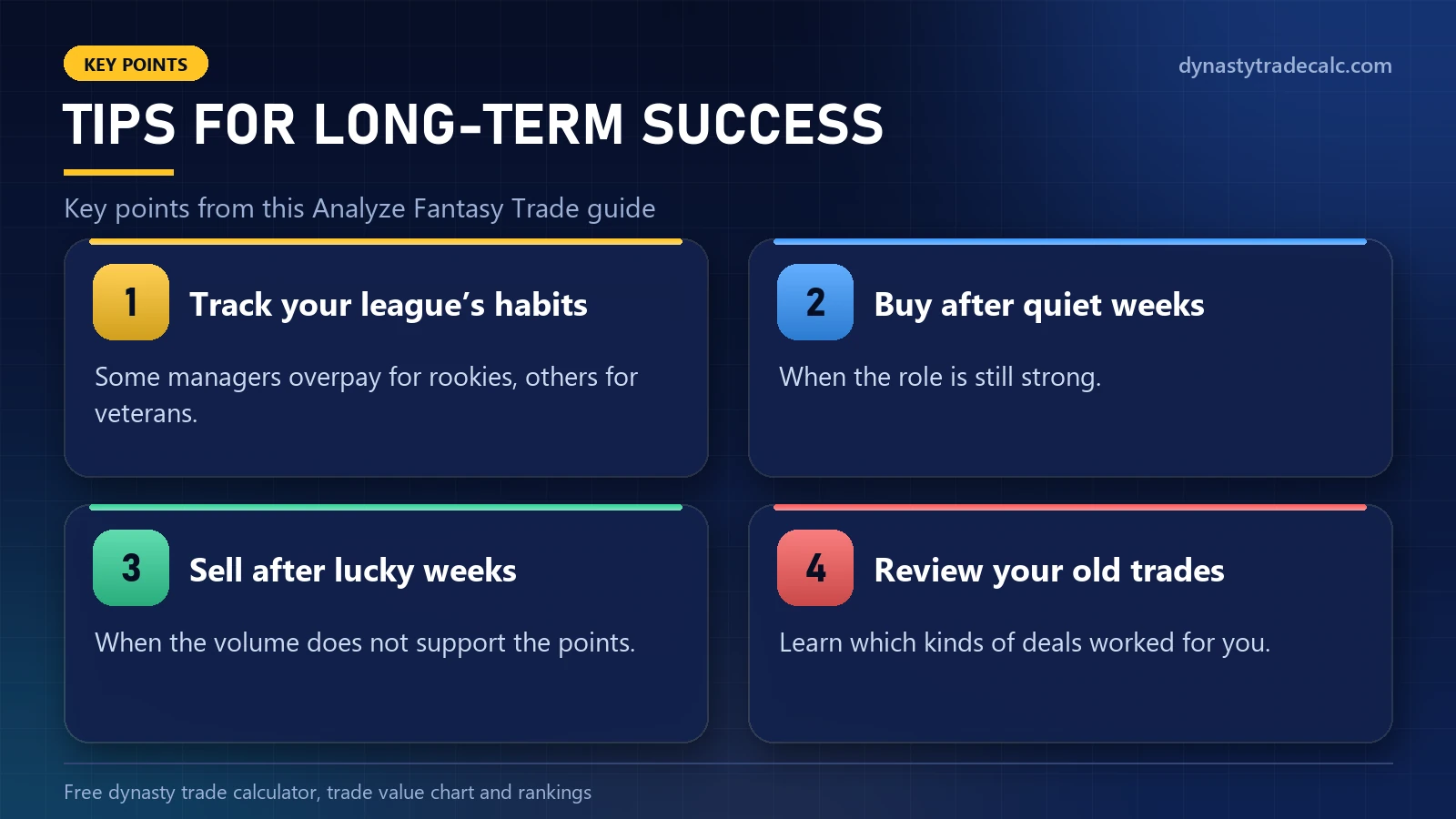
Tips for Long-Term Success
- Track your league’s habits. Some managers overpay for rookies, others for veterans.
- Buy after quiet weeks when the role is still strong.
- Sell after lucky weeks when the volume does not support the points.
- Review your old trades. Learn which kinds of deals worked for you.
Common Mistakes
- Overvaluing one game. A single breakout can mislead you.
- Ignoring roster construction. Too many players at one position wastes value.
- Treating bench players like starters. Only starters score.
- Using the wrong format. Every value in the deal changes.
If you are unsure, analyze a fantasy trade twice: once with the calculator and once by writing out your lineup for the next three weeks.
Frequently Asked Questions
How do I analyze a fantasy trade step by step?
Match your league format, enter both sides into a trade calculator, check positional scarcity, compare your starting lineup before and after, then decide by your team direction.
Can I use a free tool to analyze a fantasy trade?
Yes. Free calculators give good numerical guidance. Match the scoring and league type first, then use the result as a starting point and add your own roster check.
Should I analyze a fantasy trade differently in dynasty leagues?
Yes. In dynasty you weigh future potential alongside current points. A rookie’s upside can outweigh a veteran’s current production, and draft picks carry real value.
How often should I re-check player value before a trade?
After injuries, depth-chart changes and big performance swings. Weekly checks are ideal during the season, and always check again right before you accept.
What mistakes should I avoid when I analyze a fantasy trade?
Overvaluing one game, ignoring league format and treating bench players like starters. Always ask what your lineup looks like after the trade.
How do I make a fair counteroffer?
Keep what the other manager wants at the centre of the deal and adjust the smaller pieces, such as a later pick or a bench player, until the totals are close.
How do I do a trade analysis in fantasy football?
Start a trade analysis in fantasy football by matching your league format, then compare both sides in a calculator and check your starting lineup. That simple routine covers most of the trade analysis fantasy football needs.
What does a good fantasy trade analysis include?
A good fantasy trade analysis includes value, roster need, timing and league format. If the trade fails one of those checks, it is probably not right for your team.
What should a fantasy trade evaluation check?
A fantasy trade evaluation should check value, roster need, timing and league format. If the deal fails one of those, it is probably not right for your team.
Conclusion
To analyze a fantasy trade, set your format, compare values, check your lineup and match the deal to your direction. Track how your league trades over time, and you will spot good offers faster than your rivals and turn down bad ones without second thoughts.
Related Guides
Compare With Other Sources
No single analyzer is definitive. Sanity-check a close call against FantasyPros dynasty rankings and FantasyCalc. You can also run the same trade through our fantasy football trade analyzer.
